Building Blocks
This section contains fundamental products for the synthesis of organic and biological compounds. Building blocks are the essential starting materials used to construct complex molecules through various chemical reactions. They play a critical role in drug discovery, material science, and chemical research. At CymitQuimica, we offer a diverse range of high-quality building blocks to support your innovative research and industrial projects, ensuring you have the essential components for successful synthesis.
Subcategories of "Building Blocks"
- Boronic Acids & Boronic Acid Derivatives(5,756 products)
- Chiral Building Blocks(1,242 products)
- Hydrocarbon Building Blocks(6,095 products)
- Organic Building Blocks(61,055 products)
Found 199650 products of "Building Blocks"
Sort by
Purity (%)
0
100
|
0
|
50
|
90
|
95
|
100
2,5-Diaminobenzonitrile
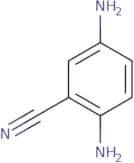
CAS:<p>2,5-Diaminobenzonitrile is a chemical compound with the molecular formula C6H5N3. It is a white crystalline solid that is insoluble in water and soluble in organic solvents such as acetone, chloroform, and ether. 2,5-Diaminobenzonitrile has been shown to be an effective monomer for polymer synthesis due to its stability and high densities. This chemical also has the ability to undergo hydrogen bonding and form hydrogen peroxide when heated to a temperature of 100 °C. The thermal isomerization of 2,5-diaminobenzonitrile can be slowed by adding other amines or nitrites.</p>Formula:C7H7N3Purity:Min. 95%Color and Shape:PowderMolecular weight:133.15 g/mol3,4-Dihydroxyphenylacetic acid
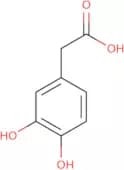
CAS:<p>3,4-Dihydroxyphenylacetic acid (DOPAC) is a metabolite of dopamine and is found in the central nervous system. Dopamine is an important neurotransmitter that is involved in the regulation of movement, emotional responses, and hormone release. Dopamine is synthesized from tyrosine by tyrosine hydroxylase and then converted to L-3,4-dihydroxyphenylalanine by L-aromatic amino acid decarboxylase. DOPAC can be formed from dopamine by monoamine oxidases or catechol O-methyltransferases. The level of DOPAC in the brain has been shown to be increased following exposure to neurotoxins such as 6-hydroxy dopamine or 1-methyl 4-phenyl 1,2,3,6 tetrahydropyridine (MPTP). This increase may be due to decreased activity of monoamine oxidases. The level</p>Formula:C8H8O4Purity:Min. 95%Color and Shape:Beige PowderMolecular weight:168.15 g/molDisodium 2-naphthol-3,6-disulfonate
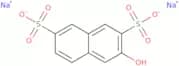
CAS:<p>Disodium 2-naphthol-3,6-disulfonate is a cationic surfactant that reacts with chloride ions to form a gel. It can be used as an inhibitor of corrosion and foaming in the oil industry. Disodium 2-naphthol-3,6-disulfonate has also been shown to have a linear response with fluorescence techniques when it interacts with metal ions. The kinetic data for this reaction is dependent on the concentration of chloride ions, which are generated by hydrochloric acid upon addition of water.</p>Formula:C10H6Na2O7S2Purity:Min. 97 Area-%Color and Shape:PowderMolecular weight:348.26 g/mol2,2'-Dithiobis(pyridine-N-oxide)
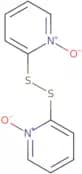
CAS:<p>2,2'-Dithiobis(pyridine-N-oxide) is a chemical compound that has been shown to have anti-inflammatory effects in vitro. It inhibits the production of inflammatory cytokines such as TNF-α and IL-1β in vitro, which are associated with many inflammatory skin diseases. This agent also has an apoptotic effect on cells, leading to cell death by triggering caspase activation. 2,2'-Dithiobis(pyridine-N-oxide) has also been shown to be effective against cancer cells in vitro. This agent may cause cancer by increasing the expression of proapoptotic proteins and decreasing the expression of anti-apoptotic proteins.</p>Formula:C10H8N2O2S2Purity:Min. 98 Area-%Color and Shape:White PowderMolecular weight:252.31 g/mol3,5-Dihydroxy-4-acetyltoluene
CAS:<p>3,5-Dihydroxy-4-acetyltoluene is a versatile building block that is used in the production of various pharmaceutical and agrochemical intermediates. It can be used as a reagent for organic synthesis and as a speciality chemical. 3,5-Dihydroxy-4-acetyltoluene has been shown to have high quality and utility. This compound can also be used as a reaction component or scaffold.</p>Formula:C9H10O3Purity:Min. 95%Color and Shape:PowderMolecular weight:166.17 g/mol(+)-Diacetyl-D-tartaric acid
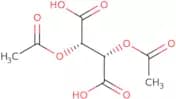
CAS:<p>(+)-Diacetyl-D-tartaric acid is a chiral organic compound that is soluble in organic solvents. It can be used as a catalyst for the asymmetric synthesis of organic compounds and has been shown to cleave bonds with high stereoselectivity. (+)-Diacetyl-D-tartaric acid also exhibits mesomorphic properties, meaning it changes from liquid to solid and vice versa at certain temperatures. The optical activity of this compound can be seen by its magnetic resonance spectrum, which displays two peaks at different wavelengths. This molecule has been shown to have potential uses in microscopy, as well as for the preparation of monomers for magnetic materials.</p>Formula:C8H10O8Purity:Min. 95%Color and Shape:White PowderMolecular weight:234.16 g/mol2,4-Dihydroxy-3-methylbenzoic acid
CAS:<p>2,4-Dihydroxy-3-methylbenzoic acid (2,4-DMB) is a potent compound that has been shown to have chemotherapeutic properties. It is a DNA repair agent that also inhibits the activity of topoisomerase II and DNA polymerase III. 2,4-DMB can be used in the treatment of radiation and ionizing radiation induced cancers. The pharmacophore of 2,4-DMB has been identified as being composed of three hydrophobic regions and one hydrophilic region. This pharmacophore has been used to design other potent compounds with similar activity against cancer cells.</p>Formula:C8H8O4Purity:Min. 95%Color and Shape:PowderMolecular weight:168.15 g/mol2,5-Difluoro-3-methylbenzoic acid methyl ester
CAS:<p>2,5-Difluoro-3-methylbenzoic acid methyl ester is a high quality, complex compound that can be used as a versatile building block in synthesis. It acts as a reagent and can be used as a research chemical. 2,5-Difluoro-3-methylbenzoic acid methyl ester is an intermediate in the production of other chemicals and can also be used as a reaction component or useful scaffold.</p>Formula:C9H8F2O2Purity:Min. 95%Color and Shape:PowderMolecular weight:186.16 g/mol3,5-Dihydroxycinnamic acid
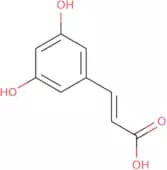
CAS:<p>3,5-Dihydroxycinnamic acid is a metabolite of the amino acid tyrosine and an intermediate in the biosynthesis of phenylalanine. It has been shown to have anti-inflammatory properties that may be due to its ability to inhibit prostaglandin synthesis. 3,5-Dihydroxycinnamic acid has also been identified as a carcinogen and is associated with an increased risk of cancer in women. 3,5-Dihydroxycinnamic acid is found in urine samples at concentrations between 2 and 10 µmol/L.</p>Formula:C9H8O4Purity:Min. 98 Area-%Color and Shape:PowderMolecular weight:180.16 g/mol3,5-Dihydroxy-2-naphthoic acid
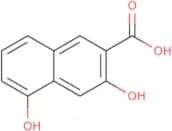
CAS:<p>3,5-Dihydroxy-2-naphthoic acid (DHNA) is an organic compound with a red shift in the optical spectrum. DHNA is a regulatory domain found in functional groups, such as salicylic acid. It has been shown to inhibit bacterial growth and gram-negative organisms, including Escherichia coli and Pseudomonas aeruginosa. DHNA is also a potent inducer of triticum aestivum lysine carboxypeptidase A and B, which are proteases that function in protein digestion. This property may be due to its ability to bind to receptor subtypes of the epidermal growth factor type 2 receptor family.</p>Formula:C11H8O4Purity:Min. 95%Color and Shape:White PowderMolecular weight:204.18 g/mol4-(Morpholinomethyl)phenol
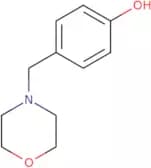
CAS:<p>4-(Morpholinomethyl)phenol is a potent acetylcholinesterase inhibitor that binds to the active site of the enzyme and prevents its function. It has been shown to have inhibitory activity against acetylcholinesterase and may be used for the treatment of Alzheimer's disease. 4-(Morpholinomethyl)phenol is a competitive inhibitor and is structurally similar to galanthamine, an acetylcholinesterase inhibitor that has been used in the treatment of Alzheimer's disease.</p>Formula:C11H15NO2Purity:Min. 95 Area-%Color and Shape:PowderMolecular weight:193.24 g/mol5-Ethylthio-1H-tetrazole - Conductivity >30 uS/cm
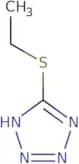
CAS:<p>5-Ethylthio-1H-tetrazole is a chloroformate that is used as an inhibitor of the cell membrane permeability. It can be prepared by the reaction of thiourea and ethyl bromoacetate in chloroform. This compound has been shown to inhibit the acidification of cells, which is caused by hydrogen ions leaking through the cell membrane. 5-Ethylthio-1H-tetrazole is also an inhibitor of RNA synthesis, which may be due to its ability to bind with nucleoside triphosphates and competitively inhibit ATPase activity. This product also has a luminescent property, which may be due to its ability to produce light upon oxidation in air or water.</p>Formula:C3H6N4SColor and Shape:PowderMolecular weight:130.17 g/molEthyl 4-iodobenzoate
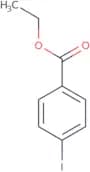
CAS:<p>Ethyl 4-iodobenzoate is an amide that reacts with a variety of substances, including retinoic acid and pemetrexed. It is a reactive substance that can be used in the synthesis of other substances such as iron oxides and transfer mechanism. Ethyl 4-iodobenzoate is also used for the preparation of picolinic acid and crystalline structure. Radical coupling reactions are most common and involve halides, phenyl groups, and aryl halides. The reaction temperature ranges from room temperature to 100 ˚C, while the reaction mechanism varies depending on the type of coupling reaction.</p>Formula:C9H9IO2Purity:Min. 95%Color and Shape:PowderMolecular weight:276.07 g/mol2-Ethyl-3,5-dimethylpyrazine
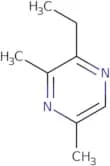
CAS:<p>2-Ethyl-3,5-dimethylpyrazine (2E-DMP) is a fatty acid that is produced by the reaction of unsaturated ketones and fatty acids. 2E-DMP has been shown to have an inhibitory effect on the activity of kidney bean lipoxygenase. It also inhibits the growth of mammalian cells in culture. 2E-DMP has a molecular weight of 152.24, a melting point of -50 degrees Celsius, and a boiling point at 230 degrees Celsius. The compound has not been tested for carcinogenic or mutagenic effects in mammals or humans.</p>Formula:C8H12N2Purity:Min. 95%Color and Shape:Clear LiquidMolecular weight:136.19 g/molEthyl 3-aminobenzoate
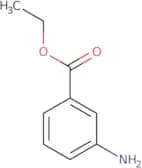
CAS:<p>Ethyl 3-aminobenzoate is a chemical that is used as an anesthetic. It is administered intravenously and has been shown to have effects on the cardiovascular system, such as lowering blood pressure, decreasing heart rate and increasing the time it takes for the heart to recover after a contraction. Ethyl 3-aminobenzoate also affects the central nervous system by causing anesthesia and changes in brain function. Its effects are reversible with administration of naloxone or flumazenil.</p>Formula:C9H11NO2Purity:Min. 95%Color and Shape:PowderMolecular weight:165.19 g/mol3-Ethoxy-4-hydroxybenzaldehyde
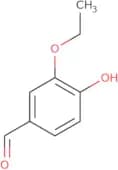
CAS:<p>3-Ethoxy-4-hydroxybenzaldehyde is an active analogue of p-hydroxybenzoic acid that can be used in the synthesis of vanillin. 3-Ethoxy-4-hydroxybenzaldehyde is extracted from a reaction solution using solid phase microextraction, and can then be analyzed by gas chromatography/mass spectrometry to determine the concentration of vanillin. This compound has been shown to have a solubility in water, but not in organic solvents. 3-Ethoxy-4-hydroxybenzaldehyde has been found to inhibit cytochrome P450 activity and polyvinyl chloride production. This chemical compound has also been found to be toxic when inhaled or ingested, with no known toxicity studies for skin contact or eye contact.</p>Formula:C9H10O3Purity:Min. 95%Color and Shape:White PowderMolecular weight:166.17 g/molEthyl 2-amino-4-methylthiophene-3-carboxylate
CAS:<p>Ethyl 2-amino-4-methylthiophene-3-carboxylate (EMTC) is a cytotoxic agent. It inhibits the HIV virus by interfering with the synthesis of viral proteins. EMTC has been shown to be effective against cancer cells, but not against healthy cells. The cytotoxic effect of EMTC is related to its ability to inhibit DNA synthesis and RNA transcription in both normal and cancer cells, which leads to cell death.</p>Formula:C8H11NO2SPurity:Min. 95%Color and Shape:PowderMolecular weight:185.24 g/mol2-Ethoxybenzamide
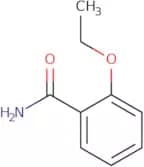
CAS:<p>2-Ethoxybenzamide is a nonsteroidal anti-inflammatory drug that has been shown to inhibit the production of inflammatory prostaglandins. It is structurally similar to ethenzamide, an older drug in this class. 2-Ethoxybenzamide is used for the treatment of pain and inflammation, as well as for other conditions such as gout and rheumatoid arthritis. The molecular formula for 2-ethoxybenzamide is C6H11NO2 and its molecular weight is 169.21 grams per mole. It has a melting point of 75 degrees Celsius and a boiling point of 220 degrees Celsius at atmospheric pressure. This compound can be found in crystalline cellulose, analytical method, water vapor, experimental solubility data, wastewater treatment, ethylmalonic acid, human serum, structural analysis.</p>Formula:C9H11NO2Purity:Min. 95%Color and Shape:White PowderMolecular weight:165.19 g/mol4'-Ethoxyacetophenone
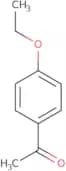
CAS:<p>Anti-bacterial agent; reagent for polymerization</p>Formula:C10H12O2Purity:Min. 98 Area-%Color and Shape:Slightly Yellow PowderMolecular weight:164.2 g/mol4-Formyl-N-methylbenzenesulfonamide
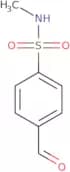
CAS:<p>4-Formyl-N-methylbenzenesulfonamide is a fine chemical that is used as a versatile building block in the synthesis of complex compounds, research chemicals, and reagents. It is highly useful as a reagent or speciality chemical in laboratory experiments involving many different reactions. 4-Formyl-N-methylbenzenesulfonamide has been shown to be an excellent intermediate for the synthesis of high quality products. This product can also be used as a scaffold in complex organic syntheses.</p>Formula:C8H9NO3SPurity:Min. 95%Color and Shape:PowderMolecular weight:199.23 g/mol