Building Blocks
This section contains fundamental products for the synthesis of organic and biological compounds. Building blocks are the essential starting materials used to construct complex molecules through various chemical reactions. They play a critical role in drug discovery, material science, and chemical research. At CymitQuimica, we offer a diverse range of high-quality building blocks to support your innovative research and industrial projects, ensuring you have the essential components for successful synthesis.
Subcategories of "Building Blocks"
- Boronic Acids & Boronic Acid Derivatives(5,778 products)
- Chiral Building Blocks(1,242 products)
- Hydrocarbon Building Blocks(6,098 products)
- Organic Building Blocks(61,098 products)
Found 199594 products of "Building Blocks"
Sort by
Purity (%)
0
100
|
0
|
50
|
90
|
95
|
100
3-Formylindole-5-carboxylic acid methyl ester
CAS:<p>3-Formylindole-5-carboxylic acid methyl ester is a chemical compound that can be used as a building block or intermediate for the synthesis of more complex compounds. 3-Formylindole-5-carboxylic acid methyl ester has a high purity and is an excellent reagent for use in research. This chemical may also be used as a starting material for the synthesis of speciality chemicals and fine chemicals.</p>Formula:C11H9NO3Purity:Min. 98.0 Area-%Molecular weight:203.20 g/mol(2R)-4-Methyl-2-[2-oxo-2-[(phenylmethoxy)amino]ethyl]pentanoic acid
CAS:<p>Please enquire for more information about (2R)-4-Methyl-2-[2-oxo-2-[(phenylmethoxy)amino]ethyl]pentanoic acid including the price, delivery time and more detailed product information at the technical inquiry form on this page</p>Formula:C15H21NO4Molecular weight:279.33 g/mol2-Acetoxybenzonitrile
CAS:<p>2-Acetoxybenzonitrile is an atypical, acidic organic compound with a molecular weight of 136.06 g/mol. It has a melting point of -5.5 °C and decomposes spontaneously at high temperatures to form benzonitrile, carbon dioxide, and water. 2-Acetoxybenzonitrile is able to act as a competitive inhibitor of acetylsalicylic acid (ASA) in the kinetic determination of ASA using acetylation as the rate-determining step. In this experiment, 2-acetoxybenzonitrile was found to be an effective inhibitor of acetylation with a KI value of 1.8 x 10 M. The spectrometer can be used to determine the molecular weight and purity of 2-acetoxybenzonitrile by measuring its absorbance in the ultraviolet region.<br>2-Acetoxybenzonitrile binds metal cations such as Cu(II), Fe(</p>Formula:C9H7NO2Purity:Min. 95%Color and Shape:Clear LiquidMolecular weight:161.16 g/mol5-Fluoroindole
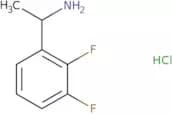
CAS:<p>5-Fluoroindole is a reagent that can be used in organic synthesis. It can be used to synthesize a variety of compounds, including pharmaceuticals and agrochemicals. 5-Fluoroindole is also useful as an intermediate for the synthesis of complex molecules or fine chemicals. 5-Fluoroindole can be used as a building block for the preparation of other chemical compounds. It is a versatile building block with many applications in research and industry.</p>Formula:C8H6FNMolecular weight:135.14 g/mol1-(2,3-Difluorophenyl)ethan-1-amine hydrochloride
CAS:<p>1-(2,3-Difluorophenyl)ethan-1-amine hydrochloride is a high quality chemical. It is a reagent that can be used as an intermediate in the synthesis of complex compounds and fine chemicals. This compound is also a useful scaffold for the development of new drugs and novel materials. 1-(2,3-Difluorophenyl)ethan-1-amine hydrochloride is also a versatile building block for reactions in organic chemistry. It is a speciality chemical that can be used as a research chemical or reaction component for synthetic organic chemistry.</p>Formula:C8H10ClF2NPurity:Min. 95%Color and Shape:PowderMolecular weight:193.62 g/mol2-Amino-6-chlorobenzoic acid
CAS:<p>2-Amino-6-chlorobenzoic acid is a fine chemical that is used as a reagent or speciality chemical.</p>Formula:C7H6ClNO2Molecular weight:171.58 g/mol5-Aminoindole
CAS:<p>5-Aminoindole is a versatile chemical intermediate that can be used in the synthesis of many different types of compounds. It has been used as a building block for the synthesis of complex molecules, such as antibiotics and other pharmaceuticals. 5-Aminoindole is also useful in research because it is a reagent that can be used to study the reaction between proteins and nucleic acids. This chemical reacts with calf thymus DNA to produce 5-aminoindole phosphate, which can then react with an activated phosphate group on a protein or nucleic acid. 5-Aminoindole is a high quality reagent that will provide you with excellent results in your experiments.</p>Formula:C8H8N2Molecular weight:132.17 g/mol2-Amino-5-iodobenzoic acid
CAS:<p>Please enquire for more information about 2-Amino-5-iodobenzoic acid including the price, delivery time and more detailed product information at the technical inquiry form on this page</p>Formula:C7H6INO2Molecular weight:263.04 g/mol2,4-Dihydroxyphenylacetic acid
CAS:<p>2,4-Dihydroxyphenylacetic acid (2,4-DPA) is a norepinephrine (NE) precursor that acts as an anxiolytic drug. It is also a dopamine (DA) precursor and has been shown to inhibit the production of inflammatory cytokines by suppressing the production of tumor necrosis factor-α (TNF-α) in cell culture. 2,4-DPA has been shown to have antiinflammatory activity in animal models and in human cells. This drug enhances the effects of hydrochloric acid on amino acid analysis and may be used as an alternative to hydrochloric acid for preparative high performance liquid chromatography. 2,4-DPA is also capable of irreversible inhibition of bacterial dna gyrase and dna topoisomerase I enzymes. 2,4-DPA has been shown to inhibit the growth of infectious bacteria such as Mycobacterium tuberculosis and Mycobacterium</p>Formula:C8H8O4Purity:Min. 95%Color and Shape:PowderMolecular weight:168.15 g/mol1-[3-(Trifluoromethyl)phenyl]cyclobutan-1-amine
CAS:Versatile small molecule scaffoldFormula:C11H12F3NPurity:Min. 95%Color and Shape:Clear LiquidMolecular weight:215.21 g/mol5-Amino-2-nitrobenzoic acid
CAS:<p>5-Amino-2-nitrobenzoic acid is a useful chemical building block that is used in the synthesis of complex compounds and useful scaffolds.</p>Formula:C7H6N2O4Molecular weight:182.13 g/molRef: 3D-A-6800
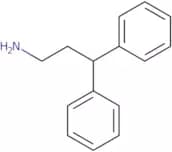
25gTo inquire50gTo inquire100gTo inquire250gTo inquire500gTo inquire-Unit-ggTo inquire3,3-Diphenylpropylamine
CAS:<p>3,3-Diphenylpropylamine is an organic compound that is used in the analytical method for infectious diseases. It has been shown to be stable under acidic conditions and can be hydrolyzed by enzymes to form 3,3-diphenylpropionic acid. This chemical is also an enantiomer of 2,2-diphenylpropanolamine. The hydrochloride salt of 3,3-diphenylpropylamine has been used as a pharmaceutical preparation for the treatment of gastric ulcers. This drug has pharmacokinetic properties that include a long half-life and low oral bioavailability.</p>Formula:C15H17NPurity:Min. 95%Color and Shape:PowderMolecular weight:211.31 g/mol5-Amino-2-nitrobenzoic acid
CAS:<p>5-Amino-2-nitrobenzoic acid is an organic compound that belongs to the class of versatile building block. It is a white solid that has been used as a research chemical, reagent, and specialty chemical for the synthesis of complex compounds and pharmaceuticals. 5-Amino-2-nitrobenzoic acid is also known as 2-amino-5-chlorobenzoic acid (ACBA). It is soluble in water, but insoluble in ethanol. The CAS number for this chemical is 13280-60-9.</p>Formula:C7H6N2O4Molecular weight:182.14 g/molRef: 3D-A-6802
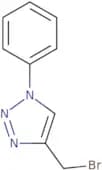
1kgTo inquire100gTo inquire250gTo inquire500gTo inquire2500gTo inquire-Unit-ggTo inquire4-(Bromomethyl)-1-phenyl-1H-1,2,3-triazole
CAS:<p>4-(Bromomethyl)-1-phenyl-1H-1,2,3-triazole (4BPHT) is a versatile building block for organic synthesis. It is a speciality chemical that can be used as a reagent or a research chemical. 4BPHT has been used in the synthesis of complex compounds and has been shown to be useful in the preparation of high quality compounds. 4BPHT is also an intermediate for the synthesis of useful scaffolds and can be used as a reaction component.</p>Formula:C9H8BrN3Purity:Min. 95%Color and Shape:PowderMolecular weight:238.08 g/mol3-[5-(Pyridin-2-yl)-1,3,4-oxadiazol-2-yl]propanoic acid
CAS:<p>Versatile small molecule scaffold</p>Formula:C10H9N3O3Purity:Min. 95%Color and Shape:PowderMolecular weight:219.2 g/mol5-Amino-2-nitrobenzoic acid
CAS:<p>5-Amino-2-nitrobenzoic acid is a versatile compound that can be used as a reagent, a reaction component, or as a useful scaffold in research. It reacts with alcohols to produce esters and amides. The high quality of this chemical makes it suitable for use in many different reactions. CAS No. 13280-60-9</p>Formula:C7H6N2O4Molecular weight:182.14 g/molRef: 3D-A-6803
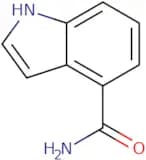
1kgTo inquire100gTo inquire250gTo inquire500gTo inquire2500gTo inquire-Unit-ggTo inquire1H-Indole-4-carboxamide
CAS:1H-Indole-4-carboxamide is a hydrogen bond inhibitor that has anticancer activity. It inhibits the growth of cancer cells by interacting with alkoxycarbonyl groups and carboxyalkyl groups in proteins. In addition, it was found to have synergistic effects when combined with Jak2 inhibitors or diazepine derivatives. 1H-Indole-4-carboxamide has been shown to inhibit the tyrosine kinase activity of the JAK2 protein and inhibit cell proliferation in murine melanoma cells.Formula:C9H8N2OPurity:Min. 95%Color and Shape:PowderMolecular weight:160.17 g/mol(Acetyloxy)(furan-2-yl)methyl acetate
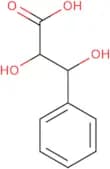
CAS:<p>Acetyloxy(furan-2-yl)methyl acetate is a hydrazone molecule that is used in pharmaceutical preparations. It is synthesized by the condensation of crotonylidene and acetyloxyacetic acid. This compound has shown promising anticancer activity with an activation energy of 8.3 kcal/mol for the formation of the reactive species. Acetyloxy(furan-2-yl)methyl acetate has also been shown to be effective against methicillin resistant Staphylococcus aureus, although it does not have any activity against Gram positive bacteria such as Mycobacterium tuberculosis or Mycobacterium avium complex.</p>Formula:C9H10O5Purity:Min. 95%Color and Shape:PowderMolecular weight:198.17 g/mol2,3-Dihydroxy-3-phenylpropanoic acid
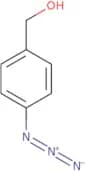
CAS:<p>2,3-Dihydroxy-3-phenylpropanoic acid is a monocarboxylic acid and a benzenes. It has been shown to have antimicrobial properties against bacteria such as Staphylococcus aureus, Proteus vulgaris, and Klebsiella pneumoniae. The monocarboxylic acid inhibits bacterial growth by binding to the beta subunit of the enzyme DNA gyrase, which is necessary for DNA replication. 2,3-Dihydroxy-3-phenylpropanoic acid also binds to the beta subunit of the enzyme RNA polymerase and prevents mRNA synthesis, thus inhibiting protein synthesis in bacteria. !-- --> !-- --> !-- --> !-- --> !-- --> !-- --> !-- --></p>Formula:C9H10O4Purity:Min. 95%Color and Shape:PowderMolecular weight:182.17 g/mol(4-Azidophenyl)methanol
CAS:<p>4-Azidophenylmethanol is a nucleophilic amine that can be synthesized from the reaction of an azide with a methoxide. 4-Azidophenylmethanol can be used to generate nitro groups in organic synthesis. It has also been shown to have cytotoxic activity against prostate cancer cells and malignant brain cancer. 4-Azidophenylmethanol also has the ability to react with squamous carcinoma cells, forming methides and causing cell death. This chemical is stable at low temperatures and does not react with water.</p>Formula:C7H7N3OPurity:Min. 95%Color and Shape:PowderMolecular weight:149.15 g/mol


![(2R)-4-Methyl-2-[2-oxo-2-[(phenylmethoxy)amino]ethyl]pentanoic acid](/_next/image/?url=https%3A%2Fstatic.cymitquimica.com%2Fproducts%2F3D%2Fthumb-webp%2FB-9970.webp&w=3840&q=75)




![1-[3-(Trifluoromethyl)phenyl]cyclobutan-1-amine](/_next/image/?url=https%3A%2Fstatic.cymitquimica.com%2Fproducts%2F3D%2Fthumb-webp%2FUTB21835.webp&w=3840&q=75)


![3-[5-(Pyridin-2-yl)-1,3,4-oxadiazol-2-yl]propanoic acid](/_next/image/?url=https%3A%2Fstatic.cymitquimica.com%2Fproducts%2F3D%2Fthumb-webp%2FIMB68525.webp&w=3840&q=75)