Building Blocks
This section contains fundamental products for the synthesis of organic and biological compounds. Building blocks are the essential starting materials used to construct complex molecules through various chemical reactions. They play a critical role in drug discovery, material science, and chemical research. At CymitQuimica, we offer a diverse range of high-quality building blocks to support your innovative research and industrial projects, ensuring you have the essential components for successful synthesis.
Subcategories of "Building Blocks"
- Boronic Acids & Boronic Acid Derivatives(5,756 products)
- Chiral Building Blocks(1,242 products)
- Hydrocarbon Building Blocks(6,095 products)
- Organic Building Blocks(61,055 products)
Found 199650 products of "Building Blocks"
Sort by
Purity (%)
0
100
|
0
|
50
|
90
|
95
|
100
4-Hydroxy-2-methoxybenzaldehyde
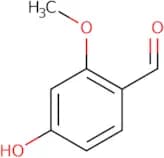
CAS:<p>Echinatin is a benzaldehyde derivative that is found in the roots of Echinacea purpurea. It is a phenolic compound with a carbonyl group and two benzyl groups. 4-Hydroxy-2-methoxybenzaldehyde has been shown to have photophysical, cell culture, and functional group properties. This compound is used as a precursor for the production of echinatin and other plant polyphenols such as malonic acid. The biosynthesis of 4-hydroxy-2-methoxybenzaldehyde begins with the oxidation of cinnamic acid by cytochrome P450 monooxygenase to form cinnamoyl CoA. The enzyme cinnamate decarboxylase then converts this intermediate to p-hydroxybenzoic acid, which is then hydroxylated to form 4-hydroxy-2-methoxybenzaldehyde.</p>Formula:C8H8O3Purity:Min. 95%Color and Shape:PowderMolecular weight:152.15 g/mol1-Benzyl-1,2,3,4-tetrahydroisoquinoline hydrochloride
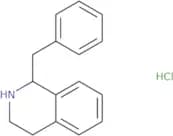
CAS:<p>1-Benzyl-1,2,3,4-tetrahydroisoquinoline hydrochloride is a drug that has been shown to have chronic toxicity in monkeys. It has been injected subcutaneously for the treatment of fascicularis and has induced parkinsonism as a symptom. The chronic effects of this drug on humans are not well known. Further investigations are required to determine whether 1-Benzyl-1,2,3,4-tetrahydroisoquinoline hydrochloride induces Parkinsonism in humans.</p>Formula:C16H17N•HClPurity:Min. 95%Color and Shape:PowderMolecular weight:259.77 g/mol2-tert-Butylcyclobutan-1-one
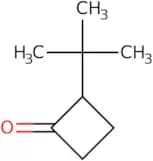
CAS:<p>2-tert-Butylcyclobutan-1-one is a research chemical that is used to study the regioselectivity and carbonyl reactivity of nucleophilic substitution reactions. This compound is synthesized by the reaction of benzannulation with cyclobutanone and stabilizes reactive carbonyl groups, which can be used for mechanistic studies. The mechanism of this reaction has been studied and it has been found that the stabilization of the carbonyl group is due to an intramolecular hydrogen bond between the carbonyl oxygen and the hydroxyl group on C2. 2-tert-Butylcyclobutan-1-one can be used as a biomolecular building block in synthetic organic chemistry.</p>Formula:C8H14OPurity:Min. 95%Color and Shape:Clear LiquidMolecular weight:126.2 g/mol2-Amino-6-bromo-4-fluorophenol
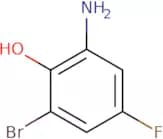
CAS:<p>2-Amino-6-bromo-4-fluorophenol is a reagent that is used in the synthesis of complex compounds. It is also a useful intermediate for the production of fine chemicals and speciality chemicals. This chemical is used as a building block in the synthesis of versatile building blocks, which are needed to produce speciality chemicals such as pharmaceuticals, agrochemicals, fragrances, and dyes. 2-Amino-6-bromo-4-fluorophenol has been used as a reaction component in the synthesis of various organic compounds. It can be synthesized from phenol or aniline via reductive amination.</p>Formula:C6H5BrFNOPurity:Min. 95 Area-%Color and Shape:PowderMolecular weight:206.01 g/mol2-(Nitromethylidene)-1,3-thiazinane
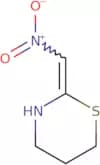
CAS:<p>2-(Nitromethylidene)-1,3-thiazinane is a chemical compound that has been shown to have chronic toxic effects in animal studies. It binds to the ryanodine receptor and inhibits the release of calcium from the sarcoplasmic reticulum, which may lead to an increase in acetylcholine, a neurotransmitter involved in many aspects of brain function. 2-(Nitromethylidene)-1,3-thiazinane has also been shown to inhibit the activity of neonicotinoids, insecticides that are used for agricultural and veterinary purposes. This compound is structurally similar to other non-competitive inhibitors of acetylcholine esterase, such as piperonyl butoxide.</p>Formula:C5H8N2O2SPurity:Min. 95%Color and Shape:PowderMolecular weight:160.2 g/mol2-Iodo-4-phenyl-1,3-oxazole
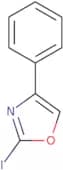
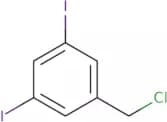
CAS:<p>Versatile small molecule scaffold</p>Formula:C9H6INOPurity:Min. 95%Color and Shape:PowderMolecular weight:271.05 g/mol1-(Chloromethyl)-3,5-diiodobenzene
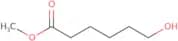
CAS:<p>1-(Chloromethyl)-3,5-diiodobenzene is a versatile and high quality chemical building block that is useful for research purposes. It can be used as a reagent or speciality chemical in the synthesis of other compounds. This compound has been shown to be an intermediate for the synthesis of more complex compounds, such as pharmaceuticals, agrochemicals, and fine chemicals. 1-(Chloromethyl)-3,5-diiodobenzene has many uses in organic chemistry including as a reaction component or scaffold for the construction of complex molecules.</p>Formula:C7H5ClI2Purity:Min. 95%Color and Shape:PowderMolecular weight:378.37 g/molMethyl 6-hydroxyhexanoate
CAS:<p>Methyl 6-hydroxyhexanoate is a reaction intermediate in the synthesis of glycol ethers and polycarboxylic acids. It is also used as a precursor for monoclonal antibodies for cancer therapy. Methyl 6-hydroxyhexanoate reacts with metal ions to form hydrogen bonds, which are important in the stabilization of the covalent bond between the two compounds. This reaction is catalyzed by an enzyme called lipase. The rate of this reaction is increased by adding glycosidation, which increases the number of hydrogen bonding sites on the compound. Methyl 6-hydoxyhexanoate can also be produced from methyl hydroxy and glycol ethers through a reaction that involves metal ion, glycosidation, and a lipase. The antigenicity of methyl 6-hydroxyhexanoate can be altered by changing its carboxyl group to a benzyl group.</p>Formula:C7H14O3Purity:Min. 95%Molecular weight:146.18 g/moltert-Butyl octahydrocyclopenta[c]pyrrol-4-ylcarbamate
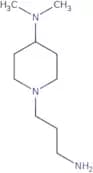
CAS:<p>Tert-Butyl octahydrocyclopenta[c]pyrrol-4-ylcarbamate is a versatile building block that is a useful intermediate. It can be used as an additive in the synthesis of pharmaceuticals and other organic compounds. Tert-Butyl octahydrocyclopenta[c]pyrrol-4-ylcarbamate has been shown to possess antiviral activity, which may be due to its ability to inhibit viral DNA polymerase.</p>Formula:C12H22N2O2Purity:Min. 95%Color and Shape:PowderMolecular weight:226.32 g/mol1-(3-Aminopropyl)-N,N-dimethylpiperidin-4-amine
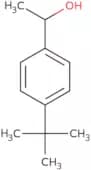
CAS:<p>Versatile small molecule scaffold</p>Formula:C10H23N3Purity:Min. 95%Color and Shape:PowderMolecular weight:185.31 g/mol1-(4-tert-Butylphenyl)ethan-1-ol
CAS:<p>1-(4-tert-Butylphenyl)ethan-1-ol is a reagent, complex compound, useful intermediate, and fine chemical. It has CAS No. 34386-42-0 and is a useful scaffold for the synthesis of speciality chemicals. 1-(4-tert-Butylphenyl)ethan-1-ol is a versatile building block that can be used in the synthesis of many different compounds. It is also an important reaction component for the synthesis of many organic compounds.</p>Formula:C12H18OPurity:Min. 95%Color and Shape:PowderMolecular weight:178.27 g/molMethyl 4-(2-chloroethyl)benzoate
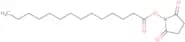
CAS:<p>Versatile small molecule scaffold</p>Formula:C10H11ClO2Purity:Min. 95%Molecular weight:198.65 g/molN-Succinimidyl myristate
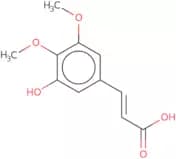
CAS:<p>N-Succinimidyl myristate is a long-chain fatty acid that contains a sulfur atom at its head. It is used in the production of diagnostic products and insulin analogs, as well as in the industrial production of organic solvents. N-Succinimidyl myristate reacts with serum albumin, forming an activated product that can be used in diagnostic tests. This reaction product is also used to bind proteins to fluorine atoms for use in industrial processes.</p>Formula:C18H31NO4Purity:Min. 95%Color and Shape:PowderMolecular weight:325.44 g/mol3,4-Dimethoxy-5-hydroxycinnamic acid
CAS:<p>3,4-Dimethoxy-5-hydroxycinnamic acid is a monoterpenoid indole alkaloid that belongs to the class of biochemical compounds. It is a promiscuous compound and can be found in many plants, such as coffee beans, black pepper, cinnamon, and thyme. 3,4-Dimethoxy-5-hydroxycinnamic acid has been shown to have antimicrobial properties against bacteria and fungi. The metabolomics study showed that this compound may also have anti-inflammatory effects. 3,4-Dimethoxy-5-hydroxycinnamic acid was shown to enhance the transcription of ferulic acid in E. coli cells. This compound was also shown to decrease the levels of transcripts for genes involved in lipid metabolism and fatty acid biosynthesis in human liver cells.</p>Formula:C11H12O5Purity:Min. 98 Area-%Color and Shape:PowderMolecular weight:224.21 g/mol2,3-Dihydroxy-4-methoxybenzaldehyde
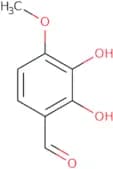
CAS:<p>2,3-Dihydroxy-4-methoxybenzaldehyde is the oxidized form of 2,3-dihydroxybenzaldehyde. It has been used in biological studies to investigate the biosynthetic pathways of reductoisomerase and analytical methods for detecting hydrogen bonds in samples. This chemical can also be found in urine samples as a metabolite of adenine nucleotide and polypeptides. The chemical has been shown to have health benefits, such as being a recombinant that helps cell culture.</p>Formula:C8H8O4Purity:Min. 95%Color and Shape:PowderMolecular weight:168.15 g/mol3,5-Dihydroxy-4-methylbenzoic acid methyl ester
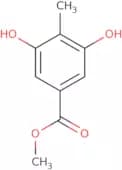
CAS:<p>3,5-Dihydroxy-4-methylbenzoic acid methyl ester is a fine chemical that is used as a versatile building block in the synthesis of pharmaceuticals, agrochemicals and other chemicals. It can be used as an intermediate in the synthesis of organic compounds and research chemicals. This compound is also used as a reaction component in organic syntheses and is often found in speciality chemicals. 3,5-Dihydroxy-4-methylbenzoic acid methyl ester is soluble in most solvents and has high purity. It is a complex compound that can be used as a useful building block or reagent for many different reactions.</p>Formula:C9H10O4Purity:Min. 95%Color and Shape:PowderMolecular weight:182.17 g/mol2,4-Diaminobenzoic acid dihydrochloride
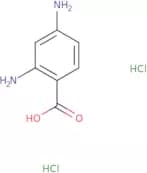
CAS:<p>2,4-Diaminobenzoic acid dihydrochloride is a versatile building block for complex compounds. This compound can be used as a research chemical and is also a reagent and speciality chemical. 2,4-Diaminobenzoic acid dihydrochloride has been used in the synthesis of many useful compounds, including pharmaceuticals and agrochemicals. It is also an intermediate in the synthesis of some pharmaceuticals and agrochemicals. 2,4-Diaminobenzoic acid dihydrochloride can be used as a scaffold to produce new molecules that are potentially useful as drugs or other chemicals.</p>Formula:C7H8N2O2•(HCL)2Purity:Min. 95%Color and Shape:Off-White PowderMolecular weight:225.07 g/mol3,4-Dihydroxy-6-nitrobenzaldehyde
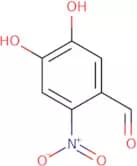
CAS:3,4-Dihydroxy-6-nitrobenzaldehyde is a nitrite that can be used to produce nitric acid. It can also be used in the synthesis of caffeic acid and protocatechuic aldehyde. This molecule is also a catalyst for the conversion of 3,4-dihydroxybenzoic acid to chloride and purine derivatives. 3,4-Dihydroxy-6-nitrobenzaldehyde is nucleophilic and can react with an electron pair donor such as methyl ester or dimerization. The product of this reaction is an unsaturated compound called hyperuricemic mice.Formula:C7H5NO5Purity:Min. 95%Color and Shape:Yellow PowderMolecular weight:183.12 g/mol2,6-Dinitro-4-methylaniline
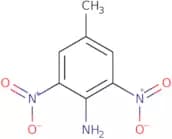
CAS:<p>2,6-Dinitro-4-methylaniline is an amide that has been shown to induce cancer in animals. It has a high affinity for nucleic acids and forms covalent bonds with DNA. 2,6-Dinitro-4-methylaniline is metabolized by the liver and excreted by the kidneys into urine, where it can be detected in urine samples. This compound has been shown to bioconcentrate in organisms and accumulate in tissues as well as activate radiation. The activation of this compound is dose dependent and may be due to its ability to form covalent bonds with DNA.</p>Formula:C7H7N3O4Purity:Min. 95%Color and Shape:PowderMolecular weight:197.15 g/mol2,4-Dimethoxy-5-methylbenzaldehyde
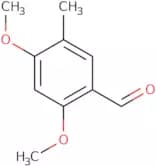
CAS:<p>2,4-Dimethoxy-5-methylbenzaldehyde is an aryl aldehyde that can be synthesized from 2,4-dimethoxyphenol and methyl benzoate. It can also be produced by condensation of benzaldehyde with chloroform in the presence of zinc chloride. This compound is used in the production of various pharmaceuticals, including antihistamines, antidepressants, and antipsychotics.</p>Formula:C10H12O3Purity:Min. 95%Color and Shape:PowderMolecular weight:180.2 g/mol

![tert-Butyl octahydrocyclopenta[c]pyrrol-4-ylcarbamate](/_next/image/?url=https%3A%2Fstatic.cymitquimica.com%2Fproducts%2F3D%2Fthumb-webp%2FKHA69312.webp&w=3840&q=75)