Building Blocks
This section contains fundamental products for the synthesis of organic and biological compounds. Building blocks are the essential starting materials used to construct complex molecules through various chemical reactions. They play a critical role in drug discovery, material science, and chemical research. At CymitQuimica, we offer a diverse range of high-quality building blocks to support your innovative research and industrial projects, ensuring you have the essential components for successful synthesis.
Subcategories of "Building Blocks"
- Boronic Acids & Boronic Acid Derivatives(5,778 products)
- Chiral Building Blocks(1,242 products)
- Hydrocarbon Building Blocks(6,098 products)
- Organic Building Blocks(61,098 products)
Found 199594 products of "Building Blocks"
Sort by
Purity (%)
0
100
|
0
|
50
|
90
|
95
|
100
Indole-3-acetic acid
CAS:<p>Plant growth hormone. Regulates cell membrane electron transport and proton flux, plays important roles in a number of plant activities, including: development of the embryo, leafformation, phototropism, gravitropism, apical dominance, fruit development, abscission, root initiation.</p>Formula:C10H9NO2Purity:Min. 99 Area-%Molecular weight:175.19 g/mol4-Acetamidobenzoic acid
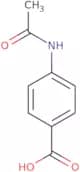
CAS:<p>4-Acetamidobenzoic acid is an aromatic organic compound that is a precursor to many pharmaceuticals, such as acetaminophen, amoxicillin, dapsone, and sulfonamide. It is an intermediate in the formation of 4-hydroxybenzoic acid from benzoic acid. This molecule is also a component of some types of plastics. The chemical's structure and properties are determined by its coordination geometry, which consists of four nitrogen atoms and one hydroxyl group. 4-Acetamidobenzoic acid has been shown to inhibit the growth of certain bacteria by interfering with their metabolic activity. It has also been found to be active against several infectious diseases such as malaria and tuberculosis. The mechanism behind its effectiveness may be due to the fact that it inhibits bacterial fatty acid synthesis or prevents the production of ATP in mitochondria cells.br>br><br>br>br><br>The reaction solution was heated for 20 minutes at 100</p>Formula:C9H9NO3Color and Shape:White PowderMolecular weight:179.17 g/mol3-Amino-2-naphthoic acid
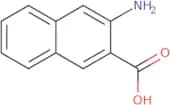
CAS:<p>3-Amino-2-naphthoic acid (3AN) is a metabolite of gabapentin that is excreted in the urine. It has been shown to be present in the urine of patients with chronic kidney disease, and is thought to be involved in the pathogenesis of this disease. 3AN has also been detected in carbon disulphide exposed rats, where it may contribute to renal damage. The biological properties of 3AN are not well understood, but it has been shown to have biochemical properties similar to those of gabapentin. 3AN is active against some bacteria and fungi, but not others. 3AN binds covalently to DNA, forming adducts that inhibit DNA synthesis and transcription. The fluorescence probe methyl anthranilate can be used as a fluorescent dye for detection of 3AN in biological samples.</p>Formula:C11H9NO2Purity:Min. 95%Color and Shape:Yellow PowderMolecular weight:187.19 g/mol2-Amino-3-nitropyridine
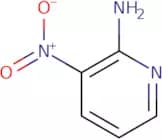
CAS:<p>2-Amino-3-nitropyridine is a synthetic molecule that has the chemical formula C6H7N5O2. It can exist in four different forms, three of which are isomers. These three isomers have different properties, such as melting point and solubility. The synthesis of 2-amino-3-nitropyridine can be achieved through a solid phase synthesis using sodium periodate as the acid catalyst. The reaction mechanism involves nitration of 2-amino pyridine with hydrogen peroxide to produce 3-nitro pyridine followed by hydrolysis to form 2-amino-3 nitropyridine. This reaction produces two dihedral angles in the molecule, one between the nitrogen and oxygen atoms and another between the nitrogen atom and carbon atom bonded to it. The functional groups present on this molecule are an amino group, a nitro group, and an amide group.</p>Purity:Min. 98 Area-%Color and Shape:Yellow SolidMolecular weight:139.11 g/mol1-Adamantanol
CAS:<p>1-Adamantanol is a cyclic molecule with a hydroxyl group. It is produced by the oxidation of 2-methyl-2-adamantanol. 1-Adamantanol has been shown to be an effective substrate for bioremediation in wastewater treatment plants and can be used as a precursor to produce trifluoroacetic acid. The reaction mechanism is thought to involve the oxidation of 1-adamantanol by an oxidizing agent, such as hydrogen peroxide or ozone, to form a radical intermediate that spontaneously reacts with oxygen in solution. The reaction solution can be cooled down or heated up to increase the rate of the reaction. 1-Adamantanol also undergoes thermal expansion when heated up, which may be due to its high boiling point.</p>Formula:C10H16OPurity:Min. 98.5%Color and Shape:White PowderMolecular weight:152.24 g/mol3-Formylindole-5-carboxylic acid methyl ester
CAS:<p>3-Formylindole-5-carboxylic acid methyl ester is a chemical compound that can be used as a building block or intermediate for the synthesis of more complex compounds. 3-Formylindole-5-carboxylic acid methyl ester has a high purity and is an excellent reagent for use in research. This chemical may also be used as a starting material for the synthesis of speciality chemicals and fine chemicals.</p>Formula:C11H9NO3Purity:Min. 98.0 Area-%Molecular weight:203.20 g/mol5-Fluoroindole
CAS:<p>5-Fluoroindole is a reagent that can be used in organic synthesis. It can be used to synthesize a variety of compounds, including pharmaceuticals and agrochemicals. 5-Fluoroindole is also useful as an intermediate for the synthesis of complex molecules or fine chemicals. 5-Fluoroindole can be used as a building block for the preparation of other chemical compounds. It is a versatile building block with many applications in research and industry.</p>Formula:C8H6FNMolecular weight:135.14 g/mol1-(2,3-Difluorophenyl)ethan-1-amine hydrochloride
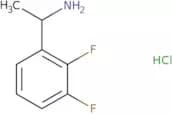
CAS:<p>1-(2,3-Difluorophenyl)ethan-1-amine hydrochloride is a high quality chemical. It is a reagent that can be used as an intermediate in the synthesis of complex compounds and fine chemicals. This compound is also a useful scaffold for the development of new drugs and novel materials. 1-(2,3-Difluorophenyl)ethan-1-amine hydrochloride is also a versatile building block for reactions in organic chemistry. It is a speciality chemical that can be used as a research chemical or reaction component for synthetic organic chemistry.</p>Formula:C8H10ClF2NPurity:Min. 95%Color and Shape:PowderMolecular weight:193.62 g/moltert-Butyl N-(1-methylpiperidin-4-yl)carbamate
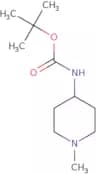
CAS:<p>Versatile small molecule scaffold</p>Formula:C11H22N2O2Purity:Min. 95%Color and Shape:PowderMolecular weight:214.3 g/mol5-(4-Chloro-phenyl)-2-methyl-2H-pyrazole-3-carboxylic acid
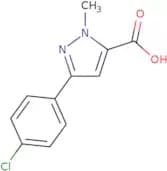
CAS:<p>Versatile small molecule scaffold</p>Formula:C11H9ClN2O2Purity:Min. 95%Molecular weight:236.65 g/molCyclohexylmethanethiol
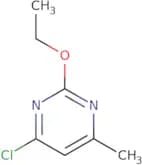
CAS:<p>Cyclohexylmethanethiol is a reactive chemical that is a colorless liquid with a strong odor. It is an organic compound belonging to the group of polybasic, hydroxamic acids and has been found to be an antimicrobial agent. Cyclohexylmethanethiol reacts with the hydroxyl groups on the surface of bacteria and damages the cell wall by disrupting the cross-linking of peptidoglycan. This reaction product inhibits bacterial growth by binding to proteins in the cell membrane, which prevents essential molecules from entering or exiting the cell. Cyclohexylmethanethiol also reacts with alkylthio groups on proteins in bacterial cells, which alters their function and leads to protein denaturation.</p>Formula:C7H14SPurity:Min. 95%Molecular weight:130.25 g/mol4-Chloro-2-ethoxy-6-methyl-pyrimidine
CAS:<p>Versatile small molecule scaffold</p>Formula:C7H9ClN2OPurity:Min. 95%Color and Shape:PowderMolecular weight:172.61 g/mol1H-Pyrrolo[2,3-c]pyridin-7-amine
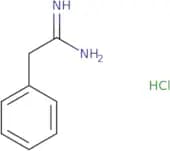
CAS:<p>Versatile small molecule scaffold</p>Formula:C7H7N3Purity:Min. 95%Color and Shape:PowderMolecular weight:133.15 g/mol2-Phenylethanimidamide hydrochloride
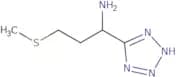
CAS:<p>2-Phenylethanimidamide hydrochloride is a chemical compound that is used as an insecticide and acaricide. It is a derivative of benzonitrile, which contains a chlorine atom. 2-Phenylethanimidamide hydrochloride is typically sprayed on plants to control pests such as mites, aphids, and beetles. This product can be mixed with other chemicals that help it stay on the plant for longer periods of time. The use of 2-phenylethanimidamide hydrochloride does not pose any health risks to humans or animals when use according to the directions on the label.</p>Formula:C8H10N2•HClPurity:Min. 95%Color and Shape:PowderMolecular weight:170.64 g/mol(1S)-3-(Methylsulfanyl)-1-(2H-1,2,3,4-tetrazol-5-yl)propan-1-amine
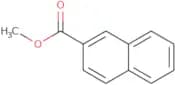
CAS:Versatile small molecule scaffoldFormula:C5H11N5SPurity:Min. 95%Color and Shape:PowderMolecular weight:173.24 g/molMethyl 2-naphthoate
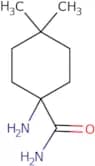
CAS:<p>Methyl 2-naphthoate is a chinese herb that has been used as a traditional medicine to treat inflammatory diseases. Methyl 2-naphthoate contains a carbonyl group, which is an important part of the molecule. The 13C NMR spectroscopy and X-ray crystal structures reveal the presence of a hydrogen bond between the carbonyl group and water molecule. The kinetic data demonstrate that methyl 2-naphthoate has significant cytotoxicity in vitro. These results were confirmed by in vivo experiments using mice with myeloma cells. Moreover, methyl 2-naphthoate was found to significantly suppress pro-inflammatory factors such as TNF-α and IL-1β.<br>Methyl 2-naphthoate is an analytical method for detecting carboxylic acid derivatives in organic solvents because it reacts with thiourea to produce colorless crystals of methyl naphthylamide.</p>Formula:C10H7CO2CH3Purity:Min. 95%Color and Shape:PowderMolecular weight:186.21 g/mol1-Amino-4,4-dimethylcyclohexane-1-carboxamide
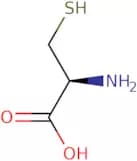
CAS:<p>Versatile small molecule scaffold</p>Formula:C9H18N2OPurity:Min. 95%Color and Shape:PowderMolecular weight:170.25 g/molD-Cysteine
CAS:<p>D-Cysteine is a versatile building block for the synthesis of complex compounds and peptides.</p>Formula:C3H7NO2SMolecular weight:121.16 g/mol3-(Cyclohexylamino)-1-propanesulfonic acid sodium salt
CAS:<p>CAS No. 105140-23-6 is a cyclic sulfonic acid that is used as a reagent, building block, and intermediate in the synthesis of organic compounds. It is soluble in water and has a high melting point, making it useful for research purposes. CAS No. 105140-23-6 is also an excellent scaffold for complex compounds with many functional groups, making it versatile for use in reactions and syntheses.</p>Formula:C9H18NO3SNaMolecular weight:243.3 g/mol6-Cyanoindole
CAS:<p>6-Cyanoindole is a reactive intermediate in organic synthesis. It is used as a building block for the synthesis of other chemical compounds.</p>Formula:C9H6N2Molecular weight:142.16 g/mol





![1H-Pyrrolo[2,3-c]pyridin-7-amine](/_next/image/?url=https%3A%2Fstatic.cymitquimica.com%2Fproducts%2F3D%2Fthumb-webp%2FQGA66936.webp&w=3840&q=75)