Building Blocks
This section contains fundamental products for the synthesis of organic and biological compounds. Building blocks are the essential starting materials used to construct complex molecules through various chemical reactions. They play a critical role in drug discovery, material science, and chemical research. At CymitQuimica, we offer a diverse range of high-quality building blocks to support your innovative research and industrial projects, ensuring you have the essential components for successful synthesis.
Subcategories of "Building Blocks"
- Boronic Acids & Boronic Acid Derivatives(5,756 products)
- Chiral Building Blocks(1,242 products)
- Hydrocarbon Building Blocks(6,095 products)
- Organic Building Blocks(61,055 products)
Found 199650 products of "Building Blocks"
Sort by
Purity (%)
0
100
|
0
|
50
|
90
|
95
|
100
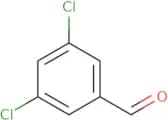
3,5-Dichlorobenzaldehyde
CAS:<p>3,5-Dichlorobenzaldehyde is an organic compound with the formula CHClO. It is a colorless liquid that smells like freshly cut grass. 3,5-Dichlorobenzaldehyde is used in organic synthesis as an electrophile for the preparation of substituted benzoquinones and other heterocycles. It is also used to prepare aromatic amines via aldol condensation with ketones. In addition, it can be used to generate azides from nitroarenes or nitroalkanes in the presence of sodium azide or potassium azide. Finally, it can be used to synthesize molybdenum compounds such as molybdic acid and ammonium molybdate.</p>Formula:C7H4Cl2OPurity:Min. 95%Color and Shape:PowderMolecular weight:175.01 g/mol2,6-Dihydroxybenzaldehyde
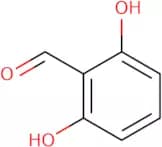
CAS:<p>2,6-Dihydroxybenzaldehyde is a chemical compound that has been used as an intermediate in the synthesis of other chemicals. It is also used as a precursor for benzaldehyde and benzoic acid. 2,6-Dihydroxybenzaldehyde can be synthesized by reacting sodium carbonate with pluronic F127 in the presence of cationic surfactant. The surface methodology used in this process involves the use of hydrophobic molecules to form micelles and liposomes on the surface of the electrode. The interaction between these micelles and liposomes is pH dependent. This reaction causes an increase in hydrogen ions, which leads to an increase in conductivity at acidic pH values. Electrochemical impedance spectroscopy (EIS) results show that 2,6-dihydroxybenzaldehyde reacts with high concentrations of salt and water vapor. FTIR spectroscopy shows that it has two hydroxyl groups and one double</p>Formula:C7H6O3Purity:Min. 95%Color and Shape:PowderMolecular weight:138.12 g/mol1,4-Diisopropenylbenzene
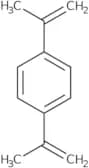
CAS:<p>1,4-Diisopropenylbenzene is a hydrocarbon solvent that is used as a reagent in organic synthesis. It is reactive and can react with an inorganic acid such as hydrochloric acid to form an ester. The reaction time of 1,4-diisopropenylbenzene with an alkali metal hydroxide such as magnesium hydroxide is about one hour at room temperature. The product of this reaction is the magnesium salt of the corresponding carboxylic acid. 1,4-Diisopropenylbenzene has been shown to be toxic to mouse melanoma cells and has been used for cationic polymerization reactions. It has also been shown to be reactive with vinylene and other monomers, forming gels that are useful in making rubber products.</p>Formula:C12H14Purity:Min. 95%Color and Shape:PowderMolecular weight:158.24 g/mol4,4'-Dimethoxybenzophenone
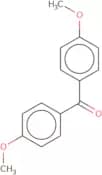
CAS:<p>4,4'-Dimethoxybenzophenone is a process optimization agent that can be used to measure the concentration of basic proteins in human serum. It is also used as a chemical intermediate in the production of polymers. In this application, 4,4'-dimethoxybenzophenone undergoes an irreversible oxidation reaction with trifluoroacetic acid to form 4-methoxybenzoic acid and hydrogen peroxide. The linear model for this reaction has been shown to be:<br>The rate of the reaction depends on the concentration of homogeneous catalysts, such as metal surfaces or hydrogen bonds.</p>Formula:C15H14O3Purity:Min. 95%Color and Shape:PowderMolecular weight:242.27 g/mol(+)-Diacetyl-D-tartaric acid
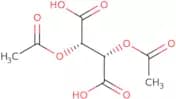
CAS:<p>(+)-Diacetyl-D-tartaric acid is a chiral organic compound that is soluble in organic solvents. It can be used as a catalyst for the asymmetric synthesis of organic compounds and has been shown to cleave bonds with high stereoselectivity. (+)-Diacetyl-D-tartaric acid also exhibits mesomorphic properties, meaning it changes from liquid to solid and vice versa at certain temperatures. The optical activity of this compound can be seen by its magnetic resonance spectrum, which displays two peaks at different wavelengths. This molecule has been shown to have potential uses in microscopy, as well as for the preparation of monomers for magnetic materials.</p>Formula:C8H10O8Purity:Min. 95%Color and Shape:White PowderMolecular weight:234.16 g/mol4-Chlorophenylurea
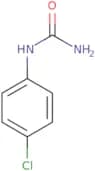
CAS:<p>4-Chlorophenylurea is an urea derivative that has been shown to inhibit the activity of a number of enzymes. It has been used as a chemical intermediate and in the synthesis of other compounds. 4-Chlorophenylurea is stable in dry environments and does not react with air. The enzyme hydrolysis can be inhibited by adding piperonyl butoxide, which prevents the cleavage of the urea ring. The enzyme's activity can also be suppressed by adding acidic compounds such as hydrochloric acid, which increases its activation energy. The chemical structure of 4-Chlorophenylurea contains a carbonyl group and two chloro groups that are responsible for its inhibitory effect on tumour cells. This compound can also be analysed using liquid chromatography methods, which provide structural data about the product being tested.</p>Formula:C7H7ClN2OPurity:Min. 95%Color and Shape:PowderMolecular weight:170.6 g/mol3',5'-Dimethoxyacetophenone
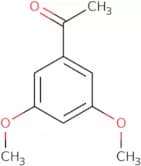
CAS:<p>3',5'-Dimethoxyacetophenone is a compound that is used as an analytical reagent, corrosion inhibitor, and a catalyst. It has been categorized as a hazardous substance by the U.S. Environmental Protection Agency (EPA) and is on the list of substances of very high concern in Europe. 3',5'-Dimethoxyacetophenone is used to prevent corrosion in metals because it reacts with chloride ions to form a protective layer of hydrochloric acid and fatty acid esters. This product has medicinal values because it can be used to synthesize flavonoids or fatty acids.</p>Formula:C10H12O3Purity:Min. 95%Color and Shape:PowderMolecular weight:180.2 g/mol2,3-Dibromopropene - stabilized with copper chip
CAS:<p>2,3-Dibromopropene - stabilized with copper chip (2,3-DBPC) is a novel bromination reagent that can be used for the synthesis of polypeptides. This compound has been shown to react with acyl halides in an asymmetric synthesis. The reaction mechanism is thought to be via the addition of 2,3-DBPC to the carbonyl group of an acyl halide and subsequent elimination of bromoethane. 2,3-DBPC also reacts with ethanolamine in the presence of carbon disulphide and x-ray diffraction data have shown that this reaction proceeds through a 1,4 addition mechanism.</p>Formula:C3H4Br2Purity:Min. 90 Area-%Color and Shape:Brown Colorless Yellow Clear LiquidMolecular weight:199.87 g/mol3,5-Dimethoxybenzaldehyde
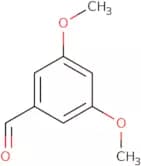
CAS:<p>3,5-Dimethoxybenzaldehyde is a fungicide that can kill fungal cells by inhibiting the synthesis of ergosterol, an important component of the fungal cell membrane. It has been shown to be effective against Cryptococcus neoformans and other fungi. 3,5-Dimethoxybenzaldehyde inhibits mitochondrial superoxide production and the growth of fungi in a model system. The optimum concentration for inhibition was determined in a kinetic and thermodynamic study. This compound has also been shown to have anti-inflammatory properties, which may be due to its ability to inhibit prostaglandin synthesis.</p>Formula:C9H10O3Purity:Min. 98%Color and Shape:PowderMolecular weight:166.17 g/molZ-1,4-diaminobutane·HCl
CAS:<p>Z-1,4-diaminobutane·HCl is a fine chemical that is a useful building block in research and manufacture of pharmaceuticals. It is also used as a reagent and speciality chemical in the production of other chemicals, such as dyes, rubber products, and pesticides. This compound has been shown to be an effective intermediate for the synthesis of complex organic compounds with versatile structures. Z-1,4-diaminobutane·HCl can be used as a scaffold for the construction of various types of molecules.</p>Formula:C12H18N2O2·HClPurity:Min. 95%Color and Shape:White PowderMolecular weight:258.74 g/mol3,5-Dihydroxy-4-acetyltoluene
CAS:<p>3,5-Dihydroxy-4-acetyltoluene is a versatile building block that is used in the production of various pharmaceutical and agrochemical intermediates. It can be used as a reagent for organic synthesis and as a speciality chemical. 3,5-Dihydroxy-4-acetyltoluene has been shown to have high quality and utility. This compound can also be used as a reaction component or scaffold.</p>Formula:C9H10O3Purity:Min. 95%Color and Shape:PowderMolecular weight:166.17 g/mol2,2'-Dithiobis(pyridine-N-oxide)
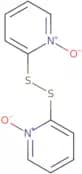
CAS:<p>2,2'-Dithiobis(pyridine-N-oxide) is a chemical compound that has been shown to have anti-inflammatory effects in vitro. It inhibits the production of inflammatory cytokines such as TNF-α and IL-1β in vitro, which are associated with many inflammatory skin diseases. This agent also has an apoptotic effect on cells, leading to cell death by triggering caspase activation. 2,2'-Dithiobis(pyridine-N-oxide) has also been shown to be effective against cancer cells in vitro. This agent may cause cancer by increasing the expression of proapoptotic proteins and decreasing the expression of anti-apoptotic proteins.</p>Formula:C10H8N2O2S2Purity:Min. 98 Area-%Color and Shape:White PowderMolecular weight:252.31 g/mol2-Amino-1-cyclopentene-1-carbonitrile
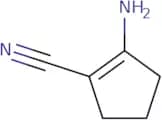
CAS:<p>2-Amino-1-cyclopentene-1-carbonitrile is a chemical compound with the formula CH2N(C=O)CH2NH. It is a white crystalline solid that is soluble in water and polar organic solvents. The compound has been used as an impurity in the synthesis of cyclic polymers, as a transition metal ligand, and as a chroma for dyes. 2-Amino-1-cyclopentene-1-carbonitrile is also used to introduce cyclic groups into polyphosphoric acid and to convert paraformaldehyde to acrylonitrile.<br>2-Amino-1-cyclopentene-1-carbonitrile reacts with hydrocarbons to form adiponitrile and cyclohexanone.</p>Formula:C6H8N2Purity:Min. 95%Color and Shape:PowderMolecular weight:108.14 g/molDisodium 2-naphthol-3,6-disulfonate
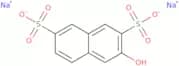
CAS:<p>Disodium 2-naphthol-3,6-disulfonate is a cationic surfactant that reacts with chloride ions to form a gel. It can be used as an inhibitor of corrosion and foaming in the oil industry. Disodium 2-naphthol-3,6-disulfonate has also been shown to have a linear response with fluorescence techniques when it interacts with metal ions. The kinetic data for this reaction is dependent on the concentration of chloride ions, which are generated by hydrochloric acid upon addition of water.</p>Formula:C10H6Na2O7S2Purity:Min. 97 Area-%Color and Shape:PowderMolecular weight:348.26 g/mol3',4'-Dimethylacetophenone
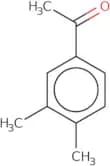
CAS:<p>3',4'-Dimethylacetophenone is a natural product that belongs to the class of salicylates. It is a yellow oily liquid with an odor reminiscent of ocimene, which has been shown to be an attractant for the cotton bollworm (Hirsutum). 3',4'-Dimethylacetophenone is also used in cyclization reactions, such as the conversion of a benzene ring into a cyclohexane ring. This compound can be found in many plants and flowers, including hirsutum, caryophyllene, gossypium, medicago, and chalcone. The molecule can be synthesized in several ways through combinations of different reactants.</p>Formula:C10H12OPurity:Min. 95%Color and Shape:PowderMolecular weight:148.2 g/mol2,5-Dimethoxybenzoic acid
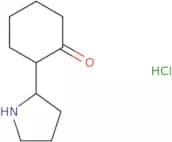
CAS:<p>2,5-Dimethoxybenzoic acid (2,5-DMA) is a plant metabolite that belongs to the group of cinnamic acid derivatives. It can be found in plants and has been shown to have systemic effects. 2,5-DMA is involved in the cycloacylation of protocatechuic acid. This reaction is catalyzed by an enzyme called cyclooxygenase and requires molecular oxygen as a cofactor. 2,5-DMA also forms hydrogen bonds with methoxy groups and other molecules. The monoclonal antibodies against 2,5-DMA have been used for radiation therapy and are effective against cancer cells. Model studies show that 2,5-DMA can be converted into more potent metabolites by the action of cytochrome P450 enzymes or glutathione S-transferases.</p>Formula:C9H10O4Purity:Min. 95%Color and Shape:PowderMolecular weight:182.17 g/mol2-(Pyrrolidin-2-yl)cyclohexan-1-one hydrochloride
CAS:<p>Versatile small molecule scaffold</p>Formula:C10H18ClNOPurity:Min. 95%Color and Shape:PowderMolecular weight:203.71 g/mol3,5-Dimethylbenzoic acid
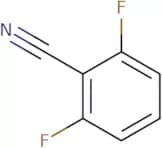
CAS:<p>3,5-Dimethylbenzoic acid is a carboxylic acid that is a member of the 3-carboxybenzenesulfonic acid family. The molecule is formed by the reaction of sodium carbonate with benzene in the presence of water. The compound has a redox potential that is close to zero, which makes it a reducing agent and an excellent hydrogen donor. The compound is soluble in water and has been shown to inhibit plant growth as well as promote plant growth by acting as a growth regulator. This molecule has also been shown to be fluorescent.</p>Formula:C9H10O2Purity:Min. 95%Color and Shape:PowderMolecular weight:150.17 g/mol2,6-Difluorobenzonitrile
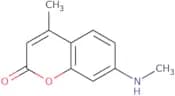
CAS:<p>2,6-Difluorobenzonitrile is a nucleophilic compound that reacts with inorganic acids to form new chemical structures. It has been shown to react with hydrochloric acid, sodium carbonate and phosphotungstic acid. The FT-IR spectroscopy of 2,6-difluorobenzonitrile shows a reaction product with a proton. This means that the molecule is able to transfer a hydrogen ion from one site to another. The reaction between 2,6-difluorobenzonitrile and sodium carbonate produces an insoluble precipitate of sodium phosphate and sodium chloride, which can be analyzed gravimetrically. 2,6-Difluorobenzonitrile has also been shown to have fluorescence properties that are activated by ultraviolet light and naphthalene.</p>Formula:C7H3F2NPurity:Min. 95%Color and Shape:PowderMolecular weight:139.1 g/mol4-Methyl-7-(methylamino)-2H-chromen-2-one
CAS:4-Methyl-7-(methylamino)-2H-chromen-2-one is a fine chemical that is used as a building block in the synthesis of other compounds. It has been used in research as a reagent and in the production of pharmaceuticals. 4-Methyl-7-(methylamino)-2H-chromen-2-one can be used to produce a variety of complex compounds, including those with versatile scaffolds. This compound has been shown to react with many different groups, such as alcohols, amines and thiols, which makes it an excellent intermediate for organic synthesis.Formula:C11H11NO2Purity:Min. 95%Color and Shape:PowderMolecular weight:189.21 g/mol