Building Blocks
This section contains fundamental products for the synthesis of organic and biological compounds. Building blocks are the essential starting materials used to construct complex molecules through various chemical reactions. They play a critical role in drug discovery, material science, and chemical research. At CymitQuimica, we offer a diverse range of high-quality building blocks to support your innovative research and industrial projects, ensuring you have the essential components for successful synthesis.
Subcategories of "Building Blocks"
- Boronic Acids & Boronic Acid Derivatives(5,756 products)
- Chiral Building Blocks(1,242 products)
- Hydrocarbon Building Blocks(6,095 products)
- Organic Building Blocks(61,055 products)
Found 199650 products of "Building Blocks"
Sort by
Purity (%)
0
100
|
0
|
50
|
90
|
95
|
100
[(2-Bromophenyl)sulfamoyl]dimethylamine
CAS:<p>Versatile small molecule scaffold</p>Formula:C8H11BrN2O2SPurity:Min. 95%Color and Shape:PowderMolecular weight:279.16 g/mol1-(5-Propylpyridin-2-yl)ethan-1-one
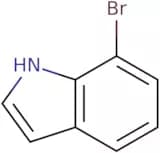
CAS:<p>Versatile small molecule scaffold</p>Formula:C10H13NOPurity:Min. 95%Color and Shape:Clear LiquidMolecular weight:163.2 g/mol7-Bromoindole
CAS:<p>7-Bromoindole is a synthetic compound that has been used as an analog for indole. It has been shown to have some biological activity in vivo, but it is not known if this activity is due to the drug itself or its breakdown products. 7-Bromoindole can be decarboxylated under acid conditions and saponified with sodium hydroxide. The isolated yield of this reaction is about 2 grams per mole of reactant. 7-Bromoindole shows hemolytic activity against human pathogens such as Staphylococcus aureus and Escherichia coli, but not against Bacillus subtilis or Pseudomonas aeruginosa.</p>Formula:C8H6BrNColor and Shape:PowderMolecular weight:196.04 g/mol2-Methyl-3-phenylpyrazine
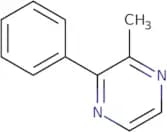
CAS:<p>2-Methyl-3-phenylpyrazine is an organic compound that is a yellow crystalline solid. Its electronic structures are determined by the molecular orbitals, which determine the probability of finding electrons in different regions of space. Excitons are pairs of photons that have been emitted due to the interaction between two molecules, and can be measured with devices such as spectroscopes or photomultipliers. 2-Methyl-3-phenylpyrazine has been used to synthesize carbenes, which are ligands for organometallic compounds. It has also been used in singlet catalysis, where it coordinates with a metal atom to activate another molecule and form a new chemical bond.</p>Formula:C11H10N2Purity:Min. 95%Color and Shape:PowderMolecular weight:170.21 g/molEthopabate - Technical
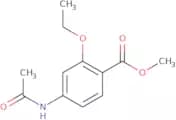
CAS:<p>Ethopabate is a salt of ethopropazine and sodium carbonate. It is used in pharmaceutical preparations as an antiparasitic agent. The chemical composition of the salt is CHNO, with one hydrogen bond between the ethopropazine and sodium carbonate. Ethopabate has been shown to be active against amprolium-resistant coccidia in human serum, as well as being an analytical reagent for detecting monoclonal antibodies. This chemical can be used to prepare a polymeric matrix for use in fluorescence detection or for antimicrobial agents. Hydrochloric acid and UV light are used to synthesize this compound.</p>Formula:C12H15NO4Purity:Min. 95%Color and Shape:White PowderMolecular weight:237.25 g/mol6-Oxa-1-azaspiro[3.5]nonane hydrochloride
CAS:<p>6-Oxa-1-azaspiro[3.5]nonane hydrochloride is a fine chemical that can be used as a versatile building block, useful intermediate, and a reaction component in research and development. It has been shown to have high quality and is a reagent that can be used in the synthesis of complex compounds. CAS No. 1956324-37-0.</p>Formula:C7H14ClNOPurity:Min. 95%Color and Shape:PowderMolecular weight:163.64 g/molBis[rhodium(±,±,±',±'-tetramethyl-1,3-benzenedipropionic Acid)]
CAS:<p>Bis[rhodium(±,±,±',±'-tetramethyl-1,3-benzenedipropionic Acid)] is a reagent that can be used in catalytic organic synthesis. Bis[rhodium(±,±,±',±'-tetramethyl-1,3-benzenedipropionic Acid)] is a stable compound that does not react with most organic solvents. It also has high solubility in many organic solvents. This reagent is toxicological and should be handled with care.</p>Formula:C32H40O8Rh2Purity:Min. 95%Color and Shape:PowderMolecular weight:758.48 g/mol2,2-Diphenylpropionic acid
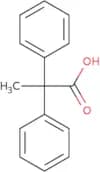
CAS:<p>2,2-Diphenylpropionic acid is an ester of 2,2-diphenylpropanoyl chloride and a carboxylic acid. It is used as a local anesthetic. The electron distribution in the molecule includes one unpaired electron on the carbon atom adjacent to the carboxylic acid group. The thermodynamic stability of this molecule is due to intramolecular hydrogen bonding between the carboxylic acid and ester moieties. This compound has anticholinergic, antimuscarinic, and spermatozoa effects that are due to its ability to inhibit acetylcholine release from neurons. 2,2-Diphenylpropionic acid has been shown to have acidic properties with an approximate pKa of 3.5.</p>Formula:C15H14O2Purity:Min. 95%Color and Shape:PowderMolecular weight:226.27 g/mol[2-Amino-1-(1-methyl-1H-pyrazol-4-yl)ethyl]dimethylamine
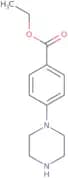
CAS:<p>Versatile small molecule scaffold</p>Formula:C8H16N4Purity:Min. 95%Color and Shape:PowderMolecular weight:168.24 g/mol1-(4-Ethoxycarbonylphenyl)piperazine
CAS:<p>1-(4-Ethoxycarbonylphenyl)piperazine is an enantiopure phosphatase inhibitor. It is used in the treatment of cancer and other life-threatening diseases. 1-(4-Ethoxycarbonylphenyl)piperazine inhibits phosphatases, which are enzymes that catalyze hydrolysis of phosphate groups from substrates. This inhibition leads to a decrease in the production of fatty acids and cholesterol, resulting in a reduction in body mass index. The drug has been shown to be effective against animal models for cancer, with an effective dose of 100 mg/kg intraperitoneally. In addition, 1-(4-ethoxycarbonylphenyl)piperazine has been shown to inhibit cardiac phosphatases and increase cardiac uptake by inhibiting acylation reactions.</p>Formula:C13H18N2O2Purity:Min. 98%Color and Shape:White PowderMolecular weight:234.29 g/mol(2S)-2-(4-Chloro-2-methylphenoxy)propanoic acid
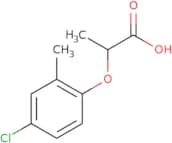
CAS:<p>(2S)-2-(4-Chloro-2-methylphenoxy)propanoic acid (MCPP) is a phenoxy herbicide that is used in the control of annual and perennial broadleaf weeds. It is often found in wastewater treatment plants because it binds to iron ions and can be removed by coagulation, adsorption, or chemical precipitation. MCPP has been shown to produce genotoxic effects in model systems and high values for enzyme activities. The long-term efficacy of MCPP was studied using a bacterial strain with high levels of resistance to this compound. Structural analysis showed that MCPP contains a chlorophenoxy radical, which may contribute to its carcinogenic potential.</p>Formula:C10H11ClO3Purity:Min. 95%Color and Shape:PowderMolecular weight:214.64 g/molEthyl 4-iodobenzoate
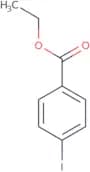
CAS:<p>Ethyl 4-iodobenzoate is an amide that reacts with a variety of substances, including retinoic acid and pemetrexed. It is a reactive substance that can be used in the synthesis of other substances such as iron oxides and transfer mechanism. Ethyl 4-iodobenzoate is also used for the preparation of picolinic acid and crystalline structure. Radical coupling reactions are most common and involve halides, phenyl groups, and aryl halides. The reaction temperature ranges from room temperature to 100 ˚C, while the reaction mechanism varies depending on the type of coupling reaction.</p>Formula:C9H9IO2Purity:Min. 95%Color and Shape:PowderMolecular weight:276.07 g/mol4-Chloro-3-iodoaniline
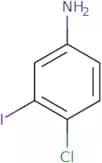
CAS:<p>Versatile small molecule scaffold</p>Formula:C6H5ClINPurity:Min. 95%Molecular weight:253.47 g/mol2,3-Dichloro-5,6-dicyano-1,4-benzoquinone
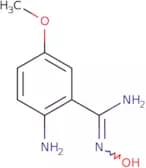
CAS:<p>Please enquire for more information about 2,3-Dichloro-5,6-dicyano-1,4-benzoquinone including the price, delivery time and more detailed product information at the technical inquiry form on this page</p>Formula:C8Cl2N2O2Molecular weight:227.01 g/mol2-Amino-N'-hydroxy-5-methoxybenzene-1-carboximidamide
CAS:<p>2-Amino-N'-hydroxy-5-methoxybenzene-1-carboximidamide (2HMB) is a high quality, versatile building block that can be used as a reagent, building block or scaffold. 2HMB is also a useful intermediate in the synthesis of pharmaceuticals, agrochemicals and fine chemicals. This compound has been shown to have antiviral and anti-inflammatory properties.</p>Formula:C8H11N3O2Purity:Min. 95%Color and Shape:PowderMolecular weight:181.19 g/mol3,5-Dihydroxyacetophenone
CAS:<p>3,5-Dihydroxyacetophenone is a chemical intermediate that is used as a building block in organic synthesis. It can be used to synthesize other chemicals, such as pharmaceuticals, dyes, and perfumes. 3,5-Dihydroxyacetophenone is also an important reagent for the production of α-hydroxyketones. It can react with nucleophiles such as amines or alcohols to form esters or ethers. 3,5-Dihydroxyacetophenone is a versatile building block that can serve as a reaction component in various reactions. This compound is also used as a useful scaffold for the construction of complex molecules.</p>Formula:C8H8O3Molecular weight:152.15 g/mol3,4-Dihydroxybenzaldehyde
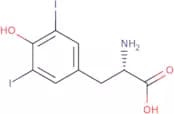
CAS:<p>Please enquire for more information about 3,4-Dihydroxybenzaldehyde including the price, delivery time and more detailed product information at the technical inquiry form on this page</p>Formula:C7H6O3Molecular weight:138.12 g/mol3,5-Diiodo-L-tyrosine dihydrate
CAS:<p>There are many good reasons to eat fish and seafood, one of them is certainly the fact that they are rich in iodine salts, which are a fundamental for the endocrine activity of the thyroid gland. Iodine salts are enzymatically converted into molecular iodine, which adds to tyrosine residues in thyroglobulin forming diiodotyrosine. This is the first step towards the biosynthesis of thyroid hormones triodityronine T3 and tetraiodotyronine T4 which serve important regulatory functions in body metabolism and energy expenditure. Recently, the dietary introduction of potassium iodide and diiodotyrosine were compared in mice showing that diiodotyrosine can also be used effectively as food supplement preventing the potential damage from excessive intake of inorganic iodine salts.</p>Formula:C9H13I2NO5Purity:Min. 95.0 Area-%Molecular weight:469.02 g/mol4-Dimethylamino-2-methoxybenzaldehyde
CAS:<p>4-Dimethylamino-2-methoxybenzaldehyde is a chemical used as a research reagent and intermediate. It can be used to synthesize other compounds, such as pharmaceuticals, pesticides, and agrochemicals. It is also useful in the production of various dyes, pigments, and fragrances, representing effective staining under anaerobic conditions. CAS No. 84562-48-1</p>Formula:C10H13NO2Molecular weight:179.22 g/molRef: 3D-D-4790
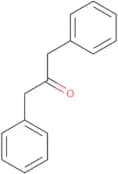
25gTo inquire50gTo inquire100gTo inquire250gTo inquire500gTo inquire-Unit-ggTo inquire1,3-Diphenylacetone
CAS:<p>1,3-Diphenylacetone is a fine chemical that can be used as a building block for research chemicals, as a reagent in organic synthesis, or as a speciality chemical. It is also a versatile building block and has been shown to be useful in the formation of complex compounds. 1,3-Diphenylacetone can react with electrophiles to form new carbon-carbon bonds and has been used in reactions involving nucleophilic substitution, electrophilic addition, and Michael reactions. 1,3-Diphenylacetone is also water soluble and has been shown to be compatible with both ionic and covalent solvents.</p>Formula:C15H14OPurity:Min. 99.0 Area-%Molecular weight:210.28 g/mol
![[(2-Bromophenyl)sulfamoyl]dimethylamine](/_next/image/?url=https%3A%2Fstatic.cymitquimica.com%2Fproducts%2F3D%2Fthumb-webp%2FZNA54050.webp&w=3840&q=75)


![6-Oxa-1-azaspiro[3.5]nonane hydrochloride](/_next/image/?url=https%3A%2Fstatic.cymitquimica.com%2Fproducts%2F3D%2Fthumb-webp%2FGDD32437.webp&w=3840&q=75)
![Bis[rhodium(±,±,±',±'-tetramethyl-1,3-benzenedipropionic Acid)]](/_next/image/?url=https%3A%2Fstatic.cymitquimica.com%2Fproducts%2F3D%2Fthumb-webp%2FUHB05089.webp&w=3840&q=75)
![[2-Amino-1-(1-methyl-1H-pyrazol-4-yl)ethyl]dimethylamine](/_next/image/?url=https%3A%2Fstatic.cymitquimica.com%2Fproducts%2F3D%2Fthumb-webp%2FCWB66676.webp&w=3840&q=75)