Building Blocks
This section contains fundamental products for the synthesis of organic and biological compounds. Building blocks are the essential starting materials used to construct complex molecules through various chemical reactions. They play a critical role in drug discovery, material science, and chemical research. At CymitQuimica, we offer a diverse range of high-quality building blocks to support your innovative research and industrial projects, ensuring you have the essential components for successful synthesis.
Subcategories of "Building Blocks"
- Boronic Acids & Boronic Acid Derivatives(5,756 products)
- Chiral Building Blocks(1,242 products)
- Hydrocarbon Building Blocks(6,095 products)
- Organic Building Blocks(61,051 products)
Found 199813 products of "Building Blocks"
Sort by
Purity (%)
0
100
|
0
|
50
|
90
|
95
|
100
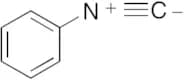
Isocyanobenzene
CAS:Controlled Product<p>Applications Isocyanobenzene is used in the study of the inhibition mechanism of reconstituted cytochrome p-450scc-linked monooxygenase system by antimycotic reagent and other inhibitors.<br> Not a dangerous good if item is equal to or less than 1g/ml and there is less than 100g/ml in the package<br>References Kurokohchi K., et al.: J. Steroid Biochem. Mol. Biol., 42, 287 (1992)<br></p>Formula:C7H5NColor and Shape:NeatMolecular weight:103.12Fenclozic Acid
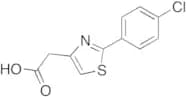
CAS:Controlled Product<p>Applications Fenclozic Acid is a a potent antiinflammatory agent with analgesic and antipyretic properties and is a human hepatotoxic drug.<br>References Hepworth, W., et. al.: Nature, 221, 582 (1969); Rodrigues, A.V.M., et. al.: Arch. Toxicol., 87, 1569 (2013)<br></p>Formula:C11H8ClNO2SColor and Shape:NeatMolecular weight:253.73'-O-Sulfate-Epicatechin Ammonium Salt
CAS:<p>Applications 3'-O-Sulfate-Epicatechin is a metabolite of (-)-Epicatechin (E582260) which is a Potent antioxidant and antineoplastic agent.<br>References Wu, Z., et al.: J. Agric. Food Chem., 59, 10737 (2011), Zheng, R., et al.: Int. J. Mol. Sci., 12, 5200 (2011); Actis-Goretta, L., et al.: Free Radical Biology & Medicine, 53, 787 (2012);<br></p>Formula:C15H14O9S·H3NColor and Shape:NeatMolecular weight:387.3622-Hydroxy-2-methyl-3-oxo-butanoic Acid Sodium Salt
CAS:Controlled ProductFormula:C5H7NaO4Color and Shape:NeatMolecular weight:154.18-Hydroxy-2(1H)-quinolinone
CAS:<p>Applications 8-Hydroxy-2(1H)-quinolinone is a substituted quinolinone derivative used in the preparation of pharmaceutical compounds.<br>References Li, F. et al.: J. Proteome. Res., 12, 1369 (2013)<br></p>Formula:C9H7NO2Color and Shape:Dark Red BrownMolecular weight:161.162,4'-Dihydroxydiphenylmethane
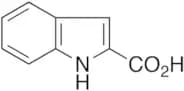
CAS:<p>Applications 2,4'-Dihydroxydiphenylmethane can be used in anisotropically conductive paste containing thermosetting compd. and solder particles with improved reliability.<br>References Ishizawa, H., et al.: Jpn. Kokai Tokkyo Koho, JP 2016066614 A 20160428 (2016);<br></p>Formula:C13H12O2Color and Shape:White To Off-WhiteMolecular weight:200.23Indole-2-carboxylic Acid
CAS:Controlled Product<p>Applications Indole-2-carboxylic Acid (cas# 1477-50-5) is a compound useful in organic synthesis.<br></p>Formula:C9H7NO2Color and Shape:NeatMolecular weight:161.16Acetohydrazide
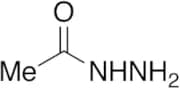
CAS:Controlled Product<p>Applications Acetohydrazide is a metabolite of Isoniazid (I821450) an antibiotic for treatment of Mycobacterium tuberculosis, inhibits mycolic acid biosynthesis.<br> Not a dangerous good if item is equal to or less than 1g/ml and there is less than 100g/ml in the package<br>References Metushi, I.G., et al.: Chem. Res. Toxciol., 25, 2567 (2012); Fukino, K., et al.: J. Toxicol. Sci., 33, 667 (2008);<br></p>Formula:C2H6N2OColor and Shape:Off-WhiteMolecular weight:74.08o-Toluic Acid
CAS:Controlled Product<p>Applications o-Toluic acid is part of a group of Benzoic acid (B203900) derivatives that possess inhibitory activity against mushroom tyrosinases. o-Toluic acid is also used as a reagent to synthesize halogen-substituted benzoic acids (such as 2,4-Dichlorobenzoic acid [D431955]), which have potential muscle stimulating effects.<br>References Lu, R., et al.: J. Comput. Theor. Nano., 4, 1311 (2007); Huang, X., et al.: Food Chem., 94, 1 (2005)<br></p>Formula:C8H8O2Color and Shape:NeatMolecular weight:136.15Indole-3-carboxaldehyde
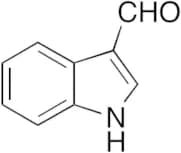
CAS:Controlled ProductFormula:C9H7NOColor and Shape:NeatMolecular weight:145.162-Bromo-2-phenylacetic Acid
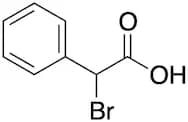
CAS:Controlled Product<p>Applications 2-Bromo-2-phenylacetic acid<br></p>Formula:C8H7BrO2Color and Shape:White To Off-WhiteMolecular weight:215.043-Cyclohexenylcarboxylic Acid
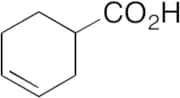
CAS:Controlled Product<p>Applications 3-Cyclohexenylcarboxylic Acid has been found to be an oxidizable, nongrowth substrate and induces the metabolism of cyclohexanecarboxylic acid and benzoic acid in a strain of Pseudomonas putida. 3-Cyclohexenylcarboxylic Acid has been used as food for cultures of Streptomyces sp. KCTC 11604BP fkbO deletion mutant to make 32-dehydroxy-FK506, a FK506 analogue containing a non-natural starter unit.<br> Not a dangerous good if item is equal to or less than 1g/ml and there is less than 100g/ml in the package<br>References Blakley, E.R., Papish, B.: Can. J. Microbiol., 28, 1324 (1982); Ban, Y.H., et. al.: Mol. bioSystems, 9, 944 (2013)<br></p>Formula:C7H10O2Color and Shape:NeatMolecular weight:126.15Indole-3-carbinol
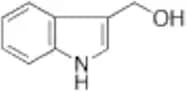
CAS:<p>Stability Unstable in solution<br>Applications Inhibits cancinogenesis at the initiation stage. A metabolite of 3-methylindole<br>References Stresser, D.M., et al.: J. Biochem. Toxicol., 10, 191 (1995), Bailey, G.S., et al.: J. Natl. Cancer Inst., 78, 931 (1987), D’Agostino et. al. Drug Metabolism and Disp. 27: 2018 (2009)<br></p>Formula:C9H9NOColor and Shape:NeatMolecular weight:147.173,5-Di-tert-butyl-4-hydroxybenzaldehyde
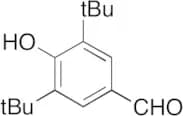
CAS:Controlled ProductFormula:C15H22O2Color and Shape:NeatMolecular weight:234.331H-Indole-3-acetamide
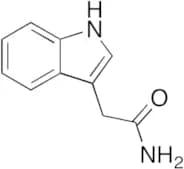
CAS:Controlled Product<p>Applications Indole-3-acetamide is a compound that is converted to indole-3-acetic acid by indole-3-acetamide hydrolase in auxin biosynthesis in plants.<br>References Mano, Y., et al.: J. Exp. Bot., 61, 25 (2010)<br></p>Formula:C10H10N2OColor and Shape:NeatMolecular weight:174.2Thioacetamide
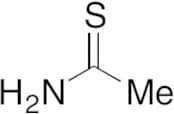
CAS:Controlled Product<p>Applications Thioacetamide is a carcinogen, a hepatotoxicant. Thioacetamide induces acute chronic liver injury through the activation of protein synthesis of RNA, DNA, and gamma-glutamyl transpeptitase. Thioacetamide has been used in the synthesis of [email protected] nano-array core-shell structure.<br>References Akhtar, T., Sheikh, N.: Toxin Reviews, 32, 43 (2013); Yuan, A., et. al.: Adv. Mater. Res., 652, 683 (2013)<br></p>Formula:C2H5NSColor and Shape:NeatMolecular weight:75.13Butyronitrile Diethyl Malonate
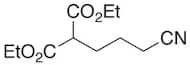
CAS:Controlled Product<p>Applications Butyronitrile Diethyl Malonate (cas# 63972-18-9) is a compound useful in organic synthesis.<br></p>Formula:C11H17NO4Color and Shape:NeatMolecular weight:227.26