Building Blocks
This section contains fundamental products for the synthesis of organic and biological compounds. Building blocks are the essential starting materials used to construct complex molecules through various chemical reactions. They play a critical role in drug discovery, material science, and chemical research. At CymitQuimica, we offer a diverse range of high-quality building blocks to support your innovative research and industrial projects, ensuring you have the essential components for successful synthesis.
Subcategories of "Building Blocks"
- Boronic Acids & Boronic Acid Derivatives(5,756 products)
- Chiral Building Blocks(1,242 products)
- Hydrocarbon Building Blocks(6,095 products)
- Organic Building Blocks(61,055 products)
Found 199650 products of "Building Blocks"
Sort by
Purity (%)
0
100
|
0
|
50
|
90
|
95
|
100
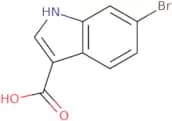
6-Bromo-1H-indole-3-carboxylic acid
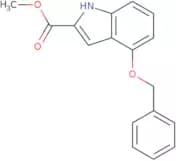
CAS:<p>6-Bromo-1H-indole-3-carboxylic acid is a natural product that is isolated from the marine sponge Smenospongia purpurea. It was first reported in 1979 and has been used for the synthesis of other compounds. 6-Bromoindole, a precursor to 6-bromo-1H-indole-3-carboxylic acid, is biosynthesized from methyl ester and NMR spectra indicate that it has a dihedral angle of 173°. This compound has been shown to have antibacterial activity against staphylococcus.</p>Formula:C9H6BrNO2Purity:Min. 95%Color and Shape:PowderMolecular weight:240.05 g/mol4-Benzyloxy-1H-indole-2-carboxylic acid methyl ester
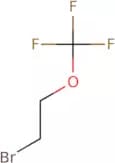
CAS:<p>4-Benzyloxy-1H-indole-2-carboxylic acid methyl ester is a high quality reagent that is used as an intermediate in the synthesis of various complex compounds, including useful scaffolds and building blocks. It is a versatile building block with a wide range of reactions that can be carried out on it. 4-Benzyloxy-1H-indole-2-carboxylic acid methyl ester has been shown to be useful for the synthesis of speciality chemicals and research chemicals. This compound has also been shown to be useful for the preparation of fine chemicals, such as pharmaceuticals, pesticides, and flavorants.</p>Formula:C17H15NO3Color and Shape:PowderMolecular weight:281.31 g/mol1-Bromo-2-(trifluoromethoxy)ethane
CAS:<p>1-Bromo-2-(trifluoromethoxy)ethane is a chemical compound with the formula CBrFO. It is a colorless liquid that reacts violently with water and alkali metals. 1-Bromo-2-(trifluoromethoxy)ethane has been used as a precursor to 2-chloroethyl peroxide, which can be used in organic synthesis as an oxidant or in solvents to produce chloroprene. The bromine atom in this molecule can be replaced by fluorine or chlorine atoms, forming 1-fluoro-2-(trifluoromethoxy)ethane and 1,1,1-trichloroethylene.</p>Formula:C3H4BrF3OPurity:Min. 95%Color and Shape:PowderMolecular weight:192.96 g/mol2-Bromo-5-methoxytoluene
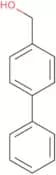
CAS:<p>2-Bromo-5-methoxytoluene is a synthetic organic compound that is used as a chemical intermediate for cellulose derivatives. It is generated by the Friedel-Crafts reaction of bromine with toluene in the presence of aluminum chloride. 2-Bromo-5-methoxytoluene has been shown to react with cellulose derivatives and other hydrogen bond acceptors. This reaction is followed by protonation, which yields a chromophore that changes color from yellow to orange. The mechanism of this reaction can be explained by an acid catalysis mechanism, which begins with protonation of the carbonyl group (C=O) and formyl group (HC=O) groups. This causes the formation of an enolate ion, which reacts with a protonated carbonyl group to yield a formyl cation and an enolate ion. The formyl cation then reacts with another proton</p>Formula:C8H9OBrPurity:Min. 95%Color and Shape:PowderMolecular weight:201.06 g/mol4-Biphenylmethanol
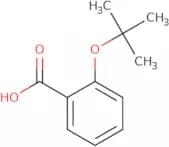
CAS:<p>4-Biphenylmethanol is a low potency naphthalene derivative that has been shown to be carcinogenic in animal studies. It is also an inhibitor of protein synthesis, which may play a role in its carcinogenic potential. 4-Biphenylmethanol has been shown to inhibit the growth of Salmonella typhimurium and Saccharomyces cerevisiae strain when used at concentrations of 50 μg/mL or higher. This compound can react with hydrochloric acid to form hydrogen bonding interactions, which may account for its observed antibacterial activity.</p>Formula:C13H12OPurity:Min. 95%Color and Shape:PowderMolecular weight:184.23 g/mol2-tert-Butoxybenzoic acid
CAS:<p>2-tert-Butoxybenzoic acid is a versatile chemical that can be used as a reagent, a speciality chemical, or as an intermediate in the synthesis of other compounds. It is typically used in organic chemistry for the preparation of esters, amides, and nitriles. 2-tert-Butoxybenzoic acid is also useful as a building block for complex molecules. This compound has been shown to react with alcohols to form esters, with amines to form amides, and with nitro groups to form nitriles.</p>Formula:C11H14O3Purity:Min. 95%Color and Shape:PowderMolecular weight:194.23 g/mol1-Bromopentane
CAS:<p>1-Bromopentane is a colorless liquid that has an unpleasant odor. It is soluble in water and reacts with acids to form bromides. 1-Bromopentane has been used as an oxidation catalyst in the preparation of organic compounds under conditions of constant pressure and light exposure. It has also been used in the synthesis of polymers, such as poly(1-bromopentene). Its biological properties are not well known, but it has been shown to have CB2 receptor agonist activity and inhibitory effects on oxidative stress. The chemical kinetic data for 1-bromopentane are available at various temperatures and pressures. Chloride ions can act as catalysts for its decomposition reaction, which is a stepwise process involving the conversion of hydroxyl groups into chloride atoms. The reaction mechanism starts with the conversion of one bromine atom into a radical by abstraction of a hydrogen atom from the molecule followed by addition of another brom</p>Formula:C5H11BrPurity:Min. 98 Area-%Color and Shape:Colorless Clear LiquidMolecular weight:151.04 g/mol7-Bromo-5-methoxyindole-3-carboxylic acid
CAS:<p>Please enquire for more information about 7-Bromo-5-methoxyindole-3-carboxylic acid including the price, delivery time and more detailed product information at the technical inquiry form on this page</p>Formula:C10H8BrNO3Purity:Min. 95%Color and Shape:PowderMolecular weight:270.09 g/mol2-Chloro-6-fluorobenzaldehyde
CAS:<p>2-Chloro-6-fluorobenzaldehyde is an impurity that can be found in wastewater. It has been shown to be a reactive intermediate for the synthesis of streptochlorin, which is a natural product with potential antibiotic activity. 2-Chloro-6-fluorobenzaldehyde is produced by the reaction of chlorine and anhydrous sodium, with acid as catalyst. The molecule has two fluorine atoms and one chloride atom. This compound can also be used in the treatment of waste water due to its ability to react with hydroxyl ions and chloride ions in the presence of hydrogen chloride or hydrochloric acid. The pain model was evaluated using nmr spectra and optical properties.</p>Formula:C7H4ClFOPurity:Min. 95%Color and Shape:White PowderMolecular weight:158.56 g/molcis-4-Chloro-3-nitrocinnamic acid
<p>Cis-4-Chloro-3-nitrocinnamic acid is an aromatic organic compound with potential utility in biochemical research and synthesis. This compound is typically derived from synthetic chemical processes involving chlorination and nitration reactions on cinnamic acid derivatives. Its molecular structure, characterized by both chloro and nitro functional groups, allows it to interact in unique ways with various biochemical pathways and molecular frameworks.</p>Formula:C9H6ClNO4Purity:Min. 95%Color and Shape:White PowderMolecular weight:227.6 g/molcis-N-(3-Chloroallyl)-1-(R)-aminoindan hydrochloride
CAS:<p>cis-N-(3-Chloroallyl)-1-(R)-aminoindan hydrochloride is a high quality, research chemical that is a versatile building block. It is used as a reagent and reaction component for the synthesis of fine chemicals, speciality chemicals, and complex compounds. cis-N-(3-Chloroallyl)-1-(R)-aminoindan hydrochloride has CAS number 1175018-80-0.</p>Formula:C12H14ClN·HClPurity:Min. 95 Area-%Color and Shape:PowderMolecular weight:244.16 g/mol2'-Chloroacetophenone
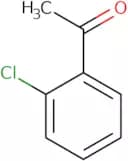
CAS:<p>2'-Chloroacetophenone is an organic compound that has been used as a hydrogen donor in the synthesis of natural products. It is produced by the reaction of acetone with chlorine gas, and it can be isolated by distillation. 2'-Chloroacetophenone reacts with hexane to form 2-chlorohexane, which can be further reacted with methanol to form methoxybenzene. The optimum concentration for this reaction is 10% (w/v) at 25°C. This chemical also has reductase activities and may enhance the activity of other reductases. 2'-Chloroacetophenone is a colorless liquid that boils at 172°C and decomposes above 300°C. It has a molecular weight of 119.16 g/mol and a density of 1.037 g/cm3 at 20°C and 0.101 g/cm3 at 25°C. It also has an intram</p>Formula:C8H7ClOPurity:Min. 96 Area-%Color and Shape:Colorless Clear LiquidMolecular weight:154.59 g/mol3-Chlorobenzoic acid
CAS:<p>3-Chlorobenzoic acid is a compound that has been shown to have potent antibacterial activity against Pseudomonas aeruginosa and other bacteria. It has been shown to inhibit the ATP-binding cassette transporter, which is a protein that transports various molecules across cell membranes. 3-Chlorobenzoic acid also inhibits the growth of bacteria by lysing cells and interfering with DNA synthesis. This compound is an effective inhibitor of wild-type strains of E. coli, but not mutants resistant to 2,4-dichlorobenzoic acid. 3-Chlorobenzoic acid reacts with benzoate to form a crystal structure at room temperature and pressure. Further studies are needed to determine the coordination geometry and thermodynamic data for this reaction.</p>Formula:C7H5ClO2Purity:Min. 95%Color and Shape:PowderMolecular weight:156.57 g/mol2-(4'-Chlorobenzoyl)benzoic acid
CAS:<p>2-(4'-Chlorobenzoyl)benzoic acid (2-CBA) is a sulfa drug that inhibits bacterial growth by blocking the synthesis of folic acid. It is also known to be luminescent and can be used in techniques such as luminescent probes. 2-CBA has antibacterial activity and can inhibit bacterial growth in a chromatographic method. 2-CBA is chemically stable and has been shown to have antibacterial properties against gram-positive bacteria, including Bacillus subtilis and Staphylococcus aureus. 2-CBA also has the ability to react with phthalazinone, an inhibitor of glutamine synthetase, which is involved in the production of ATP from ADP. This reaction results in the formation of an unstable intermediate which decomposes into CO2 and benzoic acid.</p>Formula:C14H9ClO3Purity:Min. 95%Color and Shape:White PowderMolecular weight:260.67 g/molD-Cysteine
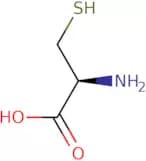
CAS:<p>D-Cysteine is the L-cysteine stereoisomer. It has been shown to inhibit the response of nicotinic acetylcholine receptors and toll-like receptor 4, which are proteins that play a role in inflammation. D-Cysteine also inhibits the production of nitric oxide by inhibiting NADPH oxidase. This inhibition leads to decreased inflammation, as well as decreased oxidation of proteins and DNA. D-Cysteine has been shown to be a specific inhibitor of wild type strains of Escherichia coli, but not mutant strains with defects in iron homeostasis. The enzyme activity for d-cysteine is also inhibited by l-cysteine, which may result in drug interactions. D-Cysteine can be found naturally in foods such as garlic, onions, broccoli, and cauliflower.</p>Formula:C3H7NO2SColor and Shape:White PowderMolecular weight:121.16 g/mol5-Chloroindole-3-acetic acid
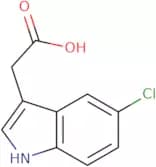
CAS:<p>5-Chloroindole-3-acetic acid (5CI3A) is a compound that belongs to the indole class of compounds. It is structurally similar to the amino acid tryptophan, which makes it a good template molecule for the synthesis of other indoles. 5CI3A is mainly found in plants and bacteria, where it acts as an auxin. In plants, 5CI3A stimulates cell elongation and leaf growth by interacting with plant hormones such as auxins and gibberellins. This compound also binds to serum albumin, which may be responsible for its low toxicity in humans. 5CI3A has been shown to inhibit the activity of human serum albumin by forming hydrogen bonds with it. This inhibition reduces the binding affinity of 5CI3A for other proteins in serum, making it less likely to interact with them than if there were no binding competition.</p>Formula:C10H8ClNO2Color and Shape:PowderMolecular weight:209.63 g/mol2-Carboxy-3,4-dimethoxybenzaldehyde
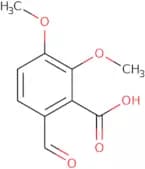
CAS:<p>2-Carboxy-3,4-dimethoxybenzaldehyde is a chemical that belongs to the class of compounds known as butyric acid derivatives. It is a colorless liquid with a pungent odor and can be used in pharmaceutical preparations as an antispasmodic or a sedative. 2-Carboxy-3,4-dimethoxybenzaldehyde has been shown to have radical scavenging activities in tissue culture systems and dry weight reaction products in the presence of hydrochloric acid and chloride ion. This compound can also act as an acid complexing agent for hydrogen chloride and depressant activity on animal behavior.</p>Formula:C10H10O5Purity:Min. 95%Color and Shape:White Yellow PowderMolecular weight:210.18 g/mol1,4-Cyclohexanedione monoethlylene acetal
CAS:<p>1,4-Cyclohexanedione monoethlylene acetal is a hydrochloric acid analog of pyrazole. It has been shown to bind selectively to serotonin receptors in the central nervous system and is used as an anti-inflammatory drug. 1,4-Cyclohexanedione monoethlylene acetal has a stereoselective profile that can be used for the treatment of inflammatory diseases. It has also been shown to have immunosuppressant properties, which may be due to its ability to inhibit T-cell proliferation and cytokine production.</p>Formula:C8H12O3Purity:Min. 95%Color and Shape:White PowderMolecular weight:156.18 g/mol1-(3-Carboxypropionyl)naphthalene
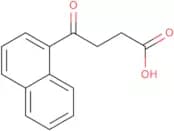
CAS:<p>1-(3-Carboxypropionyl)naphthalene is a drug that belongs to the class of reactive drugs. It is a prodrug that is metabolized by cytochrome P450 enzymes to 1-(3-carboxypropionyl)naphthoquinone (1CPRNQ). Its main mechanism of action is through binding to magnesium, which induces cell membrane permeability and results in apoptosis. 1-(3-Carboxypropionyl)naphthalene has shown an antibody response to eye disorders and cardiovascular diseases, as well as anti-angiogenic properties. It also has been shown to inhibit the proliferation of tumor cells and induce leukocyte antigen expression.</p>Formula:C14H12O3Purity:Min. 95%Color and Shape:Off-White PowderMolecular weight:228.24 g/mol4-Chloro-3,5-dihydroxybenzoic acid
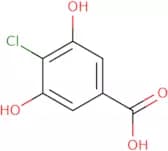
CAS:<p>4-Chloro-3,5-dihydroxybenzoic acid is a chemical substance that can be used as a building block in organic synthesis. It is also a versatile intermediate and scaffold for the synthesis of more complex compounds. 4-Chloro-3,5-dihydroxybenzoic acid has been found to be useful in research and as a reagent because it is an inexpensive, high quality chemical. This compound reacts rapidly with many other chemicals, including alcohols and amines. 4-Chloro-3,5-dihydroxybenzoic acid has been shown to be stable under acidic conditions and can be purified by crystallization or recrystallization.</p>Formula:C7H5ClO4Purity:Min. 95%Color and Shape:PowderMolecular weight:188.56 g/mol