Building Blocks
This section contains fundamental products for the synthesis of organic and biological compounds. Building blocks are the essential starting materials used to construct complex molecules through various chemical reactions. They play a critical role in drug discovery, material science, and chemical research. At CymitQuimica, we offer a diverse range of high-quality building blocks to support your innovative research and industrial projects, ensuring you have the essential components for successful synthesis.
Subcategories of "Building Blocks"
- Boronic Acids & Boronic Acid Derivatives(5,756 products)
- Chiral Building Blocks(1,242 products)
- Hydrocarbon Building Blocks(6,095 products)
- Organic Building Blocks(61,051 products)
Found 199813 products of "Building Blocks"
Sort by
Purity (%)
0
100
|
0
|
50
|
90
|
95
|
100
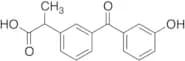
3-Hydroxy Ketoprofen
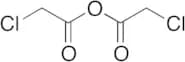
CAS:Controlled Product<p>Applications 3-Hydroxy Ketoprofen is related to rac Ketoprofen (K200800) a Anti-inflammatory drug. 3-Hydroxy Ketoprofen is used to study the metabolism of ketoprofen<br>References Liversidge, G.G., Anal. Profiles Drug Subs., 10, 443 (1981), Jamali, F., et al.: Clin. Pharmacokinet., 19, 197 (1990), Huq, F., et al.: Pure Appl. Chem., 2, 229-234 (2007)<br></p>Formula:C16H14O4Color and Shape:Off-White To Light BeigeMolecular weight:270.28Chloroacetyl Anhydride
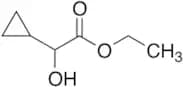
CAS:Controlled ProductFormula:C4H4Cl2O3Color and Shape:NeatMolecular weight:170.98Ethyl 2-Cyclopropyl-2-hydroxyacetate
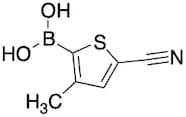
CAS:<p>Applications ethyl 2-cyclopropyl-2-hydroxyacetate (cas# 1185387-66-9) is a useful research chemical.<br></p>Formula:C7H12O3Color and Shape:NeatMolecular weight:144.168(5-Cyano-3-methylthiophen-2-yl)boronic Acid
CAS:Controlled ProductFormula:C6H6BNO2SColor and Shape:NeatMolecular weight:166.993trans-Campestanyl Ferulate
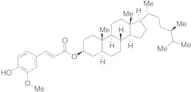
CAS:Controlled Product<p>Applications trans-Campestanyl Ferulate is used for synthesis of trans-feruloyl-β-sitostanol.<br>References Condo, A., et al.: J. Agric. Food Chem., 49, 4961 (2001);<br></p>Formula:C38H58O4Color and Shape:NeatMolecular weight:578.865-Amino-4,6-dichloropyrimidine
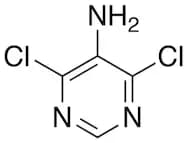
CAS:Controlled Product<p>Applications An intermediate in the production of many biological inhibitors.<br>References Lambertucci, C., et al.: Bioorg. Med. Chem., 17, 2812 (2009), Lebsack, A., et al.: Bioorg. Med. Chem. Lett., 19, 40 (2009), Griffith, D., et al.: J. Med. Chem., 52, 234 (2009),<br></p>Formula:C4H3Cl2N3Color and Shape:NeatMolecular weight:163.99Acetone Oxime
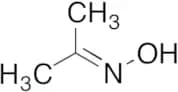
CAS:Controlled Product<p>Applications Acetone oxime was one of the reagents used as a part of preparation of arylbenzoxazoles as potent and selective estrogen receptor-β ligands.<br> Not a dangerous good if item is equal to or less than 1g/ml and there is less than 100g/ml in the package<br>References Malamas, M., et al.: J. Med. Chem., 47, 5021 (2004)<br></p>Formula:C3H7NOColor and Shape:NeatMolecular weight:73.1N-Methylsuccinimide
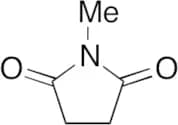
CAS:<p>Applications N-Methylsuccinimide is used as a model compound to investigate the mechanism of enolization step by density-functional theory (DFT) calculations. N-Methylsuccinimide is a metabolite of N-methyl-2-pyrrolidone (NMP) and its presence in plasma and urine can be used as a biomarker of exposure to NMP<br>References Takahashi, O., et al.: Chem. Biodivers., 7, 1349 (2010)<br></p>Formula:C5H7NO2Color and Shape:Off-WhiteMolecular weight:113.11Carboxymethoxyamine Hemihydrochloride
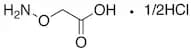
CAS:Controlled Product<p>Applications Carboxymethoxyamine Hemihydrochloride (cas# 2921-14-4) is a compound useful in organic synthesis.<br></p>Formula:C2H5NO3·ClHColor and Shape:NeatMolecular weight:218.59(1-Bromo-2,2-difluoroethyl)benzene
CAS:<p>(1-Bromo-2,2-difluoroethyl)benzene is a chemical compound that is used as a reaction component in the synthesis of other compounds. It can be used to synthesize high-quality research chemicals and speciality chemicals. It is also a versatile building block for the synthesis of complex compounds. This product has been assigned CAS No. 74492-20-9 and is considered a fine chemical.</p>Formula:C8H7BrF2Purity:Min. 95%Color and Shape:Clear LiquidMolecular weight:221.04 g/mol3,4-Dihydroxybenzaldehyde
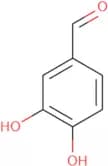
CAS:<p>3,4-Dihydroxybenzaldehyde is an active compound that is a protocatechuic aldehyde. It has been shown to inhibit protein oxidation and kidney injury. 3,4-Dihydroxybenzaldehyde also inhibits the production of bcl-2 protein and growth factor-β in rat urine. This compound has been used in Chinese medicinal preparations as well as in control methods for oxidizing agents.</p>Formula:C7H6O3Color and Shape:Brown White PowderMolecular weight:138.12 g/mol2,6-Dichloro-3-deazapurine
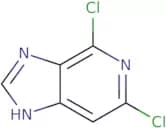
CAS:<p>2,6-Dichloro-3-deazapurine is an isomer of the nucleoside guanosine. It has been shown to inhibit the synthesis of viruses in cell cultures and may be useful in the treatment of leukemia. The synthesis of 2,6-dichloro-3-deazapurine can be achieved through a solid-phase synthesis that uses synthons as starting materials. The molecular modelling studies have shown that this molecule has a potential to bind to adenosine receptor subtypes A2a, A2b, and A3.</p>Formula:C6H3Cl2N3Purity:Min. 95%Color and Shape:Off-White PowderMolecular weight:188.02 g/mol2,6-Dichloro-7-deazapurine
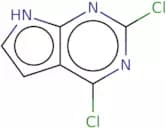
CAS:<p>Intermediate in the synthesis of tofacitinib</p>Formula:C6H3Cl2N3Purity:Min. 95%Color and Shape:Off-White PowderMolecular weight:188.02 g/molHexadecyl pyridinium bromide
CAS:<p>Cationic surfactant; antiseptic</p>Formula:C21H38BrNColor and Shape:White PowderMolecular weight:384.44 g/mol2,5-Dibromopyrazine
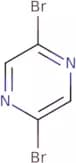
CAS:<p>2,5-Dibromopyrazine is a heterocyclic compound that can be synthesized by the Suzuki coupling reaction of 2-bromo-1,3-dibromopropane with an acceptor. It has been shown to have glycemic parameters and a high rate enhancement for the water molecule photophysical isomerization reaction. Structural isomers of 2,5-dibromopyrazine exist as well and are thought to have different rates of photocatalytic activity. The rate enhancement may be due to the increase in electron density on the heteroatoms in the ring.</p>Formula:C4H2Br2N2Purity:Min. 98%Color and Shape:Brown White Off-White Yellow Clear LiquidMolecular weight:237.88 g/molL-Histidine methyl ester dihydrochloride
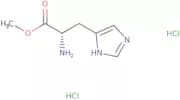
CAS:<p>L-Histidine methyl ester dihydrochloride is a β-amino acid with the chemical formula HNCH2CH(CH3)CO2H. It has the functional group of an isopropyl group and a chloride ion. L-Histidine methyl ester dihydrochloride has been shown to bind to receptors in the central nervous system that are involved in pain perception. As a result, it can be used for the treatment of neuropathic pain, chronic pain, and cancer pain. This drug also inhibits nitric oxide production by binding to iron ions or copper ions. L-Histidine methyl ester dihydrochloride has been shown to have antiinflammatory effects as well as antioxidant properties.</p>Formula:C7H11N3O2•(HCl)2Purity:Min. 95%Color and Shape:PowderMolecular weight:242.1 g/mol2,6-Dichloropyridine
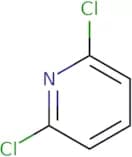
CAS:<p>2,6-Dichloropyridine is an organohalide used as a reagent for asymmetric catalysis. It is use as a precursor for the synthesis of antibacterial agents, for example the synthesis of the antibiotic enoxacin.</p>Formula:C5H3Cl2NPurity:Min. 98%Color and Shape:White To Yellowish To Pink To Grey To Light Brown SolidMolecular weight:147.99 g/mol4-Hydroxyquinoline
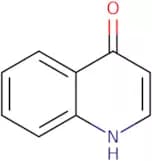
CAS:<p>4-Hydroxyquinoline is a chemical compound that has been shown to have anticancer, anti-inflammatory, and antiviral properties. It is an inhibitor of the enzyme tyrosinase, which is required for the production of melanin. 4-Hydroxyquinoline has also been shown to suppress bowel inflammation by inhibiting the synthesis of 3-hydroxyanthranilic acid in cells. 4-Hydroxyquinoline has been found to be effective against Herpes Simplex Virus Type 1 (HSV1) in cell culture and in vitro assays. <br>4-Hydroxyquinoline's photochemical properties make it a useful precursor for the synthesis of other biologically active compounds. This chemical undergoes a reaction with trifluoroacetic acid to form diazonium salt intermediate, which then reacts with hydrogen peroxide to form an active oxygen species that damages DNA and kills cells.</p>Formula:C9H7NOPurity:Min. 95%Color and Shape:White PowderMolecular weight:145.16 g/mol2,4-Dimethyl-3-nitropyridine
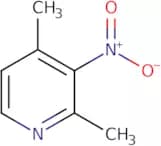
CAS:<p>2,4-Dimethyl-3-nitropyridine is a heterocyclic organic compound. It is an important and versatile building block for the synthesis of complex compounds. 2,4-Dimethyl-3-nitropyridine can be used as a reagent in organic synthesis and other chemical reactions. In addition to its use as a reactant, this compound has been employed as a useful scaffold for the preparation of other heterocycles and fine chemicals. The CAS number for 2,4-dimethyl-3-nitropyridine is 1074-76-6.</p>Formula:C7H8N2O2Purity:Min. 95%Color and Shape:Yellow Clear LiquidMolecular weight:152.15 g/mol2-(3-Hydroxypropyl)benzimidazole
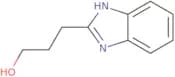
CAS:<p>2-(3-Hydroxypropyl)benzimidazole is a chloroform extract of the bark of the tree, Pongamia pinnata. It has been shown to have antibacterial and antitumor activity. 2-(3-Hydroxypropyl)benzimidazole has been found to be active against methicillin-resistant Staphylococcus aureus (MRSA), showing strong inhibitory effects on bacterial cell growth in vitro. The mechanism of action may be due to its ability to bind to DNA and RNA, preventing transcription and replication. 2-(3-Hydroxypropyl)benzimidazole also inhibits protein synthesis by binding to ribosomes and interfering with the function of enzymes that are involved in this process such as cytochrome c reductase, glutathione reductase, and 3-ketoacyl coenzyme A thiolase.</p>Formula:C10H12N2OPurity:Min. 95%Color and Shape:White PowderMolecular weight:176.22 g/mol