Building Blocks
This section contains fundamental products for the synthesis of organic and biological compounds. Building blocks are the essential starting materials used to construct complex molecules through various chemical reactions. They play a critical role in drug discovery, material science, and chemical research. At CymitQuimica, we offer a diverse range of high-quality building blocks to support your innovative research and industrial projects, ensuring you have the essential components for successful synthesis.
Subcategories of "Building Blocks"
- Boronic Acids & Boronic Acid Derivatives(5,756 products)
- Chiral Building Blocks(1,242 products)
- Hydrocarbon Building Blocks(6,095 products)
- Organic Building Blocks(61,051 products)
Found 199813 products of "Building Blocks"
Sort by
Purity (%)
0
100
|
0
|
50
|
90
|
95
|
100
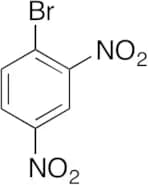
1-Bromo-2,4-dinitrobenzene
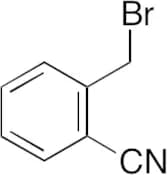
CAS:Controlled ProductFormula:C6H3BrN2O4Color and Shape:Light GreenMolecular weight:247.02-(Bromomethyl)benzonitrile
CAS:Controlled Product<p>Applications 2-(Bromomethyl)benzonitrile is an intermediate in the synthesis of Alogliptin (A575425), an oral antihyperglycemic agent that is a selective inhibitor of the enzyme dipeptidyl peptidase-4 (DPP-4). Antidiabetic agent.<br> Not a dangerous good if item is equal to or less than 1g/ml and there is less than 100g/ml in the package<br>References Lai, Z., et. al.: Eur. J. Med. Chem., 83, 547 (2014); Lynn, F., et al.: Diabetes, 50, 1004 (2001); Trumper, A., et al.: J. Endocrinol., 174, 233 (2002); Vollmer, K., et al.: J. Clin. Endocrinol. Metab., 94, 1379 (2009)<br></p>Formula:C8H6BrNColor and Shape:NeatMolecular weight:196.041-Bromotetradecane
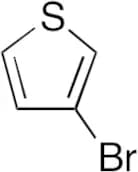
CAS:Controlled ProductFormula:C14H29BrColor and Shape:ColourlessMolecular weight:277.283-Bromothiofuran
CAS:Controlled Product<p>Applications 3-Bromothiofuran is a compound used as a corrosion inhibitor in mild steel. It also shows antimicrobial activity against common bacterium types such as Escherichia coli and Bacillus subtillis.<br>References Sawkar, A. et al.: Proc. Nat. Acad. Sci., 99, 15428 (2002); Cox, T. et al.: Lancet, 355, 1481 (2000);<br></p>Formula:C4H3BrSColor and Shape:NeatMolecular weight:163.04(22S)-Budesonide
CAS:Controlled Product<p>Applications Budesonide (B689490) epimer S. Budesonide 22R epimer is more active than 22S epimer. Used as an antiinflammatory agent.<br>References Ryrfeldt., A., et a.: J. Steroid Biochem., 10, 317 (1979), Roth, G., et al.: J. Pharm. Sci., 69, 766 (1980), Clissold, S.P., et al.: Drugs, 28, 485 (1984),<br></p>Formula:C25H34O6Color and Shape:NeatMolecular weight:430.53cis-2-Butene-1,4-diol
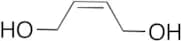
CAS:Controlled Product<p>Applications cis-1-Butene-1,4-diol is used in the synthesis of bezoxazinyl-oxazolidinones as promising antbacterial agents. Also used in the preparation of AMF-26, an antitumor agent for inhibition of the golgi system, targeting a specific ribosylation factor.<br>References Guo, B. et al.: J. Med. CHem., 56, 2642 (2013); Shiina, I. et al.: J. Med. CHem., 56, 150 (2013);<br></p>Formula:C4H8O2Color and Shape:Colourless To Light YellowMolecular weight:88.111,4-Butane Sultone
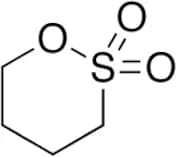
CAS:<p>Applications 1,4-Butane Sultone is an alkylating agent with weak carcinogenic activity.<br>References Van Duuren, B.L. et al.: J. Nat. Cancer Inst., 53, 696 (1974); Druckrey, H. et al.: Zeitsch. Krebsforsch.,75, 69 (1970);<br></p>Formula:C4H8O3SColor and Shape:Colourless ViscousMolecular weight:136.174-Butoxyphenol
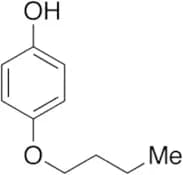
CAS:Controlled Product<p>Applications Pramoxine impurity. Phenol derivatives induced tumor cell apoptosis.<br>References Li, B., et al.: J. Biochem., 138, 679 (2005), Peltason, L., et al.: J. Med. Chem., 50, 5571 (2007),<br></p>Formula:C10H14O2Color and Shape:NeatMolecular weight:166.22Tocinoic acid trifluroacetate
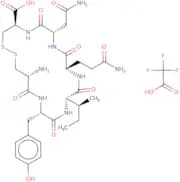
CAS:<p>Please enquire for more information about Tocinoic acid trifluroacetate including the price, delivery time and more detailed product information at the technical inquiry form on this page</p>Formula:C30H44N8O10S2•C2HF3O2Purity:Min. 95%Color and Shape:PowderMolecular weight:854.85 g/mol4-Cyanopiperidine
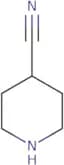
CAS:<p>4-Cyanopiperidine is an organic compound that belongs to the class of medicines and has a cyclohexane ring with two functional groups. It is a part of the compound class of dehydrating agents. 4-Cyanopiperidine is most commonly used as an intermediate in the synthesis of other compounds, but can also be used as a medicine. 4-Cyanopiperidine has been shown to be effective against pain, cancer, and seizures. The inhibitory effect of 4-cyanopiperidine on cyclic AMP causes it to have potent inhibitory activity against cb1 receptor, which is responsible for the psychoactive effects caused by tetrahydrocannabinol (THC). This drug also has potent antagonistic effects on pethidine and related drugs such as fentanyl, morphine, and oxycodone.</p>Formula:C6H10N2Purity:Min. 95%Color and Shape:Colorless Clear LiquidMolecular weight:110.16 g/mol5-Chloro-2-mercaptobenzimidazole
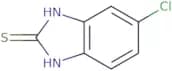
CAS:<p>5-Chloro-2-mercaptobenzimidazole is an inorganic base that is used as a microscopy reagent. It has been shown to have a transfer mechanism that is similar to the hydrogen ion transfer mechanism. 5-Chloro-2-mercaptobenzimidazole has been used in vivo assays and has functional groups that are important for its use in coatings and aluminum oxide. The molecule also contains chlorine atoms, which are important for its use in chlorination reactions. 5-Chloro-2-mercaptobenzimidazole can be used in voltammetry to test samples of organic compounds (e.g., casein) and has been shown to be effective against the Gram positive bacterium Staphylococcus aureus.</p>Formula:C7H5ClN2SPurity:Min. 98.5 Area-%Color and Shape:Off-White PowderMolecular weight:184.65 g/molPyridine 4-acetic acid HCl
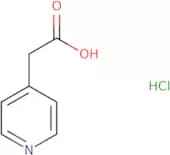
CAS:<p>Pyridine 4-acetic acid HCl is a synthetic, fluorescent probe with reactive and luminescence properties. It is used for the detection of hydrogen bond formation in organic compounds. It is also used as a probe to study the molecular interactions between metal ions and β-unsaturated aldehydes. Pyridine 4-acetic acid HCl has been shown to be useful for transduction of light energy into chemical energy. The pyridine ring makes this compound an excellent candidate for molecular modeling studies due to its rigid structure.</p>Formula:C7H8ClNO2Purity:Min. 95%Color and Shape:PowderMolecular weight:173.6 g/moltrans-4-Hydroxy-L-proline
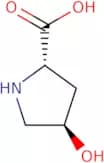
CAS:<p>Proline is a non-essential amino acid that is found in the basic structure of collagen. Proline has been shown to have physiological effects, including a protective effect on the myocardium, and can be used as an analytical method for detecting proline residues in biological samples. Trans-4-Hydroxy-L-proline is a proline derivative that has been shown to inhibit collagenase activity in vitro. It was also shown to have an optimum concentration of 1 mM and a matrix effect at pH 6.5. The model system used to study trans-4-hydroxy-l-proline was the enzyme extracted from rat liver.</p>Formula:C5H9NO3Color and Shape:White PowderMolecular weight:131.13 g/mol4-Azidopiperidine hydrochloride
CAS:<p>4-Azidopiperidine hydrochloride is a chemical compound that is used as a versatile building block in the synthesis of complex chemical compounds. It is also used as a reagent or speciality chemical, and has many applications in research, such as being an intermediate for the synthesis of other chemicals. 4-Azidopiperidine hydrochloride can be used to make useful building blocks, reaction components, and scaffolds for chemical reactions.</p>Formula:C5H11ClN4Purity:Min. 95%Color and Shape:PowderMolecular weight:162.62 g/mol6-Methylheptanol
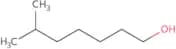
CAS:<p>6-Methylheptanol is a chemical compound that belongs to the group of imidazole hydrochlorides. It is used as a catalyst for the treatment of wastewater. 6-Methylheptanol has been shown to catalyze the reaction of malonic acid with glycol ethers and hydroxyl groups in water, which produces high values of phosphorus pentoxide. The kinetic data and reaction mechanism for this process have been elucidated by using a model system and reaction solution. 6-Methylheptanol also has an effect on polymerase chain reactions (PCR) due to its ability to increase the temperature at which the enzyme works.</p>Formula:C8H18OPurity:Min. 97 Area-%Color and Shape:Colorless Clear LiquidMolecular weight:130.23 g/mol2-Chloro-3-nitropyridine
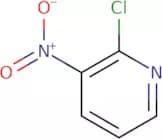
CAS:2-Chloro-3-nitropyridine is a nucleophilic compound that reacts with amines to form substituted amines. It can be synthesized by hydrolysis of chloroacetamide with hydrochloric acid and reacting the resulting ammonium chloride with nitrobenzene. The reactions are nucleophilic substitutions, which means it reacts at an electron rich atom such as the nitrogen in the ammonium chloride. This reaction is exothermic, meaning it releases heat, and the products are 2-chloro-3-nitropyridine and water. 2-Chloro-3-nitropyridine has been shown to inhibit α subunit of protein kinase C (PKCα) activity by binding to the PKCα ATP site. It also has been shown to react with proteins containing reactive sulfhydryl groups such as cysteine residues, forming sulfonamides or sulfoxides that may inhibit enzyme activity orFormula:C5H3ClN2O2Purity:Min. 95%Color and Shape:Slightly Yellow PowderMolecular weight:158.54 g/mol2-Hydroxy-4-bromopyridine
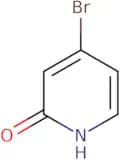
CAS:<p>2-Hydroxy-4-bromopyridine (2HBP) is a product with genotoxic activity that can be used for research. 2HBP has been shown to inhibit the synthesis of DNA by inhibiting the enzymatic reaction or binding to DNA. 2HBP is also an inhibitor of virus replication and causes monolayer cell death through radiation or chemical structures. It can be used as an anti-tumor agent and has been shown to have inhibitory properties on dna replication.</p>Formula:C5H4BrNOPurity:Min. 98 Area-%Color and Shape:White PowderMolecular weight:174 g/mol6-Chloro-2-cyano-3-nitropyridine
CAS:<p>6-Chloro-2-cyano-3-nitropyridine is a modified pyridine derivative that has been shown to be an antagonist of the adenosine receptors. 6-Chloro-2-cyano-3-nitropyridine blocks the binding of adenosine to A1 and A2A receptors, which leads to increased levels of cyclic AMP in cells. This compound can be used as an antiviral agent or as a component in the development of a new generation of drugs for the treatment of malaria. 6-Chloro-2-cyano-3-nitropyridine has also been shown to be active against HIV, inhibiting its replication and preventing viral assembly. The drug’s mechanism of action is not yet fully understood, but it may involve interference with viral replication by binding to sulfinyl groups on proteins required for virus assembly.</p>Formula:C6H2ClN3O2Purity:Min. 95%Color and Shape:PowderMolecular weight:183.55 g/mol6-Chloropurine
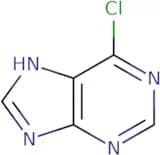
CAS:<p>6-Chloropurine is an isothiouronium salt that is metabolized by the enzyme thiopurine methyltransferase to its active form, 6-methylthioinosine. It has been shown to inhibit the growth of bacterial cells in culture by binding to their adenine nucleotide. 6-Chloropurine inhibits the synthesis of purines and pyrimidines, which are involved in DNA replication and RNA synthesis. 6-Chloropurine has been shown to have cytotoxic effects on certain human carcinoma cell lines and may be used as a chemotherapeutic agent for these types of cancer. The drug has also been shown to have high values with aerobacter aerogenes, which is a bacterium that can cause lung infections.</p>Formula:C5H3ClN4Purity:Min. 99 Area-%Color and Shape:Yellow PowderMolecular weight:154.56 g/mol