Building Blocks
This section contains fundamental products for the synthesis of organic and biological compounds. Building blocks are the essential starting materials used to construct complex molecules through various chemical reactions. They play a critical role in drug discovery, material science, and chemical research. At CymitQuimica, we offer a diverse range of high-quality building blocks to support your innovative research and industrial projects, ensuring you have the essential components for successful synthesis.
Subcategories of "Building Blocks"
- Boronic Acids & Boronic Acid Derivatives(5,756 products)
- Chiral Building Blocks(1,242 products)
- Hydrocarbon Building Blocks(6,095 products)
- Organic Building Blocks(61,055 products)
Found 199650 products of "Building Blocks"
Sort by
Purity (%)
0
100
|
0
|
50
|
90
|
95
|
100
4-[8-[(2,6-Diethoxy-4′-fluoro[1,1′-biphenyl]-4-yl)methyl]-3-oxo-2,8-diazaspiro[4.5]dec-2-yl]benzoic acid hydrochloride
<p>Please enquire for more information about 4-[8-[(2,6-Diethoxy-4′-fluoro[1,1′-biphenyl]-4-yl)methyl]-3-oxo-2,8-diazaspiro[4.5]dec-2-yl]benzoic acid hydrochloride including the price, delivery time and more detailed product information at the technical inquiry form on this page</p>Formula:C32H35FN2O5•(HCl)xPurity:Min. 95%Color and Shape:Powder1,1-Dimethylethyl (2S)-2-[[[5-(tributylstannyl)-3-pyridinyl]oxy]methyl]-1-azetidinecarboxylate
CAS:Controlled Product<p>Please enquire for more information about 1,1-Dimethylethyl (2S)-2-[[[5-(tributylstannyl)-3-pyridinyl]oxy]methyl]-1-azetidinecarboxylate including the price, delivery time and more detailed product information at the technical inquiry form on this page</p>Formula:C26H46N2O3SnPurity:Min. 95%Color and Shape:Clear LiquidMolecular weight:553.37 g/mol2-(Diphenylamino)benzoic acid
CAS:<p>Please enquire for more information about 2-(Diphenylamino)benzoic acid including the price, delivery time and more detailed product information at the technical inquiry form on this page</p>Formula:C19H15NO2Purity:Min. 95%Molecular weight:289.33 g/molN,N'-Dimethyl-trans-1,2-cyclohexanediamine
CAS:<p>N,N'-Dimethyl-trans-1,2-cyclohexanediamine (DMCDA) is a hydroxy compound that can be used as an intermediate for the synthesis of various organic compounds. It has been shown to have a stable hydroxy group and hydrogen bond donor. DMCDA is also reactive, with a reaction rate of 10.5x10 mol/s at room temperature. DMCDA forms reaction intermediates such as oxazolidinones and 1,4-dioxanes. These intermediates have been studied by structural studies and kinetic methods to understand the mechanism of the reaction. The chronic oral toxicity of DMCDA has been determined in rats through a series of experiments and tests on protein genes. The oral LD50 value was found to be more than 5000 mg/kg body weight. This means that there is no adverse effect on the body when 5000 mg/kg or more is taken orally over an extended period (usually 28 days). Functional</p>Formula:C8H18N2Purity:Min. 98.5%Color and Shape:Clear Liquid Solidified MassMolecular weight:142.24 g/mol2,5-Dimethoxybenzoic acid
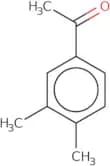
CAS:<p>2,5-Dimethoxybenzoic acid (2,5-DMA) is a plant metabolite that belongs to the group of cinnamic acid derivatives. It can be found in plants and has been shown to have systemic effects. 2,5-DMA is involved in the cycloacylation of protocatechuic acid. This reaction is catalyzed by an enzyme called cyclooxygenase and requires molecular oxygen as a cofactor. 2,5-DMA also forms hydrogen bonds with methoxy groups and other molecules. The monoclonal antibodies against 2,5-DMA have been used for radiation therapy and are effective against cancer cells. Model studies show that 2,5-DMA can be converted into more potent metabolites by the action of cytochrome P450 enzymes or glutathione S-transferases.</p>Formula:C9H10O4Purity:Min. 95%Color and Shape:PowderMolecular weight:182.17 g/mol3',4'-Dimethylacetophenone
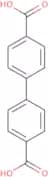
CAS:<p>3',4'-Dimethylacetophenone is a natural product that belongs to the class of salicylates. It is a yellow oily liquid with an odor reminiscent of ocimene, which has been shown to be an attractant for the cotton bollworm (Hirsutum). 3',4'-Dimethylacetophenone is also used in cyclization reactions, such as the conversion of a benzene ring into a cyclohexane ring. This compound can be found in many plants and flowers, including hirsutum, caryophyllene, gossypium, medicago, and chalcone. The molecule can be synthesized in several ways through combinations of different reactants.</p>Formula:C10H12OPurity:Min. 95%Color and Shape:PowderMolecular weight:148.2 g/mol4,4'-Dibenzoic acid
CAS:<p>4,4'-Dibenzoic acid is a chemical compound that has been used as a precursor to other compounds. It is also used in the production of polycarbonates and epoxy resins. 4,4'-Dibenzoic acid has low energy, which means it can be transported more easily than high energy molecules. This property makes it an excellent candidate for use as an enhancement agent for organometallic catalysts such as biphenyl. The structure of 4,4'-dibenzoic acid consists of two benzene rings connected by an ethylene chain. This molecule has one hydrogen bond on each side of the molecule. The 4-hydroxyl group on the left side of the molecule is susceptible to oxidation and can act as an oxidation catalyst when exposed to heat or radiation.</p>Formula:C14H10O4Purity:Min. 95%Color and Shape:PowderMolecular weight:242.23 g/mol3,4-Dihydroxybenzonitrile
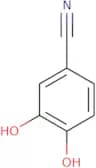
CAS:<p>3,4-Dihydroxybenzonitrile is a chemical compound that is found in soybean lipoxygenase. The molecule has been shown to be an excellent Michaelis-Menten substrate and hydrogen bonding partner. It also reacts with chlorine to form chlorinating agents such as 3,4-dichlorobenzonitrile and 3,4-dibromobenzonitrile. 3,4-Dihydroxybenzonitrile can act as a nucleophile and forms stable complexes when reacted with hydroxyl group compounds such as protocatechuic acid or reaction solution. This chemical is reactive and can be activated by redox cycling or light.<br>3,4-Dihydroxybenzonitrile has been used to treat protocatechuic acid levels in the blood of patients with chronic liver disease who are being treated for alcoholism.</p>Formula:C7H5NO2Purity:Min. 95%Color and Shape:PowderMolecular weight:135.12 g/mol[1,1'-Biphenyl]-2,4,4'-triol
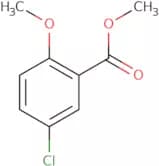
CAS:<p>Versatile small molecule scaffold</p>Formula:C12H10O3Purity:Min. 95%Color and Shape:PowderMolecular weight:202.21 g/mol5-Chloro-2-methoxybenzoic methyl ester
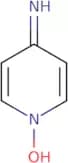
CAS:<p>5-Chloro-2-methoxybenzoic methyl ester is a versatile building block commonly used in the synthesis of various compounds. It serves as an acid methyl ester, making it suitable for use in medicinal chemistry and other synthetic applications. This compound can be obtained through pyrolysis or by reacting 5-chloro-2-methoxybenzoic acid with methanol under appropriate conditions.</p>Formula:C9H9ClO3Purity:Min. 95%Color and Shape:PowderMolecular weight:200.62 g/mol4-Aminopyridine N-oxide
CAS:<p>4-Aminopyridine N-oxide is a white, crystalline solid that is soluble in water and alcohol. It has a molecular weight of 128.2 and formula weight of 135.2. 4-Aminopyridine N-oxide reacts with acid solutions to produce nitrous acid and ammonia gas. The rate of the reaction depends on the concentration of aminopyridine and aniline, as well as the pH of the solution. The acetylation, diazotisation, and kinetics have also been studied extensively for this compound. Nitrous acid can react with amides to form azulene, which can then react with amines to form a molecule containing nitrogen, oxygen, carbon, hydrogen and one other element or compound from each group (e.g., NHCOCH). This reaction is reversible when solvents are present.br> 4-Aminopyridine N-oxide may be used as a precursor for other organic</p>Formula:C5H6N2OPurity:Min. 95%Color and Shape:Slightly Yellow PowderMolecular weight:110.11 g/mol4-Acetoxystyrene Stabilized with TB
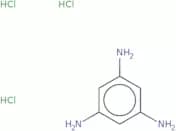
CAS:<p>Stabilised with TB</p>Formula:C10H10O2Molecular weight:162.19 g/mol1,3,5-Triaminobenzene trihydrochloride
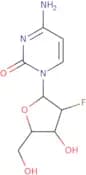
CAS:<p>1,3,5-Triaminobenzene trihydrochloride (TAT) is a low detection fluorescent probe that can be used as an introducing agent to introduce a triazine skeleton into a variety of heterocyclic amines. TAT has been shown to have the ability to bind with many different functional groups, such as amines and hydroxyls. The fluorescence of TAT is proportional to the amount of hydrogen bonding interactions between the probe and other molecules. TAT can be detected by means of energy-dispersive x-ray spectroscopy.</p>Formula:C6H12Cl3N3Purity:Min. 95%Color and Shape:White PowderMolecular weight:232.54 g/mol4-Amino-1-(2-deoxy-2-fluoro-β-D-arabinofuranosyl)-2(1H)-pyrimidinone
CAS:<p>Please enquire for more information about 4-Amino-1-(2-deoxy-2-fluoro-β-D-arabinofuranosyl)-2(1H)-pyrimidinone including the price, delivery time and more detailed product information at the technical inquiry form on this page</p>Formula:C9H12FN3O4Purity:Min. 95%Molecular weight:245.21 g/mol4-Chloro-7-azaindole
CAS:<p>4-Chloro-7-azaindole (4CA) is a molecule that has been shown to have significant cytotoxicity against cancer cells in vitro. 4CA inhibits the growth of cancer cells by binding to their DNA, preventing the synthesis of new DNA strands and leading to cell death. The inhibitory effect of 4CA on cancer cells can be attributed to its ability to bind to nitrogen atoms in the molecule's skeleton. This binding prevents the formation of hydrogen bonds between the molecule and other molecules or proteins, which are necessary for the synthesis of new DNA strands. 4CA has been shown to be active against human ovarian carcinoma and carcinoma cell lines in vitro.</p>Formula:C7H5N2ClPurity:Min. 95 Area-%Color and Shape:PowderMolecular weight:152.58 g/mol1,4-Cyclohexanedione monoethlylene acetal
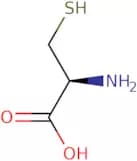
CAS:<p>1,4-Cyclohexanedione monoethlylene acetal is a hydrochloric acid analog of pyrazole. It has been shown to bind selectively to serotonin receptors in the central nervous system and is used as an anti-inflammatory drug. 1,4-Cyclohexanedione monoethlylene acetal has a stereoselective profile that can be used for the treatment of inflammatory diseases. It has also been shown to have immunosuppressant properties, which may be due to its ability to inhibit T-cell proliferation and cytokine production.</p>Formula:C8H12O3Purity:Min. 95%Color and Shape:White PowderMolecular weight:156.18 g/molD-Cysteine
CAS:<p>D-Cysteine is a versatile building block for the synthesis of complex compounds and peptides.</p>Formula:C3H7NO2SMolecular weight:121.16 g/mol1,5-Anhydro-D-glucitol 6-dihydrogenphosphate disodium
CAS:<p>Please enquire for more information about 1,5-Anhydro-D-glucitol 6-dihydrogenphosphate disodium including the price, delivery time and more detailed product information at the technical inquiry form on this page</p>Formula:C6H13O8P•Na2Purity:Min. 95%Molecular weight:290.12 g/mol3-(Cyclohexylamino)-1-propanesulfonic acid sodium salt
CAS:<p>CAS No. 105140-23-6 is a cyclic sulfonic acid that is used as a reagent, building block, and intermediate in the synthesis of organic compounds. It is soluble in water and has a high melting point, making it useful for research purposes. CAS No. 105140-23-6 is also an excellent scaffold for complex compounds with many functional groups, making it versatile for use in reactions and syntheses.</p>Formula:C9H18NO3SNaMolecular weight:243.3 g/mol6-Cyanoindole
CAS:<p>6-Cyanoindole is a reactive intermediate in organic synthesis. It is used as a building block for the synthesis of other chemical compounds.</p>Formula:C9H6N2Molecular weight:142.16 g/mol
![4-[8-[(2,6-Diethoxy-4′-fluoro[1,1′-biphenyl]-4-yl)methyl]-3-oxo-2,8-diazaspiro[4.5]dec-2-yl]benzoi…](/_next/image/?url=https%3A%2Fstatic.cymitquimica.com%2Fproducts%2F3D%2Fthumb-webp%2FFD183056.webp&w=3840&q=75)

![1,1-Dimethylethyl (2S)-2-[[[5-(tributylstannyl)-3-pyridinyl]oxy]methyl]-1-azetidinecarboxylate](/_next/image/?url=https%3A%2Fstatic.cymitquimica.com%2Fproducts%2F3D%2Fthumb-webp%2FFD183344.webp&w=3840&q=75)



![[1,1'-Biphenyl]-2,4,4'-triol](/_next/image/?url=https%3A%2Fstatic.cymitquimica.com%2Fproducts%2F3D%2Fthumb-webp%2FRCA62411.webp&w=3840&q=75)