Building Blocks
This section contains fundamental products for the synthesis of organic and biological compounds. Building blocks are the essential starting materials used to construct complex molecules through various chemical reactions. They play a critical role in drug discovery, material science, and chemical research. At CymitQuimica, we offer a diverse range of high-quality building blocks to support your innovative research and industrial projects, ensuring you have the essential components for successful synthesis.
Subcategories of "Building Blocks"
- Boronic Acids & Boronic Acid Derivatives(5,756 products)
- Chiral Building Blocks(1,242 products)
- Hydrocarbon Building Blocks(6,095 products)
- Organic Building Blocks(61,051 products)
Found 199813 products of "Building Blocks"
Sort by
Purity (%)
0
100
|
0
|
50
|
90
|
95
|
100
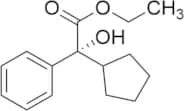
Ethyl (alphaR)-α-Cyclopentyl-α-Hydroxybenzeneacetate
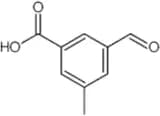
CAS:Controlled ProductFormula:C15H20O3Color and Shape:NeatMolecular weight:248.3173-Formyl-5-methylbenzoic Acid
CAS:Controlled Product<p>Applications 3-Formyl-5-methylbenzoic Acid<br></p>Formula:C9H8O3Color and Shape:NeatMolecular weight:164.162H-Furo[2,3-c]pyran-2-one
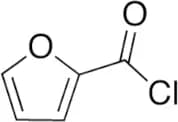
CAS:<p>Applications Forest fires are actually beneficial for ecosystems, provided they don’t happen too often. After a fire, plants germinate and grow incredibly fast. 2H-Furo[2,3-c]pyran-2-one, KAR2, is a compound in smoke responsible for promoting the seed germination of a wide range of plant species. The researchers named the compounds “the karrikins”, for “karrik”, an aboriginal word for smoke.<br>References Sakuma, H., et al.: .Agric Biol. Chem., 45, 443 (1981), Stevens, J., et al.: Plant Soil, 298, 113 (2007), Nelson, D., et al.: Plant Physiol., 149, 863 (2009),<br></p>Formula:C7H4O3Color and Shape:NeatMolecular weight:136.1Furoyl Chloride
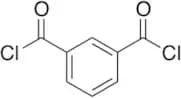
CAS:<p>Applications Furoyl Chloride is used in the preparation of novel dibenzothiepins that show antibiofilm activity.<br> Not a dangerous good if item is equal to or less than 1g/ml and there is less than 100g/ml in the package<br>References Stecoza, C. et al.: Curr. Org. Chem., 17, 113 (2013);<br></p>Formula:C5H3ClO2Color and Shape:NeatMolecular weight:130.53Isophthaloyl Chloride
CAS:Controlled ProductFormula:C8H4Cl2O2Color and Shape:NeatMolecular weight:203.02Isopropylsulphonyl Choride
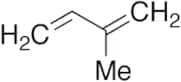
CAS:Formula:C3H7ClO2SColor and Shape:Clear ColourlessMolecular weight:142.6Isoprene (Stabilized with TBC)
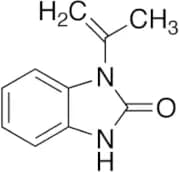
CAS:Controlled Product<p>Stability Light Sensitive<br>Applications Isoprene is used in the synthesis of rubber through a polymer synthetic route.<br> E3<br>References Pugachov, V. et al.: Lat. J. Phys. Tech. Sci., 46, 56 (2009); Oprea, C. et al.: Polym. Plas. Tech. Eng., 27, 173 (1988);<br></p>Formula:C5H8Color and Shape:ColourlessMolecular weight:68.121-Isopropenyl-2-benzimidazolidinone
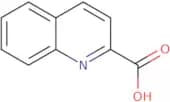
CAS:Controlled Product<p>Applications 1-Isopropenyl-2-benzimidazolidinone (cas# 52099-72-6) is a compound useful in organic synthesis.<br> Not a dangerous good if item is equal to or less than 1g/ml and there is less than 100g/ml in the package<br></p>Formula:C10H10N2OColor and Shape:NeatMolecular weight:174.202-Quinolinecarboxylic acid
CAS:<p>2-Quinolinecarboxylic acid is an antibiotic that is used in the treatment of bacterial infections and has inhibitory properties. It has been shown to be a competitive inhibitor of the enzyme quinolinate phosphoribosyltransferase, which catalyzes the conversion of quinolinic acid to nicotinic acid. 2-Quinolinecarboxylic acid binds to the active site of the enzyme and prevents substrate binding, thereby blocking the production of nicotinic acid. This drug also inhibits bacterial growth by binding to DNA-dependent RNA polymerase, thereby preventing transcription and replication. The high frequency of human activity has been shown using a patch-clamp technique on human erythrocytes. This active form is metabolized through a number of metabolic transformations, including hydrolysis by esterases or glucuronidases, oxidation by cytochrome P450 enzymes, reduction by glutathione reductase, or conjugation with glucur</p>Formula:C10H7NO2Purity:Min. 98 Area-%Color and Shape:PowderMolecular weight:173.17 g/molDL-Asparagine monohydrate
CAS:<p>DL-Asparagine monohydrate is a white crystalline powder that is soluble in water. It has been used as a building block for the synthesis of various compounds and as a reaction component in chemical research.</p>Formula:C4H10N2O4Molecular weight:150.14 g/mol7-Azaindole
CAS:<p>7-Azaindole is a chemical compound that can be used as a building block in organic synthesis. It can be used as a reactant in the preparation of other chemicals, such as dyes, rubber accelerators, and pharmaceuticals. 7-Azaindole is also useful as an intermediate in the production of polymers, such as polyurethanes and polyesters. This chemical is soluble in water and alcohols, but insoluble in ethers and chloroform. 7-Azaindole has been classified by the International Agency for Research on Cancer (IARC) as Group 3: Not Classifiable as to its Carcinogenicity to Humans.</p>Formula:C7H6N2Purity:Min. 98.0 Area-%Molecular weight:118.14 g/molRef: 3D-A-9500
1kgTo inquire5kgTo inquire250gTo inquire500gTo inquire2500gTo inquire-Unit-kgkgTo inquire4-Cyclohexylcyclohexan-1-one
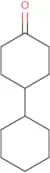
CAS:<p>4-Cyclohexylcyclohexan-1-one is an organic solvent that has a high boiling point and low vapor pressure. It is a colorless liquid with a sweet odor. 4-Cyclohexylcyclohexan-1-one is used in the production of hydrochloride salts and cyclic hydrocarbons, as well as in organic synthesis reactions involving boron nitride, reaction mechanisms, and efficient methods. Exposure to 4-cyclohexylcyclohexan-1-one can lead to chronic health effects such as dehydration and reduced lung function. The functional theory of 4-cyclohexylcyclohexan-1-one is that it reacts with water molecules to produce hydrogen chloride gas. Hydrochloric acid is produced when 4CCHC reacts with hydrochlorides salts. This reaction produces particles that are small enough to be inhaled into the lungs, which can cause particle toxicity, respiratory irritation, and pulmonary</p>Formula:C12H20OPurity:Min. 95%Color and Shape:PowderMolecular weight:180.29 g/molBenzyl methyl ether
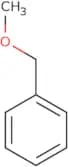
CAS:<p>Benzyl methyl ether is a colorless liquid with a sweet odor. It is used as an organic solvent in chemical reactions and as a solvent in the synthesis of pharmaceuticals, dyes, pesticides, and other organic compounds. Benzyl methyl ether has been shown to react with oxygen and light to produce benzoic acid. The reaction between benzyl methyl ether and glycol ether can be used for sample preparation prior to analysis using gas chromatography-mass spectrometry (GC-MS). GC-MS is often used for the identification of unknown substances in environmental samples. Benzyl methyl ether can also be used for chemical ionization (CI) in mass spectrometry.</p>Formula:C8H10OPurity:Min. 95%Molecular weight:122.17 g/mol4-Methoxy-6-methyl-2H,5H,6H,7H,8H-[1,3]dioxolo[4,5-G]isoquinoline
CAS:4-Methoxy-6-methyl-2H,5H,6H,7H,8H-[1,3]dioxolo[4,5-G]isoquinoline is an electron donor that has been shown to have an excitatory effect on cells. It has been used for the treatment of cancer and other diseases. 4-Methoxy-6-methyl-2H,5H,6H,7H,8H-[1,3]dioxolo[4,5-G]isoquinoline has been shown to have a cavity inhibiting effect in mice and also inhibits the growth of tumor cells in rats. This drug has been evaluated for clinical use in humans and is available as a granule formulation. The particle size of 4-Methoxy-6-methyl-2H,5H,6H,7H,8H-[1,3]dioxolo[4,5-G]Formula:C12H15NO3Purity:Min. 95%Color and Shape:PowderMolecular weight:221.25 g/mol4,4,4-Trifluoro-1-phenylbutan-1-one
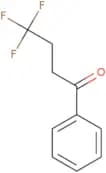
CAS:<p>4,4,4-Trifluoro-1-phenylbutan-1-one is an organic solvent and inexpensively reactant that is used in the production of dioxane. It is a colorless liquid with a pungent odor that can be found in many industrial applications. The substance has been shown to be toxic to humans at high doses.</p>Formula:C10H9F3OPurity:Min. 95%Color and Shape:PowderMolecular weight:202.17 g/mol3-Phenylbutan-2-one
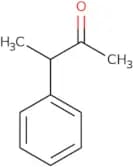
CAS:<p>3-Phenylbutan-2-one is a volatile oil that possesses bactericidal activity. 3-Phenylbutan-2-one has been shown to inhibit the growth of Enterobacter aerogenes and Bacillus subtilis at high concentrations by hydrogen bonding with the enzyme enolate anion, which is involved in the synthesis of fatty acids. 3-Phenylbutan-2-one also inhibits nitro group formation and ether extract production through steric interactions, thereby preventing bacterial cell wall synthesis. The antibacterial mechanism of 3-phenylbutan-2-one is due to its ability to react with steroid glycosides in intramolecular hydrogen transfer reactions.</p>Formula:C10H12OPurity:Min. 95%Color and Shape:Clear LiquidMolecular weight:148.2 g/molTrimethylpyruvic acid
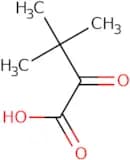
CAS:<p>Trimethylpyruvic acid is an organic compound that is a colorless liquid with a strong odor. It is produced by the oxidation of l-tert-leucine with hydrogen peroxide in the presence of sodium hydroxide. The molecule is chiral, which means it can exist as two different forms that have different physical and chemical properties. Trimethylpyruvic acid can be used for the synthesis of other molecules, including amides, carboxylic acids, and nucleotides. It also has photochemical properties and can be used in reactions that require heating or light.</p>Formula:C6H10O3Purity:Min. 95%Color and Shape:Clear LiquidMolecular weight:130.14 g/mol4-Amino-3-chloro-N-[2-(diethylamino)ethyl]benzamide
CAS:4-Amino-3-chloro-N-[2-(diethylamino)ethyl]benzamide (4ACB) is a benzoquinone analog that has been shown to inhibit the proliferation of muscle cells. It has also been found to be reactive with reactive functional groups, such as the fatty acids found in the liver and bowel. 4ACB suppresses mitochondrial functions, which may contribute to its anti-inflammatory effects. This drug is also a pharmacological agent that inhibits bowel disease by reducing the secretion of inflammatory substances from cells in the bowel.Formula:C13H20ClN3OPurity:Min. 95%Color and Shape:PowderMolecular weight:269.77 g/mol2,5-Thiophenedicarboxaldehyde
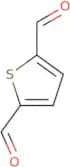
CAS:<p>2,5-Thiophenedicarboxaldehyde (2,5-TDA) is a macrocyclic nitrogen heterocycle that activates the protein kinase cAMP-dependent protein kinase A. This activation leads to increased transcription of genes controlled by this pathway and may be involved in tumor treatment. 2,5-TDA has been shown to be toxic to amines and can be used as an analytical chemistry reagent. It is also used as a starting material for the synthesis of other compounds. 2,5-TDA is prepared by oxidation of thiophene with hydrochloric acid or trifluoroacetic acid. The reaction results in an irreversible oxidation that proceeds via a radical mechanism. The isolated yield is low because 2,5-TDA is thermodynamically unstable and decomposes at higher temperatures.</p>Formula:C6H4O2SPurity:Min. 95%Color and Shape:PowderMolecular weight:140.16 g/mol

![2H-Furo[2,3-c]pyran-2-one](/_next/image/?url=https%3A%2Fstatic.cymitquimica.com%2Fproducts%2FTR%2Fthumb-webp%2FF864800.webp&w=3840&q=75)




![4-Methoxy-6-methyl-2H,5H,6H,7H,8H-[1,3]dioxolo[4,5-G]isoquinoline](/_next/image/?url=https%3A%2Fstatic.cymitquimica.com%2Fproducts%2F3D%2Fthumb-webp%2FAAA55010.webp&w=3840&q=75)
![4-Amino-3-chloro-N-[2-(diethylamino)ethyl]benzamide](/_next/image/?url=https%3A%2Fstatic.cymitquimica.com%2Fproducts%2F3D%2Fthumb-webp%2FAAA89160.webp&w=3840&q=75)