Building Blocks
This section contains fundamental products for the synthesis of organic and biological compounds. Building blocks are the essential starting materials used to construct complex molecules through various chemical reactions. They play a critical role in drug discovery, material science, and chemical research. At CymitQuimica, we offer a diverse range of high-quality building blocks to support your innovative research and industrial projects, ensuring you have the essential components for successful synthesis.
Subcategories of "Building Blocks"
- Boronic Acids & Boronic Acid Derivatives(5,778 products)
- Chiral Building Blocks(1,242 products)
- Hydrocarbon Building Blocks(6,098 products)
- Organic Building Blocks(61,034 products)
Found 199601 products of "Building Blocks"
Sort by
Purity (%)
0
100
|
0
|
50
|
90
|
95
|
100
Fmoc-Trp(Boc)-OH
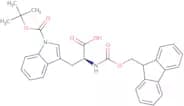
CAS:<p>Fmoc-Trp(Boc)-OH is an amide that has been shown to have the ability to bind to human serum proteins, making it useful in clinical diagnostics. This compound has also been found to be effective against a variety of bacterial strains and fungi. The Fmoc-Trp(Boc)-OH peptide can be synthesized using solid-phase synthesis techniques, which involve attaching amino acid residues to a polymer support. This process is cell specific and allows for the production of peptides with specific sequences. The presence of histidine residues on the side chain of this molecule makes it a good candidate for use in antimicrobial peptides.</p>Formula:C31H30N2O6Purity:Min. 98 Area-%Color and Shape:White Off-White PowderMolecular weight:526.58 g/molFmoc-Tyr(tBu)-OH
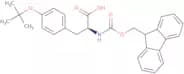
CAS:<p>Fmoc-Tyr(tBu)-OH is an amide that binds to the natriuretic receptor. It has a disulfide bond with a hydroxyapatite, which makes it more stable and inhibits its degradation. Fmoc-Tyr(tBu)-OH is hemolytic in vitro and minimally toxic in vivo at high concentrations. It also has a hydroxyl group, which can be used to synthesize other molecules. Fmoc-Tyr(tBu)-OH also has antimicrobial properties, as it inhibits the growth of bacteria and fungi by binding to cell membranes and disrupting their integrity.br>br> Fmoc-Tyr(tBu)-OH is taken up by cells through sodium/hydrogen antiporter system. This uptake process is mediated by the protein Na+, K+ -ATPase, which provides energy for transport across the membrane.</p>Formula:C28H29NO5Purity:Min. 98 Area-%Color and Shape:White Off-White PowderMolecular weight:459.53 g/molFmoc-Lys(Boc)-OH
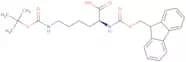
CAS:<p>Fmoc-Lys(Boc)-OH is a synthetic amino acid that has been used to synthesize polypeptides. It is prepared by the reaction of naphthalene, trifluoroacetic acid and copper (II) acetate in an acidic environment. The synthesis of Fmoc-Lys(Boc)-OH involves the use of a high salt and coordination geometry for the copper complex. This amino acid can be used as a cancer drug, because it inhibits NS3 protease, which is an enzyme that promotes tumor growth. Fmoc-Lys(Boc)-OH also binds to carbohydrate receptors on cancer cells and inhibits uptake of these cells by macrophages.</p>Formula:C26H32N2O6Purity:Min. 98 Area-%Color and Shape:White PowderMolecular weight:468.54 g/molFmoc-Gln(Trt)-OH
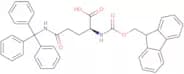
CAS:<p>Fmoc-Gln(Trt)-OH is a synthetic amino acid that contains a hydroxyl group in its side chain. The hydroxyl group of Fmoc-Gln(Trt)-OH can react with other molecules and form conjugates, which leads to impurities in the final product. In the synthesis of Fmoc-Gln(Trt)-OH, the reaction time can affect the efficiency of the synthesis. In order to produce a high concentration of Fmoc-Gln(Trt)-OH, it is necessary to use chromatographic methods for purification. Fmoc-Gln(Trt)-OH has been shown to be beneficial as an anticancer agent due to its ability to inhibit serine proteases.</p>Formula:C39H34N2O5Purity:Min. 98 Area-%Color and Shape:White Off-White PowderMolecular weight:610.7 g/molFmoc-L-Glu-OtBu
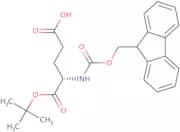
CAS:<p>Fmoc-L-Glu-OtBu is a synthetic ligand that is used as a fluorescent probe in vivo. It has been shown to bind to semaglutide with high affinity, and it can be used to study the function of semaglutide in the cell. Fmoc-L-Glu-OtBu has also been found to have an inhibitory effect on cancer cells. This ligand can be synthesized by solid-phase synthesis and purified by column chromatography. The purity of Fmoc-L-Glu-OtBu is confirmed by elemental analysis, and its impurities are determined by fluorescence spectroscopy. The carboxylate group of Fmoc-L-Glu-OtBu is activated with sulfuric acid to form the corresponding active ester, which can then be conjugated with other molecules.</p>Formula:C24H27NO6Purity:Min. 95%Color and Shape:White PowderMolecular weight:425.47 g/mol2-(Methoxycarbonyl)cyclopropane-1-carboxylic acid
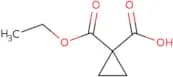
CAS:<p>Versatile small molecule scaffold</p>Formula:C6H8O4Purity:Min. 95%Color and Shape:PowderMolecular weight:144.13 g/molFmoc-Gly-OH
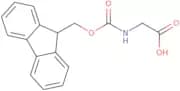
CAS:<p>Fmoc-Gly-OH is a peptide that has been shown to have anti-inflammatory properties. It inhibits the production of inflammatory cytokines by binding to the receptor for IL-1β on du145 cells, which are prostate cancer cells. The synthesis of Fmoc-Gly-OH is achieved through an ester hydrochloride and amide bond formation. This synthesis method is not efficient and requires high amounts of reagents and solvents. Fmoc-Gly-OH has been shown to be effective in inhibiting the inflammatory response in human serum with a dose of 10 μM, but it does not inhibit inflammation in chronic exposure studies with rats or mice.!--</p>Formula:C17H15NO4Purity:Min. 98 Area-%Color and Shape:White Off-White PowderMolecular weight:297.31 g/molFmoc-Arg(Pbf)-OH
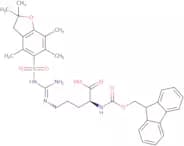
CAS:<p>The Fmoc-Arg(Pbf)-OH is a cyclic peptide that has been shown to have significant cytotoxicity against human tumor cells. It binds to integrin receptors, which are involved in transcriptional regulation and cellular proliferation. The Fmoc-Arg(Pbf)-OH has been shown to be hypoglycemic and it also possesses redox potential. The chemical biology of this compound is not yet known, but toxicity studies have shown that it is nontoxic in mice.</p>Formula:C34H40N4O7SPurity:Min. 98 Area-%Color and Shape:White Off-White PowderMolecular weight:648.77 g/molFmoc-Cys(Trt)-OH
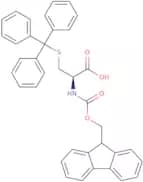
CAS:<p>Fmoc-Cys(Trt)-OH is a cyclic peptide that has potent antitumor activity. It binds to albumin and inhibits protein synthesis, leading to cell death by inhibiting the production of proteins vital for cell division. Fmoc-Cys(Trt)-OH has been shown to be effective against cancer cells in vitro and in vivo. Fmoc-Cys(Trt)-OH also binds the plasma glucose, which may be due to its ability to impede insulin release from the pancreas. This compound is synthesized by a stepwise light-induced solid-phase synthesis with trifluoroacetic acid as a solvent.</p>Formula:C37H31NO4SPurity:Min. 98 Area-%Color and Shape:White PowderMolecular weight:585.71 g/mol2-(1-Phenyl-1H-1,2,3-triazol-4-yl)propan-2-ol
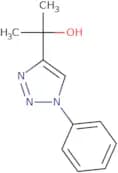
CAS:<p>2-(1-Phenyl-1H-1,2,3-triazol-4-yl)propan-2-ol is a fine chemical that is used as a research chemical and can also be used as a reaction component for the synthesis of other compounds. 2-(1-Phenyl-1H-1,2,3-triazol-4-yl)propan-2-ol has been shown to be an effective building block for the preparation of complex compounds. It has been found to have high quality and is a versatile building block with many uses in research and development.</p>Formula:C11H13N3OPurity:Min. 95%Color and Shape:PowderMolecular weight:203.24 g/mol±,±,p-Tribromoacetophenone
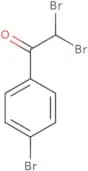
CAS:<p>Tribromoacetophenone is a brominated analog of acetophenone. It can be accessed by the reaction of an acid chloride with acetylacetone and then reacting the resulting bromide with hydrogen bromide. Tribromoacetophenone has been studied as an anti-cancer agent, but has shown little activity in animals. It is also used in the synthesis of other compounds, such as covid-19, which is being studied for its potential use as a pandemic vaccine against influenza type A H5N1.</p>Formula:C8H5OBr3Purity:Min. 95%Color and Shape:PowderMolecular weight:356.84 g/molFmoc-Thr(tBu)-OH
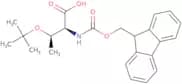
CAS:<p>Fmoc-Thr(tBu)-OH is an ester hydrochloride that is synthesized by reacting the amino acid, Fmoc-Thr(tBu) with trifluoroacetic acid. It has been used to synthesize a cyclic peptide with a protonated amide group, which allows for stereoselective synthesis of the chloride. This product has shown to be resistant to hydrolysis by atosiban and carbonyl oxygens, and also binds to mammalian cell receptors.</p>Formula:C23H27NO5Purity:Min. 98 Area-%Color and Shape:White PowderMolecular weight:397.46 g/molFmoc-Ser(tBu)-OH
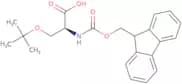
CAS:<p>Fmoc-Ser(tBu)-OH is a synthetic amino acid that is used in the synthesis of degarelix acetate, an amide ester of the vasodilator, prostaglandin F2α. Degarelix acetate binds to the fibrinogen receptor on the surface of cells and inhibits platelet aggregation. This drug has been shown to be effective in treating prostate cancer by inhibiting epidermal growth factor receptor signaling. It also has immune modulating effects by binding to monoclonal antibodies and altering antibody responses. Fmoc-Ser(tBu)-OH is synthesized from the amino acid serine and t-butyl alcohol, which are combined with trifluoroacetic acid (TFA) and hydroxyl group. The resulting product is then reacted with dansyl chloride or benzoyl chloride (BzCl), which cleaves off one carboxylic acid group from serine, forming an</p>Formula:C22H25NO5Purity:Min. 98 Area-%Color and Shape:White Off-White PowderMolecular weight:383.44 g/mol2-Amino-4-methoxybutanoic acid
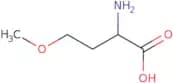
CAS:<p>2-Amino-4-methoxybutanoic acid (2AMBA) is a diagnostic agent that belongs to the class of hydroxyl group containing antimicrobial agents. It has been shown to have conformational properties, which are the spatial arrangement of atoms in a molecule. 2AMBA is a small molecule with neutral pH and has been used as a substrate for peptide synthesis by the yeast Pichia pastoris. 2AMBA has also been shown to have antimicrobial activity against infectious diseases such as Escherichia coli and Pseudomonas aeruginosa, among others. This compound is synthesized by reacting malonic acid with an amine or amide. The reaction forms a cyclic peptide that contains a disulfide bond and fatty acid, which are important for its structure and function.</p>Formula:C5H11NO3Purity:Min. 95%Color and Shape:PowderMolecular weight:133.15 g/mol2-(4-Bromophenyl)-1,3-thiazole
CAS:<p>Versatile small molecule scaffold</p>Formula:C9H6BrNSPurity:Min. 95%Color and Shape:PowderMolecular weight:240.12 g/molFmoc-Leu-OH
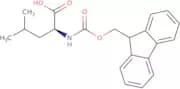
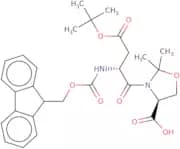
CAS:<p>Fmoc-Leu-OH is a fatty acid that contains a hydroxyl group. It is used in the synthesis of polymer drugs, especially sodium salt polymers. The activity of Fmoc-Leu-OH can be reversed with degarelix acetate, an irreversible inhibitor of ns3 protease. In addition to its use as an antidiabetic agent, Fmoc-Leu-OH has been shown to have immunomodulatory effects and antiinflammatory activity. In tumor treatment, Fmoc-Leu-OH has been shown to inhibit the growth of fat cells without affecting normal cells or causing any toxic side effects.</p>Formula:C21H23NO4Purity:Min. 98 Area-%Color and Shape:White PowderMolecular weight:353.41 g/molFmoc-D-Asp(OtBu)-L-Ser(Psi(Me,Me)pro)-OH
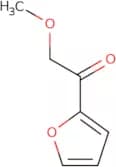
<p>Fmoc-D-Asp(OtBu)-L-Ser(Psi(Me,Me)pro)-OH is a high quality reagent that can be used as an intermediate in the synthesis of complex compounds. It is a useful building block for the synthesis of speciality chemicals and research chemicals. Fmoc-D-Asp(OtBu)-L-Ser(Psi(Me,Me)pro)-OH is also a versatile building block that can be used to synthesize different types of compounds.</p>Formula:C29H34N2O8Purity:Min. 95%Color and Shape:PowderMolecular weight:538.59 g/mol1-(Furan-2-yl)-2-methoxyethan-1-one
CAS:<p>Versatile small molecule scaffold</p>Formula:C7H8O3Purity:Min. 95%Color and Shape:Clear LiquidMolecular weight:140.14 g/mol1-[(2R)-2-(Hydroxymethyl)pyrrolidin-1-yl]ethan-1-one
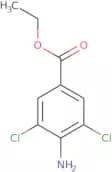
CAS:<p>Versatile small molecule scaffold</p>Formula:C7H13NO2Purity:Min. 95%Molecular weight:143.18 g/molEthyl 3,5-dichloro-4-aminobenzoate
CAS:<p>Ethyl 3,5-dichloro-4-aminobenzoate is a benzyl amine that has been shown to be an effective inhibitor of nitrile synthesis. It is used as a precursor in the production of dyes and pharmaceuticals. Ethyl 3,5-dichloro-4-aminobenzoate is stable in acidic and alkaline solutions, but decomposes when heated or exposed to cyanide ion. This compound can also react with ethylene diamine to form 2,4-diaminoanisole.</p>Formula:C9H9Cl2NO2Purity:Min. 95%Color and Shape:PowderMolecular weight:234.08 g/mol


![1-[(2R)-2-(Hydroxymethyl)pyrrolidin-1-yl]ethan-1-one](/_next/image/?url=https%3A%2Fstatic.cymitquimica.com%2Fproducts%2F3D%2Fthumb-webp%2FYEA95887.webp&w=3840&q=75)