Building Blocks
This section contains fundamental products for the synthesis of organic and biological compounds. Building blocks are the essential starting materials used to construct complex molecules through various chemical reactions. They play a critical role in drug discovery, material science, and chemical research. At CymitQuimica, we offer a diverse range of high-quality building blocks to support your innovative research and industrial projects, ensuring you have the essential components for successful synthesis.
Subcategories of "Building Blocks"
- Boronic Acids & Boronic Acid Derivatives(5,778 products)
- Chiral Building Blocks(1,242 products)
- Hydrocarbon Building Blocks(6,098 products)
- Organic Building Blocks(61,034 products)
Found 199601 products of "Building Blocks"
Sort by
Purity (%)
0
100
|
0
|
50
|
90
|
95
|
100
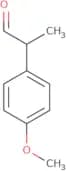
2-(4-Methoxyphenyl)propanal
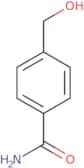
CAS:<p>Versatile small molecule scaffold</p>Formula:C10H12O2Purity:Min. 95%Molecular weight:164.2 g/mol4-(Hydroxymethyl)benzamide
CAS:<p>4-(Hydroxymethyl)benzamide is a heterocyclic compound that is activated with sodium borohydride. It can be used in the synthesis of peptides, which are chains of amino acids. 4-(Hydroxymethyl)benzamide has been shown to have a high efficiency for the synthesis of peptides and has been shown to be an excellent reactant for manual peptide synthesis. Kinetics studies have also shown that this reagent is more effective than other deprotecting agents such as hydrochloric acid. This compound has been found to be useful in the analysis of amino acids and can be used in the ligation reaction during peptide synthesis. The deprotection reactions catalyzed by 4-(Hydroxymethyl)benzamide are typically carried out at room temperature, although solvents such as dichloromethane or chloroform can be used instead if necessary.</p>Formula:C8H9NO2Purity:Min. 95%Molecular weight:151.16 g/mol3-Amino-2-hydroxybenzonitrile
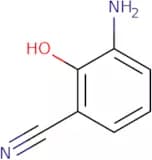
CAS:<p>3-Amino-2-hydroxybenzonitrile is a chemical that can be used as a building block in the synthesis of other compounds. It is also a versatile intermediate for organic synthesis and can be used for the production of pharmaceuticals, agrochemicals, and many other materials. 3-Amino-2-hydroxybenzonitrile is a white solid with a melting point of 203 degrees Celsius. It has high purity, low impurities, and a high quality.</p>Formula:C7H6N2OPurity:Min. 95%Color and Shape:PowderMolecular weight:134.14 g/mol4-(Bromomethyl)benzaldehyde
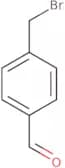
CAS:<p>4-(Bromomethyl)benzaldehyde is a chemical compound that can be synthesized by the reaction of benzaldehyde with bromine in the presence of a base. This compound has been shown to bind to human immunoglobulin G, formyl group and photophysical properties. 4-(Bromomethyl)benzaldehyde has also been used as a model for cancer studies because it binds to DNA and forms an imine bond with thymine. It has been used as a reagent for analytical methods such as phosphotungstic acid, which is a reagent used to detect proteins. The mechanism of this compound is not yet fully understood, but it may involve the formation of an imine bond with thymine in DNA.</p>Formula:C8H7BrOPurity:Min. 95%Color and Shape:PowderMolecular weight:199.04 g/mol1-Bromo-2,4-dinitrobenzene
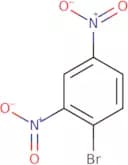
CAS:<p>1-Bromo-2,4-dinitrobenzene, also known as DNB, is a molecule that belongs to the group p2. It has been shown to be a substrate for catalysis in vitro assays. 1-Bromo-2,4-dinitrobenzene is used in cancer research and can inhibit the growth of skin cells. 1-Bromo-2,4-dinitrobenzene does not show any cytotoxic effects on untreated control cells and it has been shown to have limited solubility in water (less than 0.1 g/L). This molecule also shows low reactivity with nucleophilic compounds and has been found to be less reactive than nitro compounds.</p>Formula:C6H3BrN2O4Purity:Min. 95%Color and Shape:Off-White PowderMolecular weight:247 g/mol(S)-1-Boc-3-hydroxypiperidine
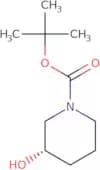
CAS:<p>Intermediate in the synthesis of ibrutinib</p>Formula:C10H19NO3Purity:Min. 97 Area-%Color and Shape:White PowderMolecular weight:201.26 g/mol7-Bromoindole
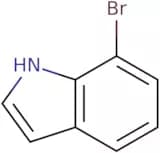
CAS:7-Bromoindole is a synthetic compound that has been used as an analog for indole. It has been shown to have some biological activity in vivo, but it is not known if this activity is due to the drug itself or its breakdown products. 7-Bromoindole can be decarboxylated under acid conditions and saponified with sodium hydroxide. The isolated yield of this reaction is about 2 grams per mole of reactant. 7-Bromoindole shows hemolytic activity against human pathogens such as Staphylococcus aureus and Escherichia coli, but not against Bacillus subtilis or Pseudomonas aeruginosa.Formula:C8H6BrNColor and Shape:PowderMolecular weight:196.04 g/mol5-Chloro-indan-2-ylamine hydrochloride
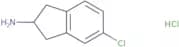
CAS:Controlled Product5-Chloro-indan-2-ylamine hydrochloride is a chemical that can be used as a building block in the synthesis of other chemicals. It is a reagent and useful scaffold in organic synthesis reactions, such as Friedel-Crafts reactions, and can be used to produce indenes. 5-Chloro-indan-2-ylamine hydrochloride is also an intermediate for the production of complex compounds, fine chemicals, and pharmaceuticals. The CAS number for this chemical is 73536-86-4.Formula:C9H10NCl·HClPurity:Min. 95%Color and Shape:PowderMolecular weight:204.09 g/molNα-Nim-Bis-Z-L-histidine ethanol
CAS:<p>Please enquire for more information about Nα-Nim-Bis-Z-L-histidine ethanol including the price, delivery time and more detailed product information at the technical inquiry form on this page</p>Formula:C22H21N3O6•C2H6OPurity:Min. 95%Color and Shape:PowderMolecular weight:469.49 g/molBP fluor 647 NHS ester trisodium
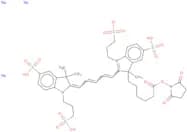
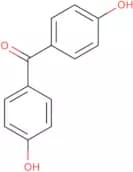
CAS:<p>Please enquire for more information about BP fluor 647 NHS ester trisodium including the price, delivery time and more detailed product information at the technical inquiry form on this page</p>Formula:C40H46N3Na3O16S4Purity:90%MinColor and Shape:PowderMolecular weight:1,022 g/molBis(4-hydroxy)benzophenone
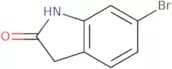
CAS:<p>Bis(4-hydroxyphenyl)benzene is a cross-linking agent that is used as a photoinitiator in the production of polymers and coatings. It is also used in wastewater treatment to remove organic matter, phenols, and other pollutants. This chemical has been shown to have physiological effects on hamster V79 cells and may cause cancer. The toxicity of Bis(4-hydroxyphenyl)benzene can be reduced by the addition of hydroxylamine or hydrogen fluoride. Hydroxyl groups can be quantified using diphenyl ether or p-hydroxybenzoic acid. Bis(4-hydroxyphenyl)benzene also reacts with serine protease and has been shown to inhibit the growth of V79 cells in urine samples.</p>Formula:C13H10O3Purity:Min. 95%Color and Shape:White Off-White PowderMolecular weight:214.22 g/mol6-Bromo-2-oxindole
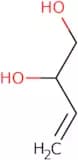
CAS:<p>6-Bromo-2-oxindole is a crystalline compound with a molecular formula of C10H6BrO. It has been shown to have a high efficiency in the production of butyric acid and other organic acids. 6-Bromo-2-oxindole is also used in electron microscopy studies as an electron acceptor, and can be used for producing polymers with crystalline structures and dihedral angles. The compound has been shown to inhibit the growth of breast cancer cells by preventing the synthesis of mda-mb-231 breast cancer cells. It also has been shown to inhibit the production of isoindigo and morphology.</p>Formula:C8H6BrNOPurity:Min. 98 Area-%Color and Shape:PowderMolecular weight:212.04 g/mol1-Butene-3,4-diol
CAS:<p>1-Butene-3,4-diol is a reactive compound that is used in analytical methods. It can be synthesized by an asymmetric synthesis from 1,2-butanediol. This product has been shown to inhibit aminotransferase activity in rat liver microsomes and to be metabolized through the cytochrome P450 system. 1-Butene-3,4-diol also inhibits polymerase chain reactions and is reactive with hydrochloric acid. It may cause fatty acid metabolism and hydroxyl group formation.</p>Formula:C4H8O2Purity:Min. 95%Color and Shape:Colorless Clear LiquidMolecular weight:88.11 g/mol2-(Bromomethyl)benzoic acid
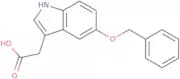
CAS:<p>2-(Bromomethyl)benzoic acid is a functional group that can be found in many organic compounds. It is a derivative of phthalic acid and has some similar properties, including the ability to form micelles and radical species. 2-(Bromomethyl)benzoic acid has been shown to react with carbon tetrachloride or terephthalic acid to produce peroxides. This reaction is initiated by oxidation of the carbon-carbon double bond, which produces a radical pair that reacts with oxygen in the air to form radicals that are stabilized by resonance. 2-(Bromomethyl)benzoic acid also reacts with an inorganic base such as sodium hydroxide or potassium hydroxide to produce bromine gas and water.</p>Formula:C8H7BrO2Purity:Min. 97 Area-%Color and Shape:White Off-White PowderMolecular weight:215.04 g/mol5-Benzyloxyindole-3-acetic acid
CAS:<p>5-Benzyloxyindole-3-acetic acid is a synthetic chemical that is used as a plant growth regulator. It inhibits the uptake of other plant nutrients, such as nitrates and phosphate ions by roots, which leads to decreased plant growth. This compound also has an inhibitory effect on membranes and morphology. The inhibition of membrane transport can lead to cell death, which can be seen in the case of plants treated with this chemical. 5-Benzyloxyindole-3-acetic acid has been shown to affect the response pathway of plants at temperatures between c1-c3 degrees Celsius.</p>Formula:C17H15NO3Purity:Min. 95%Color and Shape:PowderMolecular weight:281.31 g/mol5-Bromoindole-3-carboxaldehyde
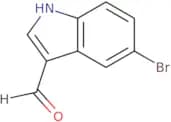
CAS:<p>5-Bromoindole-3-carboxaldehyde is a water molecule that has been crystallized in the form of an amide. It is a chemical substance with asymmetric synthesis and significant antifungal activity. 5-Bromoindole-3-carboxaldehyde is active against some strains of the fungus Candida albicans and has been shown to inhibit the growth of kidney cells. This molecule also binds to the neurokinin 1 receptor and is used as a probe for fluorescence studies. The efficient method for synthesizing 5-Bromoindole-3-carboxaldehyde includes using silico analysis to confirm the structure on a computer, then performing an asymmetric synthesis with an acid catalyst to produce this compound.</p>Formula:C9H6BrNOPurity:Min. 98 Area-%Color and Shape:PowderMolecular weight:224.05 g/molN-alpha-Benzoyl-L-arginine ethyl ester hydrochloride
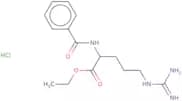
CAS:<p>Benzoyl-L-arginine ethyl ester hydrochloride is a white or beige crystalline solid with a melting point of 85°C. It is soluble in water and ethanol. It has been used as a reagent, speciality chemical, and reaction component for the synthesis of complex compounds. Benzoyl-L-arginine ethyl ester hydrochloride is used as a building block in the synthesis of an intermediate, which is then used to create scaffold drugs.</p>Formula:C15H23ClN4O3Purity:Min. 98 Area-%Color and Shape:White PowderMolecular weight:342.82 g/mol2-[4-(Trifluoromethyl)-1H-imidazol-1-yl]acetic acid
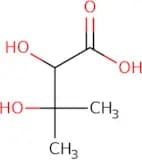
CAS:<p>Versatile small molecule scaffold</p>Formula:C6H5F3N2O2Purity:Min. 95%Color and Shape:PowderMolecular weight:194.11 g/mol2,3-Dihydroxy-3-methylbutanoic acid
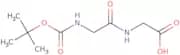
CAS:2,3-Dihydroxy-3-methylbutanoic acid (2,3DMB) is a hydrophobic molecule that is used as an activator of the butyric acid pathway. This activation mechanism has been shown in vitro with the use of 2,3DMB and racemase to convert isovaleric acid into butyric acid. The activation mechanism can be seen in vivo by synthesizing 2,3DMB from its constituent parts: magnesium ion and a monocarboxylic acid. The reaction occurs when magnesium ion binds to the carboxyl group of a monocarboxylic acid in the presence of water. In this reaction, water acts as a base to remove hydrogen ions from the carboxyl group and release protons. The protonated carboxyl group then reacts with magnesium ion to form an intermediate compound called Grignard reagent. The Grignard reagent will react with water to form anFormula:C5H10O4Purity:Min. 95%Color and Shape:PowderMolecular weight:134.13 g/molBoc-Gly-Gly-OH
CAS:<p>Boc-Gly-Gly-OH is a synthetic molecule with inhibitory properties. It has been shown to prevent the polymerization of tubulin into microtubules by binding to the hydroxyl group on lysine residues in the monomeric form. Boc-Gly-Gly-OH can be used as a reagent in organic solution, and can be seen under an electron microscope as nanodots.</p>Formula:C9H16N2O5Purity:Min. 95%Color and Shape:PowderMolecular weight:232.23 g/mol


![2-[4-(Trifluoromethyl)-1H-imidazol-1-yl]acetic acid](/_next/image/?url=https%3A%2Fstatic.cymitquimica.com%2Fproducts%2F3D%2Fthumb-webp%2FRXB25564.webp&w=3840&q=75)