Building Blocks
This section contains fundamental products for the synthesis of organic and biological compounds. Building blocks are the essential starting materials used to construct complex molecules through various chemical reactions. They play a critical role in drug discovery, material science, and chemical research. At CymitQuimica, we offer a diverse range of high-quality building blocks to support your innovative research and industrial projects, ensuring you have the essential components for successful synthesis.
Subcategories of "Building Blocks"
- Boronic Acids & Boronic Acid Derivatives(5,778 products)
- Chiral Building Blocks(1,242 products)
- Hydrocarbon Building Blocks(6,098 products)
- Organic Building Blocks(61,098 products)
Found 199594 products of "Building Blocks"
Sort by
Purity (%)
0
100
|
0
|
50
|
90
|
95
|
100
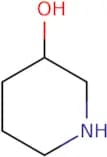
3-Hydroxypiperidine
CAS:<p>3-Hydroxypiperidine is a chemical compound that contains an asymmetric carbonyl group. It has been used in the synthesis of enantiopure pharmaceuticals, and is also a competitive inhibitor for some enzymes. 3-Hydroxypiperidine can be synthesized by hydrogenation reduction or hydroxylation of piperidine. This compound has been shown to have pharmacokinetic properties in rats and mice, as well as inhibitory effects on brain functions such as memory retention and learning. 3-Hydroxypiperidine has also been shown to induce apoptosis in breast cancer cells, which may be due to its ability to inhibit protein synthesis in these cells.</p>Formula:C5H11NOPurity:Min. 95%Color and Shape:White PowderMolecular weight:101.15 g/mol4-Hydroxypyridine
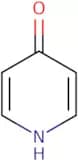
CAS:<p>4-Hydroxypyridine is a nitrite ion that contains two nitrogen atoms. It is used to study microbial metabolism and the role of nitrogen in biological systems. 4-Hydroxypyridine can be synthesized from pyridinium, which can be prepared by treating aniline with nitrous acid. The synthesis of 4-hydroxypyridine has been investigated using a hydroxylation reaction catalyzed by palladium, followed by cyclization to form a cyclic peptide. This reaction has been shown to have significant cytotoxicity against HIV-infected cells, with light emission as a result of the reaction between the hydrogen atom on the pyridine ring and oxygen molecule.</p>Formula:C5H5NOPurity:Min. 98 Area-%Color and Shape:White PowderMolecular weight:95.1 g/molN-Hydroxysuccinimide
CAS:<p>An additive in carbodiimide peptide coupling</p>Formula:C4H5NO3Color and Shape:White PowderMolecular weight:115.09 g/molL-Leucine, USP
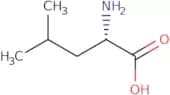
CAS:<p>Amino acid</p>Formula:C6H13NO2Purity:98.5 To 101.5%Color and Shape:White PowderMolecular weight:131.17 g/molLuteolin-4'-O-glucoside
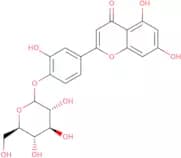
CAS:<p>Luteolin-4'-O-glucoside is a flavonol glycoside that is found in plants such as licorice, celery, and parsley. Luteolin-4'-O-glucoside has been shown to inhibit the growth of Coccidioides neoformans by binding to the cell membrane surface and blocking the synthesis of phospholipids. It also inhibits cancer cells in culture by reducing their viability. The structural analysis of luteolin-4'-O-glucoside revealed an hydroxyl group on its aromatic ring, which may be responsible for its anti-inflammatory effects. Luteolin-4'-O-glucoside has been shown to be effective against inflammatory diseases, such as rheumatoid arthritis and asthma, and may also have a protective effect against certain types of cancer, such as cervical cancer. Luteolin-4'-O-glucoside has also been shown to</p>Formula:C21H20O11Purity:Min. 95%Color and Shape:PowderMolecular weight:448.38 g/molLys(Boc)-OtBu,HCl
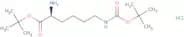
CAS:<p>Lys(Boc)-OtBu,HCl is a versatile building block and research chemical that can be used for the synthesis of complex compounds. This compound is a useful intermediate and reaction component in organic chemistry. It is also a reagent that can be used to synthesize high-quality chemical products.</p>Formula:C15H30N2O4·HClPurity:Min. 95%Color and Shape:White PowderMolecular weight:338.87 g/molLithium bis(trifluoromethanesulfonimide)
CAS:<p>Lithium bis(trifluoromethanesulfonimide) is a salt that is used in analytical chemistry as a reagent for the preparation of lithium salts. The sample should be dissolved in an organic solution and then reacted with lithium bis(trifluoromethanesulfonimide). Lithium bis(trifluoromethanesulfonimide) has been shown to have good transport properties, but the reaction mechanism is not well-understood. It has an activation energy of approximately 18 kcal/mol and can decompose at high temperatures. Lithium bis(trifluoromethanesulfonimide) can also react with strong acids or bases, so it is necessary to use an electrolyte when preparing the solution.</p>Formula:C2F6LiNO4S2Purity:Min 98%Color and Shape:White Off-White PowderMolecular weight:287.09 g/mol4-(Methylamino)cyclohexane-1-sulfonamide hydrochloride
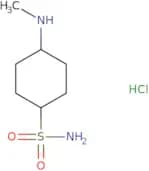
CAS:Versatile small molecule scaffoldFormula:C7H16N2O2S•HClPurity:Min. 95%Color and Shape:PowderMolecular weight:228.7 g/molN-Methyl-beta-alaninenitrile
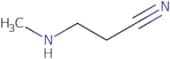
CAS:<p>Formamide is a colorless gas with a pungent, irritating odor. It is used as an antiseptic and an intermediate in the production of other organic compounds. Formamide has been shown to be effective against animal-derived pathogens such as Covid-19 and influenza A/H5N1, and it has been proposed as a potential treatment for pandemic influenza. Formamide reacts with chlorine to produce formate salt (formic acid), which can then be converted into amines or hexamethylphosphoramide. The reaction rate of formamide increases with increasing temperature, but decreases with increasing concentration of hydrogen.<br>Formamide is also used as a solvent in microscopy to dissolve tissue samples for analysis by electron microscopy techniques.</p>Formula:C4H8N2Purity:Min. 98 Area-%Color and Shape:Colorless Clear LiquidMolecular weight:84.12 g/mol7-Methoxy-1H-indole
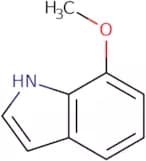
CAS:<p>7-Methoxy-1H-indole (7MI) is a synthetic compound that exhibits anti-inflammatory activity. It is an analog of the amino acid methionine found in proteins and its synthesis involves the condensation of a chlorinated alkyl acetate with an esterified hydrazide to form the corresponding amide. 7MI has been shown to inhibit both bacterial and mammalian protein synthesis, as well as to inhibit tumor cell growth. 7MI binds reversibly to the N7 atom of the adenine base in DNA, thereby inhibiting DNA replication through inhibition of DNA polymerase.</p>Formula:C9H9NOPurity:Min. 95%Color and Shape:Clear LiquidMolecular weight:147.17 g/mol4-Mercaptobenzonitrile
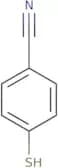
CAS:<p>4-mercaptobenzonitrile (4MBN) is a typical compound used in many spectroscopic experiments. The addition of 4-mercaptobenzonitrile to metal surfaces is used to create self-assembled monolayers with metals. For numerous reasons, it can difficult to immbolize certain chemical groups on surfaces. The addition of 4-mercaptobenzonitrile forms a modified metal surface that enhances technique sensitivity and serves as tool for a better understanding of the interfaces. In recent years, the use of 4-mercaptobenzonitrile together with other molecules on metal nanoparticles has been explored for biomedicinal purposes, serving as a tool for creating surface-enhanced Raman scattering tags (SER tags), useful as cancer biomarker imaging (Li, 2018).</p>Formula:C7H5NSPurity:Min. 95%Color and Shape:PowderMolecular weight:135.19 g/molL-Tyrosine
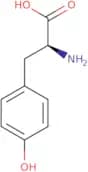
CAS:<p>Amino acid; precursor to neurotransmitters, hormones, pigments, natural phenols</p>Formula:C9H11NO3Color and Shape:White PowderMolecular weight:181.19 g/mol3-(Trifluoromethyl)pyridine-2-sulfonamide
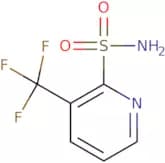
CAS:3-(Trifluoromethyl)pyridine-2-sulfonamide is a fine chemical used in the synthesis of complex compounds, research chemicals, and reagents. It is also a useful building block for the synthesis of valuable chemical products such as pharmaceuticals, agrochemicals, and high-tech materials. 3-(Trifluoromethyl)pyridine-2-sulfonamide has been classified by the US Chemical Abstract Service (CAS) Number 104040-76-8. This product is available in bulk quantities that are both high quality and pure.Formula:C6H5F3N2O2SPurity:Min. 95%Color and Shape:White To Yellow SolidMolecular weight:226.18 g/mol3,4,5-Trimethoxyphenylacetic acid
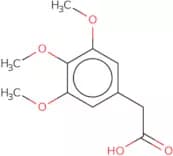
CAS:<p>3,4,5-Trimethoxyphenylacetic acid is a synthetic compound that is used as an anticancer drug. It has been shown to inhibit the growth of cancer cells in vitro and in vivo by binding to the DNA. 3,4,5-Trimethoxyphenylacetic acid has been shown to be stereoselective with respect to the anticancer activity of the two isomers. The hydroxyl group present on one side of the molecule may be responsible for this effect. 3,4,5-Trimethoxyphenylacetic acid also inhibits enzymes called oxidases that are involved in the production of prostaglandins from arachidonic acid (prostaglandins play a role in inflammation). This property may account for its anti-inflammatory effects.</p>Formula:C11H14O5Purity:Min. 95%Color and Shape:White PowderMolecular weight:226.23 g/molThiamine pyrophosphate
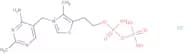
CAS:<p>Thiamine derivative; coenzyme of transketolase</p>Formula:C12H19ClN4O7P2SPurity:Min. 93%Color and Shape:White PowderMolecular weight:460.77 g/mol2,4,6-Triisopropylbenzenesulfonyl chloride
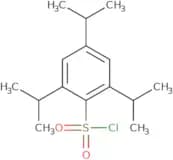
CAS:<p>2,4,6-Triisopropylbenzenesulfonyl chloride is a molecule that belongs to the class of ethylene diamine. It has been shown to inhibit the replication of herpes simplex virus in cell culture. This compound has an intramolecular hydrogen and steric interactions with a hydroxyl group. The analog of this molecule is 2,4,6-triisopropylbenzenesulfonic acid.<br>2,4,6-Triisopropylbenzenesulfonyl chloride can be used as a sulfonation agent and is known for its ability to react with nitrogen nucleophiles such as amines or ammonia.</p>Formula:C15H23SO2ClPurity:Min. 95%Molecular weight:302.86 g/molL-Threonine methyl ester hydrochloride
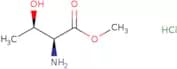
CAS:<p>L-Threonine methyl ester hydrochloride is a synthetic amino acid that has shown efficacy in treating Gram-negative infections. L-Threonine methyl ester hydrochloride is an agonist for the hyaluronic acid receptor and has been demonstrated to be potent in vitro against gram-negative bacteria such as Escherichia coli and Klebsiella pneumoniae. It also exhibits high stereoselectivity, with one enantiomer being more active than the other. L-Threonine methyl ester hydrochloride is currently in clinical development for cancer treatments, as it shows promise for inhibiting tumor growth and inducing apoptosis.</p>Formula:C5H11NO3•HClPurity:Min. 97%Color and Shape:Yellow PowderMolecular weight:169.61 g/mol5-(Trifluoromethoxy)-1H-indole-2,3-dione
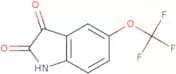
CAS:<p>5-(Trifluoromethoxy)-1H-indole-2,3-dione is a potent anticancer agent that inhibits the growth of cancer cells by inducing apoptosis. It binds to DNA, forming hydrogen bonds with guanine and adenine residues. This binding prevents the formation of hydrogen bonds between DNA bases, which are essential for maintaining the stability of DNA. The disruption of these bonds leads to chromosomal degradation and eventually cell death. 5-(Trifluoromethoxy)-1H-indole-2,3-dione has shown antifungal activity against Cryptococcus neoformans in vitro and in vivo. This drug also has an allosteric modulator effect on HL60 cells.</p>Formula:C9H4F3NO3Purity:Min. 95%Color and Shape:Red PowderMolecular weight:231.13 g/mol2,4,6-Trinitrobenzenesulfonic acid - 5% Aqueous solution
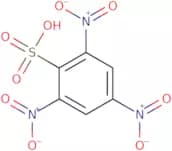
CAS:2,4,6-Trinitrobenzenesulfonic acid (also known as TNBS, TNSBA or picrylsulfonic acid) is a strongly oxidising organic acid that has long been used as a reagent to determine the presence of free primary amine groups. TNBS reacts rapidly with primary amines to form highly coloured N-trinitrophenyl acid products which can then be analysed by colorimetry. The amine can be regenerated by treatment with hydrazine. This analytical technique can also be applied to thiols and hydrazides. As is common with nitrated aromatic compounds, there is a risk of explosion and TNBS is typically commercially available as a solution. We also supply the 1% solution in DMF.Formula:C6H3N3O9SColor and Shape:Colorless Yellow Clear LiquidMolecular weight:293.17 g/molRef: 3D-FT73268
2g334.00€5g453.00€10g607.00€25g955.00€50g1,642.00€200g5,345.00€250g4,404.00€38.69g1,412.00€(Azidomethyl)cyclopentane
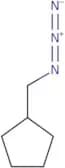
CAS:<p>Azidomethylcyclopentane is a neuraminidase inhibitor that binds to the active site of the influenza virus neuraminidase enzyme. It has been shown to be effective against influenza A and B viruses in vitro. In vivo studies have also shown that Azidomethylcyclopentane prevents the activation of chronic pain receptors, which may be due to its ability to regulate the activation of cyclic adenosine monophosphate (cAMP) by activating adrenergic receptors. This drug is a prodrug that is converted by hydrolysis into an active form, which inactivates viral neuraminidase and prevents spread of infection.</p>Formula:C6H11N3Purity:Min. 95%Color and Shape:Clear LiquidMolecular weight:125.17 g/mol