Building Blocks
This section contains fundamental products for the synthesis of organic and biological compounds. Building blocks are the essential starting materials used to construct complex molecules through various chemical reactions. They play a critical role in drug discovery, material science, and chemical research. At CymitQuimica, we offer a diverse range of high-quality building blocks to support your innovative research and industrial projects, ensuring you have the essential components for successful synthesis.
Subcategories of "Building Blocks"
- Boronic Acids & Boronic Acid Derivatives(5,756 products)
- Chiral Building Blocks(1,242 products)
- Hydrocarbon Building Blocks(6,095 products)
- Organic Building Blocks(61,051 products)
Found 199813 products of "Building Blocks"
Sort by
Purity (%)
0
100
|
0
|
50
|
90
|
95
|
100
Adenine
CAS:<p>Purine nucleobase; component of nucleic acids and coenzymes</p>Formula:C5H5N5Purity:Min. 98 Area-%Color and Shape:White PowderMolecular weight:135.13 g/mol4-Amino-1-naphthol hydrochloride
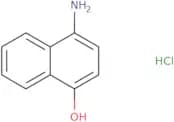
CAS:<p>4-Amino-2-methyl-1-naphthol is a menadione analog. Most commonly seen in its hydrochloride form, 4-amini-2-methyl-1-naphtol posseses vitamin K activity, effective against microbes and bacteria, and as antibiotic.</p>Formula:C10H9NO•HClPurity:Min. 85.0 Area-%Color and Shape:PowderMolecular weight:195.65 g/mol2-Amino-5-fluoropyridine
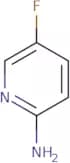
CAS:<p>2-Amino-5-fluoropyridine is a precursor to the amino acid L-glutamic acid. It is used in organic synthesis as an acetylating agent and can be synthesized from ethyl bromoacetate and anhydrous sodium acetate. 2-Amino-5-fluoropyridine has shown efficacy in treating cancer, including leukemia cells. This compound also has allosteric modulator activity, which may be due to its ability to form hydrogen bonds with other molecules. The synthesis of 2-amino-5-fluoropyridine requires a chloride ion source that is not chlorinated, such as magnesium chloride or potassium chloride. The optimal reaction temperature is between 60°C and 80°C.</p>Formula:C5H5FN2Purity:Min. 95%Color and Shape:White PowderMolecular weight:112.11 g/mol1,3-Adamantanediacetic acid
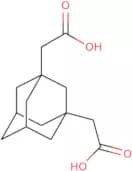
CAS:<p>1,3-Adamantanediacetic acid is a linker molecule that is used in analytical chemistry. It is a bifunctional reagent that reacts with trifluoroacetic acid and triflic acid to form a chelate ring. This reaction product can be analyzed using analytical methods such as gas chromatography or nuclear magnetic resonance spectroscopy. 1,3-Adamantanediacetic acid has been shown to react with amides and hydrogen bonding interactions to form supramolecular structures. The introduction of this compound into the synthesis of peptides has allowed for the elucidation of the structural analysis of these molecules.</p>Formula:C14H20O4Purity:Min. 98 Area-%Color and Shape:PowderMolecular weight:252.31 g/mol8-Aminoquinoline
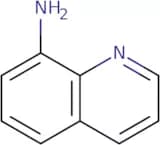
CAS:<p>8-Aminoquinoline is a fluorescent probe that is used to detect the presence of nitrite ions in biological samples. It is used in electron paramagnetic resonance (EPR) experiments and can be used as a chemical inhibitor of cytochrome P450 enzymes. 8-Aminoquinoline has been shown to have minimal toxicity in animal models. It has been shown to inhibit the growth of Leishmania, an organism that causes leishmaniasis, by arresting protein synthesis at the ribosome level. The drug interactions of 8-aminoquinoline have not been well studied, but it may be necessary for patients to avoid other drugs that are metabolized by cytochrome P450 enzymes when taking this agent.</p>Formula:C9H8N2Purity:Min. 95%Color and Shape:Slightly Yellow PowderMolecular weight:144.17 g/mol7-Azaindole
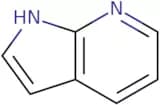
CAS:<p>7-Azaindole is a reactive chemical that has been shown to be effective in the treatment of skin cancer, as well as hepatic steatosis. The compound can promote the transfer of hydrogen atoms and form a dimer with protonated nitrogen. 7-Azaindole reacts rapidly with nucleophiles such as amines, alcohols, and thiols to form covalent bonds. The reaction mechanism is characterized by an initial protonation step followed by nucleophilic attack or hydrogen transfer from the nucleophile to 7-azaindole. Kinetic studies have demonstrated that the rate of this reaction depends on the concentration of both reactants.</p>Formula:C7H6N2Color and Shape:PowderMolecular weight:118.14 g/mol4-Acetoxyindole
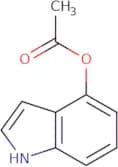
CAS:<p>4-Acetoxyindole is a chromophore that belongs to the pyrrole family of compounds. It has been shown to react with an ionic liquid under acidic conditions to form a protonated intermediate, which can be deprotonated by a nucleophile. This reaction yields an acetate anion and a fluorescing product. 4-Acetoxyindole also reacts with deuterium gas, yielding an acetate, a deuterium atom, and fluorescing product. The reaction is reversible and the yield of the product depends on the concentration of the reactants. 4-Acetoxyindole has strong carbonyl groups that make it reactive towards other functional groups. These reactions are useful for synthesizing heterocycles such as indoles and isoquinolines.</p>Formula:C10H9NO2Purity:Min. 97 Area-%Color and Shape:White PowderMolecular weight:175.18 g/mol4-Amino-3-nitropyridine
CAS:<p>4-Amino-3-nitropyridine is a molecule with the chemical formula C6H6N4O2. It is an organic compound that has been shown to have analgesic, antimicrobial, and antiviral properties. 4-Amino-3-nitropyridine has been shown to inhibit the growth of bacteria in vitro by reducing the ability of bacteria to synthesize DNA. It is not active against bacteria that use RNA as their genetic material. 4-Amino-3-nitropyridine also inhibits viral replication and may be useful in treating chronic pain, diabetic neuropathy, and other conditions related to nerve damage. This drug binds to chloride ions and nucleophilic functional groups on microbial metabolites, which prevents their conversion into other metabolites.</p>Formula:C5H5N3O2Purity:Min. 95%Color and Shape:PowderMolecular weight:139.11 g/mol5-Aminoindole
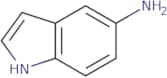
CAS:<p>5-Aminoindole is a hydrogen bond acid. It has been shown to have an optimum concentration of 0.1 mM in the presence of 0.2 mM potassium chloride and 2 mM magnesium chloride, which is similar to the pH range for biological systems. 5-Aminoindole also acts as a competitive inhibitor of quinoline derivatives, such as chloroquine and hydroxychloroquine, which are used in the treatment of malaria and rheumatoid arthritis. The compound has been shown to be active against primary cells grown in culture, including mouse erythrocytes and human hepatocytes. When used with agarose gel electrophoresis or electrochemical impedance spectroscopy, 5-aminoindole shows excellent selectivity for kinases over other enzymes. 5-Aminoindole is not reactive under physiological conditions because it does not have any redox potentials that can be measured by Langmuir adsorption isother</p>Formula:C8H8N2Purity:Min. 97%Color and Shape:Brown PowderMolecular weight:132.16 g/mol1-Adamantane carbonitrile
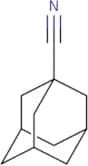
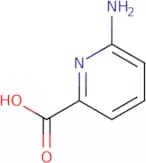
CAS:<p>1-Adamantane carbonitrile is a compound that has been shown to have high binding constants to the covid-19 pandemic. The compound has been shown to be a good candidate for oxidation catalysts and radiation. 1-Adamantane carbonitrile is also a metastable molecule, which means it can exist in two different states with different energy levels. This compound has been found to bind to an endogenous enzyme, as well as being crystalline and having a coordination complex. It has been shown that 1-Adamantane carbonitrile reacts with hydrogen chloride and produces reactive intermediates such as hydrogen chloride. 1-Adamantane carbonitrile has also been shown to have antiviral properties against influenza virus with nmr spectra data showing the presence of this compound in the active site of the influenza virus.</p>Formula:C11H15NPurity:Min. 96.0%Color and Shape:PowderMolecular weight:161.24 g/mol6-Amino-2-pyridinecarboxylic acid
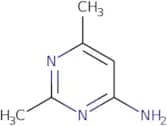
CAS:<p>6-Amino-2-pyridinecarboxylic acid is a potentiating agent that belongs to the class of cyclic peptides. It has been shown to have anti-leukemic activity and can be used for the treatment of leukemia. The mechanism of action is not yet fully understood, but it may involve hydrogen bonding interactions with other molecules or cavities in proteins. 6-Amino-2-pyridinecarboxylic acid forms stable complexes with halides and intramolecular hydrogen bonds. This drug also has quantum theory effects, including a short lifetime in solution and an increase in fluorescence intensity when excited with light at low energies.</p>Formula:C6H6N2O2Purity:Min. 95%Color and Shape:PowderMolecular weight:138.12 g/mol4-Amino-2,6-dimethylpyrimidine
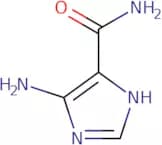
CAS:<p>4-Amino-2,6-dimethylpyrimidine (4ADMP) is an organic solvent that inhibits the enzyme acetylcholinesterase. It has been shown to be a potent and selective inhibitor of human immunodeficiency virus type 1 (HIV-1) replication in vitro. 4ADMP is a prodrug that undergoes reduction to form a reactive intermediate that binds to the active site of acetylcholinesterase and inhibits its activity. The nitrogen atom in 4ADMP stabilizes the intermediate and prevents it from reacting with other proteins. This agent also has muscarinic M1 receptor agonist activity, which may be due to its ability to allosterically modulate the receptor and increase the affinity for acetylcholine.</p>Formula:C6H9N3Purity:Min. 95%Color and Shape:PowderMolecular weight:123.16 g/mol5-Amino-1H-imidazole-4-carboxamide
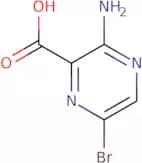
CAS:<p>5-Amino-1H-imidazole-4-carboxamide is a potent inhibitor of inosine monophosphate dehydrogenase (IMPDH). This enzyme converts inosine 5'-monophosphate (IMP) to xanthosine 5'-monophosphate (XMP) and is essential for the synthesis of purines. By inhibiting IMPDH, 5-amino-1H-imidazole-4-carboxamide prevents the formation of XMP, which leads to the depletion of purines, thereby inhibiting DNA synthesis. In addition to its role as an anti-inflammatory agent, this drug has been shown to reduce disease activity in bowel disease patients by reducing nitrate reductase activity. The molecule has also been shown to inhibit protein kinases such as PKC and MAPK/ERK kinases.</p>Formula:C4H6N4OPurity:Min. 95%Color and Shape:PowderMolecular weight:126.12 g/mol2-Amino-5-bromopyrazine-3-carboxylic acid
CAS:<p>2-Amino-5-bromopyrazine-3-carboxylic acid is an organic compound that belongs to the group of boronic acids. It has a molecular weight of 138.14 and a melting point of 198°C. The compound has been characterized by x-ray crystallography, revealing its molecular structure. 2-Amino-5-bromopyrazine-3-carboxylic acid is soluble in water and can be isolated from the reaction mixture using conventional methods such as recrystallization. The compound reacts with alkyl halides through cross coupling reactions to form pyridyl compounds. This reagent is used for Suzuki, Miyaura, and other cross coupling reactions with high yield.</p>Formula:C5H4BrN3O2Purity:Min. 95%Color and Shape:Brown PowderMolecular weight:218.01 g/mol5-Amino-1-pentanol
CAS:<p>5-Amino-1-pentanol is a chemical compound that has been shown to stimulate angiogenesis, which is the process of developing new blood vessels from pre-existing ones. It is not currently approved for use in humans and has only been tested on mice. 5-Amino-1-pentanol stimulates angiogenesis by binding to the vascular endothelial growth factor receptor 2 (VEGFR2) protein, which is involved in regulating blood vessel formation. This drug also suppresses cancer gene expression and selectively binds to DNA polymerase α. The amide group of 5-amino-1-pentanol reacts with trifluoroacetic acid to form an amine, which then reacts with water vapor to form a hydroxyl group. This reaction solution can be used as a diagnostic tool for detecting the presence of amines or other nitrogenous compounds.</p>Formula:C5H13NOPurity:Min. 94%Color and Shape:Colorless Yellow PowderMolecular weight:103.16 g/mol2-Acetyl cyclohexanone
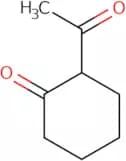
CAS:2-Acetylcyclohexanone is a chemical compound that belongs to the group of aryl halides. It is used as a raw material in the production of other chemicals, such as ethylene diamine and acetic anhydride. The reaction mechanism of 2-acetylcyclohexanone is mainly via nucleophilic substitution with hydrochloric acid or trifluoroacetic acid. The reaction with acetic anhydride or ethylene diamine has been shown to be through an acetylation reaction. 2-acetylcyclohexanone can be synthesized by reacting acetaldehyde with sodium cyclopentadienide in the presence of hydrochloric acid, followed by elimination of hydrogen chloride by heating. This compound has two tautomers: keto and enol.Formula:C8H12O2Purity:Min. 95%Color and Shape:Colorless Clear LiquidMolecular weight:140.18 g/mol4-Anisylchlorodiphenylmethane
CAS:<p>4-Anisylchlorodiphenylmethane is a trifluoroacetic acid derivative of diphenyl sulfoxide. It is activated by hydrochloric acid and hydrogen chloride to form the corresponding anisyl chlorodiphenylmethane chloride. This compound has a high resistance to nucleophilic attack, with a reaction solution that is resistant to nucleophiles such as water, amines, alcohols, and carboxylic acids. 4-Anisylchlorodiphenylmethane can be synthesized from uridine and acetic acid in the presence of diphenyl sulfoxide and a base. The reaction is then heated at reflux for 24 hours. 4-Anisylchlorodiphenylmethane binds to DNA as well as RNA templates in vitro and can be used for linear regression analysis of DNA sequences. It also has inhibitory effects on cell growth in culture.</p>Formula:C20H17ClOPurity:Min. 95%Color and Shape:White PowderMolecular weight:308.8 g/mol4-Aminoindole
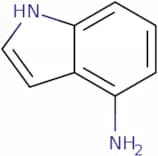
CAS:<p>4-Aminoindole is a heterocycle with a carboxy group and four nitrogen atoms. It can be synthesized by reacting hydrochloric acid with nitrobenzene. 4-Aminoindole has shown potential as a drug target, which may be due to its ability to inhibit the enzyme carboxamidase. The compound is also acidic in water, making it an ideal candidate for use as an acid catalyst. Electropolymerization of 4-aminoindole has been achieved using Pt electrodes in the presence of an acidic environment. This reaction results in the formation of functional groups on the metal surface that are not found in most other electropolymerization reactions.</p>Formula:C8H8N2Color and Shape:PowderMolecular weight:132.16 g/molN-Acetyl-L-tyrosine
CAS:<p>N-Acetyl-L-tyrosine is a tyrosine derivative with a chemical structure similar to that of an amino acid. It is used as a model system in biochemistry and molecular biology to study the transfer reactions of tyrosine, which are important for energy metabolism, protein synthesis, and metal chelation. N-Acetyl-L-tyrosine is also an effective substrate molecule for many analytical methods, such as thin layer chromatography or liquid chromatography.</p>Formula:C11H13NO4Purity:Min. 95%Color and Shape:White PowderMolecular weight:223.23 g/mol2-Amino-4-fluorobenzamide
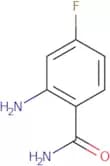
CAS:<p>2-Amino-4-fluorobenzamide is a catalyst that reacts with alcohols and cyclizes them to form quinazolinones. It has been shown to oxidize various alcohols including those with an electron-donating group, such as esters and nitro groups. 2-Amino-4-fluorobenzamide also reacts with electron-deficient alcohols, such as oximes and hydrazines. The mechanism of the oxidative cyclizations is not well understood but it is likely that they are initiated by a nucleophilic attack on the carbonyl carbon atom followed by a concerted or stepwise oxidation of the C=O double bond. The oxidative cyclization reactions are mechanistically similar to those of other catalytic oxidations, such as those used in the industrial production of acetic acid from methanol.</p>Formula:C7H7FN2OPurity:Min. 95%Color and Shape:PowderMolecular weight:154.14 g/mol