Building Blocks
This section contains fundamental products for the synthesis of organic and biological compounds. Building blocks are the essential starting materials used to construct complex molecules through various chemical reactions. They play a critical role in drug discovery, material science, and chemical research. At CymitQuimica, we offer a diverse range of high-quality building blocks to support your innovative research and industrial projects, ensuring you have the essential components for successful synthesis.
Subcategories of "Building Blocks"
- Boronic Acids & Boronic Acid Derivatives(5,778 products)
- Chiral Building Blocks(1,242 products)
- Hydrocarbon Building Blocks(6,098 products)
- Organic Building Blocks(61,034 products)
Found 199601 products of "Building Blocks"
Sort by
Purity (%)
0
100
|
0
|
50
|
90
|
95
|
100
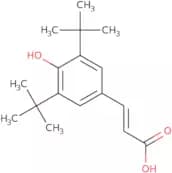
3,5-Di-tert-butyl-4-hydroxycinnamic acid
CAS:<p>3,5-Di-tert-butyl-4-hydroxycinnamic acid is a chemical compound that belongs to the group of antihistaminic drugs. It is used as an antiallergic drug and has shown to be effective in treating hay fever and asthma. 3,5-Di-tert-butyl-4-hydroxycinnamic acid has been shown to be metabolised by rat plasma into dimethylformamide, tetrahydrofuran, reactive amides, chlorides and volatile compounds. These metabolites are then excreted via the kidneys or liver. The synthesis of 3,5-Di-tert-butyl-4-hydroxycinnamic acid can be done through a two step process that starts with the reaction of pivalaldehyde with hydrochloric acid followed by hydrogenation with rhodium on charcoal catalyst.</p>Formula:C17H24O3Purity:Min. 95%Color and Shape:PowderMolecular weight:276.37 g/moltert-Butyl (R)-3-(piperidin-3-yl)azetidine-1-carboxylate
CAS:A useful building block for organic synthesis.Formula:C13H24N2O2Molecular weight:240.34 g/mol4-Benzyloxy-3-methoxybenzaldehyde
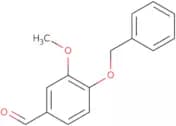
CAS:<p>4-Benzyloxy-3-methoxybenzaldehyde is a deuterium isotope analog of the natural compound benzaldehyde. This molecule has been shown to inhibit the growth of cancer cells in tissue culture by binding to DNA. The molecular mechanism of this inhibition is believed to involve an enzymatic process that results in the substitution of chloride for chlorine, thereby inhibiting DNA synthesis and preventing cell division. 4-Benzyloxy-3-methoxybenzaldehyde also inhibits the production of growth factors and thus has anticancer activity.</p>Formula:C15H14O3Purity:Min. 95%Color and Shape:PowderMolecular weight:242.27 g/mol2-(4-Benzyloxyphenyl)ethanol
CAS:2-(4-Benzyloxyphenyl)ethanol is an organic compound that has a particle size of less than 10 μm and is soluble in water. It is used as a reaction system for the production of tannins, which are polyphenolic compounds that have antioxidant properties. 2-(4-Benzyloxyphenyl)ethanol also inhibits maltase activity and metal ion-induced allylic oxidation. This compound can be used to inhibit fatty acid synthesis, which is important for the prevention of atherosclerosis and other cardiovascular diseases.Formula:C15H16O2Purity:Min. 95%Color and Shape:PowderMolecular weight:228.29 g/mol(5-Trifluoromethyl-thiophen-3-yl)-methanol
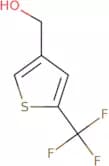
CAS:(5-Trifluoromethyl-thiophen-3-yl)-methanol is a fine chemical that is used as a building block for research chemicals, reagents, and specialty chemicals. It can be used in the synthesis of various complex compounds and is a versatile building block for organic reactions. (5-Trifluoromethyl-thiophen-3-yl)-methanol is an intermediate that can serve as a scaffold for the synthesis of more complex molecules. This compound has CAS No. 1447913-56-5 and has a high quality.Formula:C6H5F3OSPurity:Min. 95%Color and Shape:Clear LiquidMolecular weight:182.16 g/mol8-Aminoquinoline-3-carboxylic acid
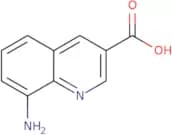
CAS:<p>8-Aminoquinoline-3-carboxylic acid is a small molecule that inhibits the activity of the enzyme, catechol-O-methyltransferase (COMT), which is responsible for the demethylation of dopamine. 8-Aminoquinoline-3-carboxylic acid has been shown to be potent and selective in inhibiting COMT and thereby preventing the degradation of dopamine. This compound has been used in screening assays to identify other small molecules that can act as COMT inhibitors. The role of COMT in neurodegenerative diseases such as Parkinson's disease and Alzheimer's disease has been investigated using this inhibitor as a model system. 8-Aminoquinoline-3-carboxylic acid also binds to methylated DNA, which may explain its effect on cellular growth factor signaling pathways.</p>Formula:C10H8N2O2Purity:Min. 95%Color and Shape:PowderMolecular weight:188.19 g/mol5-(piperazine-1-sulfonyl)isoquinoline dihydrochloride
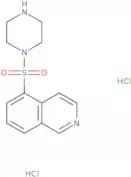
CAS:<p>5-(piperazine-1-sulfonyl)isoquinoline dihydrochloride is an antiviral drug that inhibits the assembly of viral filaments. It is a potent inhibitor of herpes simplex virus type 1 (HSV-1) and HSV-2 in vitro. 5-(piperazine-1-sulfonyl)isoquinoline dihydrochloride has been shown to inhibit the replication of human cytomegalovirus (HCMV) in cell culture. This compound also inhibits the secretion of pertussis toxin, which is necessary for the virulence of Bordetella pertussis. 5-(piperazine-1-sulfonyl)isoquinoline dihydrochloride has been shown to have no effect on noninfected cells, suggesting it may be useful as a therapeutic agent against viruses that infect only specific types of cells.</p>Formula:C13H17Cl2N3O2SPurity:Min. 95%Color and Shape:PowderMolecular weight:350.3 g/mol3,5-Dimethyl-4-nitrobenzoic acid
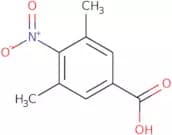
CAS:<p>3,5-Dimethyl-4-nitrobenzoic acid is a synthetic compound that has been used in the synthesis of other organic compounds. It is not currently used as a drug, but it has been shown to inhibit the growth of bacteria in vitro. The mechanism of action for this compound is unclear. 3,5-Dimethyl-4-nitrobenzoic acid has been shown to be active against the bacterium Typhimurium and may inhibit bacterial growth by being metabolised into nitrite or nitrate ions. This chemical can also be converted into a reactive intermediate that reacts with oxygen to form superoxide anion radicals, which are known to have antibacterial effects.</p>Formula:C9H9NO4Purity:Min. 95%Color and Shape:PowderMolecular weight:195.17 g/mol1-Butene-3,4-diol
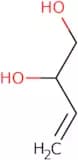
CAS:<p>1-Butene-3,4-diol is a reactive compound that is used in analytical methods. It can be synthesized by an asymmetric synthesis from 1,2-butanediol. This product has been shown to inhibit aminotransferase activity in rat liver microsomes and to be metabolized through the cytochrome P450 system. 1-Butene-3,4-diol also inhibits polymerase chain reactions and is reactive with hydrochloric acid. It may cause fatty acid metabolism and hydroxyl group formation.</p>Formula:C4H8O2Purity:Min. 95%Color and Shape:Colorless Clear LiquidMolecular weight:88.11 g/mol5-Phenoxypyridin-2-amine
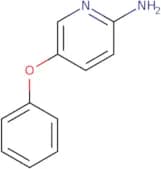
CAS:<p>5-Phenoxypyridin-2-amine is a useful scaffold that can be used as a reaction component, reagent, or intermediate. It is an aromatic compound with a benzene ring and pyridine group and has the CAS number 64064-68-2. 5-Phenoxypyridin-2-amine can be used as a building block for organic synthesis and as an intermediate for other compounds. This product can also be used to create complex compounds that are difficult to synthesize in other ways.</p>Formula:C11H10N2OPurity:Min. 95%Color and Shape:PowderMolecular weight:186.21 g/mol1-Butanoic acid-2-(O-methyl-L-tyrosine)-1-carbaoxytocin
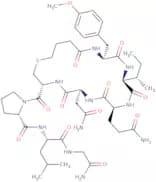
CAS:<p>1-Butanoic acid-2-(O-methyl-L-tyrosine)-1-carbaoxytocin (BMT) is a synthetic analog of oxytocin. Oxytocin is a hormone that is produced in the hypothalamus and released by the pituitary gland to stimulate uterine contractions and milk letdown in mammals. 1-Butanoic acid-2-(O-methyl-L-tyrosine)-1-carbaoxytocin has been shown to bind to the oxytocin receptor and stimulate the release of insulin, which may be useful for treating type 2 diabetes. BMT also stimulates epidermal growth factor (EGF) production and induces skin cell growth. It has been used as an animal health drug for stimulating appetite, increasing weight gain, reducing inflammation, and lowering blood pressure.</p>Formula:C45H69N11O12SPurity:Min. 95%Color and Shape:White PowderMolecular weight:988.16 g/mol2-Bromo-3-methylpyridine
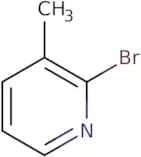
CAS:2-Bromo-3-methylpyridine is a diazido compound with a hydrogen bond. It reacts rapidly with copper chloride to form the coordination complex Cu(diazido)(Cl)2 and an organic product. 2-Bromo-3-methylpyridine can be synthesized from 2,4-dibromopyridine by a cross coupling reaction with copper chloride and calcium carbonate in the presence of sodium potassium bicarbonate. The coordination geometry of the molecule is tetrahedral, with two bromine atoms on opposite sides of the central nitrogen atom and one bromine atom on each side of the pyridine ring. Reaction products are formed as a result of substitution reactions involving halides, such as methyl chloride or ethyl chloride, which act as electrophiles to react with the diazido group. Potential mechanisms include metathesis reactions or cryogenic processes.Formula:C6H6BrNPurity:Min. 95%Color and Shape:Colorless Clear LiquidMolecular weight:172.02 g/molBoc-L-serine-b-lactone
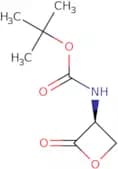
CAS:Boc-L-serine-b-lactone is a chemical compound that can be used as a reagent and reaction component. It can also be used to produce other compounds, such as pharmaceuticals, pesticides, or coatings. Boc-L-serine-b-lactone can be produced in high quality through our advanced manufacturing processes. This chemical is useful for research purposes and has many applications in the production of speciality chemicals. Boc-L-serine-b-lactone is a versatile building block that can also be used as an intermediate or building block to create complex compounds. This chemical is fine and should only be handled by professionals with experience in handling chemicals.Formula:C8H13NO4Purity:Min. 95%Color and Shape:White PowderMolecular weight:187.19 g/mol1-(Phenylamino)cyclopropane-1-carboxylic acid
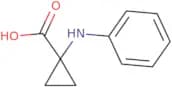
CAS:<p>1-(Phenylamino)cyclopropane-1-carboxylic acid is a high quality chemical that is a useful intermediate and building block in the synthesis of fine chemicals. It has been used as a reagent and complex compound. The CAS number for this chemical is 210576-54-8. This chemical can be used as a speciality chemical. It has also been shown to be versatile in the laboratory setting, being used as a reaction component for both synthetic and natural product syntheses.</p>Formula:C10H11NO2Purity:Min. 95%Color and Shape:PowderMolecular weight:177.2 g/molBenzoic acid N-hydroxysuccinimide ester
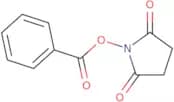
CAS:<p>Benzoic acid N-hydroxysuccinimide ester is a chemical compound that is used for the diagnosis of cancer. It is used as a reagent in chromatographic methods and as a sample preparation agent in amine extraction techniques. The benzoate group reacts with amines to form an aminobenzoate ester, which can be detected by ionization techniques. This reaction mechanism has been studied extensively with spinorphin and epidermal growth factor.</p>Formula:C11H9NO4Purity:Min. 95%Color and Shape:White PowderMolecular weight:219.19 g/moltert-Butyl isocyanoacetate
CAS:tert-Butyl isocyanoacetate is an organic compound that belongs to the diacid class of organic compounds. It reacts with water to produce the amide and squaramide. Tert-butyl isocyanoacetate has a high affinity for nitrogen atoms, and can be used in uv absorption spectroscopy. It also has a stepwise mechanism and can react with other chemicals to produce new substances. The compound has fluorescence properties and is used in optical devices such as lasers. Tert-butyl isocyanoacetate also has an ester hydrochloride form which is low potency but active methylene catalysed.Formula:C7H11NO2Purity:Min. 95%Color and Shape:Brown Clear LiquidMolecular weight:141.17 g/mol2,3-Butanedione monoxime
CAS:<p>2,3-Butanedione monoxime (BDM) is a metabolite of the glycol ether, 2,3-butanedione. It has been shown to have a beneficial effect on metabolic disorders in rats by modulating several enzyme activities. The optimum concentration of BDM is 2 mmol/L. This compound has also been shown to inhibit the oxidation of xanthine oxidase and the formation of hydroxyl radicals in vitro. BDM has also been found to have synchronous fluorescence with papillary muscles from guinea pigs and cytosolic ca2+ levels in rat liver cells. The structure analysis revealed that BDM binds to the active site of the x-ray crystal structures for mitochondrial cytochrome C oxidase and cardiac ATP synthase with an affinity similar to that of CoQ10. The Langmuir adsorption isotherm for BDM was calculated as 0.913 +/- 0.034 cm/g at 20 degrees Celsius,</p>Formula:C4H7O2NPurity:(%) Min. 99%Color and Shape:White PowderMolecular weight:101.1 g/molDimethylolurea
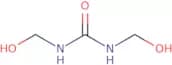
CAS:<p>Dimethylolurea is a formaldehyde releaser that has clinical relevance as a nutrient solution. Dimethylolurea has been shown to release formaldehyde, which may be used to treat bowel diseases and inflammatory bowel disease. Dimethylolurea can also induce an immune response in the human body. This chemical is not soluble in water but it is soluble in ethanol and methanol, which are often used as solvents for this drug. The reaction mechanism of dimethylurea is unclear. It may be due to intramolecular hydrogen transfer or metal hydroxides. As with other drugs, the surface methodology of dimethylurea depends on the size of the microcapsules.</p>Formula:C3H8N2O3Purity:Min. 95%Color and Shape:White PowderMolecular weight:120.11 g/mol3,4-Furandimethanol
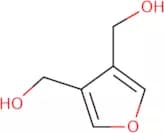
CAS:<p>3,4-Furandimethanol is an antimicrobial agent that is used to treat skin and soft tissue infections. It belongs to the group of compounds called halogens and has a number of natural sources. The fluorescence properties make it a useful tool for biocatalysis, especially in Friedel-Crafts reactions. 3,4-Furandimethanol can be produced from hydrogen chloride, sulfuric acid, and diphenyl ether. This compound is also acetylated by acetic anhydride to produce 3,4-dihydroxymethylfuran (DHMF). 3,4-Furandimethanol has been shown to react with hydrogen sulfate in a polymerization reaction.</p>Formula:C6H8O3Purity:Min. 95%Color and Shape:Clear LiquidMolecular weight:128.13 g/mol2-Amino-4-oxopentanoic acid hydrochloride
CAS:<p>Versatile small molecule scaffold</p>Formula:C5H9NO3•HClPurity:Min. 95%Color and Shape:PowderMolecular weight:167.59 g/mol