Building Blocks
This section contains fundamental products for the synthesis of organic and biological compounds. Building blocks are the essential starting materials used to construct complex molecules through various chemical reactions. They play a critical role in drug discovery, material science, and chemical research. At CymitQuimica, we offer a diverse range of high-quality building blocks to support your innovative research and industrial projects, ensuring you have the essential components for successful synthesis.
Subcategories of "Building Blocks"
- Boronic Acids & Boronic Acid Derivatives(5,778 products)
- Chiral Building Blocks(1,242 products)
- Hydrocarbon Building Blocks(6,098 products)
- Organic Building Blocks(61,034 products)
Found 199601 products of "Building Blocks"
Sort by
Purity (%)
0
100
|
0
|
50
|
90
|
95
|
100
3-Bromo-4-methoxybenzoic acid
CAS:3-Bromo-4-methoxybenzoic acid is a methyl ester of 3-bromo-4-methoxybenzoic acid. It is used as a reagent in organic synthesis, including the hydrolysis of esters and nitriles to acids and amines respectively. The compound is also used in the synthesis of 3-bromo-4-methoxybenzamide and other bromomethyl benzoates. The trifluoroacetic acid reacts with cuprous cyanide to form ethyl formate and methoxybenzoate, which reacts with thionyl chloride to form the chloride 3-bromo-4-methoxybenzoic acid. This compound can be demethylated by acetaldehyde or alkali metal hydroxides to give methyl formate and methanol. It can also react with acetonitrile to produce 3,3′,3″Formula:C8H7BrO3Purity:Min. 95%Color and Shape:PowderMolecular weight:231.04 g/mol5-Bromo-1H-pyrrolo[2,3-b]pyridine-2-carboxylic acid
CAS:<p>5-Bromo-1H-pyrrolo[2,3-b]pyridine-2-carboxylic acid is a chemical compound with the molecular formula C6H4BrNO2. It is used as a reaction component and reagent in organic synthesis. This compound has been shown to have high quality and can be used for research purposes. 5-Bromo-1H-pyrrolo[2,3-b]pyridine-2-carboxylic acid is a versatile building block that can be used as an intermediate or building block in the synthesis of complex compounds. This compound is also a fine chemical that can be used in the production of pharmaceuticals and other commercial products.</p>Formula:C8H5BrN2O2Purity:Min. 95%Molecular weight:241.04 g/mol2-Methylindole
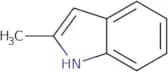
CAS:<p>2-Methylindole is a reactive molecule that can undergo electrophilic substitution at the 2-position. It reacts with a variety of nitrogen nucleophiles, acylating them at the 2-position. These reactions are catalyzed by enzymes such as carbonyl reductase and methyl ketone reductase. The reaction mechanism is not yet fully understood, but it has been proposed that it proceeds through an acylation reaction between two molecules of 2-methylindole to form a linear product. The regiospecificity of this reaction has been demonstrated in vivo using a model system.</p>Formula:C9H9NColor and Shape:PowderMolecular weight:131.17 g/mol[2-(Cyclopropylmethoxy)ethyl](methyl)amine
CAS:<p>Versatile small molecule scaffold</p>Formula:C7H15NOPurity:Min. 80%Color and Shape:Clear LiquidMolecular weight:129.2 g/mol(R)-1,1'-Bi-2-Naphthol
CAS:<p>(R)-1,1'-Bi-2-Naphthol is an organic compound that is made from the hydrogenation of 2-naphthol. The sodium salts of this compound are chiral and can be used to synthesize racemic mixtures with a high degree of optical purity. The x-ray crystal structures of (R)-1,1'-Bi-2-Naphthol have been studied in detail and show that this molecule exhibits intermolecular hydrogen bonding interactions. It also has a steric interaction with the amine group which prevents rotation about the C3—C4 bond. Other interesting features include intramolecular hydrogen bonding interactions between the hydroxyl group and the alkanoic acid. This molecule also has a hydrophobic region consisting of three methyl groups that are connected to fatty acids.</p>Formula:C20H14O2Purity:Min. 98.5 Area-%Color and Shape:White Off-White PowderMolecular weight:286.32 g/mol4-Methyl-3-nitrobenzoic acid
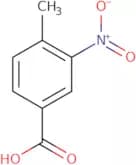
CAS:<p>4-Methyl-3-nitrobenzoic acid is a hydroxide solution that has been shown to be cytotoxic to malignant melanoma cells in vitro. 4-Methyl-3-nitrobenzoic acid also inhibits the growth of normal cells by blocking epidermal growth factor receptor signaling. This molecule is converted to hippuric acid, which may have an anti-cancer effect by inhibiting metal ion uptake and causing DNA damage. There are no known adverse effects or interactions with other drugs.</p>Formula:C8H7NO4Purity:Min. 95%Color and Shape:PowderMolecular weight:181.15 g/mol2-Amino-4-methoxybutanoic acid
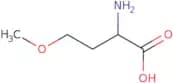
CAS:<p>2-Amino-4-methoxybutanoic acid (2AMBA) is a diagnostic agent that belongs to the class of hydroxyl group containing antimicrobial agents. It has been shown to have conformational properties, which are the spatial arrangement of atoms in a molecule. 2AMBA is a small molecule with neutral pH and has been used as a substrate for peptide synthesis by the yeast Pichia pastoris. 2AMBA has also been shown to have antimicrobial activity against infectious diseases such as Escherichia coli and Pseudomonas aeruginosa, among others. This compound is synthesized by reacting malonic acid with an amine or amide. The reaction forms a cyclic peptide that contains a disulfide bond and fatty acid, which are important for its structure and function.</p>Formula:C5H11NO3Purity:Min. 95%Color and Shape:PowderMolecular weight:133.15 g/mol3-Acetoxybenzoic acid
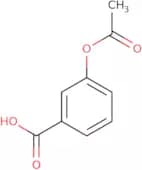
CAS:<p>3-Acetoxybenzoic acid is a metabolite of 3-hydroxybenzoic acid, which is an intermediate in the biosynthesis of salicylic acid. It has been shown to have antibacterial properties and may be used as a topical treatment for skin infections caused by staphylococcus. 3-Acetoxybenzoic acid also has antiviral properties, which may be related to its ability to bind histone H3. 3-Acetoxybenzoic acid inhibits leishmania infantum growth and development by binding to chloride ions and preventing the formation of hydrogen bonds in the cell membrane. This prevents chloride ions from entering the cell and causes water channels to close, leading to dehydration and death.</p>Formula:C9H8O4Purity:Min. 95%Color and Shape:PowderMolecular weight:180.16 g/mol2-Bromo-5-methoxybenzoic acid
CAS:2-Bromo-5-methoxybenzoic acid (BMBA) is a natural compound that belongs to the class of ellagitannins. It has been shown to inhibit the proliferation of leukemia cells and induce apoptosis in these cells. The mechanism of this apoptotic activity may be due to BMBA's inhibition of the progesterone receptor, which has been demonstrated by molecular modeling and 13C NMR spectroscopy experiments. This receptor is involved in cancer development and progression. BMBA also inhibits the mitochondrial membrane potential, leading to cell death. In addition, 2-Bromo-5-methoxybenzoic acid has been shown to have anti-inflammatory properties in mice with chronic colitis. This compound also has an effect on bacteria such as Pseudomonas aeruginosa, which was observed using thermodynamic calculations.Formula:C8H7BrO3Purity:Min. 95%Color and Shape:PowderMolecular weight:231.04 g/mol3-[3-(Methylcarbamoyl)phenyl]propanoic acid
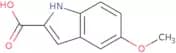
CAS:<p>Versatile small molecule scaffold</p>Formula:C11H13NO3Purity:Min. 95%Color and Shape:PowderMolecular weight:207.23 g/mol5-Methoxyindole-2-carboxylic acid
CAS:<p>5-Methoxyindole-2-carboxylic acid is a molecule that belongs to the class of diazonium salts. It is a potent inhibitor of mitochondrial membrane potential and has been shown to have anti-diabetic effects in animal models. 5-Methoxyindole-2-carboxylic acid also inhibits sperm motility, which may be due to its ability to inhibit uv absorption. This compound has been shown to be an effective agent in the treatment of brain infarctions when administered chronically orally. The mechanism of action is not known, but it may involve inhibition of potassium ion uptake or hydrogen bond formation with fatty acids.</p>Formula:C10H9NO3Color and Shape:PowderMolecular weight:191.18 g/molBenzophenone imine
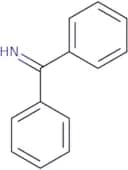
CAS:<p>Benzophenone imine is a metabolite that is produced during the metabolism of benzophenones. It was first synthesized in 1887 by the reaction of copper chloride and benzene-1,2-diamine. The reaction solution was purified by fractional crystallization to give crystals of benzophenone imine hydrochloride (benzophenamine) as a white solid. The x-ray crystal structures were determined for two different forms, one with the 5-hydroxy group in the para position relative to the imine and one with it in the meta position. Benzophenone imine is an amide that has been shown to bind to 5-HT2 receptors, which are found primarily on neurons in the central nervous system. This binding leads to an increase in serotonin levels and an inhibition of glutamate release from nerve terminals. This inhibition can lead to infectious diseases such as herpes zoster.</p>Formula:C13H11NPurity:Min. 96.0 Area-%Color and Shape:Clear LiquidMolecular weight:181.23 g/mol2-Bromo-4-iodopyridine
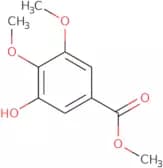
CAS:<p>2-Bromo-4-iodopyridine is a coordination compound that inhibits bacterial enzyme catechol-O-methyltransferase (COMT). It is also an inhibitor of methicillin-resistant Staphylococcus aureus (MRSA) and other bacteria. 2-Bromo-4-iodopyridine binds to the active site of COMT, which is located in the bacterial cell wall, and prevents methylamine from binding to the enzyme. This prevents methylation of the catechol ring, which is required for bacterial growth. 2-Bromo-4-iodopyridine has been shown to have antimicrobial activity against Escherichia coli, Enterococcus faecalis, Bacillus subtilis, and Candida albicans.</p>Formula:C5H3BrINPurity:Min. 95%Color and Shape:PowderMolecular weight:283.88 g/molMethyl 4,5-dimethoxy-3-hydroxybenzoate
CAS:<p>Methyl 4,5-dimethoxy-3-hydroxybenzoate is a synthetic chemical that inhibits the enzyme tectorigenin reductase. Tectorigenin reductase is responsible for the production of tectorigenin, a phytoestrogen found in plants such as china. Methyl 4,5-dimethoxy-3-hydroxybenzoate was shown to inhibit the activity of platelets from human blood and has been studied for its pharmacological properties. The thermodynamic and kinetic parameters of methyl 4,5-dimethoxy-3-hydroxybenzoate have been determined using gas chromatography - mass spectrometry (GC–MS) and nuclear magnetic resonance (NMR) spectroscopy. It exists as both an enantiomeric mixture and racemic mixture.</p>Formula:C10H12O5Purity:Min. 95%Color and Shape:PowderMolecular weight:212.2 g/mol2-Bromo-1,3-diethylbenzene
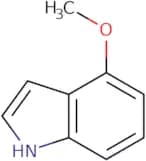
CAS:<p>2-Bromo-1,3-diethylbenzene is a reactive intermediate that can be used for the synthesis of styrene derivatives. It is also used as an anesthetic agent and has been shown to have cognition-enhancing properties. This compound reacts with electrophiles to form monoadducts, which are useful for protein targetting. The pharmacophore of 2-bromo-1,3-diethylbenzene consists of vinyl groups and halides. Radiation induces substitution reactions on the vinyl groups. Pharmacophores are important in drug design because they help identify specific chemical features that are necessary for binding to a particular protein target or protein targets.</p>Formula:C10H13BrPurity:Min. 95%Color and Shape:Clear LiquidMolecular weight:213.11 g/mol4-Methoxyindole
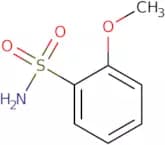
CAS:<p>4-Methoxyindole is a high-performance liquid chromatography (HPLC) solute that has been shown to interact with the fluoroquinolone antibiotic, 4-methoxyindole. The interaction of the two substances may be due to the formation of condensation products. 4-Methoxyindole can also react with monoamine oxidase inhibitors and form fluorescence as a result of chemical reactions. This compound is used in HPLC as a stationary phase for the separation of solutes by column chromatography. The density and bond cleavage properties of this substance make it suitable for use in this application.</p>Formula:C9H9NOColor and Shape:PowderMolecular weight:147.17 g/mol2-Methoxybenzene sulphonamide
CAS:<p>2-Methoxybenzene sulphonamide is an anti-cancer drug that belongs to the class of hydroxylated aromatic compounds. It has been shown to inhibit the growth of cancer cells in culture and in animals, and to prevent the formation of metastases. 2-Methoxybenzene sulphonamide is also a vasodilator drug used for the treatment of congestive heart failure. This drug binds to dopamine receptors in humans and may inhibit phosphatase activity. It has been shown to act as an antihypertensive by inhibiting angiotensin II mediated hypertrophy of cardiac tissue.</p>Formula:C7H9NO3SPurity:Min. 95%Color and Shape:White PowderMolecular weight:187.22 g/mol8-Bromoadenine
CAS:<p>8-Bromoadenine is a nucleophile that reacts with electrophiles to form adducts. 8-Bromoadenine has been shown to induce DNA strand breaks and oxidative damage in vitro, which may be due to its ability to react with DNA bases and form intramolecular hydrogen bonds. 8-Bromoadenine has also been shown to cause inflammatory bowel disease in mice by increasing the production of proinflammatory cytokines. 8-Bromoadenine induces Toll-like receptor 4 (TLR4) signaling, which leads to enhancement of radiation response. This drug can also be used as the monosodium salt for treating cancer, although it only has a limited number of sequences that can be synthesized.</p>Formula:C5H4BrN5Purity:Min. 95%Color and Shape:White PowderMolecular weight:214.02 g/mol6-Methoxy-2-naphthol
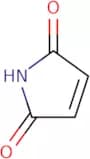
CAS:<p>6-Methoxy-2-naphthol is a synthetic compound. It has been shown to be an effective antibacterial agent against Gram-positive bacteria when tested in vitro. 6-Methoxy-2-naphthol also inhibits methyltransferase activity and can be used in the treatment of cancer. The optical properties of 6-Methoxy-2-naphthol have been studied extensively, and it has been found to have strong absorption bands at 350 nm and 575 nm, making it a potential candidate for photodynamic therapy.</p>Formula:C11H10O2Purity:Min. 95%Color and Shape:Brown PowderMolecular weight:174.2 g/molMaleimide
CAS:<p>Maleimide is a chemical compound that can be synthesized from maleic anhydride and hydrogen fluoride. It has been used as a fluorescent probe for the measurement of electrochemical impedance spectroscopy (EIS) in biological systems. Maleimide is also used to study the interaction with mouse monoclonal antibody, which can be used to detect the presence of specific proteins or antigens in blood. Maleimides are covalently linked to proteins and other macromolecules through their thiol groups, forming a stable linkage. Maleimide reacts with hydrogen gas at high temperatures, leading to a decrease in its redox potentials. The reaction solution can be analyzed by plasma mass spectrometry, which determines the concentration of maleimide and its reactants by measuring ions produced by ionization or fragmentation reactions.</p>Formula:C4H3NO2Purity:Min. 95%Color and Shape:Off-White PowderMolecular weight:97.07 g/mol


![5-Bromo-1H-pyrrolo[2,3-b]pyridine-2-carboxylic acid](/_next/image/?url=https%3A%2Fstatic.cymitquimica.com%2Fproducts%2F3D%2Fthumb-webp%2FXYB17520.webp&w=3840&q=75)
amine](/_next/image/?url=https%3A%2Fstatic.cymitquimica.com%2Fproducts%2F3D%2Fthumb-webp%2FIKB52698.webp&w=3840&q=75)


![3-[3-(Methylcarbamoyl)phenyl]propanoic acid](/_next/image/?url=https%3A%2Fstatic.cymitquimica.com%2Fproducts%2F3D%2Fthumb-webp%2FJZB49430.webp&w=3840&q=75)