Building Blocks
This section contains fundamental products for the synthesis of organic and biological compounds. Building blocks are the essential starting materials used to construct complex molecules through various chemical reactions. They play a critical role in drug discovery, material science, and chemical research. At CymitQuimica, we offer a diverse range of high-quality building blocks to support your innovative research and industrial projects, ensuring you have the essential components for successful synthesis.
Subcategories of "Building Blocks"
- Boronic Acids & Boronic Acid Derivatives(5,778 products)
- Chiral Building Blocks(1,242 products)
- Hydrocarbon Building Blocks(6,098 products)
- Organic Building Blocks(61,034 products)
Found 199601 products of "Building Blocks"
Sort by
Purity (%)
0
100
|
0
|
50
|
90
|
95
|
100
4-Dimethylamino-2-methoxybenzaldehyde
CAS:<p>4-Dimethylamino-2-methoxybenzaldehyde is a chemical used as a research reagent and intermediate. It can be used to synthesize other compounds, such as pharmaceuticals, pesticides, and agrochemicals. It is also useful in the production of various dyes, pigments, and fragrances, representing effective staining under anaerobic conditions. CAS No. 84562-48-1</p>Formula:C10H13NO2Molecular weight:179.22 g/molRef: 3D-D-4790
25gTo inquire50gTo inquire100gTo inquire250gTo inquire500gTo inquire-Unit-ggTo inquire5-Methylindole
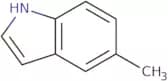
CAS:<p>5-Methylindole is a molecule that has been found to be active against Staphylococcus aureus. This drug interferes with the synthesis of glycogen, which is an important energy storage molecule in animals. 5-Methylindole inhibits glycogen synthase kinase 3 (GSK-3) activity and thereby reduces the production of proinflammatory cytokines. This drug has also been shown to have cardiac effects, such as tachycardia and arrhythmias in mice. The optical properties of 5-methylindole are characterized by fluorescence and absorbance spectra, as well as its chemical reactions. 5-Methylindole is detectable at concentrations of 10 µg/mL and reacts with aminoglycosides by forming an adduct that can be detected using chromatographic methods.</p>Formula:C9H9NPurity:Min. 95%Color and Shape:PowderMolecular weight:131.17 g/mol3,5-Diiodo-L-tyrosine dihydrate
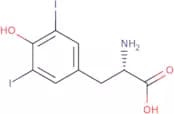
CAS:<p>There are many good reasons to eat fish and seafood, one of them is certainly the fact that they are rich in iodine salts, which are a fundamental for the endocrine activity of the thyroid gland. Iodine salts are enzymatically converted into molecular iodine, which adds to tyrosine residues in thyroglobulin forming diiodotyrosine. This is the first step towards the biosynthesis of thyroid hormones triodityronine T3 and tetraiodotyronine T4 which serve important regulatory functions in body metabolism and energy expenditure. Recently, the dietary introduction of potassium iodide and diiodotyrosine were compared in mice showing that diiodotyrosine can also be used effectively as food supplement preventing the potential damage from excessive intake of inorganic iodine salts.</p>Formula:C9H13I2NO5Purity:Min. 95.0 Area-%Molecular weight:469.02 g/mol5-Chloro-2-methylaminobenzophenone
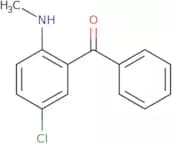
CAS:<p>5-Chloro-2-methylaminobenzophenone is an intermediate in the synthesis of 2,4-dichlorophenoxyacetic acid. 5-Chloro-2-methylaminobenzophenone is a reactive intermediate that can be used for wastewater treatment and for the production of chemicals that are used in the manufacture of other substances. It is also a reaction intermediate in chemical ionization. It has been shown to have chronic toxicity as well as carcinogenic effects when it is present in urine samples or human serum. In addition, 5-Chloro-2-methylaminobenzophenone has been found to cause light sensitivity and skin irritation when it is exposed to UV light. This chemical reacts with hydrochloric acid and pyridoxine hydrochloride to form 2,4,-dichlorophenoxyacetic acid. The activation energies for this process are between 30 and 60 kJ/mol.</p>Formula:C14H12NOClPurity:Min. 95%Color and Shape:PowderMolecular weight:245.7 g/mol4-Cyanobenzaldehyde
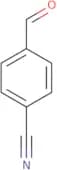
CAS:<p>4-Cyanobenzaldehyde is an acid that inhibits tyrosinase, an enzyme involved in the production of melanin. It has been shown to have a strong inhibitory effect on the activity of this enzyme in a variety of biological studies. 4-Cyanobenzaldehyde is chemically stable and does not react with hydrochloric acid or water at room temperature, making it suitable for use in experiments involving these substances. This chemical also has antiinflammatory properties and can be used as a substitute for phenols in some chemical reactions. 4-Cyanobenzaldehyde is soluble in methanol and reacts with diphenolase, an enzyme involved in the synthesis of lignin, to produce benzophenone and benzoic acid. This reaction may be important for the formation of lignin during wood decomposition.</p>Formula:C8H5NOPurity:80%Color and Shape:PowderMolecular weight:131.13 g/mol4-Chlorophenylacetic acid
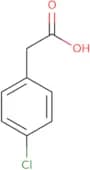
CAS:<p>4-Chlorophenylacetic acid is a fatty acid that reacts with hydroxyl groups to form reaction intermediates. It has been used in antiestrogen therapy as it is able to inhibit the activity of estrogen. It has also been used in polymeric matrices to control the release of silver ions for the treatment of cancer. 4-Chlorophenylacetic acid is synthesized by acylation of phenylacetic acid with chloroacetyl chloride in the presence of hydrochloric acid and sephadex g-100. 4-Chlorophenylacetic acid has been shown to inhibit tumor growth in animal models, which may be due to its ability to induce apoptosis.</p>Formula:C8H7ClO2Purity:Min. 97.5 Area-%Color and Shape:White PowderMolecular weight:170.59 g/molL-Cysteine ethyl ester hydrochloride
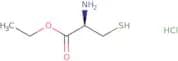
CAS:<p>L-Cysteine ethyl ester HCl is a disulfide bond that is used in the synthesis of proteins. It is also used to prevent hair loss and to treat baldness. L-Cysteine ethyl ester HCl has potent antitumor activity, which may be due to its ability to react with nucleophilic substitutions. In addition, L-Cysteine ethyl ester HCl can induce apoptosis by binding to the apoptosis protein. The reaction mechanism is not well understood but it may involve hydroxide ion and organometallic complexes. L-Cysteine ethyl ester HCl is soluble in water at neutral pH and poorly soluble in ethanol. It hydrolyzes in the presence of acid or base, forming trifluoroacetic acid or sodium hydroxide solution respectively.</p>Formula:C5H11NO2S•HClPurity:Min. 95%Color and Shape:PowderMolecular weight:185.67 g/mol(3R)-3-Hydroxyoctanoic acid
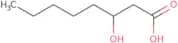
CAS:<p>(3R)-3-Hydroxyoctanoic acid is a fatty acid that is produced in the cytoplasm from acetyl-CoA. This chemical can be synthesized by immobilizing acyl-CoA synthase on a surface, which has been shown to increase its activity and extend the duration of its action. This immobilization technique has been used for the production of monomers, which are then polymerized to form polyesters with high molecular weight. (3R)-3-Hydroxyoctanoic acid is also involved in the biosynthesis of phospholipids, glycerophospholipids, and sphingolipids. The biochemical properties of this molecule have been studied using in vitro assays.</p>Formula:C8H16O3Purity:Min. 95%Color and Shape:PowderMolecular weight:160.21 g/mol2-Chloro-6-fluorobenzoic acid
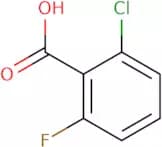
CAS:<p>2-Chloro-6-fluorobenzoic acid is an aromatic compound that is used as a solvent in the production of pharmaceuticals, plastics, and dyes. The 2-chloro-6-fluorobenzoic acid molecule has an electron rich ring structure that can undergo nucleophilic attack by a nucleophile such as hydrogen chloride or hydrochloric acid. It also has a high affinity for water molecules, which may be attributed to its aromatic hydrocarbon structure. This allows 2-chloro-6-fluorobenzoic acid to act as a good solvent for many organic compounds. This chemical is classified as a possible human carcinogen and is toxic to the liver cells.</p>Formula:C7H4ClFO2Purity:Min. 95%Color and Shape:PowderMolecular weight:174.56 g/mol1,4-Cyclohexanedione monoethlylene acetal
CAS:<p>1,4-Cyclohexanedione monoethlylene acetal is a hydrochloric acid analog of pyrazole. It has been shown to bind selectively to serotonin receptors in the central nervous system and is used as an anti-inflammatory drug. 1,4-Cyclohexanedione monoethlylene acetal has a stereoselective profile that can be used for the treatment of inflammatory diseases. It has also been shown to have immunosuppressant properties, which may be due to its ability to inhibit T-cell proliferation and cytokine production.</p>Formula:C8H12O3Purity:Min. 95%Color and Shape:White PowderMolecular weight:156.18 g/molN,1,3-Trimethylpiperidin-4-amine
CAS:<p>Versatile small molecule scaffold</p>Formula:C8H18N2Purity:Min. 95%Color and Shape:PowderMolecular weight:142.24 g/molMethanesulfonamide
CAS:<p>Methanesulfonamide is a drug that is used to treat infectious diseases and in the treatment of HIV. It is a non-steroidal anti-inflammatory drug that inhibits prostaglandin synthesis by blocking the activity of cyclooxygenase (COX) enzymes, COX-1 and COX-2. Methanesulfonamide has been shown to have chemoprotective effects against HIV infection and may reduce the risk of opportunistic infections associated with AIDS. Methanesulfonamide may also inhibit the production of inflammatory cytokines such as tumor necrosis factor alpha (TNFα) and interleukin-1β (IL-1β).</p>Formula:CH5NO2SPurity:Min. 95%Color and Shape:PowderMolecular weight:95.12 g/mol5-Chloroindole-3-acetic acid
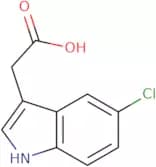
CAS:<p>5-Chloroindole-3-acetic acid (5CI3A) is a compound that belongs to the indole class of compounds. It is structurally similar to the amino acid tryptophan, which makes it a good template molecule for the synthesis of other indoles. 5CI3A is mainly found in plants and bacteria, where it acts as an auxin. In plants, 5CI3A stimulates cell elongation and leaf growth by interacting with plant hormones such as auxins and gibberellins. This compound also binds to serum albumin, which may be responsible for its low toxicity in humans. 5CI3A has been shown to inhibit the activity of human serum albumin by forming hydrogen bonds with it. This inhibition reduces the binding affinity of 5CI3A for other proteins in serum, making it less likely to interact with them than if there were no binding competition.</p>Formula:C10H8ClNO2Color and Shape:PowderMolecular weight:209.63 g/molD-Cysteine
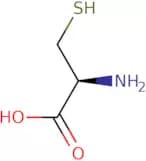
CAS:<p>D-Cysteine is the L-cysteine stereoisomer. It has been shown to inhibit the response of nicotinic acetylcholine receptors and toll-like receptor 4, which are proteins that play a role in inflammation. D-Cysteine also inhibits the production of nitric oxide by inhibiting NADPH oxidase. This inhibition leads to decreased inflammation, as well as decreased oxidation of proteins and DNA. D-Cysteine has been shown to be a specific inhibitor of wild type strains of Escherichia coli, but not mutant strains with defects in iron homeostasis. The enzyme activity for d-cysteine is also inhibited by l-cysteine, which may result in drug interactions. D-Cysteine can be found naturally in foods such as garlic, onions, broccoli, and cauliflower.</p>Formula:C3H7NO2SColor and Shape:White PowderMolecular weight:121.16 g/molCyclamic acid
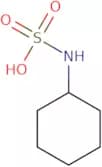
CAS:<p>Artificial sweetener</p>Formula:C6H13NO3SColor and Shape:PowderMolecular weight:179.24 g/mol1-Cyanoimidazole
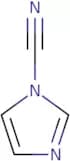
CAS:<p>1-Cyanoimidazole is a phosphodiester that is used in the chemical ligation of nucleic acids. It reacts with terminal alkynes to form covalent linkages between DNA molecules, and can be used as a crosslinker for dna duplexes. 1-Cyanoimidazole can be used as a phosphate group replacement in DNA replication. This compound has been shown to react with terminal alkyne groups on DNA templates, forming stable covalent linkages between strands in the presence of an appropriate nucleophile. 1-Cyanoimidazole has been shown to have sequence specificity and efficient method for linking strands of DNA.</p>Formula:C4H3N3Purity:Min. 95%Color and Shape:Off-White PowderMolecular weight:93.09 g/mol3,4-Dihydroxybenzaldehyde
CAS:<p>Please enquire for more information about 3,4-Dihydroxybenzaldehyde including the price, delivery time and more detailed product information at the technical inquiry form on this page</p>Formula:C7H6O3Molecular weight:138.12 g/mol3,5-Dihydroxyacetophenone
CAS:<p>3,5-Dihydroxyacetophenone is a chemical intermediate that is used as a building block in organic synthesis. It can be used to synthesize other chemicals, such as pharmaceuticals, dyes, and perfumes. 3,5-Dihydroxyacetophenone is also an important reagent for the production of α-hydroxyketones. It can react with nucleophiles such as amines or alcohols to form esters or ethers. 3,5-Dihydroxyacetophenone is a versatile building block that can serve as a reaction component in various reactions. This compound is also used as a useful scaffold for the construction of complex molecules.</p>Formula:C8H8O3Molecular weight:152.15 g/mol2,3-Dichloro-5,6-dicyano-1,4-benzoquinone
CAS:<p>Please enquire for more information about 2,3-Dichloro-5,6-dicyano-1,4-benzoquinone including the price, delivery time and more detailed product information at the technical inquiry form on this page</p>Formula:C8Cl2N2O2Molecular weight:227.01 g/mol2-(4'-Chlorobenzoyl)benzoic acid
CAS:<p>2-(4'-Chlorobenzoyl)benzoic acid (2-CBA) is a sulfa drug that inhibits bacterial growth by blocking the synthesis of folic acid. It is also known to be luminescent and can be used in techniques such as luminescent probes. 2-CBA has antibacterial activity and can inhibit bacterial growth in a chromatographic method. 2-CBA is chemically stable and has been shown to have antibacterial properties against gram-positive bacteria, including Bacillus subtilis and Staphylococcus aureus. 2-CBA also has the ability to react with phthalazinone, an inhibitor of glutamine synthetase, which is involved in the production of ATP from ADP. This reaction results in the formation of an unstable intermediate which decomposes into CO2 and benzoic acid.</p>Formula:C14H9ClO3Purity:Min. 95%Color and Shape:White PowderMolecular weight:260.67 g/mol