Building Blocks
This section contains fundamental products for the synthesis of organic and biological compounds. Building blocks are the essential starting materials used to construct complex molecules through various chemical reactions. They play a critical role in drug discovery, material science, and chemical research. At CymitQuimica, we offer a diverse range of high-quality building blocks to support your innovative research and industrial projects, ensuring you have the essential components for successful synthesis.
Subcategories of "Building Blocks"
- Boronic Acids & Boronic Acid Derivatives(5,778 products)
- Chiral Building Blocks(1,242 products)
- Hydrocarbon Building Blocks(6,098 products)
- Organic Building Blocks(61,034 products)
Found 199601 products of "Building Blocks"
Sort by
Purity (%)
0
100
|
0
|
50
|
90
|
95
|
100
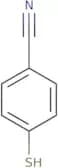
4-Mercaptobenzonitrile
CAS:<p>4-mercaptobenzonitrile (4MBN) is a typical compound used in many spectroscopic experiments. The addition of 4-mercaptobenzonitrile to metal surfaces is used to create self-assembled monolayers with metals. For numerous reasons, it can difficult to immbolize certain chemical groups on surfaces. The addition of 4-mercaptobenzonitrile forms a modified metal surface that enhances technique sensitivity and serves as tool for a better understanding of the interfaces. In recent years, the use of 4-mercaptobenzonitrile together with other molecules on metal nanoparticles has been explored for biomedicinal purposes, serving as a tool for creating surface-enhanced Raman scattering tags (SER tags), useful as cancer biomarker imaging (Li, 2018).</p>Formula:C7H5NSPurity:Min. 95%Color and Shape:PowderMolecular weight:135.19 g/mol1,1,3,3-Tetramethylbutyl isocyanide
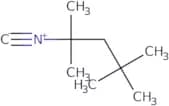
CAS:<p>1,1,3,3-Tetramethylbutyl isocyanide (TMBC) is a palladium complex that has been used in palladium-catalyzed coupling reactions. TMBC is also a ligand for the synthesis of β-amino acid and can be used to form hydrogen bonds with nucleophiles. It has been used in biological studies as well as clinical diagnostics. The solid-phase synthesis of TMBC has been shown to be an efficient method for producing this compound. In addition, TMBC shows stereoselective reactivity with amines and methoxy groups. The nmr spectra of TMBC are characteristic of a carbonyl group at δ 3.20 ppm and two methyl groups at δ 1.36 and 1.37 ppm respectively.</p>Formula:C9H17NPurity:Min. 98%Color and Shape:Clear LiquidMolecular weight:139.24 g/mol4-Azidopiperidine hydrochloride
CAS:<p>4-Azidopiperidine hydrochloride is a chemical compound that is used as a versatile building block in the synthesis of complex chemical compounds. It is also used as a reagent or speciality chemical, and has many applications in research, such as being an intermediate for the synthesis of other chemicals. 4-Azidopiperidine hydrochloride can be used to make useful building blocks, reaction components, and scaffolds for chemical reactions.</p>Formula:C5H11ClN4Purity:Min. 95%Color and Shape:PowderMolecular weight:162.62 g/mol5-Aminopentane-1-thiol hydrochloride
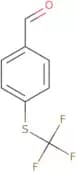
CAS:Versatile small molecule scaffoldFormula:C5H14ClNSPurity:Min. 95%Color and Shape:PowderMolecular weight:155.69 g/mol4-(Trifluoromethylthio)benzaldehyde
CAS:4-(Trifluoromethylthio)benzaldehyde is a magnetic, stereogenic, mononuclear compound with a thermodynamic stability that has been improved by advances in the field of thermodynamics. The compound can also be synthesized using an asymmetric synthesis and is tetrasubstituted with antiferromagnetic coupling. 4-(Trifluoromethylthio)benzaldehyde has many functions, including being able to control the oxidation-reduction potentials of lanthanide ions and ferromagnetic materials. It also has a calorimetry effect on the adsorption of water vapor onto hydrophobic surfaces.Formula:C8H5F3OSPurity:Min. 95%Color and Shape:PowderMolecular weight:206.19 g/mol3,3',5,5'-Tetramethylbenzidine, free base
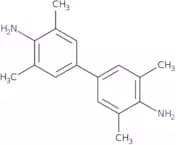
CAS:<p>TMB is an excellent colorimetric substrate for detection of horseradish peroxidase labelled probes and is used with peroxidase and peroxidase coupled systems, particularly in ELISA techniques. It produces a soluble end product, which is blue in color and can be read spectrophotometrically. TMB has also been used in the quantitative determination of hemoglobin and in cytochemical staining for peroxidase. TMB is a hepatitis B antigen.</p>Formula:C16H20N2Purity:Min. 99.0 Area-%Molecular weight:240.35 g/mol2-(2-Hydroxyphenyl)-2-oxoacetic acid
CAS:<p>Versatile small molecule scaffold</p>Formula:C8H6O4Purity:Min. 95%Color and Shape:PowderMolecular weight:166.1 g/mol4-Ethenyl-1,2-dimethylbenzene
CAS:<p>4-Ethenyl-1,2-dimethylbenzene is a volatile oil that has been found in plants and is a metabolite of styrene. It is classified as a vinyl group, which are compounds with the general formula CH=CH2. 4-Ethenyl-1,2-dimethylbenzene is also a volatile substance, meaning that it evaporates easily from surfaces or materials. This compound may be used as an intermediate for other organic chemicals.</p>Formula:C10H12Purity:Min. 95%Color and Shape:Clear LiquidMolecular weight:132.2 g/mol5-Methanesulfinylpentanenitrile
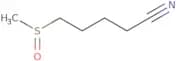
CAS:<p>5-Methanesulfinylpentanenitrile is a compound that is found in plants such as broccoli, cabbage, and cauliflower. It has been shown to have anticarcinogenic properties in cell culture studies. The activity of sulforaphane can be increased by the presence of glucosinolates. Sulforaphane inhibits the synthesis of fatty acids and is metabolized by detoxification enzymes. Amides are formed from sulforaphane, which can be detected using preparative high performance liquid chromatography (prep-HPLC). The water solubility of sulforaphane can be increased by heating it to a temperature above its boiling point so that it becomes supercritical (above its critical temperature). This allows for the preparation of dry weight samples for analysis.</p>Formula:C6H11NOSPurity:Min. 95%Molecular weight:145.23 g/moltert-Butyl 3-(4-(4,4,5,5-tetramethyl-1,3,2-dioxaborolan-2-yl)phenoxy)azetidine-1-carboxylate
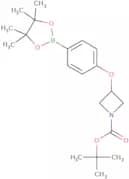
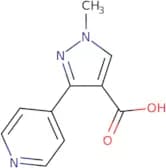
CAS:<p>Tert-Butyl 3-(4-(4,4,5,5-tetramethyl-1,3,2-dioxaborolan-2-yl)phenoxy)azetidine-1-carboxylate is a high quality reagent that can be used as an intermediate in the synthesis of complex compounds. It has been shown to have various uses as a fine chemical or speciality chemical. Tert-butyl 3-(4-(4,4,5,5-tetramethyl-1,3,2-dioxaborolan-2-yl)phenoxy)azetidine 1 carboxylate is also a versatile building block and can serve as a reaction component.</p>Formula:C20H30BNO5Purity:Min. 95%Color and Shape:PowderMolecular weight:375.3 g/mol1-Methyl-3-(pyridin-4-yl)-1H-pyrazole-4-carboxylic acid
CAS:<p>Versatile small molecule scaffold</p>Formula:C10H9N3O2Purity:Min. 95%Color and Shape:PowderMolecular weight:203.20 g/molPF-04965842
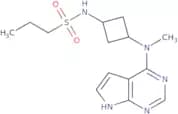
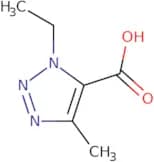
CAS:<p>PF-04965842 is an anti-inflammatory drug that belongs to the class of Jak1 inhibitors. It is used in the treatment of alopecia areata, dermatitis, and bowel disease. PF-04965842 is a selective inhibitor of JAK3 and blocks signaling through this pathway. PF-04965842 has been shown to have long-term efficacy in the treatment of inflammatory skin diseases such as atopic dermatitis and psoriasis. In addition, it has been demonstrated to be effective in reducing symptoms associated with inflammatory bowel disease (IBD) and ulcerative colitis. PF-04965842 also inhibits the production of proinflammatory cytokines by inhibiting the activation of inflammatory cells in the skin or gut.</p>Formula:C14H21N5O2SPurity:Min. 95%Color and Shape:PowderMolecular weight:323.41 g/mol1-Ethyl-4-methyl-1H-1,2,3-triazole-5-carboxylic acid
CAS:<p>Versatile small molecule scaffold</p>Formula:C6H9N3O2Purity:Min. 95%Molecular weight:155.15 g/molN-(1-Cyano-1-methylethyl)-2-methylpropanamide
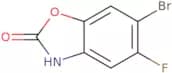
CAS:<p>N-(1-Cyano-1-methylethyl)-2-methylpropanamide is a chemical that is used in pharmaceutical dosage. It is a prodrug of aminopropiophenone, which has been shown to be useful for the treatment of depression. This chemical is readily soluble in water and hydrochloric acid, but insoluble in trifluoroacetic acid or hydrophilic interaction chromatography. N-(1-Cyano-1-methylethyl)-2-methylpropanamide has been shown to bind to chloride ions, amines, and dodecyl groups.</p>Formula:C8H14N2OPurity:Min. 95%Color and Shape:PowderMolecular weight:154.21 g/mol6-Bromo-5-fluoro-2,3-dihydro-1,3-benzoxazol-2-one
CAS:<p>Versatile small molecule scaffold</p>Formula:C7H3BrFNO2Purity:Min. 95%Color and Shape:PowderMolecular weight:232.01 g/mol1-[4-(2-Methoxyethyl)phenoxy]propan-2-one
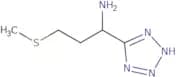
CAS:<p>1-[4-(2-Methoxyethyl)phenoxy]propan-2-one is a useful scaffold for organic synthesis. It is a versatile building block that can be used as an intermediate in the synthesis of complex compounds with pharmaceutical, agrochemical and other applications.1-[4-(2-Methoxyethyl)phenoxy]propan-2-one is also a reagent in chemical reactions, and has been used to synthesize other compounds such as 1-[4-(2-Methoxyethyl)phenoxy]propan-2-ol (CAS No. 1155083-54-7). This compound has been shown to have good reactivity and high quality, making it an excellent research chemical.</p>Formula:C12H16O3Purity:Min. 95%Molecular weight:208.25 g/mol(1S)-3-(Methylsulfanyl)-1-(2H-1,2,3,4-tetrazol-5-yl)propan-1-amine
CAS:Versatile small molecule scaffoldFormula:C5H11N5SPurity:Min. 95%Color and Shape:PowderMolecular weight:173.24 g/mol1H-Tetrazole - ~0.45M solution in acetonitrile
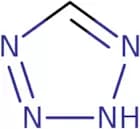
CAS:<p>Catalyst; intermediate in organic syntheses</p>Formula:CH2N4Purity:Min. 98.0%Color and Shape:Colorless Clear LiquidMolecular weight:70.05 g/mol6-Formyl-2-methyl-4H-thieno[3,2-b]pyrrole-5-carboxylic acid
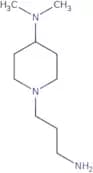
CAS:<p>Versatile small molecule scaffold</p>Formula:C9H7NO3SPurity:Min. 95%Molecular weight:209.22 g/mol1-(3-Aminopropyl)-N,N-dimethylpiperidin-4-amine
CAS:<p>Versatile small molecule scaffold</p>Formula:C10H23N3Purity:Min. 95%Color and Shape:PowderMolecular weight:185.31 g/mol





![1-[4-(2-Methoxyethyl)phenoxy]propan-2-one](/_next/image/?url=https%3A%2Fstatic.cymitquimica.com%2Fproducts%2F3D%2Fthumb-webp%2FFWB08353.webp&w=3840&q=75)
![6-Formyl-2-methyl-4H-thieno[3,2-b]pyrrole-5-carboxylic acid](/_next/image/?url=https%3A%2Fstatic.cymitquimica.com%2Fproducts%2F3D%2Fthumb-webp%2FSIB11266.webp&w=3840&q=75)