Building Blocks
This section contains fundamental products for the synthesis of organic and biological compounds. Building blocks are the essential starting materials used to construct complex molecules through various chemical reactions. They play a critical role in drug discovery, material science, and chemical research. At CymitQuimica, we offer a diverse range of high-quality building blocks to support your innovative research and industrial projects, ensuring you have the essential components for successful synthesis.
Subcategories of "Building Blocks"
- Boronic Acids & Boronic Acid Derivatives(5,778 products)
- Chiral Building Blocks(1,242 products)
- Hydrocarbon Building Blocks(6,098 products)
- Organic Building Blocks(61,034 products)
Found 199601 products of "Building Blocks"
Sort by
Purity (%)
0
100
|
0
|
50
|
90
|
95
|
100
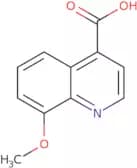
8-Methoxyquinoline-4-carboxylic acid
CAS:<p>8-Methoxyquinoline-4-carboxylic acid is a potent inhibitor of phosphodiesterase I, II, IV and V. It has been shown to inhibit the production of inflammatory prostaglandins in asthma patients. 8-Methoxyquinoline-4-carboxylic acid has been used to study the fluorescence properties of acetonitrile and its derivatives. 8-Methoxyquinoline-4-carboxylic acid has been tested as a fluorescent probe for DNA sequencing and has also shown potential as a fluorescent probe for protein sequencing. This molecule is an inhibitor of phosphodiesterases, which are enzymes that break down cyclic nucleotides such as cAMP and cGMP.<br>8-Methoxyquinoline-4-carboxylic acid is a bicyclic heteroaryl compound with an electron donating group at position 4 on the heterocyclic ring. It can be synthesized from ethanol using</p>Formula:C11H9NO3Purity:(¹H-Nmr) Min. 95 Area-%Color and Shape:PowderMolecular weight:203.19 g/molEthyl 2,4-dihydroxy-6-methylbenzoate
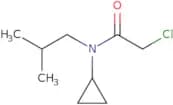
CAS:<p>Ethyl 2,4-dihydroxy-6-methylbenzoate is a phenolic acid that is found in lichens. It has been shown to have anti-cancer and anti-inflammatory properties. The hydrogen bonds of ethyl 2,4-dihydroxy-6-methylbenzoate are the result of an intramolecular hydrogen bonding between the benzoic acid group and the hydroxymethyl group. This compound can also be found in matrix effect health care products as well as wastewater treatment plants. Ethyl 2,4-dihydroxy-6-methylbenzoate has also been shown to inhibit enzymes such as uv absorption and phenolic acids.</p>Formula:C10H12O4Purity:Min. 95%Molecular weight:196.2 g/mol2-Chloro-N-cyclopropyl-N-(2-methylpropyl)acetamide
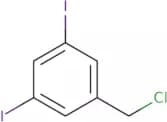
CAS:<p>Versatile small molecule scaffold</p>Formula:C9H16ClNOPurity:(%) Min. 85%Color and Shape:Clear LiquidMolecular weight:189.68 g/mol1-(Chloromethyl)-3,5-diiodobenzene
CAS:<p>1-(Chloromethyl)-3,5-diiodobenzene is a versatile and high quality chemical building block that is useful for research purposes. It can be used as a reagent or speciality chemical in the synthesis of other compounds. This compound has been shown to be an intermediate for the synthesis of more complex compounds, such as pharmaceuticals, agrochemicals, and fine chemicals. 1-(Chloromethyl)-3,5-diiodobenzene has many uses in organic chemistry including as a reaction component or scaffold for the construction of complex molecules.</p>Formula:C7H5ClI2Purity:Min. 95%Color and Shape:PowderMolecular weight:378.37 g/mol(1S,3S,5S)-2-Azabicyclo[3.1.0]hexane-3-carboxylic Acid
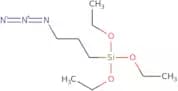
CAS:(1S,3S,5S)-2-Azabicyclo[3.1.0]hexane-3-carboxylic Acid is a crystalline compound in the form of a white solid with a melting point of 210°C and a molecular weight of 164.09 g/mol. It has been used to stabilize the helical conformation of l-proline and proline, which are amino acids that have been shown to inhibit the conformational changes in proteins that may lead to protein misfolding and aggregation. (1S,3S,5S)-2-Azabicyclo[3.1.0]hexane-3-carboxylic Acid also has structural properties that make it suitable for x-ray crystallography experiments as well as structural studies with dichroism or tetrameric techniques.Formula:C6H9NO2Purity:Min. 95%Molecular weight:127.14 g/mol3-(Azidopropyl)triethoxysilane
CAS:<p>3-(Azidopropyl)triethoxysilane is a chemical compound that is used as an immobilization agent for metal ions. It is typically synthesized by reacting triethoxysilane with azide and can be used to immobilize metal ions on the surface of various materials, such as glass, silicon, or other substrates. 3-(Azidopropyl)triethoxysilane has been shown to have anticancer activity in vitro against MCF-7 cells. This compound induces cancer cell death by binding to the cell membrane and disrupting its lipid bilayer. 3-(Azidopropyl)triethoxysilane also has a diameter of 6.3 nm, which allows it to cross the membrane easily.</p>Formula:C9H21N3O3SiPurity:Min. 95 Area-%Color and Shape:Clear LiquidMolecular weight:247.37 g/mol10-Undecen-1-ol
CAS:<p>10-Undecen-1-ol is a fatty acid with a hydroxyl group at the 10th position. It has strong intermolecular hydrogen bonding and reacts to form esters and ethers. 10-Undecen-1-ol is used as a multi-walled carbon for wastewater treatment, which removes organic contaminants. This compound also has a high degree of chemical stability, which makes it suitable for use in anhydrous sodium synthesis methods.</p>Formula:C11H22OPurity:Min. 98%Color and Shape:Colorless Clear LiquidMolecular weight:170.29 g/molIndole-4-carboxylic acid methyl ester
CAS:<p>Indole-4-carboxylic acid methyl ester is a fine chemical that is used as a building block in the synthesis of complex compounds. It can be used as a reagent, speciality chemical, or intermediate, and it has versatile applications in the synthesis of pharmaceuticals and dyes. Indole-4-carboxylic acid methyl ester has been shown to react with alcohols to form ketones, which are useful scaffolds for organic chemistry. It can also be used as a reaction component for the synthesis of other compounds.</p>Formula:C10H9NO2Molecular weight:175.19 g/molRef: 3D-I-2510
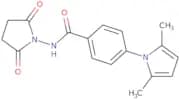
1kgTo inquire50gTo inquire100gTo inquire250gTo inquire500gTo inquire-Unit-ggTo inquire4-(2,5-Dimethyl-1H-pyrrol-1-yl)-N-(2,5-dioxopyrrolidin-1-yl)benzamide
CAS:4-(2,5-Dimethyl-1H-pyrrol-1-yl)-N-(2,5-dioxopyrrolidin-1-yl)benzamide is a useful scaffold that can be used to synthesize high quality and versatile building blocks. This compound is also a useful intermediate in the synthesis of complex compounds. This chemical is not an approved pharmaceutical, but it has shown promising activity as an antihistamine.Formula:C17H17N3O3Purity:Min. 95%Molecular weight:311.33 g/molL-5-Methyltetrahydrofolate calcium
CAS:<p>L-5-Methyltetrahydrofolate calcium is also known as calcium levomefolate; N-[4-[[(2-amino-1,4,5,6,7,8-hexahydro-5-methyl-4-oxo-6-pteridinyl)methyl]amino]benzoyl]-L-glutamic acid, calcium salt; and L-5-MTHF. L-5-Methyltetrahydrofolate calcium is the calcium salt of L-5-methyltetrahydrofolic acid, and a member of the folate group of vitamins (Vitamin B9). It is the coenzymated and most active form of folic acid, which performs many vital cellular functions, including DNA reproduction, cysteine cycle and homocysteine regulation. L-5-Methyltetrahydrofolate calcium is used as in dietary supplements and has been proposed for treatment of cardiovascular disease.</p>Formula:C20H23CaN7O6Purity:Min. 95 Area-%Color and Shape:White PowderMolecular weight:497.52 g/molIndole-4-carboxaldehyde
CAS:<p>Please enquire for more information about Indole-4-carboxaldehyde including the price, delivery time and more detailed product information at the technical inquiry form on this page</p>Formula:C9H7NOMolecular weight:145.16 g/molIndole-3-carboxaldehyde
CAS:<p>Indole-3-carboxaldehyde is a versatile building block that can be used as an intermediate in the production of complex compounds. It is also a research chemical and reagent for speciality chemicals. Indole-3-carboxaldehyde has been shown to react with other chemicals to form high quality, useful intermediates or reaction components. This compound can also be used as a scaffold for chemical synthesis.</p>Formula:C9H7NOMolecular weight:145.16 g/molRef: 3D-I-2200
1kgTo inquire100gTo inquire250gTo inquire500gTo inquire2500gTo inquire-Unit-kgkgTo inquireIndole-3-carbinol
CAS:<p>Indole-3-carbinol is a fine chemical that has been used for research purposes as a reagent and speciality chemical. Indole-3-carbinol is also a versatile building block and reaction intermediate in organic synthesis, which has been used for the synthesis of many complex compounds. Indole-3-carbinol is also an important precursor to pharmaceuticals, including antiestrogens and anti-angiogenesis agents. Indole-3-carbinol has been shown to have antiinflammatory effects, which may be due to its ability to inhibit prostaglandin synthesis.</p>Formula:C9H9NOPurity:Min. 99 Area-%Molecular weight:147.18 g/molRef: 3D-I-2100
1kgTo inquire50gTo inquire100gTo inquire250gTo inquire500gTo inquire-Unit-ggTo inquire(4-Chlorophenyl)[3-(trifluoromethyl)phenyl]methanone
CAS:<p>4-Chlorophenyl[3-(trifluoromethyl)phenyl]methanone is a chemical compound that can be used as a reaction component or a reagent. It is often used as a building block in organic synthesis, due to its high quality and versatility. 4-Chlorophenyl[3-(trifluoromethyl)phenyl]methanone is soluble in organic solvents and has been shown to have no significant toxicity. This chemical is also useful for the production of complex compounds with various applications, such as pharmaceuticals, agrochemicals, and dyes.</p>Formula:C14H8ClF3OPurity:Min. 95%Molecular weight:284.66 g/molIndole-3-butyric acid
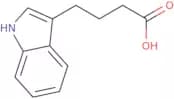
CAS:Indole-3-butyric acid is a chemical compound that has a wide range of applications. It is used in the synthesis of many organic compounds and can be used as a reagent or speciality chemical. Indole-3-butyric acid is also used as an intermediate in the synthesis of other compounds, such as indoles, indanones, and benzofuranones. The high quality of this compound makes it a useful scaffold for constructing complex molecules.Formula:C12H13NO2Molecular weight:203.24 g/molRef: 3D-I-2005
1kgTo inquire5kgTo inquire100gTo inquire10kgTo inquire2500gTo inquire-Unit-kgkgTo inquireIndole-3-acetyl-DL-tryptophan
CAS:<p>Indole-3-acetyl-DL-tryptophan is a useful intermediate for the synthesis of various biologically active compounds. It is a white solid that can be synthesized from indole and tryptophan using acetic acid as a catalyst. Indole-3-acetyl-DL-tryptophan has been used in the synthesis of several complex compounds, such as β-(N) indolyloxypropanal, which is a fine chemical with potential use in the production of polyurethane foam. This compound has also been found to be an effective building block for the synthesis of novel scaffolds, such as 2-(1H-indol-2-yl)-N-(2H-[1,2,4]triazol-3-yl)ethanamine. Indole 3 acetyl DL tryptophan has also been shown to be an excellent intermediate in the synthesis of other heterocycles, such as pyrazolo</p>Formula:C21H19N3O3Molecular weight:361.4 g/molRef: 3D-I-1700
1gTo inquire5gTo inquire10gTo inquire500mgTo inquire2500mgTo inquire-Unit-ggTo inquire1-(3-Azetidinyl)-pyrrolidine dihydrochloride
CAS:1-(3-Azetidinyl)-pyrrolidine dihydrochloride is a high quality, versatile building block that can be used as a reagent in the synthesis of complex compounds and as an intermediate in the synthesis of fine chemicals. 1-(3-Azetidinyl)-pyrrolidine dihydrochloride is an excellent starting material for the synthesis of a wide range of compounds. It can also act as a speciality chemical or research chemical. 1-(3-Azetidinyl)-pyrrolidine dihydrochloride has CAS No. 1024589-68-1 and can be found on our website at www.chemistryworldstore.comFormula:C7H14N2•(HCl)2Purity:Min. 95%Color and Shape:PowderMolecular weight:199.12 g/mol4-Cyanobenzophenone
CAS:<p>4-Cyanobenzophenone is an organic compound that is used as a reactant in the synthesis of other compounds. 4-Cyanobenzophenone has a number of applications, including use as a reagent in organic synthesis and as a building block for the synthesis of more complex compounds. It can also be used to synthesize antimalarial drugs, antibiotics, and other pharmaceuticals.</p>Formula:C14H9NOPurity:Min. 98 Area-%Molecular weight:207.23 g/molBCN-PNP carbonate
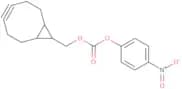
CAS:<p>BCN-PNP carbonate is a versatile building block that can be used as an intermediate in the synthesis of complex compounds. It has a variety of uses in research and as a reagent for fine chemicals. BCN-PNP carbonate is an effective reaction component for the synthesis of speciality chemicals, which are used for research purposes or as intermediates for pharmaceuticals. BCN-PNP carbonate is also useful scaffold for the synthesis of highly pure, high quality building blocks.</p>Formula:C17H17NO5Purity:Min. 95%Color and Shape:PowderMolecular weight:315.32 g/mol3-Cyano-1,2-oxazole-5-carboxylic acid
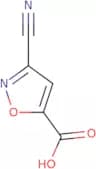
CAS:<p>Versatile small molecule scaffold</p>Formula:C5H2N2O3Purity:Min. 95%Color and Shape:PowderMolecular weight:138.08 g/mol


![(1S,3S,5S)-2-Azabicyclo[3.1.0]hexane-3-carboxylic Acid](/_next/image/?url=https%3A%2Fstatic.cymitquimica.com%2Fproducts%2F3D%2Fthumb-webp%2FPIA19313.webp&w=3840&q=75)




![(4-Chlorophenyl)[3-(trifluoromethyl)phenyl]methanone](/_next/image/?url=https%3A%2Fstatic.cymitquimica.com%2Fproducts%2F3D%2Fthumb-webp%2FRDA50365.webp&w=3840&q=75)