Building Blocks
This section contains fundamental products for the synthesis of organic and biological compounds. Building blocks are the essential starting materials used to construct complex molecules through various chemical reactions. They play a critical role in drug discovery, material science, and chemical research. At CymitQuimica, we offer a diverse range of high-quality building blocks to support your innovative research and industrial projects, ensuring you have the essential components for successful synthesis.
Subcategories of "Building Blocks"
- Boronic Acids & Boronic Acid Derivatives(5,778 products)
- Chiral Building Blocks(1,242 products)
- Hydrocarbon Building Blocks(6,098 products)
- Organic Building Blocks(61,034 products)
Found 199601 products of "Building Blocks"
Sort by
Purity (%)
0
100
|
0
|
50
|
90
|
95
|
100
Lauroyl coenzyme A lithium
CAS:<p>Please enquire for more information about Lauroyl coenzyme A lithium including the price, delivery time and more detailed product information at the technical inquiry form on this page</p>Formula:C33H58N7O17P3S•LixPurity:90%Color and Shape:PowderLinoleic acid - 60%min
CAS:<p>Linoleic acid is a polyunsaturated fatty acid that is an important component of the human diet. It has been shown to have inhibitory properties on liver cells, and may be related to body mass index. Linoleic acid is a precursor for gamma-aminobutyric acid (GABA), which functions as a neurotransmitter in the central nervous system. Linoleyl alcohol is a metabolite of linoleic acid and has been shown to inhibit the production of antimicrobial peptides, such as cathelicidin and beta-defensin. The inhibition of this peptide may be responsible for the observed reduction in inflammatory responses and infections.</p>Formula:C18H32O2Purity:Min. 95%Color and Shape:Yellow Clear LiquidMolecular weight:280.45 g/molH-Lys(Boc)-AMC
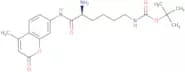
CAS:<p>H-Lys(Boc)-AMC is a useful building block for the synthesis of peptides, nucleic acids, and other complex molecules. It is a fine chemical that can be used as a reagent or speciality chemical in research laboratories. H-Lys(Boc)-AMC is also a versatile building block that can be used to synthesize complex compounds and scaffolds. This compound has been assigned CAS number 222037-62-9.</p>Formula:C21H29N3O5Purity:Min. 95%Color and Shape:PowderMolecular weight:403.47 g/molLuteolin-4'-O-glucoside
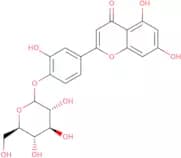
CAS:<p>Luteolin-4'-O-glucoside is a flavonol glycoside that is found in plants such as licorice, celery, and parsley. Luteolin-4'-O-glucoside has been shown to inhibit the growth of Coccidioides neoformans by binding to the cell membrane surface and blocking the synthesis of phospholipids. It also inhibits cancer cells in culture by reducing their viability. The structural analysis of luteolin-4'-O-glucoside revealed an hydroxyl group on its aromatic ring, which may be responsible for its anti-inflammatory effects. Luteolin-4'-O-glucoside has been shown to be effective against inflammatory diseases, such as rheumatoid arthritis and asthma, and may also have a protective effect against certain types of cancer, such as cervical cancer. Luteolin-4'-O-glucoside has also been shown to</p>Formula:C21H20O11Purity:Min. 95%Color and Shape:PowderMolecular weight:448.38 g/molL-Leucine, USP
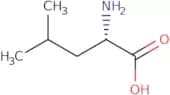
CAS:<p>Amino acid</p>Formula:C6H13NO2Purity:98.5 To 101.5%Color and Shape:White PowderMolecular weight:131.17 g/molN-Hydroxysuccinimide
CAS:<p>An additive in carbodiimide peptide coupling</p>Formula:C4H5NO3Color and Shape:White PowderMolecular weight:115.09 g/mol4-Hydroxypyridine
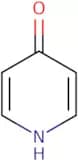
CAS:<p>4-Hydroxypyridine is a nitrite ion that contains two nitrogen atoms. It is used to study microbial metabolism and the role of nitrogen in biological systems. 4-Hydroxypyridine can be synthesized from pyridinium, which can be prepared by treating aniline with nitrous acid. The synthesis of 4-hydroxypyridine has been investigated using a hydroxylation reaction catalyzed by palladium, followed by cyclization to form a cyclic peptide. This reaction has been shown to have significant cytotoxicity against HIV-infected cells, with light emission as a result of the reaction between the hydrogen atom on the pyridine ring and oxygen molecule.</p>Formula:C5H5NOPurity:Min. 98 Area-%Color and Shape:White PowderMolecular weight:95.1 g/mol3-Hydroxypiperidine
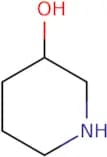
CAS:<p>3-Hydroxypiperidine is a chemical compound that contains an asymmetric carbonyl group. It has been used in the synthesis of enantiopure pharmaceuticals, and is also a competitive inhibitor for some enzymes. 3-Hydroxypiperidine can be synthesized by hydrogenation reduction or hydroxylation of piperidine. This compound has been shown to have pharmacokinetic properties in rats and mice, as well as inhibitory effects on brain functions such as memory retention and learning. 3-Hydroxypiperidine has also been shown to induce apoptosis in breast cancer cells, which may be due to its ability to inhibit protein synthesis in these cells.</p>Formula:C5H11NOPurity:Min. 95%Color and Shape:White PowderMolecular weight:101.15 g/mol4-Hydroxy-3-methoxybenzoic acid
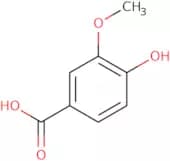
CAS:<p>Flavoring agent; interacts with TPRV receptors and ASIC channels</p>Formula:C8H8O4Purity:Min. 98 Area-%Color and Shape:White Beige PowderMolecular weight:168.15 g/mol3-Iodopyrazin-2-ol
CAS:<p>Versatile small molecule scaffold</p>Formula:C4H3IN2OPurity:Min. 95%Color and Shape:PowderMolecular weight:221.98 g/molBenzene-1,3,5-tricarbaldehyde
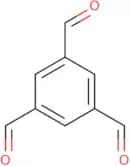
CAS:<p>Trifluoroacetic acid is a nonsteroidal anti-inflammatory drug that belongs to the group of carboxylic acids. Benzene-1,3,5-tricarbaldehyde is used as an intermediate in the synthesis of trifluoroacetic acid and has been shown to be effective against microbial infections. It has been shown to inhibit the growth of bacteria such as Staphylococcus aureus and Bacillus cereus by disrupting their DNA replication. Benzene-1,3,5-tricarbaldehyde also inhibits the production of inflammatory cytokines and reduces inflammation. The compound has chemical stability and does not react with human serum or other biological fluids.</p>Formula:C9H6O3Purity:Min. 95%Color and Shape:PowderMolecular weight:162.15 g/mol4,5-Dichloro-3-thiophenecarboxylic acid
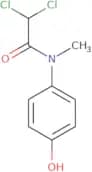
CAS:<p>4,5-Dichloro-3-thiophenecarboxylic acid (4,5-DTTC) is an organic compound that is a useful building block and can be used as a reactive intermediate in the synthesis of other chemicals. 4,5-DTTC has been shown to react with alkenes at room temperature to produce a variety of thioethers. This reaction was facilitated by the use of copper(II) chloride as a catalyst. 4,5-DTTC has also been shown to be a good starting material for synthesizing pharmaceuticals such as antihistamines and antibiotics.</p>Formula:C5H2Cl2O2SPurity:Min. 95%Color and Shape:PowderMolecular weight:197.04 g/mol2,2-Dichloro-N-(4-hydroxyphenyl)-N-methylacetamide
CAS:<p>2,2-Dichloro-N-(4-hydroxyphenyl)-N-methylacetamide (FUROATE) is a synthetic antimicrobial agent that is structurally related to the furoate class of antibiotics. FUROATE has been shown to be effective against urothelial carcinoma cells and minimal toxic in animals. It binds to the fatty acid component of bacterial cell membranes and causes rapid lysis. FUROATE is used as an analytical reagent for the determination of hydroxyl groups in organic solutes. The detection limit of this test is 0.1 ppm. Monoclonal antibodies can be generated against FUROATE for use as diagnostic or therapeutic agents for infectious diseases, such as HIV infection.</p>Formula:C9H9Cl2NO2Purity:Min. 95%Color and Shape:PowderMolecular weight:234.08 g/mol5-Amino-2-nitrobenzoic acid
CAS:<p>5-Amino-2-nitrobenzoic acid is a versatile compound that can be used as a reagent, a reaction component, or as a useful scaffold in research. It reacts with alcohols to produce esters and amides. The high quality of this chemical makes it suitable for use in many different reactions. CAS No. 13280-60-9</p>Formula:C7H6N2O4Molecular weight:182.14 g/molRef: 3D-A-6803
1kgTo inquire100gTo inquire250gTo inquire500gTo inquire2500gTo inquire-Unit-ggTo inquire5-Amino-2-nitrobenzoic acid
CAS:<p>5-Amino-2-nitrobenzoic acid is an organic compound that belongs to the class of versatile building block. It is a white solid that has been used as a research chemical, reagent, and specialty chemical for the synthesis of complex compounds and pharmaceuticals. 5-Amino-2-nitrobenzoic acid is also known as 2-amino-5-chlorobenzoic acid (ACBA). It is soluble in water, but insoluble in ethanol. The CAS number for this chemical is 13280-60-9.</p>Formula:C7H6N2O4Molecular weight:182.14 g/molRef: 3D-A-6802
1kgTo inquire100gTo inquire250gTo inquire500gTo inquire2500gTo inquire-Unit-ggTo inquire5-Amino-2-nitrobenzoic acid
CAS:<p>5-Amino-2-nitrobenzoic acid is a useful chemical building block that is used in the synthesis of complex compounds and useful scaffolds.</p>Formula:C7H6N2O4Molecular weight:182.13 g/molRef: 3D-A-6800
25gTo inquire50gTo inquire100gTo inquire250gTo inquire500gTo inquire-Unit-ggTo inquire2-Amino-5-iodobenzoic acid
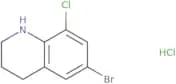
CAS:<p>Please enquire for more information about 2-Amino-5-iodobenzoic acid including the price, delivery time and more detailed product information at the technical inquiry form on this page</p>Formula:C7H6INO2Molecular weight:263.04 g/mol6-Bromo-8-chloro-1,2,3,4-tetrahydroquinoline hydrochloride
CAS:<p>Versatile small molecule scaffold</p>Formula:C9H10BrCl2NPurity:Min. 95%Color and Shape:PowderMolecular weight:282.99 g/mol5-Aminoindole
CAS:<p>5-Aminoindole is a versatile chemical intermediate that can be used in the synthesis of many different types of compounds. It has been used as a building block for the synthesis of complex molecules, such as antibiotics and other pharmaceuticals. 5-Aminoindole is also useful in research because it is a reagent that can be used to study the reaction between proteins and nucleic acids. This chemical reacts with calf thymus DNA to produce 5-aminoindole phosphate, which can then react with an activated phosphate group on a protein or nucleic acid. 5-Aminoindole is a high quality reagent that will provide you with excellent results in your experiments.</p>Formula:C8H8N2Molecular weight:132.17 g/mol2-Amino-6-chlorobenzoic acid
CAS:<p>2-Amino-6-chlorobenzoic acid is a fine chemical that is used as a reagent or speciality chemical.</p>Formula:C7H6ClNO2Molecular weight:171.58 g/mol