


Building Blocks
This section contains fundamental products for the synthesis of organic and biological compounds. Building blocks are the essential starting materials used to construct complex molecules through various chemical reactions. They play a critical role in drug discovery, material science, and chemical research. At CymitQuimica, we offer a diverse range of high-quality building blocks to support your innovative research and industrial projects, ensuring you have the essential components for successful synthesis.
Subcategories of "Building Blocks"
- Boronic Acids & Boronic Acid Derivatives(5,778 products)
- Chiral Building Blocks(1,242 products)
- Hydrocarbon Building Blocks(6,098 products)
- Organic Building Blocks(61,034 products)
Found 199601 products of "Building Blocks"
Sort by
Purity (%)
0
100
|
0
|
50
|
90
|
95
|
100
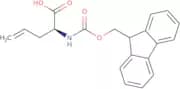
FMoc-L-Allylglycine
CAS:<p>FMoc-L Allylglycine is a synthetic reactive molecule that binds to the P2Y receptor. It is active in the cell maturation process and stimulates receptor activity. FMoc-L-Allylglycine has been shown to have anticancer properties, as well as an effect on human serum and bovine fetal serum. The nitrogen atoms in FMoc-L-Allylglycine are capable of forming strong bonds with buffers and imprinting agents, which can be used to study biomolecules. The disulfide bond in FMoc-L-Allylglycine can be cleaved with reductive conditions, making it a useful tool for the synthesis of peptides.</p>Formula:C20H19NO4Purity:Min. 95%Color and Shape:White PowderMolecular weight:337.37 g/mol5,6-Dichlorovanillic acid
CAS:<p>5,6-Dichlorovanillic acid is a high quality, versatile molecule that can be used as a reagent in organic synthesis or as a building block for the synthesis of complex compounds. It has many useful properties, such as being a fine chemical and research chemicals. 5,6-Dichlorovanillic acid is also a speciality chemical with versatile uses in building blocks or reaction components.</p>Formula:C8H6Cl2O4Purity:Min. 95%Color and Shape:PowderMolecular weight:237.04 g/molFmoc-L-tert-leucine
CAS:<p>Fmoc-L-tert-leucine is an amide that is used for the treatment of prostate cancer. Fmoc-L-tert-leucine has been shown to be effective in treating resistant prostate cancer cells in vivo, and it has been shown to inhibit the growth of prostate cancer cells in vitro. This drug also has a diagnostic effect on prostate cancer cells. The uptake of this drug by prostate cancer cells is dependent on the presence of caspase-9, which may be due to its ability to inhibit apoptosis.</p>Formula:C21H23NO4Purity:Min. 95%Color and Shape:White PowderMolecular weight:353.41 g/molFerene disodium salt
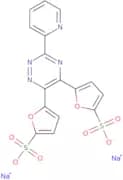
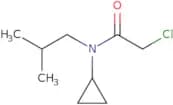
CAS:Ferene is an iron chelate that has been shown to have a number of beneficial effects on iron homeostasis. Ferene has been used in the treatment of chronic viral hepatitis, and it has also been shown to be effective against galleria mellonella. Ferene is a metal chelate, which means that it is a type of molecule that contains two metal ions. The metal ions are usually connected by a central atom, such as oxygen or nitrogen. Ferene disodium salt can be synthesized in the lab using the chemiluminescence method and polymerase chain reaction (PCR). It is also possible to isolate ferene from human serum or from a model system.Formula:C16H8N4Na2O8S2Purity:Min. 95 Area-%Color and Shape:Yellow PowderMolecular weight:494.37 g/mol2-Chloro-N-cyclopropyl-N-(2-methylpropyl)acetamide
CAS:<p>Versatile small molecule scaffold</p>Formula:C9H16ClNOPurity:(%) Min. 85%Color and Shape:Clear LiquidMolecular weight:189.68 g/molFmoc-beta-alanine
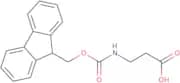
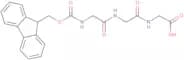
CAS:<p>Fmoc-beta-alanine is a type of amino acid that is found in plants. It has been shown to have biological properties and can be used as an ingredient in food products. Fmoc-beta-alanine is also a chemical ligation agent that can be used for the synthesis of cyclic peptides and polypeptides. The compound has been shown to inhibit chloride ion channels, which may make it useful for the treatment of autoimmune diseases. Fmoc-beta-alanine is natural antibacterial and has been shown to increase the activity of urokinase-type plasminogen activator, which may make it useful for the treatment of cardiovascular diseases. Fmoc-beta-alanine is a sequence of amino acids found in wheat germ, as well as other plant families such as corn and rice. This compound binds to specific receptors and can be synthesized by solid phase synthesis on a resin column.</p>Formula:C18H17NO4Purity:Min. 95%Color and Shape:PowderMolecular weight:311.33 g/molFmoc-Gly-Gly-Gly-OH
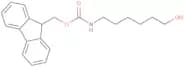
CAS:<p>Fmoc-gly-gly-gly-OH is a synthetic amino acid with the carboxylate group at the alpha position and an amide group at the beta position. It is a white solid that can be synthesized by reacting glycine ethyl ester with glyoxylic acid in a solvent such as chloroform. Fmoc-gly-gly-gly-OH has been used to study the binding of oxytocin to its receptor, which is important for regulating uterine contraction during childbirth. The compound also has potential applications in drug delivery, biotechnology, and medical research.</p>Formula:C21H21N3O6Purity:Min. 95%Color and Shape:PowderMolecular weight:411.41 g/mol6-(Fmoc-amino)-1-hexanol
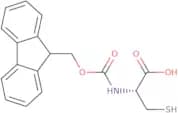
CAS:6-(Fmoc-amino)-1-hexanol is a high quality chemical that can be used as an intermediate in the synthesis of many complex compounds, such as pharmaceuticals, fine chemicals and research chemicals. It is often used as a building block in the synthesis of other useful chemicals and has been shown to have versatile reactions with many functional groups. 6-(Fmoc-amino)-1-hexanol can be used in reactions involving nucleophilic substitution, elimination, amination, esterification and transesterification.Formula:C21H25NO3Purity:Min. 95%Color and Shape:PowderMolecular weight:339.43 g/molFmoc-L-cysteine
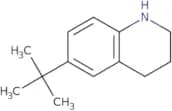
CAS:<p>Fmoc-L-cysteine is a reactive thiol that can be used for the synthesis of peptides and proteins. Fmoc-L-cysteine is synthesized by hydrothiolation of L-cysteine with 3-mercaptopropionic acid, which leads to the formation of a disulfide bond. The reaction product is purified by column chromatography and analyzed by NMR spectroscopy. Fmoc-L-cysteine has been shown to have efficient prenylation activity in vitro and in cell culture experiments. It has also been shown to be an important amino acid for the formation of amyloid protein aggregates, as well as being involved with other helical peptides in plants. X-ray crystal structures have been determined for Fmoc-L-cysteine bound to monoclonal antibodies.</p>Formula:C18H17NO4SPurity:Min. 98 Area-%Color and Shape:PowderMolecular weight:343.4 g/mol6-tert-Butyl-1,2,3,4-tetrahydroquinoline
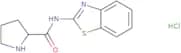
CAS:<p>Versatile small molecule scaffold</p>Formula:C13H19NPurity:Min. 95%Color and Shape:Clear LiquidMolecular weight:189.3 g/molN-(1,3-Benzothiazol-2-yl)pyrrolidine-2-carboxamide hydrochloride
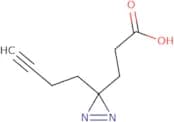
CAS:<p>Versatile small molecule scaffold</p>Formula:C12H14ClN3OSPurity:Min. 95%Color and Shape:PowderMolecular weight:283.78 g/mol3-(3-(But-3-yn-1-yl)-3H-diazirin-3-yl)propanoic acid
CAS:<p>3-(3-(But-3-yn-1-yl)-3H-diazirin-3-yl)propanoic acid (BDPA) is a reagent that is used as a starting material or intermediate for the synthesis of pharmaceuticals and other chemical compounds. This compound has been shown to be an excellent scaffold for the synthesis of complex structures, such as peptides and natural products. BDPA is also a versatile building block for organic syntheses, which can be used in reactions with other chemicals to form new compounds. Research chemicals such as BDPA are not approved by the FDA, so they should only be handled and used by professionals.</p>Formula:C8H10N2O2Purity:Min. 95%Color and Shape:PowderMolecular weight:166.18 g/mol2,5-Dimethoxybenzoic acid
CAS:<p>2,5-Dimethoxybenzoic acid (2,5-DMA) is a plant metabolite that belongs to the group of cinnamic acid derivatives. It can be found in plants and has been shown to have systemic effects. 2,5-DMA is involved in the cycloacylation of protocatechuic acid. This reaction is catalyzed by an enzyme called cyclooxygenase and requires molecular oxygen as a cofactor. 2,5-DMA also forms hydrogen bonds with methoxy groups and other molecules. The monoclonal antibodies against 2,5-DMA have been used for radiation therapy and are effective against cancer cells. Model studies show that 2,5-DMA can be converted into more potent metabolites by the action of cytochrome P450 enzymes or glutathione S-transferases.</p>Formula:C9H10O4Purity:Min. 95%Color and Shape:PowderMolecular weight:182.17 g/mol1H,4H,6H,7H-Pyrano[4,3-b]pyrrole-2-carboxylic acid
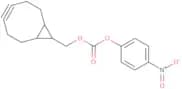
CAS:<p>1H,4H,6H,7H-Pyrano[4,3-b]pyrrole-2-carboxylic acid is a fine chemical that is used as a versatile building block in the synthesis of complex compounds. It can be used as a reagent or speciality chemical for research purposes and has been shown to be useful for the synthesis of high quality building blocks and scaffolds for organic molecules. The CAS No. 1263083-03-9 is 1263083-03-9 and it's molecular formula is C11H10N2O3.</p>Formula:C8H9NO3Purity:Min. 95%Color and Shape:PowderMolecular weight:167.16 g/molBCN-PNP carbonate
CAS:<p>BCN-PNP carbonate is a versatile building block that can be used as an intermediate in the synthesis of complex compounds. It has a variety of uses in research and as a reagent for fine chemicals. BCN-PNP carbonate is an effective reaction component for the synthesis of speciality chemicals, which are used for research purposes or as intermediates for pharmaceuticals. BCN-PNP carbonate is also useful scaffold for the synthesis of highly pure, high quality building blocks.</p>Formula:C17H17NO5Purity:Min. 95%Color and Shape:PowderMolecular weight:315.32 g/mol3-Hydroxy-3,4-dihydro-2H-1-benzopyran-4-one
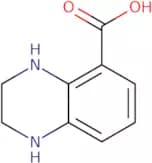
CAS:<p>Versatile small molecule scaffold</p>Formula:C9H8O3Purity:Min. 95%Color and Shape:PowderMolecular weight:164.16 g/mol1,2,3,4-Tetrahydroquinoxaline-5-carboxylic acid
CAS:<p>1,2,3,4-Tetrahydroquinoxaline-5-carboxylic acid is a versatile building block that can be used in the synthesis of complex compounds with a wide range of applications. It has been shown to be useful as a reagent in research chemicals and as a speciality chemical. 1,2,3,4-Tetrahydroquinoxaline-5-carboxylic acid is also used in the preparation of high quality pharmaceuticals and is an important intermediate for the synthesis of drugs. The compound can also be used as a scaffold for drug design.</p>Formula:C9H10N2O2Purity:Min. 95%Color and Shape:PowderMolecular weight:178.19 g/molSulfoxaflor
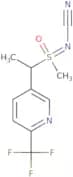
CAS:<p>Sulfoxaflor is a novel insecticide that belongs to the group of neonicotinoids. It has been shown to have synergic effects with other insecticides, such as piperonyl butoxide and pyrethrum, which are also neonicotinoids. Sulfoxaflor inhibits the enzyme acetylcholinesterase in insects, leading to paralysis and death. The analytical method for sulfoxaflor is based on the determination of terminal residues in honeybees using gas chromatography with mass spectrometry detection (GC-MS). This product is not toxic to mammals or birds at low doses, but has carcinogenic potential. Sulfoxaflor has been shown to cause high resistance levels in insects.</p>Formula:C10H10F3N3OSPurity:Min. 95%Color and Shape:PowderMolecular weight:277.27 g/mol2-Benzyl-1-methylpiperazine
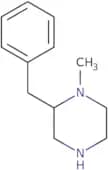
CAS:<p>2-Benzyl-1-methylpiperazine is a versatile building block that can be used in the synthesis of other compounds. It is used as a reagent and building block in research, as well as a speciality chemical and useful scaffold for synthesizing new materials. 2-Benzyl-1-methylpiperazine has been shown to have usefulness in organic synthesis due to its ability to undergo both nucleophilic and electrophilic substitution reactions. It can also react with aldehydes to form ketones, or with alcohols to form ethers. This compound is also used as a reaction component for the synthesis of heterocycles or polymers.</p>Formula:C12H18N2Purity:Min. 95%Color and Shape:Clear LiquidMolecular weight:190.28 g/mol2-{1-[(tert-Butoxy)carbonyl]piperidin-4-yl}-2-methylpropanoic acid
CAS:<p>2-{1-[(tert-Butoxy)carbonyl]piperidin-4-yl}-2-methylpropanoic acid is a reagent that can be used as a building block for the synthesis of complex compounds. This compound is also useful for the preparation of fine chemicals, research chemicals, and speciality chemicals. 2-{1-[(tert-Butoxy)carbonyl]piperidin-4-yl}-2-methylpropanoic acid is a versatile intermediate that has been employed in many reactions. It is also an excellent reaction component for use in organic chemistry.</p>Formula:C14H25NO4Purity:Min. 95%Color and Shape:PowderMolecular weight:271.4 g/mol



![1H,4H,6H,7H-Pyrano[4,3-b]pyrrole-2-carboxylic acid](/_next/image/?url=https%3A%2Fstatic.cymitquimica.com%2Fproducts%2F3D%2Fthumb-webp%2FNAC08303.webp&w=3840&q=75)
![2-{1-[(tert-Butoxy)carbonyl]piperidin-4-yl}-2-methylpropanoic acid](/_next/image/?url=https%3A%2Fstatic.cymitquimica.com%2Fproducts%2F3D%2Fthumb-webp%2FQJB15685.webp&w=3840&q=75)