Building Blocks
This section contains fundamental products for the synthesis of organic and biological compounds. Building blocks are the essential starting materials used to construct complex molecules through various chemical reactions. They play a critical role in drug discovery, material science, and chemical research. At CymitQuimica, we offer a diverse range of high-quality building blocks to support your innovative research and industrial projects, ensuring you have the essential components for successful synthesis.
Subcategories of "Building Blocks"
- Boronic Acids & Boronic Acid Derivatives(5,778 products)
- Chiral Building Blocks(1,242 products)
- Hydrocarbon Building Blocks(6,098 products)
- Organic Building Blocks(61,034 products)
Found 199601 products of "Building Blocks"
Sort by
Purity (%)
0
100
|
0
|
50
|
90
|
95
|
100
2,6-Difluoroaniline
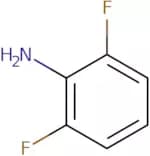
CAS:<p>2,6-Difluoroaniline is a chemical compound that can be used as an industrial solvent in the production of cyclohexane. 2,6-Difluoroaniline has been used to produce amides and for clinical chemistry. It is also a reagent for the conversion of alcohols to amides. This chemical was shown to react with water vapor at an optimal temperature of approximately 60°C and pressure of approximately 100 kPa. 2,6-Difluoroaniline is industrially produced by the fluorination of fluoroethane using sodium carbonate or trifluoromethanesulfonic acid. The molecule has been explored for its apoptosis pathway inhibiting effects in covid-19 pandemic influenza virus</p>Formula:C6H5F2NPurity:90%Color and Shape:Clear LiquidMolecular weight:129.11 g/mol3-Hydroxyindole
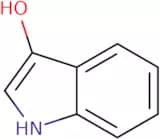
CAS:<p>A building block research chemical</p>Formula:C8H7NOPurity:(¹H-Nmr) Min. 95 Area-%Color and Shape:PowderMolecular weight:133.15 g/molMethyl 2-(1,1-dioxothiolan-3-yl)acetate
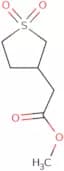
CAS:<p>Versatile small molecule scaffold</p>Formula:C7H12O4SPurity:Min. 95%Color and Shape:PowderMolecular weight:192.23 g/mol(+)-Diacetyl-D-tartaric acid
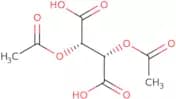
CAS:<p>(+)-Diacetyl-D-tartaric acid is a chiral organic compound that is soluble in organic solvents. It can be used as a catalyst for the asymmetric synthesis of organic compounds and has been shown to cleave bonds with high stereoselectivity. (+)-Diacetyl-D-tartaric acid also exhibits mesomorphic properties, meaning it changes from liquid to solid and vice versa at certain temperatures. The optical activity of this compound can be seen by its magnetic resonance spectrum, which displays two peaks at different wavelengths. This molecule has been shown to have potential uses in microscopy, as well as for the preparation of monomers for magnetic materials.</p>Formula:C8H10O8Purity:Min. 95%Color and Shape:White PowderMolecular weight:234.16 g/mol3-Hydroxy-2-methylpentanoic acid
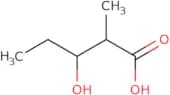
CAS:<p>2-Hydroxy-3-methylpentanoic acid (HMVA) is an organic acid generated by L-isoleucine metabolism. There are 4 stereoisomers of HMVA (2S,3S-HMVA, 2R,3R-HMVA, 2S,3R-HMVA and 2R,3S-HMVA). HMVA is found in the urine and blood of normal individuals but in very elevated levels in patients with maple syrup urine disease (MSUD). Maple syrup urine disease (MSUD) is an inherited metabolic disease predominantly characterized by neurological dysfunction including psychomotor/delay/mental retardation.</p>Formula:C6H12O3Purity:Min. 95%Color and Shape:Clear LiquidMolecular weight:132.16 g/molN,1,3-Trimethylpiperidin-4-amine
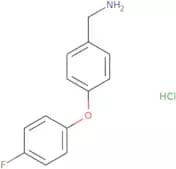
CAS:<p>Versatile small molecule scaffold</p>Formula:C8H18N2Purity:Min. 95%Color and Shape:PowderMolecular weight:142.24 g/mol4-(4-Fluorophenoxy)benzylamine hydrochloride
CAS:<p>4-(4-Fluorophenoxy)benzylamine hydrochloride is a metabolic agent that inhibits the metabolism of phenylpropionic acid and butanoic acid. It is used industrially as an oxime to protect other organic compounds from damage by peroxides, such as in polymerization reactions. 4-(4-Fluorophenoxy)benzylamine hydrochloride has been shown to be effective in treating metabolic diseases, such as phenylketonuria and urea cycle disorders.</p>Formula:C13H12FNO·HClPurity:Min. 95%Color and Shape:PowderMolecular weight:253.7 g/moltert-Butyl 1H,4H,5H,6H,7H-pyrrolo[3,2-c]pyridine-5-carboxylate
CAS:<p>Tert-Butyl 1H,4H,5H,6H,7H-pyrrolo[3,2-c]pyridine-5-carboxylate is a fine chemical that is a useful scaffold for the synthesis of various organic compounds. It is an intermediate for research chemicals and a reaction component for speciality chemicals. Tert-Butyl 1H,4H,5H,6H,7H-pyrrolo[3,2-c]pyridine-5-carboxylate has been used as a reagent in the synthesis of complex compounds. This compound has high purity and can be used as a building block in synthesis of other compounds.</p>Formula:C12H18N2O2Purity:Min. 95%Color and Shape:PowderMolecular weight:222.28 g/mol1H-Indole-7-carboxamide
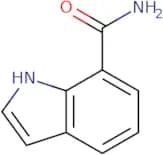
CAS:<p>Rauwolscine is a pharmacological agent that acts as an alpha-2 adrenergic receptor agonist. It is used to treat eye disease, such as glaucoma and iritis, and also has been used for the treatment of disorders of the urogenital system, such as prostatic hypertrophy. Rauwolscine is metabolized by oxidation at the nitrogen atom to form active metabolites with similar effects. This drug has been shown to be effective for the treatment of cancer, although it does not have any significant effect on muscle tissue. The major route of elimination for this drug is through urine and it may accumulate in tissues with renal disease.</p>Formula:C9H8N2OPurity:90%MinColor and Shape:PowderMolecular weight:160.18 g/mol2,3-Dihydroxy-3-phenylpropanoic acid
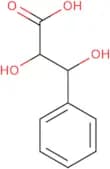
CAS:<p>2,3-Dihydroxy-3-phenylpropanoic acid is a monocarboxylic acid and a benzenes. It has been shown to have antimicrobial properties against bacteria such as Staphylococcus aureus, Proteus vulgaris, and Klebsiella pneumoniae. The monocarboxylic acid inhibits bacterial growth by binding to the beta subunit of the enzyme DNA gyrase, which is necessary for DNA replication. 2,3-Dihydroxy-3-phenylpropanoic acid also binds to the beta subunit of the enzyme RNA polymerase and prevents mRNA synthesis, thus inhibiting protein synthesis in bacteria. !-- --> !-- --> !-- --> !-- --> !-- --> !-- --> !-- --></p>Formula:C9H10O4Purity:Min. 95%Color and Shape:PowderMolecular weight:182.17 g/mol4-Acetoxystyrene Stabilized with TB
CAS:Stabilised with TBFormula:C10H10O2Molecular weight:162.19 g/mol7-Octyn-1-amine hydrochloride
CAS:<p>7-Octyn-1-amine hydrochloride is a chemical that can be used as an intermediate in the synthesis of other compounds. It has a high quality and is a versatile building block for numerous chemical reactions. 7-Octyn-1-amine hydrochloride can be used as an intermediate in the synthesis of complex compounds. It is also useful as a reagent and reaction component, as well as being a useful scaffold for research chemicals.</p>Formula:C8H15N•HClPurity:Min. 90%Molecular weight:161.67 g/mol5-Bromofuran-2-sulfonamide
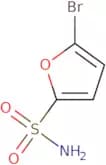
CAS:<p>Versatile small molecule scaffold</p>Formula:C4H4BrNO3SPurity:Min. 95%Color and Shape:PowderMolecular weight:226.05 g/mol5-Hydroxy-2-methoxybenzoic acid
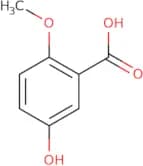
CAS:<p>Apigenin is a flavonoid found in plants of the genus Labiatae, such as chamomile and feverfew. It is a potent anti-inflammatory agent that may be due to its ability to inhibit cyclooxygenase (COX) enzymes and subsequent production of proinflammatory prostaglandins, leukotrienes, and thromboxanes. Apigenin has also been shown to inhibit cancer cell growth by binding to DNA and inhibiting transcription. Apigenin is chemically stable at room temperature and has been used in techniques such as liquid chromatography-mass spectrometry (LC-MS).</p>Formula:C8H8O4Purity:Min. 95%Color and Shape:PowderMolecular weight:168.14 g/mol10H-Phenothiazine-10-propanesulfonic acid sodium salt
CAS:<p>As a derivative of phenothiazine this compound may have various applications, including in the field of pharmaceuticals or materials science, depending on its specific properties and reactivity. Phenothiazine derivatives, in general, have been explored for their diverse biological and chemical activities, ranging from antipsychotic properties to use as dyes and light-sensitive materials.</p>Formula:C15H14NNaO3S2Purity:Min. 98 Area-%Color and Shape:PowderMolecular weight:343.4 g/mol(R)-3-Aminoquinuclidine dihydrochloride
CAS:3-Aminoquinuclidine dihydrochloride is a high quality, reagent, complex compound that can be used as a useful intermediate to produce other fine chemicals. The CAS number for this compound is 123536-14-1. 3-Aminoquinuclidine dihydrochloride is a fine chemical that has many uses in the production of research chemicals and speciality chemicals. This compound can be used as a versatile building block in synthesis reactions and as a reaction component.Formula:C7H16Cl2N2Purity:Min. 97 Area-%Molecular weight:199.12 g/molRef: 3D-Q-100108
25gTo inquire50gTo inquire100gTo inquire250gTo inquire500gTo inquire-Unit-ggTo inquire2-Hydroxy-4-bromopyridine
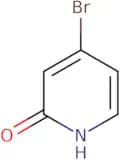
CAS:<p>2-Hydroxy-4-bromopyridine (2HBP) is a product with genotoxic activity that can be used for research. 2HBP has been shown to inhibit the synthesis of DNA by inhibiting the enzymatic reaction or binding to DNA. 2HBP is also an inhibitor of virus replication and causes monolayer cell death through radiation or chemical structures. It can be used as an anti-tumor agent and has been shown to have inhibitory properties on dna replication.</p>Formula:C5H4BrNOPurity:Min. 98 Area-%Color and Shape:White PowderMolecular weight:174 g/molPivalonitrile
CAS:<p>Please enquire for more information about Pivalonitrile including the price, delivery time and more detailed product information at the technical inquiry form on this page</p>Formula:C5H9NMolecular weight:83.13 g/molPhenoxazine
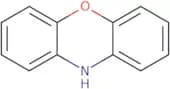
CAS:Phenoxazine is a fluorescence probe that binds to DNA and has minimal toxicity. It is used in biological studies as a redox potential indicator to measure the electrochemical impedance of cells. Phenoxazine has been shown to have anti-inflammatory activity by inhibiting prostaglandin E2 levels in HL-60 cells. This drug also can be used as a model system for studying infectious diseases, such as tuberculosis, which are caused by mycobacteria. Phenoxazine has been shown to inhibit the growth of mycobacteria using an electrochemical impedance spectroscopy (EIS) polymerase chain reaction (PCR) technique.Formula:C12H9NOPurity:Min. 96.5 Area-%Color and Shape:Beige PowderMolecular weight:183.21 g/molIodocyclopentane (stabilised with copper)
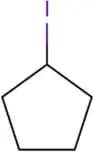
CAS:Iodocyclopentane is an organic compound that has been synthesized for the treatment of infectious diseases. Iodocyclopentane binds to the active site of a lipid kinase and inhibits the enzyme activity, which prevents the synthesis of phospholipids and lipids. This compound also inhibits bacterial growth by binding to nitrogen atoms in their DNA, preventing replication. The X-ray crystal structure of iodocyclopentane shows that it is a symmetric molecule.Formula:C5H9IPurity:Min. 95%Molecular weight:196.03 g/mol


![tert-Butyl 1H,4H,5H,6H,7H-pyrrolo[3,2-c]pyridine-5-carboxylate](/_next/image/?url=https%3A%2Fstatic.cymitquimica.com%2Fproducts%2F3D%2Fthumb-webp%2FPGC95879.webp&w=3840&q=75)