Building Blocks
This section contains fundamental products for the synthesis of organic and biological compounds. Building blocks are the essential starting materials used to construct complex molecules through various chemical reactions. They play a critical role in drug discovery, material science, and chemical research. At CymitQuimica, we offer a diverse range of high-quality building blocks to support your innovative research and industrial projects, ensuring you have the essential components for successful synthesis.
Subcategories of "Building Blocks"
- Boronic Acids & Boronic Acid Derivatives(5,756 products)
- Chiral Building Blocks(1,242 products)
- Hydrocarbon Building Blocks(6,095 products)
- Organic Building Blocks(61,051 products)
Found 199813 products of "Building Blocks"
Sort by
Purity (%)
0
100
|
0
|
50
|
90
|
95
|
100
2-Chloro-4-methoxybenzoic acid
CAS:<p>2-Chloro-4-methoxybenzoic acid is a model compound for the screening of acridones, which are a class of compounds with anticancer activity. 2-Chloro-4-methoxybenzoic acid has been shown to inhibit potassium t-butoxide efflux in cancer cells and induce multidrug resistance in cancer cells. Furthermore, it has been shown that 2-Chloro-4-methoxybenzoic acid inhibits mitoxantrone efflux in cancer cells, leading to an increase in mitoxantrone cytotoxicity. This compound is also able to induce a phenotype change from cancerous to normal and can be used as a chemotherapeutic agent against cancers.</p>Formula:C8H7ClO3Purity:Min. 95%Color and Shape:PowderMolecular weight:186.59 g/mol2-Chloro-4-methoxybenzoic acid methyl ester
CAS:<p>2-Chloro-4-methoxybenzoic acid methyl ester is a reagent that can be used in the preparation of various compounds. It is also a versatile building block for the synthesis of complex compounds, such as pharmaceuticals and agrochemicals. This chemical is often used as an intermediate or building block in the preparation of pharmaceuticals and agrochemicals. 2-Chloro-4-methoxybenzoic acid methyl ester has been shown to be a useful scaffold for the synthesis of drugs with high quality and low cost.</p>Formula:C9H9ClO3Purity:Min. 95%Color and Shape:PowderMolecular weight:200.62 g/mol3-Amino-N-propylpropanamide
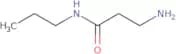
CAS:<p>3-Amino-N-propylpropanamide is a reagent and useful intermediate. It is a fine chemical that has CAS No. 271591-60-7. 3-Amino-N-propylpropanamide can be used as a versatile building block in the synthesis of fine chemicals, such as speciality chemicals and research chemicals, and in the preparation of pharmaceuticals and agrochemicals. 3APPA may also be used as a reaction component in organic synthesis to form amides, ureas, sulfonamides, or phosphonates, which are important intermediates for pharmaceuticals and agrochemicals.</p>Formula:C6H14N2OPurity:Min. 95%Color and Shape:Clear LiquidMolecular weight:130.19 g/mol2,4-Dinitrobenzaldehyde
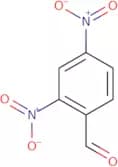
CAS:2,4-Dinitrobenzaldehyde is a chemical compound that contains a hydroxyl group and an amine. It is reactive and can form cationic surfactants with other compounds. 2,4-Dinitrobenzaldehyde has been shown to react with dimethyl fumarate in the presence of ethyl esters to form ethyl 2,4-dinitrophenolate. This reaction is catalyzed by dinucleotide phosphate and requires salinity or a base such as sodium methoxide. 2,4-Dinitrobenzaldehyde reacts with 2-aminoethanol in the presence of water or alcohols to produce 2,4-diaminobenzoic acid. The reaction mechanism for this process is not known but it may involve hydrogen bonding between the hydroxyl group and amine groups. 2,4-Dinitrobenzaldehyde has been used as a reagent for staining DNA in gel electFormula:C7H4N2O5Purity:Min. 95%Color and Shape:PowderMolecular weight:196.12 g/mol1,4-Diisocyanatobutane
CAS:<p>Monomer for the preparation of biocompatible polyurethane polymers</p>Formula:C6H8N2O2Purity:Min. 98 Area-%Color and Shape:Colorless Clear LiquidMolecular weight:140.14 g/mol2,3-Dihydroxybenzoic acid
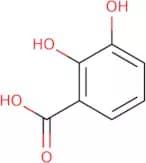
CAS:2,3-Dihydroxybenzoic acid is an antioxidant found in many plants. It has a protective effect against oxidative injury. 2,3-Dihydroxybenzoic acid has been used as a model for the study of infectious diseases and its effects on biological studies. This compound has been shown to prevent the growth of Aerobacter aerogenes and Dinucleotide phosphate. 2,3-Dihydroxybenzoic acid is also used as an ingredient in sephadex g-100 and it acts as an antimicrobial agent that prevents microbial growth in wastewater treatment systems.Formula:C7H6O4Purity:Min. 95%Color and Shape:PowderMolecular weight:154.12 g/molcis-4,7,10,13,16,19-Docosahexaenoic acid
CAS:<p>cis-4,7,10,13,16,19-Docosahexaenoic acid (also known as DHA or cervonic acid) is one of the omega-3 fatty acids (a group of highly unsaturated fatty acids). As for most omega-3 fatty acids, good sources of DHA include fish oils and other seafoods. DHA plays a key role in human brain development and function and is also found in high concentration in the retina, central nervous system and skin. As such DHA is a key nutrient which is widely used as a dietary supplement, particularly for infants and pregnant women, with its potential health benefits currently being investigated across a number of different disease areas.</p>Formula:C22H32O2Purity:Min. 80 Area-%Color and Shape:Yellow Clear LiquidMolecular weight:328.49 g/mol3,4-Dihydroxybenzoic acid ethyl ester
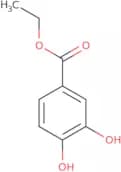
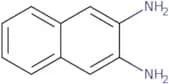
CAS:<p>3,4-Dihydroxybenzoic acid ethyl ester (3,4-DHBA) is a phenolic compound that is used in the treatment of hepatic steatosis. 3,4-DHBA has been shown to be effective in inhibiting autophagy and may also be useful in the treatment of her2+ breast cancer. This drug has antioxidative properties and may also have a protective effect against myocardial infarct. 3,4-DHBA binds to iron ions and prevents their oxidation, thereby preventing oxidative stress. It has been shown to have low potency due to its short half-life in vivo. 3,4-DHBA can inhibit the mitochondrial membrane potential and lead to apoptosis of primary cells and tissue culture cells.</p>Formula:C9H10O4Purity:Min. 95%Color and Shape:White PowderMolecular weight:182.17 g/mol2,3-Diaminonaphthalene
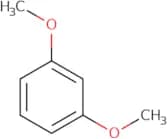
CAS:<p>For fluorometric measurement of nitrite/nitrate in cells; inhibits NO production</p>Formula:C10H10N2Purity:Min. 95 Area-%Color and Shape:Brown Off-White PowderMolecular weight:158.2 g/mol1,3-Dimethoxybenzene
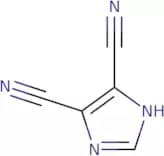
CAS:<p>1,3-Dimethoxybenzene is a carbonyl compound with the chemical formula C6H4(OCH2)2. It is soluble in water and has a boiling point of 176 °C. This compound reacts with hydrochloric acid to produce an intermediate acid chloride and hydrogen chloride gas. 1,3-Dimethoxybenzene also reacts with trifluoromethanesulfonic acid to produce an intermediate sulfonium salt and hydrogen fluoride gas. 1,3-Dimethoxybenzene can be used as a reagent for analytical methods such as IR spectroscopy, NMR spectroscopy, or mass spectrometry. When 1,3-dimethoxybenzene is combined with sodium hydroxide and acetic acid it forms an isothiouronium salt that can be used to study the effects of fatty acids on physiological activity.<br>1,3-Dimethoxybenzene has conformational</p>Formula:C8H10O2Purity:Min. 95%Color and Shape:Clear LiquidMolecular weight:138.16 g/mol4,5-Dicyanoimidazole
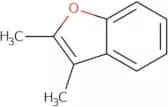
CAS:<p>Please enquire for more information about 4,5-Dicyanoimidazole including the price, delivery time and more detailed product information at the technical inquiry form on this page</p>Formula:C5H2N4Purity:Min. 98 Area-%Color and Shape:White Off-White PowderMolecular weight:118.1 g/mol2,3-Dimethylbenzofuran
CAS:<p>2,3-Dimethylbenzofuran (2,3-DBF) is a specific interaction that is an inorganic chemical. It has shown genotoxic effects, such as DNA damage and chromosomal aberrations, in hl-60 cells. 2,3-DBF can be acetylated by the activity of acetyltransferases to form 2,3-dimethylbenzoic acid (DMBA). DMBA is oxidized by cytochrome P450 enzymes to form DMBA quinone. DMBA quinone reacts with deuterium isotope to form an ionizable compound which can then be hydrolyzed into benzoic acid and methyl alcohol. The oxidation products of 2,3-DBF have been studied using analytical methods such as gas chromatography and mass spectrometry. These analyses showed the presence of acidic hydrolysis products and ionizable compounds.</p>Formula:C10H10OPurity:Min. 98 Area-%Color and Shape:Clear LiquidMolecular weight:146.19 g/mol4,6-Dimethyl-2-mercaptopyrimidine
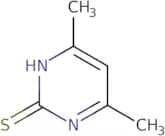
CAS:<p>4,6-Dimethyl-2-mercaptopyrimidine is a protonated form of the compound 4,6-dimethylpyrimidine. It is a member of the group p2 of nitrogenous bases and has a hydrogen bond interaction with its base pair. The reaction mechanism for this molecule is similar to that of other tricyclic antidepressant drugs, as it involves an intermolecular hydrogen bonding reaction where the deprotonated hydroxyl group on one molecule transfers a proton to the adjacent nitrogen atom on another molecule. 4,6-Dimethyl-2-mercaptopyrimidine has been shown to be active in cervical cancer cells and is capable of inhibiting DNA synthesis and protein synthesis. This compound also has antihistamine effects which are likely due to its hydrogen bonding interactions with histamine receptors.</p>Formula:C6H8N2SPurity:Min. 95%Color and Shape:Yellow PowderMolecular weight:140.21 g/mol2,4-Dichloropyrimidine
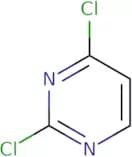
CAS:<p>2,4-Dichloropyrimidine is a compound with an antiproliferation activity that has been shown to inhibit replication of viruses such as HIV. It inhibits the activity of enzymes involved in the replication of viral DNA, including the enzyme human telomerase reverse transcriptase (hTERT), which is essential for viral replication. The effects of 2,4-dichloropyrimidine on wild-type HIV are not clear because it does not have a significant effect on HIV-1 strains that have acquired resistance to erythromycin and tetracycline. However, this drug may be effective against other viruses that have not yet developed resistance. 2,4-Dichloropyrimidine also has antiinflammatory properties due to its ability to inhibit the production of epidermal growth factor and nitrogenous compounds from inflammatory cells.</p>Formula:C4H2N2CI2Purity:Min. 95%Color and Shape:Off-White PowderMolecular weight:148.98 g/mol(S)-2,5-Dihydro-3,6-dimethoxy-2-isopropylpyrazine
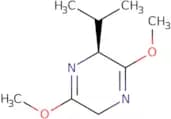
CAS:<p>(S)-2,5-Dihydro-3,6-dimethoxy-2-isopropylpyrazine and its enantiomer, (R)-2,5-Dihydro-3,6-dimethoxy-2-isopropylpyrazine, are also known as Schöllkopf chiral auxiliaries or Schöllkopf reagents, and are used to produce optically pure α-amino acids via asymmetric synthesis. The Schöllkopf reagent can be deprotonated at the prochiral α-carbon, and the resulting enolate is trapped with electrophiles to yield adducts with high (typically > 95% d.e.) diastereoselectivity. The enolate is essentially planar, and the steric bulk of the isopropyl group directs the incoming electrophile to attack from the opposite face, yielding trans adducts. A wide range of electrophiles including alkyl halides, alkyl sulfonates, acyl chlorides, aldehydes, ketones, epoxides, thioketones and enones can be used. Hydrolysis, typically under mild acidic conditions, yields the non-substituted amino acid with high (typically > 95 e.e.) enantiopurity.</p>Formula:C9H16N2O2Purity:Min. 97%Color and Shape:Colorless Clear LiquidMolecular weight:184.24 g/mol1,3-Dibromoadamantane
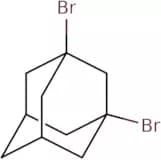
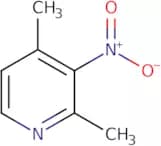
CAS:<p>1,3-Dibromoadamantane is an organic compound that belongs to the group of organobromides. It has a chemical structure with three bromine atoms and one carbon atom, which are bonded to each other in a triangle shape. 1,3-Dibromoadamantane is soluble in solvents such as water and methanol. The reaction yield of 1,3-dibromoadamantane is 100% when it reacts with hydrochloric acid as the catalyst under optimal conditions. The reaction also occurs at a high temperature (100 degrees Celsius) and releases energy efficiently. 1,3-Dibromoadamantane can be used as a substrate molecule for the Suzuki coupling reaction.<br>The coordination chemistry of 1,3-dibromoadamantane involves the formation of a square planar complex with copper ions and ammonia molecules to form copper(I) ammine complexes, which are then able to bind</p>Formula:C10H14Br2Purity:Min. 95%Color and Shape:PowderMolecular weight:294.03 g/mol2,4-Dimethyl-3-nitropyridine
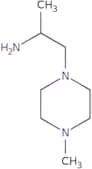
CAS:<p>2,4-Dimethyl-3-nitropyridine is a heterocyclic organic compound. It is an important and versatile building block for the synthesis of complex compounds. 2,4-Dimethyl-3-nitropyridine can be used as a reagent in organic synthesis and other chemical reactions. In addition to its use as a reactant, this compound has been employed as a useful scaffold for the preparation of other heterocycles and fine chemicals. The CAS number for 2,4-dimethyl-3-nitropyridine is 1074-76-6.</p>Formula:C7H8N2O2Purity:Min. 95%Color and Shape:Yellow Clear LiquidMolecular weight:152.15 g/mol(S)-1-(2-Amino-propan-1-yl)-4-methyl-piperazine
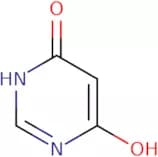
CAS:(S)-1-(2-Amino-propan-1-yl)-4-methyl-piperazine is a reagent, reaction component and building block for speciality chemicals. It is a versatile intermediate that has been used in the synthesis of complex compounds. (S)-1-(2-Amino-propan-1-yl)-4-methyl-piperazine is an important building block for the synthesis of a variety of pharmaceuticals and other organic compounds. This compound can be used as an intermediate or reagent to produce high quality research chemicals.Formula:C8H19N3Purity:Min. 95%Molecular weight:157.26 g/mol4,6-Dihydroxypyrimidine
CAS:<p>4,6-Dihydroxypyrimidine is a competitive inhibitor of the bacterial enzyme DNA gyrase. It binds to the ATP-binding site and blocks the conversion of ATP to ADP. This leads to inhibition of the DNA replication process. 4,6-Dihydroxypyrimidine has shown inhibition constants against various bacterial strains. The kinetic data indicate that this compound is a noncompetitive inhibitor for DNA gyrase. 4,6-Dihydroxypyrimidine also binds to sodium hydroxide solution and forms a Langmuir adsorption isotherm that can be described by an equation with a single binding site. The chemical structure of 4,6-dihydroxypyrimidine consists of three atoms: two hydrogen atoms and one oxygen atom. This molecule has been found in electrochemical impedance spectroscopy experiments using methanol solvent as an electrolyte and monosodium salt as a supporting electrolyte.</p>Formula:C4H4N2O2Purity:Min. 95%Color and Shape:Yellow PowderMolecular weight:112.09 g/molcis-2-Decenoic acid
CAS:<p>cis-2-Decenoic acid is a fatty acid that acts as an antimicrobial agent. It has been shown to inhibit the growth of many human pathogens, including methicillin-resistant Staphylococcus aureus, Pseudomonas aeruginosa, and Candida albicans. cis-2-Decenoic acid also inhibits the production of proinflammatory cytokines by lipopolysaccharide and stimulates the production of anti-inflammatory cytokines. cis-2-Decenoic acid was also found to be effective against diabetic neuropathy biofilm in mice and may be useful for treatment of this condition.</p>Formula:C10H18O2Purity:Min. 98 Area-%Color and Shape:Clear LiquidMolecular weight:170.25 g/mol