Building Blocks
This section contains fundamental products for the synthesis of organic and biological compounds. Building blocks are the essential starting materials used to construct complex molecules through various chemical reactions. They play a critical role in drug discovery, material science, and chemical research. At CymitQuimica, we offer a diverse range of high-quality building blocks to support your innovative research and industrial projects, ensuring you have the essential components for successful synthesis.
Subcategories of "Building Blocks"
- Boronic Acids & Boronic Acid Derivatives(5,756 products)
- Chiral Building Blocks(1,242 products)
- Hydrocarbon Building Blocks(6,095 products)
- Organic Building Blocks(61,051 products)
Found 199813 products of "Building Blocks"
Sort by
Purity (%)
0
100
|
0
|
50
|
90
|
95
|
100
Gentisic acid sodium salt hydrate
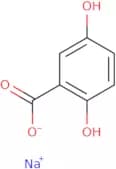
CAS:<p>Gentisic acid sodium salt hydrate is a benzoate that is used as a diagnostic agent in the study of inflammatory bowel disease. Gentisic acid sodium salt hydrate is a sodium salt of gentisic acid and has been shown to have anti-inflammatory properties. It is used as a stabilizer for solid dispersions, such as capsules, tablets, and granules. Gentisic acid sodium salt hydrate also has the ability to prevent degradation of certain drugs by hydrolysis or oxidation. Gentisic acid sodium salt hydrate can be synthesized from 2,6-dihydroxybenzoic acid (2,6-DHB) and hippuric acid.</p>Formula:C7H5NaO4·xH2OPurity:Min. 98 Area-%Color and Shape:White PowderMolecular weight:176.1 g/mol3-Hydroxy-2-methylpentanoic acid
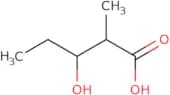
CAS:<p>2-Hydroxy-3-methylpentanoic acid (HMVA) is an organic acid generated by L-isoleucine metabolism. There are 4 stereoisomers of HMVA (2S,3S-HMVA, 2R,3R-HMVA, 2S,3R-HMVA and 2R,3S-HMVA). HMVA is found in the urine and blood of normal individuals but in very elevated levels in patients with maple syrup urine disease (MSUD). Maple syrup urine disease (MSUD) is an inherited metabolic disease predominantly characterized by neurological dysfunction including psychomotor/delay/mental retardation.</p>Formula:C6H12O3Purity:Min. 95%Color and Shape:Clear LiquidMolecular weight:132.16 g/mol5-(2-Bromoethyl)-4-methyl-1,3-thiazole
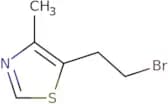
CAS:<p>Versatile small molecule scaffold</p>Formula:C6H8BrNSPurity:Min. 95%Molecular weight:206.11 g/mol1-Phenyl-1,3-diazinane-2,4-dione
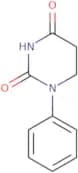
CAS:<p>1-Phenyl-1,3-diazinane-2,4-dione is a synthetic molecule that has been found to be active against influenza virus. It inhibits the replication of influenza A and B viruses by inhibiting the enzyme dihydropyrimidinase. This compound also has an effect on parasitic worms and animal health. 1-Phenyl-1,3-diazinane-2,4-dione is used in research for the development of new drugs. The chemical properties of this drug are similar to β-amino acids that are known to inhibit the synthesis of proteins such as rna polymerase and transporter proteins.</p>Formula:C10H10N2O2Purity:Min. 95%Color and Shape:PowderMolecular weight:190.2 g/molTetrahydro-2H-pyran-2-ol
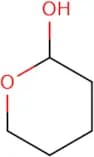
CAS:<p>Tetrahydro-2H-pyran-2-ol is a chemical compound that belongs to the class of organic compounds called alcohols. It has been shown to have a taste and smell similar to ethyl alcohol, but can be distinguished by its higher boiling point. Tetrahydro-2H-pyran-2-ol is also used as a biological sample in assays for metabolic disorders and as a reactant in cell lysis reactions. This alcohol binds with proteins, which may be due to hydrogen bonding interactions between the hydroxyl group on the alcohol and the amide group on the proteins. The conformational properties of tetrahydro-2H-pyran-2-ol are dependent on its intramolecular hydrogen bonds, which can be broken by x-ray diffraction data.</p>Formula:C20H21N3O2Purity:Min. 95%Molecular weight:335.4 g/mol7-Bromo-5-methoxyindole-3-carboxylic acid
CAS:<p>Please enquire for more information about 7-Bromo-5-methoxyindole-3-carboxylic acid including the price, delivery time and more detailed product information at the technical inquiry form on this page</p>Formula:C10H8BrNO3Purity:Min. 95%Color and Shape:PowderMolecular weight:270.09 g/mol2-Bromo-5-chloropyridine
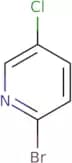
CAS:<p>2-Bromo-5-chloropyridine is a synthetic compound that acts as an inhibitor of tyrosine kinase. It binds to the active site of the enzyme and blocks its activity. This inhibits protein phosphorylation, which is essential for cell signaling. The mechanism of this inhibition is similar to that of piperidine and diethanolamine, which are competitive inhibitors of the enzyme. 2-Bromo-5-chloropyridine also reacts with chloride ion to give bipyridines, which have been shown to inhibit cholesterol ester transfer protein (CETP) by binding covalently to the enzyme's active site. 2-Bromo-5-chloropyridine has been shown to be effective in inhibiting tumor growth in mice when given orally at doses ranging from 10 mg/kg to 30 mg/kg daily.<br>2-Bromo-5-chloropyridine can also be used as a starting material for</p>Formula:C5H3BrClNPurity:Min. 98 Area-%Color and Shape:White PowderMolecular weight:192.44 g/molIndole-4-carboxylic acid methyl ester
CAS:<p>Indole-4-carboxylic acid methyl ester is a fine chemical that is used as a building block in the synthesis of complex compounds. It can be used as a reagent, speciality chemical, or intermediate, and it has versatile applications in the synthesis of pharmaceuticals and dyes. Indole-4-carboxylic acid methyl ester has been shown to react with alcohols to form ketones, which are useful scaffolds for organic chemistry. It can also be used as a reaction component for the synthesis of other compounds.</p>Formula:C10H9NO2Molecular weight:175.19 g/molRef: 3D-I-2510
1kgTo inquire50gTo inquire100gTo inquire250gTo inquire500gTo inquire-Unit-ggTo inquireBis[rhodium(±,±,±',±'-tetramethyl-1,3-benzenedipropionic Acid)]
CAS:<p>Bis[rhodium(±,±,±',±'-tetramethyl-1,3-benzenedipropionic Acid)] is a reagent that can be used in catalytic organic synthesis. Bis[rhodium(±,±,±',±'-tetramethyl-1,3-benzenedipropionic Acid)] is a stable compound that does not react with most organic solvents. It also has high solubility in many organic solvents. This reagent is toxicological and should be handled with care.</p>Formula:C32H40O8Rh2Purity:Min. 95%Color and Shape:PowderMolecular weight:758.48 g/molIndole-4-carboxaldehyde
CAS:<p>Please enquire for more information about Indole-4-carboxaldehyde including the price, delivery time and more detailed product information at the technical inquiry form on this page</p>Formula:C9H7NOMolecular weight:145.16 g/molIndole-3-carboxaldehyde
CAS:<p>Indole-3-carboxaldehyde is a versatile building block that can be used as an intermediate in the production of complex compounds. It is also a research chemical and reagent for speciality chemicals. Indole-3-carboxaldehyde has been shown to react with other chemicals to form high quality, useful intermediates or reaction components. This compound can also be used as a scaffold for chemical synthesis.</p>Formula:C9H7NOMolecular weight:145.16 g/molRef: 3D-I-2200
1kgTo inquire100gTo inquire250gTo inquire500gTo inquire2500gTo inquire-Unit-kgkgTo inquireIndole-3-carbinol
CAS:<p>Indole-3-carbinol is a fine chemical that has been used for research purposes as a reagent and speciality chemical. Indole-3-carbinol is also a versatile building block and reaction intermediate in organic synthesis, which has been used for the synthesis of many complex compounds. Indole-3-carbinol is also an important precursor to pharmaceuticals, including antiestrogens and anti-angiogenesis agents. Indole-3-carbinol has been shown to have antiinflammatory effects, which may be due to its ability to inhibit prostaglandin synthesis.</p>Formula:C9H9NOPurity:Min. 99 Area-%Molecular weight:147.18 g/molRef: 3D-I-2100
1kgTo inquire50gTo inquire100gTo inquire250gTo inquire500gTo inquire-Unit-ggTo inquireIndole-3-butyric acid
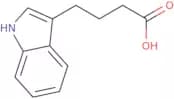
CAS:Indole-3-butyric acid is a chemical compound that has a wide range of applications. It is used in the synthesis of many organic compounds and can be used as a reagent or speciality chemical. Indole-3-butyric acid is also used as an intermediate in the synthesis of other compounds, such as indoles, indanones, and benzofuranones. The high quality of this compound makes it a useful scaffold for constructing complex molecules.Formula:C12H13NO2Molecular weight:203.24 g/molRef: 3D-I-2005
1kgTo inquire5kgTo inquire100gTo inquire10kgTo inquire2500gTo inquire-Unit-kgkgTo inquireIndole-3-acetyl-DL-tryptophan
CAS:<p>Indole-3-acetyl-DL-tryptophan is a useful intermediate for the synthesis of various biologically active compounds. It is a white solid that can be synthesized from indole and tryptophan using acetic acid as a catalyst. Indole-3-acetyl-DL-tryptophan has been used in the synthesis of several complex compounds, such as β-(N) indolyloxypropanal, which is a fine chemical with potential use in the production of polyurethane foam. This compound has also been found to be an effective building block for the synthesis of novel scaffolds, such as 2-(1H-indol-2-yl)-N-(2H-[1,2,4]triazol-3-yl)ethanamine. Indole 3 acetyl DL tryptophan has also been shown to be an excellent intermediate in the synthesis of other heterocycles, such as pyrazolo</p>Formula:C21H19N3O3Molecular weight:361.4 g/molRef: 3D-I-1700
1gTo inquire5gTo inquire10gTo inquire500mgTo inquire2500mgTo inquire-Unit-ggTo inquireIndole-3-acetic acid
CAS:<p>Plant growth hormone. Regulates cell membrane electron transport and proton flux, plays important roles in a number of plant activities, including: development of the embryo, leafformation, phototropism, gravitropism, apical dominance, fruit development, abscission, root initiation.</p>Formula:C10H9NO2Purity:Min. 99 Area-%Molecular weight:175.19 g/mol1-Bromo-2-chloro-3-fluorobenzene
CAS:<p>1-Bromo-2-chloro-3-fluorobenzene is a halide of fluorine and chlorine. It is used in the production of biphenyls and fluoroarenes. 1-Bromo-2-chloro-3-fluorobenzene has anticarcinogenic properties in animal studies, but it can be toxic to humans. Exposure to 1-bromo-2,3 difluorobenzene may lead to neurological, respiratory, hepatic, ocular, and gastrointestinal toxicity. This compound also has been shown to affect the liver enzymes as an enzyme inducer and is believed to be carcinogenic in animals.</p>Formula:C6H3BrClFPurity:Min. 95%Color and Shape:PowderMolecular weight:209.44 g/mol4-Bromo-2-chloroaniline
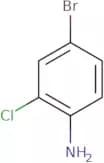
CAS:<p>4-Bromo-2-chloroaniline (4BCA) is an exciplex that forms in the presence of hydrogen peroxide and chloride ions. It is unreactive with fluconazole and other related molecules, but is able to photoreduce hydrogen peroxide. The molecular mechanism of 4BCA is a result of its ability to form a covalent bond with DNA containing pyrimidine bases. This reaction results in the formation of pyrimidine dimers, which can lead to cell death through the inhibition of DNA synthesis and repair. 4BCA has been shown to be effective against cancer cells at high concentrations, but does not affect healthy cells. The effectiveness against cancer cells may be due to the fact that this exciplex reacts with uv irradiation and irradiation, which leads to a higher concentration of reactive oxygen species (ROS).</p>Formula:C6H5BrClNPurity:Min. 95%Color and Shape:PowderMolecular weight:206.47 g/mol4-(Bromomethyl)benzylamine HBr
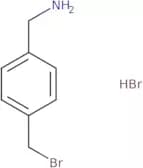
CAS:4-(Bromomethyl)benzylamine HBr is a fine chemical that can be used as a building block for organic synthesis. This compound is also a useful research chemical, reagent, and specialty chemical. 4-(Bromomethyl)benzylamine HBr has been used as a reaction component in the synthesis of various pharmaceuticals, such as theophylline and ampicillin. It has also been used as an intermediate in the production of other compounds, such as 4-hydroxybutyric acid and 3-methylthiopropionic acid. This complex compound can be purchased at high quality and is versatile enough to act as a scaffold for many reactions.Formula:C8H11Br2NPurity:Min. 95%Color and Shape:PowderMolecular weight:280.99 g/mol4-tert-Butylaniline
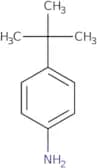
CAS:<p>4-tert-Butylaniline is a chemical compound with the molecular formula C6H7N. It is an organic base that has acidic properties and can be used as an amine. 4-tert-Butylaniline is used in the manufacture of other chemicals, such as herbicides, pesticides, and pharmaceuticals. 4-tert-Butylaniline binds to metal ions such as palladium by hydrogen bonding. This binding increases the reactivity of the metal ion and allows it to catalyze reactions that would otherwise not occur. 4-tert-Butylaniline also has transport properties and binds to replicon cells through adsorption mechanisms.</p>Formula:C10H15NPurity:Min. 95%Color and Shape:Colorless Clear LiquidMolecular weight:149.23 g/mol2-Bromo-5-iodopyridine
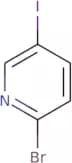
CAS:2-Bromo-5-iodopyridine is a compound that has been studied for its potential use in the treatment of neurodegenerative diseases. It inhibits nicotinic acetylcholine receptors, which are involved in the transmission of nerve impulses to the muscles. 2-Bromo-5-iodopyridine binds to acetylcholine receptors, blocking the uptake of acetylcholine and preventing it from binding with the receptor. This leads to an increase in acetylcholine levels, which increases muscle contraction and improves brain function. The crystal structure of 2-bromo-5-iodopyridine has been determined by x-ray diffraction studies. The molecule contains two bromine atoms and five iodine atoms, which are arranged such that they form a square planar geometry around a central metal ion (hydrochloric acid). Nitrogen atoms are found on opposite corners of this square plane. These nitrogen atoms can be substituted with chlorideFormula:C5H3BrINPurity:Min. 95%Color and Shape:Off-White PowderMolecular weight:283.89 g/mol


![Bis[rhodium(±,±,±',±'-tetramethyl-1,3-benzenedipropionic Acid)]](/_next/image/?url=https%3A%2Fstatic.cymitquimica.com%2Fproducts%2F3D%2Fthumb-webp%2FUHB05089.webp&w=3840&q=75)