Building Blocks
This section contains fundamental products for the synthesis of organic and biological compounds. Building blocks are the essential starting materials used to construct complex molecules through various chemical reactions. They play a critical role in drug discovery, material science, and chemical research. At CymitQuimica, we offer a diverse range of high-quality building blocks to support your innovative research and industrial projects, ensuring you have the essential components for successful synthesis.
Subcategories of "Building Blocks"
- Boronic Acids & Boronic Acid Derivatives(5,756 products)
- Chiral Building Blocks(1,242 products)
- Hydrocarbon Building Blocks(6,095 products)
- Organic Building Blocks(61,051 products)
Found 199813 products of "Building Blocks"
Sort by
Purity (%)
0
100
|
0
|
50
|
90
|
95
|
100
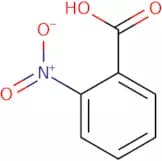
2-Nitrobenzoic acid - Technical
CAS:<p>2-Nitrobenzoic acid is an organic compound that is used as a reagent in the preparation of aldehydes, esters, and amides. It has been shown to be a potent inhibitor of the MCL-1 protein. This protein is an important regulator of mitochondrial permeability transition pore (MPTP) opening and apoptosis induction. The inhibition of the MPTP by 2-nitrobenzoic acid may be due to its ability to react with nitric oxide (NO) to form peroxynitrite, which reacts with MPTP proteins in the mitochondria. The use of 2-nitrobenzoic acid has been found to be effective in treating infectious diseases such as HIV, as well as autoimmune diseases such as psoriasis.</p>Formula:C7H5NO4Purity:Min. 95%Color and Shape:PowderMolecular weight:167.12 g/mol2-Benzyl-1-methylpiperazine
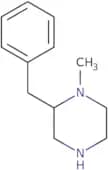
CAS:<p>2-Benzyl-1-methylpiperazine is a versatile building block that can be used in the synthesis of other compounds. It is used as a reagent and building block in research, as well as a speciality chemical and useful scaffold for synthesizing new materials. 2-Benzyl-1-methylpiperazine has been shown to have usefulness in organic synthesis due to its ability to undergo both nucleophilic and electrophilic substitution reactions. It can also react with aldehydes to form ketones, or with alcohols to form ethers. This compound is also used as a reaction component for the synthesis of heterocycles or polymers.</p>Formula:C12H18N2Purity:Min. 95%Color and Shape:Clear LiquidMolecular weight:190.28 g/mol2-(Hydroxymethyl)-3,4-dihydroquinazolin-4-one
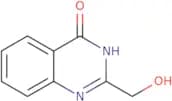
CAS:<p>2-(Hydroxymethyl)-3,4-dihydroquinazolin-4-one is an organic compound that belongs to the group of quinazolines. It is a fine chemical with CAS No. 34637-40-6. This product is a versatile building block for synthesis of complex compounds and can be used as a reaction component in organic chemistry. 2-(Hydroxymethyl)-3,4-dihydroquinazolin-4-one is a useful intermediate in the preparation of various pharmaceuticals, including antibiotics and antihypertensives. It is also used as a reagent in the laboratory or as a speciality chemical.</p>Formula:C9H8N2O2Purity:Min. 95%Color and Shape:PowderMolecular weight:176.17 g/mol5-Chloro-indan-2-ylamine hydrochloride
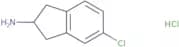
CAS:Controlled Product5-Chloro-indan-2-ylamine hydrochloride is a chemical that can be used as a building block in the synthesis of other chemicals. It is a reagent and useful scaffold in organic synthesis reactions, such as Friedel-Crafts reactions, and can be used to produce indenes. 5-Chloro-indan-2-ylamine hydrochloride is also an intermediate for the production of complex compounds, fine chemicals, and pharmaceuticals. The CAS number for this chemical is 73536-86-4.Formula:C9H10NCl·HClPurity:Min. 95%Color and Shape:PowderMolecular weight:204.09 g/mol2-(Chloromethyl)pyrimidine HCl
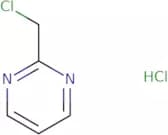
CAS:<p>2-(Chloromethyl)pyrimidine HCl is a chlorinated aromatic compound that is used in the manufacturing of nylon and other synthetic fibers. It is an intermediate for the production of polychloroparaffins, which are used as solvents and raw materials in the chemical industry. 2-(Chloromethyl)pyrimidine HCl has been shown to undergo a chlorination reaction with alcohols to produce 4-chloro-2-methyl-1,3-dioxolane. This reaction can be catalyzed by calcium hydroxide or magnesium chloride, which are both common chemicals found in household cleaners.</p>Formula:C5H5ClN2·HClPurity:Min. 95%Color and Shape:Yellow PowderMolecular weight:165.02 g/mol5-Nitrothiophene-2-carboxylic acid
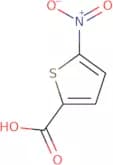
CAS:<p>Used for preparation of pentathiophene amide</p>Formula:C5H3NO4SPurity:Min. 95%Color and Shape:White PowderMolecular weight:173.15 g/mol4-Nitrobenzophenone
CAS:<p>4-Nitrobenzophenone is an aromatic organic compound that is synthesized by the nitration of benzophenone. The coordination complex formed with p. aeruginosa was found to be acidic and readily hydrolyzed in water. This compound has been used in the synthesis of cinnamic acid derivatives, which are intermediates for azo dyes and pharmaceuticals. 4-Nitrobenzophenone can also undergo acylation reactions to form esters or amides with alcohols or carboxylic acids. It is also a precursor to the drug metronidazole, which is used to treat bacterial infections. Acute toxicity studies have shown that this compound has low acute toxicities and causes no irritation on skin contact. 4-Nitrobenzophenone reacts with hydrogen fluoride to form hydrogen chloride and x-ray crystal structures have shown that it forms tetrahedral complexes with chlorine, fluorine, and bromine at low temperatures (0</p>Formula:C13H9NO3Purity:Min. 95%Color and Shape:PowderMolecular weight:227.22 g/mol6-(Dimethylamino)-2,3-dihydro-1H-indole-2,3-dione
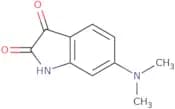
CAS:<p>6-(Dimethylamino)-2,3-dihydro-1H-indole-2,3-dione is a reagent that is used as a high quality intermediate for the synthesis of complex compounds. It is also a useful scaffold for the synthesis of organic compounds. 6-(Dimethylamino)-2,3-dihydro-1H-indole-2,3-dione is a speciality chemical that can be used in research and development to produce novel compounds. This compound can be used in versatile synthetic reactions and is a reaction component with many applications.</p>Formula:C10H10N2O2Purity:Min. 95%Color and Shape:PowderMolecular weight:190.2 g/mol5-Chloro-2-mercaptobenzothiazole
CAS:<p>5-Chloro-2-mercaptobenzothiazole (5CMB) is a thione that binds to hydrogen fluoride (HF) and sodium salts. 5CMB has been used in the synthesis of fluorinated drugs, such as 5-chloro-2-(4'-fluorophenylsulfonyl)benzothiazole, which is used for the treatment of cancer. 5CMB has also been shown to be a potential drug candidate for the treatment of Alzheimer's disease. The structure of 5CMB can be determined using crystallography techniques. Its binding constants with HF and sodium salts can be determined using matrix-assisted laser desorption ionization mass spectrometry (MALDI MS). The toxicity studies of 5CMB have been conducted on animals including mice and rats. These studies show that the LD50 value for 5CMB is 3200 mg/kg bodyweight.</p>Formula:C7H4ClNS2Purity:Min. 98 Area-%Color and Shape:PowderMolecular weight:201.7 g/moltrans-4-Nitrocinnamic acid
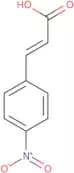
CAS:<p>Trans-4-nitrocinnamic acid is an organic compound that is synthesized from 4-hydroxycinnamic acid by nitration with aqueous or alcoholic nitric acid. Trans-4-Nitrocinnamic acid has been shown to inhibit tyrosinase activity in the presence of metal hydroxides, such as copper, zinc, and iron. The reaction mechanism is unclear but may involve an initial protonation of the phenolic group followed by an electron transfer to the nitro group. This reaction results in an irreversible inhibition of tyrosinase activity. Trans-4-Nitrocinnamic acid also reacts with hydrochloric acid to produce a carboxylate salt that can be used for sample preparation.</p>Formula:C9H7NO4Purity:Min. 95%Color and Shape:PowderMolecular weight:193.16 g/mol5-Fluoroorotic acid potassium salt
CAS:<p>Please enquire for more information about 5-Fluoroorotic acid potassium salt including the price, delivery time and more detailed product information at the technical inquiry form on this page</p>Formula:C5H2FN2O4KPurity:(Free Base) Min. 98.0 Area-%Color and Shape:White PowderMolecular weight:212.18 g/mol4-Nitrobenzeneethanol
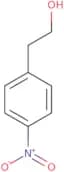
CAS:4-Nitrobenzeneethanol is a primary amine that is synthesized from the amino acid L-glutamic acid and the alcohol 4-nitrobenzyl alcohol. It is activated by reaction with sodium hydroxide solution, which releases hydrogen ions. The conjugates of this compound are isomers. 4-Nitrobenzeneethanol can be used to synthesize compounds that have different functional groups, such as monoclonal antibodies for the treatment of parasitic diseases.Formula:C8H9NO3Purity:Min. 95%Color and Shape:PowderMolecular weight:167.16 g/mol(1-Methylpiperidin-4-yl)methanol
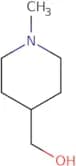
CAS:<p>(1-Methylpiperidin-4-yl)methanol is a potent inhibitor of the kinases vegfr-2 and vesicular glutamate transporter 2 (vglut2). It is also active against human tumor xenografts. The inhibitory activity was determined to be due to its ability to bind and covalently modify tyrosine residues in the kinase domain. The inhibitory potency of (1-Methylpiperidin-4-yl)methanol was found to be constant, regardless of oxygenation status. This suggests that the inhibition is not due to the binding of oxygenated metabolites. In vitro experiments showed that it inhibits cellular proliferation by blocking protein synthesis and arresting cells at G1 phase. This drug has potential as an antitumor agent because it inhibits tumor growth without affecting normal tissue or causing significant toxicity in animal models.</p>Formula:C7H15NOPurity:Min. 95%Color and Shape:Colourless to yellow liquid.Molecular weight:129.2 g/mol3-Methoxy-2-nitroacetophenone
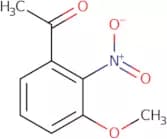
CAS:<p>3-Methoxy-2-nitroacetophenone is a crystalline solid that is soluble in organic solvents. It is catalytic and reductive, forming enamines by reacting with aldehydes or ketones. 3-Methoxy-2-nitroacetophenone can be used to reduce nitro groups to amines and also transfer hydrogen to alkenes. This compound can be also used for cyclization reactions and as a transfer hydrogenation catalyst.</p>Formula:C9H9NO4Purity:Min. 95%Color and Shape:PowderMolecular weight:195.17 g/molH-Imidazo[1,2-a]pyridin-2-amine
CAS:<p>H-Imidazo[1,2-a]pyridin-2-amine is a synthetic compound that has been shown to bind selectively to the catalytic subunit of protein kinase A (PKA). This binding inhibits PKA's ability to phosphorylate proteins, which plays a key role in regulating physiological functions such as cell growth and proliferation. H-Imidazo[1,2-a]pyridin-2-amine has been shown to inhibit tumor growth and symptoms in mouse models by targeting amine receptors. The compound also inhibits the proliferation of cancer cells by signaling through the kinase pathways that regulate mitosis. H-Imidazo[1,2-a]pyridin-2-amine is scalable and can be produced at high yields from inexpensive starting materials.</p>Formula:C7H7N3Purity:Min. 95%Molecular weight:133.15 g/mol1-Bromopentane
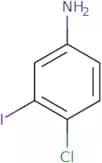
CAS:<p>1-Bromopentane is a colorless liquid that has an unpleasant odor. It is soluble in water and reacts with acids to form bromides. 1-Bromopentane has been used as an oxidation catalyst in the preparation of organic compounds under conditions of constant pressure and light exposure. It has also been used in the synthesis of polymers, such as poly(1-bromopentene). Its biological properties are not well known, but it has been shown to have CB2 receptor agonist activity and inhibitory effects on oxidative stress. The chemical kinetic data for 1-bromopentane are available at various temperatures and pressures. Chloride ions can act as catalysts for its decomposition reaction, which is a stepwise process involving the conversion of hydroxyl groups into chloride atoms. The reaction mechanism starts with the conversion of one bromine atom into a radical by abstraction of a hydrogen atom from the molecule followed by addition of another brom</p>Formula:C5H11BrPurity:Min. 98 Area-%Color and Shape:Colorless Clear LiquidMolecular weight:151.04 g/mol4-Chloro-3-iodoaniline
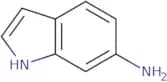
CAS:<p>Versatile small molecule scaffold</p>Formula:C6H5ClINPurity:Min. 95%Molecular weight:253.47 g/mol6-Aminoindole
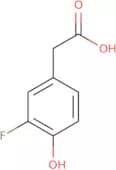
CAS:<p>6-Aminoindole is a model complex that can be used for studying the interactions of primary amines with acidic molecules in bioinorganic chemistry. The molecule was synthesized by electropolymerization, which involves the oxidation of aniline with bifunctional oxidases. 6-Aminoindole has been shown to have protonation and salicylaldehyde properties. It reacts with metal surfaces to form a molecular target.</p>Formula:C8H8N2Purity:Min. 97 Area-%Color and Shape:PowderMolecular weight:132.16 g/mol3-Fluoro-4-hydroxyphenylacetic acid
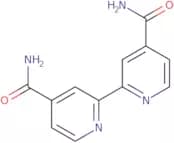
CAS:<p>3-Fluoro-4-hydroxyphenylacetic acid is a fluorinated aromatic compound that has been shown to have serotonergic, dopaminergic and noradrenergic actions. 3-Fluoro-4-hydroxyphenylacetic acid has been shown to interact with the serotonin receptor 5HT2A in cell culture and in vivo, as well as with the dopamine receptor DRD2. This compound also interacts with the eschscholtzia receptor. 3-Fluoro-4-hydroxyphenylacetic acid is biosynthesized from 5-hydroxyindoleacetic acid (5HIAA).</p>Formula:C8H7FO3Purity:Min. 95%Color and Shape:PowderMolecular weight:170.14 g/mol2,2'-Bipyridine-4,4'-dicarboxamide
CAS:<p>2,2'-Bipyridine-4,4'-dicarboxamide is a catalyst that can be used in a variety of reactions. It has been used as an additive to increase yields and to accelerate catalytic reactions. The compound also has the ability to oxidize picolinic acid and form formic acid. This product can be used in glycerol synthesis or hydrogen peroxide production. 2,2'-Bipyridine-4,4'-dicarboxamide is a ligand that binds to picolinic acid and peroxide ions, forming an ion pair with the peroxide ion. This complex increases the efficiency of hydrogen peroxide evolution from water by up to 100%.</p>Formula:C12H10N4O2Purity:Min. 95%Color and Shape:PowderMolecular weight:242.23 g/mol




![H-Imidazo[1,2-a]pyridin-2-amine](/_next/image/?url=https%3A%2Fstatic.cymitquimica.com%2Fproducts%2F3D%2Fthumb-webp%2FPBA58826.webp&w=3840&q=75)