Building Blocks
This section contains fundamental products for the synthesis of organic and biological compounds. Building blocks are the essential starting materials used to construct complex molecules through various chemical reactions. They play a critical role in drug discovery, material science, and chemical research. At CymitQuimica, we offer a diverse range of high-quality building blocks to support your innovative research and industrial projects, ensuring you have the essential components for successful synthesis.
Subcategories of "Building Blocks"
- Boronic Acids & Boronic Acid Derivatives(5,756 products)
- Chiral Building Blocks(1,242 products)
- Hydrocarbon Building Blocks(6,095 products)
- Organic Building Blocks(61,051 products)
Found 199813 products of "Building Blocks"
Sort by
Purity (%)
0
100
|
0
|
50
|
90
|
95
|
100
Ethyl 2-formyl-1H-pyrrole-3-carboxylate
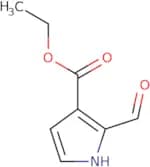
CAS:Ethyl 2-formyl-1H-pyrrole-3-carboxylate is a fine chemical that can be used as a building block in the synthesis of drugs, pesticides, and other organic compounds. It is also a reagent for the synthesis of other compounds. The compound can be easily synthesized by reacting ethyl formate with pyrrole. This process occurs spontaneously at room temperature and does not require any catalysts or solvents. Ethyl 2-formyl-1H-pyrrole-3-carboxylate has been used to synthesize antihistamines, antihypertensives, and anticancer agents. As it is a versatile building block, it can be used as an intermediate for the synthesis of many other compounds. It has also been shown to have useful scaffolding properties in drug design.Formula:C8H9NO3Purity:Min. 95%Color and Shape:PowderMolecular weight:167.16 g/molCyclopentanecarbaldehyde
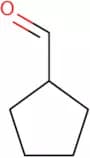
CAS:<p>Cyclopentanecarbaldehyde is a reactive molecule that is used as a ligand in coordination chemistry. It has been shown to bind to the toll-like receptor and may be useful for treating autoimmune diseases. Cyclopentanecarbaldehyde binds with nitrogen atoms in the active site of chelate ligands, which can cause changes in coordination geometry. This reaction mechanism is similar to that of other heterocycles such as 2-picolylhydrazine and 4-picolylhydrazine, which have been shown to be effective in treating Parkinson's disease.</p>Formula:C6H10OPurity:Min. 95%Color and Shape:Colorless Yellow Clear LiquidMolecular weight:98.14 g/mol2-(Chloromethyl)pyrimidine HCl
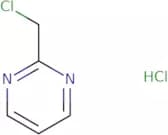
CAS:<p>2-(Chloromethyl)pyrimidine HCl is a chlorinated aromatic compound that is used in the manufacturing of nylon and other synthetic fibers. It is an intermediate for the production of polychloroparaffins, which are used as solvents and raw materials in the chemical industry. 2-(Chloromethyl)pyrimidine HCl has been shown to undergo a chlorination reaction with alcohols to produce 4-chloro-2-methyl-1,3-dioxolane. This reaction can be catalyzed by calcium hydroxide or magnesium chloride, which are both common chemicals found in household cleaners.</p>Formula:C5H5ClN2·HClPurity:Min. 95%Color and Shape:Yellow PowderMolecular weight:165.02 g/mol5-Chloro-2-mercaptobenzothiazole
CAS:<p>5-Chloro-2-mercaptobenzothiazole (5CMB) is a thione that binds to hydrogen fluoride (HF) and sodium salts. 5CMB has been used in the synthesis of fluorinated drugs, such as 5-chloro-2-(4'-fluorophenylsulfonyl)benzothiazole, which is used for the treatment of cancer. 5CMB has also been shown to be a potential drug candidate for the treatment of Alzheimer's disease. The structure of 5CMB can be determined using crystallography techniques. Its binding constants with HF and sodium salts can be determined using matrix-assisted laser desorption ionization mass spectrometry (MALDI MS). The toxicity studies of 5CMB have been conducted on animals including mice and rats. These studies show that the LD50 value for 5CMB is 3200 mg/kg bodyweight.</p>Formula:C7H4ClNS2Purity:Min. 98 Area-%Color and Shape:PowderMolecular weight:201.7 g/mol2,5-Thiophenedicarboxaldehyde
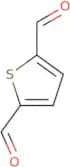
CAS:<p>2,5-Thiophenedicarboxaldehyde (2,5-TDA) is a macrocyclic nitrogen heterocycle that activates the protein kinase cAMP-dependent protein kinase A. This activation leads to increased transcription of genes controlled by this pathway and may be involved in tumor treatment. 2,5-TDA has been shown to be toxic to amines and can be used as an analytical chemistry reagent. It is also used as a starting material for the synthesis of other compounds. 2,5-TDA is prepared by oxidation of thiophene with hydrochloric acid or trifluoroacetic acid. The reaction results in an irreversible oxidation that proceeds via a radical mechanism. The isolated yield is low because 2,5-TDA is thermodynamically unstable and decomposes at higher temperatures.</p>Formula:C6H4O2SPurity:Min. 95%Color and Shape:PowderMolecular weight:140.16 g/mol2-(tert-Butyldimethylsilyloxy)ethanamine
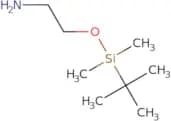
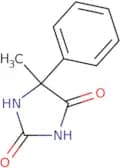
CAS:Versatile small molecule scaffoldFormula:C8H21NOSiPurity:Min. 95%Molecular weight:175.35 g/mol(5R)-5-Methyl-5-phenylimidazolidine-2,4-dione
CAS:<p>Versatile small molecule scaffold</p>Formula:C10H10N2O2Purity:Min. 95%Color and Shape:PowderMolecular weight:190.2 g/mol1-Azaspiro[3.5]nonane
CAS:<p>1-Azaspiro[3.5]nonane is a versatile building block with many uses in research and industrial chemistry. It can be used as a reagent for the synthesis of various organic compounds, or as an intermediate to synthesize more complex molecules. 1-Azaspiro[3.5]nonane is a high quality compound that is sold at a competitive price. The versatility of this compound makes it useful in many different reactions, and it can be used as a scaffold for the construction of more complex structures.</p>Formula:C8H15NPurity:Min. 95%Color and Shape:Clear LiquidMolecular weight:125.21 g/mol3-[4-(Difluoromethoxy)phenyl]propanenitrile
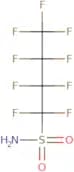
CAS:<p>Versatile small molecule scaffold</p>Formula:C10H9F2NOPurity:Min. 95%Color and Shape:PowderMolecular weight:197.18 g/molPerfluorobutylsulphonamide
CAS:<p>Perfluorobutylsulphonamide is an atrial reactive agent that has been shown to be effective in the treatment of autoimmune diseases. It is a monoclonal antibody that binds to a specific site on the Na+ channel, which is located in the heart and brain cells. This drug has been shown to have no adverse effects on cardiac function or weight gain, which makes it preferable to other drugs in this class. Perfluorobutylsulphonamide also inhibits the production of reactive oxygen species and nitric oxide, which are important in the development of autoimmune diseases. The following product details are for 3-desacetylcefotaxime potassium:</p>Formula:C4H2F9NO2SPurity:Min. 95%Color and Shape:PowderMolecular weight:299.12 g/mol[2-(Cyclopropylmethoxy)ethyl](methyl)amine
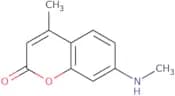
CAS:<p>Versatile small molecule scaffold</p>Formula:C7H15NOPurity:Min. 80%Color and Shape:Clear LiquidMolecular weight:129.2 g/mol4-Methyl-7-(methylamino)-2H-chromen-2-one
CAS:4-Methyl-7-(methylamino)-2H-chromen-2-one is a fine chemical that is used as a building block in the synthesis of other compounds. It has been used in research as a reagent and in the production of pharmaceuticals. 4-Methyl-7-(methylamino)-2H-chromen-2-one can be used to produce a variety of complex compounds, including those with versatile scaffolds. This compound has been shown to react with many different groups, such as alcohols, amines and thiols, which makes it an excellent intermediate for organic synthesis.Formula:C11H11NO2Purity:Min. 95%Color and Shape:PowderMolecular weight:189.21 g/mol2-Azidoacetic acid
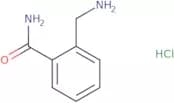
CAS:<p>2-Azidoacetic acid is a versatile chemical building block that can be used to form amides by reaction of the carboxylic acid with a suitable coupling reagent and amine. The azide group can undergo copper(I) catalysed or Huisgen 1,3-dipolar cycloadditin reactions to form triazoles, a common example of click chemistry.</p>Formula:C2H3N3O2Purity:Min. 97.0 Area-%Color and Shape:Colorless Slightly Yellow Clear Liquid PowderMolecular weight:101.06 g/mol2-(Aminomethyl)benzamide hydrochloride
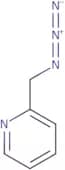
CAS:<p>2-(Aminomethyl)benzamide hydrochloride is a research chemical with high quality and versatile building block properties. It is a useful intermediate in the synthesis of complex compounds, and can be used as a reagent for the production of speciality chemicals. 2-(Aminomethyl)benzamide hydrochloride is also an important reaction component in the synthesis of some fine chemicals, such as pharmaceuticals, dyes, pesticides, and perfumes. 2-(Aminomethyl)benzamide hydrochloride has CAS No. 1187927-15-6 and can be purchased from chemical suppliers worldwide.</p>Formula:C8H10N2O·HClPurity:Min. 95%Color and Shape:White PowderMolecular weight:186.64 g/mol2-(Azidomethyl)pyridine
CAS:<p>2-(Azidomethyl)pyridine (2-AP) is an organopalladium complex with a molecular weight of 206.2 g/mol. It has been used in magnetic resonance spectroscopy and has been shown to bind to all-trans retinoic acid, which is an active metabolite of vitamin A. 2-AP has also been shown to inhibit the growth of cancer cells by binding to the glycan on cell surfaces. The copper complex has been shown to have anti-inflammatory properties and can inhibit the activity of enzymes such as cyclooxygenase and lipoxygenase, which are involved in inflammatory responses. 2-AP is a second-order rate constant for the exothermic reaction between hydrogen peroxide and azide ion, which produces nitrous oxide ((NO)) and water molecules.</p>Formula:C6H6N4Purity:Min. 95%Color and Shape:Brown PowderMolecular weight:134.14 g/mol4-Aminomethylbenzoic acid
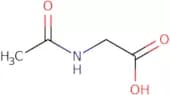
CAS:<p>4-Aminomethylbenzoic acid (4AMBA) is a metabolite that is formed from the amino acid methionine. It has been shown to inhibit the growth of prostate cancer cells in vitro and in vivo. 4-Aminomethylbenzoic acid inhibits the activity of polymerase chain reaction (PCR), which is an enzyme that catalyzes DNA replication. The hydroxyl group on 4-aminomethylbenzoic acid reacts with one of the phosphate groups on DNA, forming a covalent bond and inhibiting DNA synthesis. This inhibition occurs at the step called initiation, where DNA synthesis begins by binding of RNA polymerase to a specific sequence of DNA. In addition, 4-aminomethylbenzoic acid also inhibits the activity of x-ray diffraction data, which is an enzyme that catalyzes RNA transcription. Histological analysis shows that 4-aminomethylbenzoic acid causes congestive heart</p>Formula:C8H9NO2Purity:Min. 98 Area-%Color and Shape:White PowderMolecular weight:151.16 g/molN-Acetylglycine
CAS:<p>N-Acetylglycine is an amide, which is a molecule with both a carboxylate and hydroxyl group. It belongs to the class of antimicrobial agents and has been shown to inhibit the growth of bacteria by inhibiting synthesis of folic acid and other metabolites. N-Acetylglycine also inhibits the formation of terminal residues from amino acids. The analytical method for this compound is based on the reaction between n-acetylglycine and hydrogen chloride in methanol. This produces picolinic acid, which can be detected using ultraviolet spectroscopy at a wavelength of 325 nm.</p>Formula:C4H7NO3Purity:Min. 95%Color and Shape:White PowderMolecular weight:117.1 g/mol3-Hydroxy-3,4-dihydro-2H-1-benzopyran-4-one
CAS:<p>Versatile small molecule scaffold</p>Formula:C9H8O3Purity:Min. 95%Color and Shape:PowderMolecular weight:164.16 g/molBCN-PNP carbonate
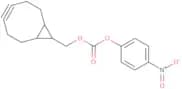
CAS:<p>BCN-PNP carbonate is a versatile building block that can be used as an intermediate in the synthesis of complex compounds. It has a variety of uses in research and as a reagent for fine chemicals. BCN-PNP carbonate is an effective reaction component for the synthesis of speciality chemicals, which are used for research purposes or as intermediates for pharmaceuticals. BCN-PNP carbonate is also useful scaffold for the synthesis of highly pure, high quality building blocks.</p>Formula:C17H17NO5Purity:Min. 95%Color and Shape:PowderMolecular weight:315.32 g/mol1-Adamantane carbonitrile
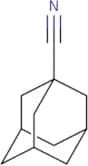
CAS:<p>1-Adamantane carbonitrile is a compound that has been shown to have high binding constants to the covid-19 pandemic. The compound has been shown to be a good candidate for oxidation catalysts and radiation. 1-Adamantane carbonitrile is also a metastable molecule, which means it can exist in two different states with different energy levels. This compound has been found to bind to an endogenous enzyme, as well as being crystalline and having a coordination complex. It has been shown that 1-Adamantane carbonitrile reacts with hydrogen chloride and produces reactive intermediates such as hydrogen chloride. 1-Adamantane carbonitrile has also been shown to have antiviral properties against influenza virus with nmr spectra data showing the presence of this compound in the active site of the influenza virus.</p>Formula:C11H15NPurity:Min. 96.0%Color and Shape:PowderMolecular weight:161.24 g/mol


![1-Azaspiro[3.5]nonane](/_next/image/?url=https%3A%2Fstatic.cymitquimica.com%2Fproducts%2F3D%2Fthumb-webp%2FNAA37455.webp&w=3840&q=75)
![3-[4-(Difluoromethoxy)phenyl]propanenitrile](/_next/image/?url=https%3A%2Fstatic.cymitquimica.com%2Fproducts%2F3D%2Fthumb-webp%2FHSB67627.webp&w=3840&q=75)
amine](/_next/image/?url=https%3A%2Fstatic.cymitquimica.com%2Fproducts%2F3D%2Fthumb-webp%2FIKB52698.webp&w=3840&q=75)