Building Blocks
This section contains fundamental products for the synthesis of organic and biological compounds. Building blocks are the essential starting materials used to construct complex molecules through various chemical reactions. They play a critical role in drug discovery, material science, and chemical research. At CymitQuimica, we offer a diverse range of high-quality building blocks to support your innovative research and industrial projects, ensuring you have the essential components for successful synthesis.
Subcategories of "Building Blocks"
- Boronic Acids & Boronic Acid Derivatives(5,778 products)
- Chiral Building Blocks(1,242 products)
- Hydrocarbon Building Blocks(6,098 products)
- Organic Building Blocks(61,098 products)
Found 199594 products of "Building Blocks"
Sort by
Purity (%)
0
100
|
0
|
50
|
90
|
95
|
100
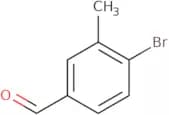
4-Bromo-3-methylbenzaldehyde
CAS:<p>4-Bromo-3-methylbenzaldehyde is a versatile building block that is used in the synthesis of many complex compounds. It can be used as a reactant, reagent, or speciality chemical. 4-Bromo-3-methylbenzaldehyde is an intermediate for the production of other chemicals and has been shown to be useful in the synthesis of various scaffolds. This product has been shown to have high purity and quality.</p>Formula:C8H7BrOPurity:Min. 95%Color and Shape:Yellow PowderMolecular weight:199.04 g/mol1-Bromo-2,4,6-trimethoxybenzene
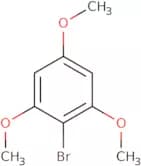
CAS:<p>1-Bromo-2,4,6-trimethoxybenzene is a reactive chemical that has shown to have toxic properties in model studies. It reacts with metals such as Iridium and can be used to remove halogens from solutions. It is also able to react with a variety of other molecules, including peroxides, chlorine gas and bromine gas. 1-Bromo-2,4,6-trimethoxybenzene can form free radicals when exposed to UV radiation and may be used as a ligand for metal ions. 1-Bromo-2,4,6-trimethoxybenzene is also soluble in n-dimethylformamide and carbon tetrachloride.</p>Formula:C9H11BrO3Purity:Min. 95%Color and Shape:White PowderMolecular weight:247.09 g/mol4-Bromo-2-(trifluoromethyl)benzoic acid methyl ester
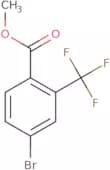
CAS:<p>4-Bromo-2-(trifluoromethyl)benzoic acid methyl ester is a versatile building block that can be used to produce complex compounds. It is also an intermediate and a useful scaffold in organic synthesis. This chemical has been used as a research chemical and as a reagent for the production of other chemicals. The compound has CAS number 957207-58-8 and can be obtained from our supplier in high quality, with purity of 99%.</p>Formula:C9H6BrF3O2Purity:Min. 95%Color and Shape:Colorless PowderMolecular weight:283.04 g/mol1,8-Octanediol
CAS:<p>1,8-Octanediol is a long-term efficacy drug that is used in the treatment of granulosa cell tumors. It has been shown to inhibit the proliferation of these cells by binding to them and inhibiting their metabolism. 1,8-Octanediol can be considered as an analog of progesterone and works by binding to progesterone receptors present in the tumor cells. This binding leads to a decrease in the production of estrogen and decreases the risk of cancer recurrence. 1,8-Octanediol has also been shown to increase body mass index (BMI) in women with polycystic ovary syndrome (PCOS). 1,8-Octanediol is soluble in water and has a phase transition temperature at around 37 degrees Celsius, which makes it biocompatible.</p>Formula:C8H18O2Purity:Min. 98 Area-%Color and Shape:White PowderMolecular weight:146.23 g/mol2-Bromo-4-nitrobenzonitrile
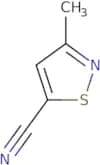
CAS:<p>2-Bromo-4-nitrobenzonitrile is a chemical compound that can be used to study the relationship between genetic polymorphism and chromosome structure. This compound has been found to induce polyploidy in Brassica plants, which may have implications for the evolution of these species. 2-Bromo-4-nitrobenzonitrile also has been shown to be a useful marker for phylogenetic and ecological studies of Lepidium species. The compound is diploid in nature, but can be used as a matrix in tetraploid plants.</p>Formula:C7H3BrN2O2Purity:Min. 95%Color and Shape:PowderMolecular weight:227.02 g/mol3-Methyl-1,2-thiazole-5-carbonitrile
CAS:<p>Versatile small molecule scaffold</p>Formula:C5H4N2SPurity:Min. 95%Molecular weight:124.17 g/mol2-Oxa-7-azaspiro[3.5]nonane hemioxalate
CAS:<p>2-Oxa-7-azaspiro[3.5]nonane hemioxalate is a fine chemical that is used as a building block in research and development of complex compounds, such as pharmaceuticals, agrochemicals, and polymers. It has been shown to be useful in the synthesis of heterocycles, such as pyrrolidines, piperazines, indoles, and benzoxazoles. 2-Oxa-7-azaspiro[3.5]nonane hemioxalate can serve as a versatile building block for the preparation of various scaffolds with different functionalities. 2-Oxa-7-azaspiro[3.5]nonane hemioxalate is a reagent that can be used for the preparation of other compounds and intermediates as well.</p>Formula:C7H13NOC2H2O4Purity:Min. 95%Color and Shape:Off-White Clear LiquidMolecular weight:172.2 g/mol1-(Bromomethyl)adamantane
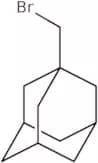
CAS:<p>1-(Bromomethyl)adamantane is a synthetic chemical that is used in the preparation of other chemicals. The active site of 1-(bromomethyl)adamantane can be found on its bromine atom, which has been shown to react with copper. The regioselectivity is determined by the 1-position on adamantane, and the thermodynamic constants are affected by the carbon-halogen bond, which is present in 1-(bromomethyl)adamantane. This compound has been shown to have chromatographic properties that make it useful for separating compounds that are similar in structure. It can also be used as a reagent to synthesize other chemicals or prepare them for use in experiments.</p>Formula:C11H17BrPurity:Min. 95%Color and Shape:White PowderMolecular weight:229.16 g/mol4-tert-Butoxyphenylacetic acid
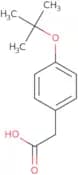
CAS:<p>Ruthenium complexes of 4-tert-butoxyphenylacetic acid are catalysts that have been shown to be effective in the asymmetric synthesis of alcohols and terpyridines. <br>This complex has been shown to be a ligand for ruthenium metal, which is often used as a catalyst in organic reactions. The use of this catalyst has led to advances in the field of organic chemistry, specifically the synthesis of new oligomers.</p>Formula:C12H16O3Purity:Min. 95%Color and Shape:PowderMolecular weight:208.25 g/mol1-Octanesulfonic acid sodium salt
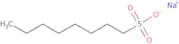
CAS:<p>1-Octanesulfonic acid sodium salt is a chemical compound that can be used to prepare surfactants. It has been shown to have a high optimum concentration for the formation of stable foam and is compatible with blood sampling, hydrophobic effect, and ester hydrochloride. 1-Octanesulfonic acid sodium salt has also been used as an analytical method for detecting sulfate ion in the presence of other ions on the basis of its reactivity with potassium permanganate. The detection limit is 0.1 ppm with a reaction solution containing 1% octanesulfonic acid sodium salt and 3% potassium permanganate. The chemical stability at pH 2 is higher than that at pH 7 because the sulfonate group acts as a buffer at low pH. 1-Octanesulfonic acid sodium salt can be quantified by means of fluorescence detector or electrochemical detector after it reacts with phenolphthalein in an acidic solution.</p>Formula:C8H18O3S•NaPurity:Min. 98%Color and Shape:White PowderMolecular weight:217.28 g/mol5-Amino-2-nitrobenzoic acid
CAS:<p>5-Amino-2-nitrobenzoic acid is a versatile compound that can be used as a reagent, a reaction component, or as a useful scaffold in research. It reacts with alcohols to produce esters and amides. The high quality of this chemical makes it suitable for use in many different reactions. CAS No. 13280-60-9</p>Formula:C7H6N2O4Molecular weight:182.14 g/molRef: 3D-A-6803
1kgTo inquire100gTo inquire250gTo inquire500gTo inquire2500gTo inquire-Unit-ggTo inquire1-[3-(Trifluoromethyl)phenyl]-1H-1,2,3-triazole-4-carboxylic acid
CAS:<p>1-[3-(Trifluoromethyl)phenyl]-1H-1,2,3-triazole-4-carboxylic acid (TFTCA) is a versatile building block used as a reagent in research and speciality chemical synthesis. TFTCA is used as a reactant in the synthesis of complex compounds and can be used as an intermediate or scaffold. The compound has been used to synthesize drugs such as 3,5-dichloro-N-(3-(trifluoromethyl)phenyl)-2-thiophenecarboxamide (PF23410), which is a potent inhibitor of protein kinase C.</p>Formula:C10H6F3N3O2Purity:Min. 95%Color and Shape:PowderMolecular weight:257.17 g/mol2-Nitro-4-(trifluoromethyl)cinnamic acid
CAS:<p>2-Nitro-4-(trifluoromethyl)cinnamic acid is a versatile building block that can be used in the synthesis of complex compounds. It is a useful reagent, speciality chemical, and reaction component. 2-Nitro-4-(trifluoromethyl)cinnamic acid has been shown to be an intermediate for the synthesis of other compounds such as anti-tuberculosis drugs, antibiotics, and pharmaceuticals. This compound also has high quality and can be used as a scaffold for the synthesis of other compounds.</p>Formula:C10H6F3NO4Purity:Min. 95%Molecular weight:261.15 g/mol4'-Butylacetophenone
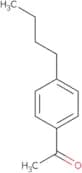
CAS:<p>4'-Butylacetophenone (BA) is a phenolic compound that has been shown to reduce the need for an acceptor in wastewater treatment. It can be used as a substitute for hexane, which is commonly used to extract hydrophobic compounds from water. 4'-Butylacetophenone has also been shown to have anti-inflammatory properties and has been used in the synthesis of nonsteroidal anti-inflammatory drugs such as diclofenac amide.</p>Formula:C12H16OPurity:Min. 95%Color and Shape:PowderMolecular weight:176.25 g/mol5-Amino-2-nitrobenzoic acid
CAS:<p>5-Amino-2-nitrobenzoic acid is an organic compound that belongs to the class of versatile building block. It is a white solid that has been used as a research chemical, reagent, and specialty chemical for the synthesis of complex compounds and pharmaceuticals. 5-Amino-2-nitrobenzoic acid is also known as 2-amino-5-chlorobenzoic acid (ACBA). It is soluble in water, but insoluble in ethanol. The CAS number for this chemical is 13280-60-9.</p>Formula:C7H6N2O4Molecular weight:182.14 g/molRef: 3D-A-6802
1kgTo inquire100gTo inquire250gTo inquire500gTo inquire2500gTo inquire-Unit-ggTo inquire1-Nitroadamantane
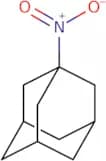
CAS:<p>1-Nitroadamantane is a metal-free catalyst that oxidizes organic compounds in the presence of water. It is synthesized using the following method: 1) The reaction of carbon monoxide with nitric acid produces nitrous acid, which reacts with a fatty acid to yield 1-nitroadamantane. 2) This product can be obtained from trifluoroacetic acid and hydrogen fluoride. 3) This product can also be prepared by reacting diphenyl ether with an acylurea.</p>Formula:C10H15NO2Purity:Min. 95%Color and Shape:White PowderMolecular weight:181.23 g/molBoc-Gly-Gly-OH
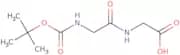
CAS:<p>Boc-Gly-Gly-OH is a synthetic molecule with inhibitory properties. It has been shown to prevent the polymerization of tubulin into microtubules by binding to the hydroxyl group on lysine residues in the monomeric form. Boc-Gly-Gly-OH can be used as a reagent in organic solution, and can be seen under an electron microscope as nanodots.</p>Formula:C9H16N2O5Purity:Min. 95%Color and Shape:PowderMolecular weight:232.23 g/mol5-Amino-2-nitrobenzoic acid
CAS:<p>5-Amino-2-nitrobenzoic acid is a useful chemical building block that is used in the synthesis of complex compounds and useful scaffolds.</p>Formula:C7H6N2O4Molecular weight:182.13 g/molRef: 3D-A-6800
25gTo inquire50gTo inquire100gTo inquire250gTo inquire500gTo inquire-Unit-ggTo inquire2-Amino-5-iodobenzoic acid
CAS:<p>Please enquire for more information about 2-Amino-5-iodobenzoic acid including the price, delivery time and more detailed product information at the technical inquiry form on this page</p>Formula:C7H6INO2Molecular weight:263.04 g/mol(3-Nitrophenyl)acetone
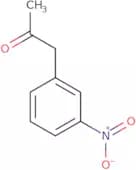
CAS:<p>3-Nitrophenylacetone is a white solid that is soluble in water and polar organic solvents. 3-Nitrophenylacetone can be used as a building block for the synthesis of other compounds, such as pharmaceuticals and dyes. This compound has been researched for its ability to inhibit protein glycosylation. 3-Nitrophenylacetone is also used as an intermediate in the synthesis of polyurethanes and polycarbonates.</p>Formula:C9H9NO3Purity:Min. 95%Color and Shape:White PowderMolecular weight:179.17 g/mol



![2-Oxa-7-azaspiro[3.5]nonane hemioxalate](/_next/image/?url=https%3A%2Fstatic.cymitquimica.com%2Fproducts%2F3D%2Fthumb-webp%2FFO29380.webp&w=3840&q=75)

![1-[3-(Trifluoromethyl)phenyl]-1H-1,2,3-triazole-4-carboxylic acid](/_next/image/?url=https%3A%2Fstatic.cymitquimica.com%2Fproducts%2F3D%2Fthumb-webp%2FNEA93433.webp&w=3840&q=75)