Building Blocks
This section contains fundamental products for the synthesis of organic and biological compounds. Building blocks are the essential starting materials used to construct complex molecules through various chemical reactions. They play a critical role in drug discovery, material science, and chemical research. At CymitQuimica, we offer a diverse range of high-quality building blocks to support your innovative research and industrial projects, ensuring you have the essential components for successful synthesis.
Subcategories of "Building Blocks"
- Boronic Acids & Boronic Acid Derivatives(5,778 products)
- Chiral Building Blocks(1,243 products)
- Hydrocarbon Building Blocks(6,098 products)
- Organic Building Blocks(61,057 products)
Found 200716 products of "Building Blocks"
Sort by
Purity (%)
0
100
|
0
|
50
|
90
|
95
|
100
1,2-Epoxy-5-cyclooctene
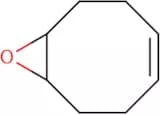
CAS:<p>1,2-Epoxy-5-cyclooctene is a cyclic epoxide that undergoes ring opening with the addition of a nucleophile. This reaction is catalyzed by a bromonium ion, which acts as the electrophile. The product of this reaction is 2-hydroxy-1,2-epoxycyclohexane. 1,2-Epoxy-5-cyclooctene has been used in synthesizing various compounds such as monoepoxides and hydrosilanes. It can also be used to produce compounds that are difficult to access through other methods. 1,2-Epoxy-5-cyclooctene has been studied using x-ray crystallography and conformational analysis.</p>Formula:C8H12OPurity:Min. 98 Area-%Color and Shape:Clear LiquidMolecular weight:124.18 g/molEthyl propiolate
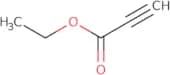
CAS:<p>Ethyl propiolate is a halide that is structurally related to the alkylating agent trifluoroacetic acid. Ethyl propiolate inhibits the activity of several enzymes including phosphofructokinase and pyruvate kinase, which are important for energy metabolism in cells. It also has been shown to have beneficial effects on autoimmune diseases such as lupus erythematosus. The mechanism of action of ethyl propiolate is due to its ability to react with activated oxygen and form an intramolecular hydrogen bond with carbon atoms in the substrate molecule. The reaction between ethyl propiolate and diethyl ketomalonate results in the formation of diethyl 2-propiolate, which can then be hydrolyzed by water into acetaldehyde and diethyl ketomalonate.</p>Formula:C5H6O2Purity:Min. 98 Area-%Color and Shape:Colorless Clear LiquidMolecular weight:98.1 g/mol2-amino-1,3-benzothiazol-7-ol
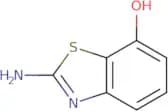
CAS:<p>2-Amino-1,3-benzothiazol-7-ol is a versatile building block that can be used in the synthesis of complex compounds. It has been used as a research chemical and as a reagent for the production of speciality chemicals. 2-Amino-1,3-benzothiazol-7-ol is also useful as an intermediate in organic reactions or as a scaffold to construct novel molecular frameworks. This compound is known to have a high quality and purity.</p>Formula:C7H6N2OSPurity:Min. 95%Color and Shape:PowderMolecular weight:166.2 g/mol1,1,1-Tris(hydroxymethyl)ethane
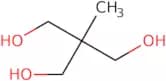
CAS:1,1,1-Tris(hydroxymethyl)ethane is a liquid that can be used in the treatment of wastewater. It is a non-ionic surfactant that reacts with metal hydroxides to form insoluble salts. 1,1,1-Tris(hydroxymethyl)ethane has been shown to have a light emission property at room temperature and below. The structure of 1,1,1-Tris(hydroxymethyl)ethane has been determined using spectroscopic analysis and chemical synthesis. Hypoglycemic effects have been demonstrated in mice fed a high-fat diet supplemented with 1,1,1-Tris(hydroxymethyl)ethane as well as in rats fed an experimental diet containing this compound.Formula:C5H12O3Purity:Min. 95 Area-%Color and Shape:White Off-White PowderMolecular weight:120.15 g/molL-Tyrosine - non-animal origin
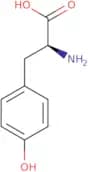
CAS:<p>Amino acid; precursor to neurotransmitters, hormones, pigments, natural phenols</p>Formula:C9H11NO3Color and Shape:White Off-White PowderMolecular weight:181.19 g/mol1,3,5-Triazine
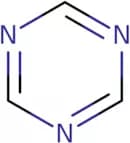
CAS:<p>1,3,5-Triazine is a nitrogen-containing heterocyclic compound that is used as a precursor for the synthesis of other compounds. It has been shown to inhibit the polymerase chain reaction and to bind to the enzyme DNA polymerase. This binding prevents the formation of an enzyme-substrate complex required for DNA replication. 1,3,5-Triazine also inhibits oxidative injury in experimental models and inhibits cellular physiology by decreasing the production of growth factor-β1. 1,3,5-Triazine has been shown to be a natural compound with inhibitory properties against growth factors and cell proliferation. This chemical also exhibits antioxidant effects by scavenging reactive oxygen species or inhibiting lipid peroxidation.END></p>Formula:C3H3N3Purity:Min. 95%Color and Shape:White PowderMolecular weight:81.08 g/mol2,2,4,6-Tetramethyl-1,3-dioxan-5-one
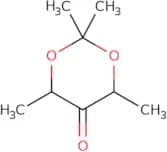
CAS:<p>Please enquire for more information about 2,2,4,6-Tetramethyl-1,3-dioxan-5-one including the price, delivery time and more detailed product information at the technical inquiry form on this page</p>Formula:C8H14O3Purity:Min. 95%Color and Shape:PowderMolecular weight:158.2 g/molTocinoic acid trifluroacetate
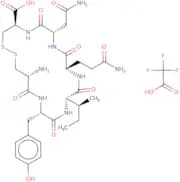
CAS:Please enquire for more information about Tocinoic acid trifluroacetate including the price, delivery time and more detailed product information at the technical inquiry form on this pageFormula:C30H44N8O10S2•C2HF3O2Purity:Min. 95%Color and Shape:PowderMolecular weight:854.85 g/mol2-Bromo-6-fluorobenzonitrile
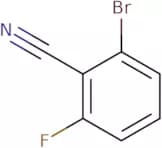
CAS:<p>2-Bromo-6-fluorobenzonitrile is an organic compound with a molecular formula of C6H3BrF. It is a colorless liquid that is used as a precursor in the synthesis of other compounds. 2-Bromo-6-fluorobenzonitrile has been shown to be an efficient fluorophore and can be activated by electron transfer, thermally, or chemically. 2-Bromo-6-fluorobenzonitrile also has a quantum efficiency of 0.5% and transport properties that make it ideal for fluorescence microscopy. The fluorescence intensity of 2-bromo-6-fluorobenzonitrile is proportional to the amount of energy absorbed, which makes it useful for quantifying the concentration of fluorescent molecules in solution. 2-Bromo-6-fluorobenzonitrile has also been shown to have high quantum yields and high efficiency levels when</p>Formula:C7H3BrFNPurity:Min. 95%Color and Shape:PowderMolecular weight:200.01 g/mol2',3',4'-Trihydroxyacetophenone
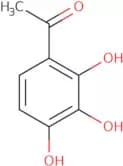
CAS:<p>2',3',4'-Trihydroxyacetophenone is a polycarboxylic acid that has potent inhibitory activity against tyrosinase, an enzyme that catalyzes the conversion of tyrosine to DOPA. This compound can be used as a cross-linking agent for polymerization reactions and has been shown to have optimum inhibitory concentrations in the range of 0.01-1 mM. 2',3',4'-Trihydroxyacetophenone inhibits the production of melanin by inhibiting tyrosinase and can be used as a skin whitening agent. In addition, this compound can be used as a cox-2 inhibitor in food composition and may also be useful in preventing or treating inflammatory conditions such as asthma and arthritis.</p>Formula:C8H8O4Purity:Min. 95%Color and Shape:Off-White PowderMolecular weight:168.15 g/mol2,4,6-Trihydroxytoluene
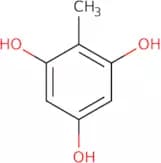
CAS:<p>2,4,6-Trihydroxytoluene is a phenolic compound with an intense yellow color. It is used for the preparation of dryopteris and as a fabric dye. 2,4,6-Trihydroxytoluene is also used in the production of pharmaceuticals and as a chemical intermediate. 2,4,6-Trihydroxytoluene has been shown to inhibit the growth of bacteria by binding to one or more hydroxyl groups on the bacterial cell wall. This binding prevents the formation of an antibiotic-inhibitor complex with the enzyme cell wall synthesis that is required for cell wall biosynthesis, inhibiting protein synthesis and cell division.</p>Formula:C7H8O3Purity:Min. 95%Color and Shape:Red PowderMolecular weight:140.14 g/mol1-(Ethenesulfonyl)-4-fluorobenzene
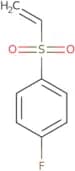
CAS:<p>1-(Ethenesulfonyl)-4-fluorobenzene is a versatile chemical that can be used as a building block for the synthesis of complex compounds. It is also a reagent and speciality chemical with many applications in research. 1-(Ethenesulfonyl)-4-fluorobenzene is an excellent starting material for the synthesis of useful scaffolds and it has shown to have high quality.</p>Formula:C8H7FO2SPurity:Min. 95%Molecular weight:186.21 g/mol3,4,5-Trihydroxytoluene
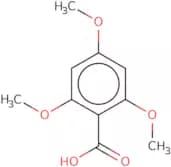
CAS:Substrate for peroxidaseFormula:C7H8O3Purity:Min. 95%Color and Shape:PowderMolecular weight:140.14 g/mol2,4,6-Trimethoxybenzoic acid
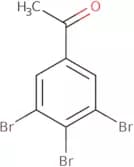
CAS:<p>2,4,6-Trimethoxybenzoic acid (TMB) is a monomer that belongs to the class of organic compounds known as phenols. It can undergo dehydrogenation reactions with nitroethane in the presence of trifluoroacetic acid and catalytic amounts of hydrogen gas. TMB has been shown to interact with an allyl group in other molecules. The reaction system was studied under different flow rates and was found to be best described by an isotherm equation.</p>Formula:C10H12O5Purity:Min. 95%Color and Shape:PowderMolecular weight:212.2 g/mol3,4,5-Tribromoacetophenone
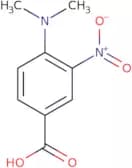
CAS:<p>3,4,5-Tribromoacetophenone is a high quality and versatile chemical with many special applications. It is an important intermediate for the production of various chemicals, such as plastics and pharmaceuticals. This compound can be used as a starting material for the synthesis of more complex compounds by reacting with other chemicals. 3,4,5-Tribromoacetophenone also has a number of useful properties that make it ideal for research purposes.</p>Formula:C8H5Br3OPurity:Min. 95%Color and Shape:PowderMolecular weight:356.84 g/mol4-(Dimethylamino)-3-nitrobenzoic acid
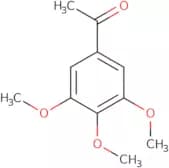
CAS:4-(Dimethylamino)-3-nitrobenzoic acid is a chemical compound with CAS No. 28096-56-2. It is a high quality chemical reagent, useful as an intermediate for the synthesis of complex compounds and fine chemicals. It is also a useful building block for the synthesis of versatile building blocks, and can be used in reactions to form new chemical compounds. 4-(Dimethylamino)-3-nitrobenzoic acid is also a versatile building block that can be used in many reactions to form new chemical compounds, and can be used as a research chemical or speciality chemical.Formula:C9H10N2O4Purity:Min. 95%Molecular weight:210.19 g/mol3,4,5-Trimethoxyacetophenone
CAS:<p>3,4,5-Trimethoxyacetophenone is a natural product that has been shown to be an antimycotic. It has significant cytotoxicity against A549 cells and also inhibits the growth of cancer cells in culture. 3,4,5-Trimethoxyacetophenone has a low bioavailability due to its chemical properties and inhibitory effects on CYP3A4. This compound is metabolized by the liver into metabolites with inhibitory properties. 3,4,5-Trimethoxyacetophenone also binds to methoxy groups on proteins.</p>Formula:C11H14O4Purity:Min. 99 Area-%Color and Shape:White PowderMolecular weight:210.23 g/mol3,4,5-Tribromobenzoic acid
CAS:<p>3,4,5-Tribromobenzoic acid is a metabolite of 3-indoleacetic acid. It is excreted in the urine and has a phaseolus-like physiological activity. This compound has been found to reduce the number of internodes in plants and increase the number of subjacent nodes. In addition, it has been shown to inhibit abscission (the separation of plant parts) by inhibiting the release of auxin from the upper node. The structural properties of 3,4,5-tribromobenzoic acid are similar to those of benzoic acid and it can be found naturally in some plants. Diversity in this chemical has been found among different species: for example, 2,3,5-triiodobenzoic acid is only present in citrus fruits such as oranges and lemons.</p>Formula:C7H3Br3O2Purity:Min. 95%Color and Shape:PowderMolecular weight:358.81 g/mol2,4,6-Trichlorobenzonitrile
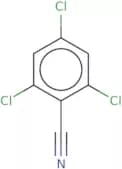
CAS:2,4,6-Trichlorobenzonitrile is a chlorine-containing chemical that has been used as a pesticide. It is a highly toxic substance and can be fatal if ingested. 2,4,6-Trichlorobenzonitrile is converted to chloride in soil and water by microbial action. This chemical can be activated by light or temperature changes and is used in the production of pesticides that are phytotoxic. It also has been shown to have thermodynamic properties that allow it to act as an environmental pollutant. 2,4,6-Trichlorobenzonitrile can react with sulfoxides to form chloromethylation products such as 2,3,5-trichloroethanol. These reactions are catalyzed by metal ions such as Fe(II) and Mn(II).Formula:C7H2Cl3NPurity:Min. 95%Color and Shape:PowderMolecular weight:206.46 g/mol4-Nitroimidazole
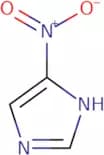
CAS:<p>4-Nitroimidazole has a redox potential that is well suited to the reduction of nitro groups. It is an antimicrobial agent that inhibits the growth of microorganisms by inhibiting DNA synthesis. 4-Nitroimidazole can be used for the treatment of infectious diseases such as tuberculosis, leprosy, and brucellosis. In rat liver microsomes, 4-nitroimidazole reacts with NADPH to produce a nitro group and an imidazole ring with a new configuration. The reaction mechanism is based on electron transfer from NADPH to the nitro group in 4-nitroimidazole via a series of reactions that involve cytochrome P450 enzymes. This reaction has kinetic energy and matrix effects that affect its pharmacokinetics and pharmacodynamics.</p>Formula:C3H3N3O2Purity:Min. 95%Color and Shape:White PowderMolecular weight:113.07 g/mol