Building Blocks
This section contains fundamental products for the synthesis of organic and biological compounds. Building blocks are the essential starting materials used to construct complex molecules through various chemical reactions. They play a critical role in drug discovery, material science, and chemical research. At CymitQuimica, we offer a diverse range of high-quality building blocks to support your innovative research and industrial projects, ensuring you have the essential components for successful synthesis.
Subcategories of "Building Blocks"
- Boronic Acids & Boronic Acid Derivatives(5,778 products)
- Chiral Building Blocks(1,243 products)
- Hydrocarbon Building Blocks(6,098 products)
- Organic Building Blocks(61,057 products)
Found 200710 products of "Building Blocks"
Sort by
Purity (%)
0
100
|
0
|
50
|
90
|
95
|
100
Trans-methylisoeugenol
CAS:<p>Trans-methylisoeugenol is a natural compound that has been shown to have anti-inflammatory, antioxidant, and immunomodulatory properties. It is a metabolite of isoeugenol, which is a constituent of the essential oils from plants such as angelica dahurica and eugenia caryophyllata. Trans-methylisoeugenol binds to the glucuronide conjugate receptor on the cell surface, leading to various effects including inflammatory responses. Trans-methylisoeugenol also inhibits the activity of enzymes such as benzalkonium chloride and eugenol that are responsible for inflammation. Molecular docking analysis predicts that trans-methylisoeugenol may bind to the same site on the receptor as benzalkonium chloride.</p>Formula:C11H14O2Purity:Min. 90 Area-%Color and Shape:PowderMolecular weight:178.23 g/mol(4S)-4-Amino-5-hydroxypentanoic acid hydrochloride
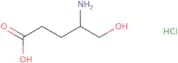
CAS:Versatile small molecule scaffoldFormula:C5H11NO3•HClPurity:Min. 95%Color and Shape:PowderMolecular weight:169.61 g/mol2-[4-(Trifluoromethyl)phenyl]propanal
CAS:<p>Versatile small molecule scaffold</p>Formula:C10H9F3OPurity:Min. 95%Color and Shape:Clear LiquidMolecular weight:202.17 g/mol4-Cyclohexylcyclohexan-1-one
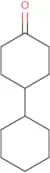
CAS:<p>4-Cyclohexylcyclohexan-1-one is an organic solvent that has a high boiling point and low vapor pressure. It is a colorless liquid with a sweet odor. 4-Cyclohexylcyclohexan-1-one is used in the production of hydrochloride salts and cyclic hydrocarbons, as well as in organic synthesis reactions involving boron nitride, reaction mechanisms, and efficient methods. Exposure to 4-cyclohexylcyclohexan-1-one can lead to chronic health effects such as dehydration and reduced lung function. The functional theory of 4-cyclohexylcyclohexan-1-one is that it reacts with water molecules to produce hydrogen chloride gas. Hydrochloric acid is produced when 4CCHC reacts with hydrochlorides salts. This reaction produces particles that are small enough to be inhaled into the lungs, which can cause particle toxicity, respiratory irritation, and pulmonary</p>Formula:C12H20OPurity:Min. 95%Color and Shape:PowderMolecular weight:180.29 g/mol4-(Methylamino)cyclohexane-1-sulfonamide hydrochloride
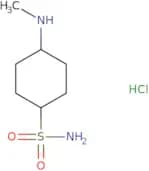
CAS:Versatile small molecule scaffoldFormula:C7H16N2O2S•HClPurity:Min. 95%Color and Shape:PowderMolecular weight:228.7 g/mol2-Azaspiro[3.3]heptane-1-carboxylic acid hydrochloride
CAS:<p>2-Azaspiro[3.3]heptane-1-carboxylic acid hydrochloride is a versatile building block that can be used in the synthesis of a wide variety of chemical compounds. It is a high quality, useful intermediate that has been shown to be an effective scaffold for synthesis of various complex compounds.</p>Formula:C7H11NO2•HClPurity:Min. 95%Molecular weight:177.63 g/molN-Methyl-beta-alaninenitrile
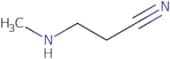
CAS:<p>Formamide is a colorless gas with a pungent, irritating odor. It is used as an antiseptic and an intermediate in the production of other organic compounds. Formamide has been shown to be effective against animal-derived pathogens such as Covid-19 and influenza A/H5N1, and it has been proposed as a potential treatment for pandemic influenza. Formamide reacts with chlorine to produce formate salt (formic acid), which can then be converted into amines or hexamethylphosphoramide. The reaction rate of formamide increases with increasing temperature, but decreases with increasing concentration of hydrogen.<br>Formamide is also used as a solvent in microscopy to dissolve tissue samples for analysis by electron microscopy techniques.</p>Formula:C4H8N2Purity:Min. 98 Area-%Color and Shape:Colorless Clear LiquidMolecular weight:84.12 g/mol2-Mercaptobenzimidazole zinc salt
CAS:<p>2-Mercaptobenzimidazole zinc salt is a synthetic, organic solvent that is used as an additive in the manufacture of dyes, paints, and varnishes. It is also used to make photographic film and x-ray film. 2-Mercaptobenzimidazole zinc salt is not soluble in water but can be dissolved by organic solvents such as acrylonitrile. This compound has been shown to have photocatalytic activity when activated by light. It has been found to be heat resistant up to 110°C, which makes it suitable for use in coating and printing applications. 2-Mercaptobenzimidazole zinc salt has carboxylate properties that allow it to react with calcium carbonate and hydrogen tartrate for industrial purposes.</p>Formula:C14H10N4S2ZnColor and Shape:White Off-White PowderMolecular weight:363.8 g/mol7-Methoxy-1H-indole
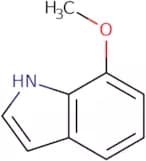
CAS:7-Methoxy-1H-indole (7MI) is a synthetic compound that exhibits anti-inflammatory activity. It is an analog of the amino acid methionine found in proteins and its synthesis involves the condensation of a chlorinated alkyl acetate with an esterified hydrazide to form the corresponding amide. 7MI has been shown to inhibit both bacterial and mammalian protein synthesis, as well as to inhibit tumor cell growth. 7MI binds reversibly to the N7 atom of the adenine base in DNA, thereby inhibiting DNA replication through inhibition of DNA polymerase.Formula:C9H9NOPurity:Min. 95%Color and Shape:Clear LiquidMolecular weight:147.17 g/mol7-Methylindole
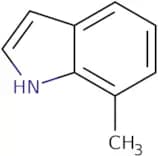
CAS:<p>7-Methylindole is a biochemical substance that is synthesized in the body. It is produced in the liver, and it can be found in the brain, heart, and kidney. 7-Methylindole has been shown to have cancer-fighting properties. 7-Methylindole binds to DNA by methylating nucleic acid bases, which causes a change in the genetic code. This leads to tumor cells being more sensitive to treatment with other substances that inhibit DNA synthesis or repair, such as anthranilate and 5-methoxyindole.</p>Formula:C9H9NPurity:Min 98%Color and Shape:PowderMolecular weight:131.17 g/molUracil
CAS:<p>Pyrimidine nucleobase; allosteric regulator and coenzyme for reactions</p>Formula:C4H4N2O2Purity:Min. 98 Area-%Color and Shape:White Off-White PowderMolecular weight:112.09 g/mol4-Mercaptobenzonitrile
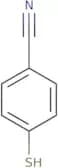
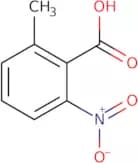
CAS:<p>4-mercaptobenzonitrile (4MBN) is a typical compound used in many spectroscopic experiments. The addition of 4-mercaptobenzonitrile to metal surfaces is used to create self-assembled monolayers with metals. For numerous reasons, it can difficult to immbolize certain chemical groups on surfaces. The addition of 4-mercaptobenzonitrile forms a modified metal surface that enhances technique sensitivity and serves as tool for a better understanding of the interfaces. In recent years, the use of 4-mercaptobenzonitrile together with other molecules on metal nanoparticles has been explored for biomedicinal purposes, serving as a tool for creating surface-enhanced Raman scattering tags (SER tags), useful as cancer biomarker imaging (Li, 2018).</p>Formula:C7H5NSPurity:Min. 95%Color and Shape:PowderMolecular weight:135.19 g/mol2-Methyl-6-nitrobenzoic acid
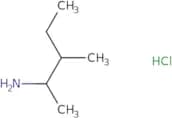
CAS:<p>2-Methyl-6-nitrobenzoic acid is a yellow needle solid that is soluble in organic solvents. It is used as a reagent to prepare other chemicals and has been shown to react with sodium hydrogen sulfate, chloride, and sulfuric acid to form 2-methyl-6-nitrobenzenesulfonic acid. The mixture of 2-methyl-6-nitrobenzoic acid and sodium hydrogen sulfate reacts violently with chlorine gas or argon. This reaction solution can be evaporated by heating at atmospheric pressure or under vacuum, leaving 2-methyl-6-nitrobenzenesulfonic acid behind. 2MBA can also be purified by filtration or recrystallization from a suitable solvent such as chloroform or ether.</p>Formula:C8H7NO4Purity:Min. 95%Color and Shape:Slightly Yellow PowderMolecular weight:181.15 g/mol3-Methylpentan-2-amine hydrochloride
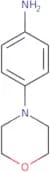
CAS:Versatile small molecule scaffoldFormula:C6H15N•HClPurity:Min. 95%Color and Shape:PowderMolecular weight:137.65 g/mol4-Morpholinoaniline
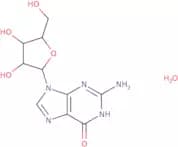
CAS:4-Morpholinoaniline is a synthetic substrate that reacts with hydrochloric acid and sodium nitrite to form the reactive intermediate 4-morpholinonitrosobenzene. The reaction mechanism is proposed to proceed through an initial electron transfer from the substrate to the nitrosobenzene intermediate, followed by protonation of the nitrosobenzene nitrogen atom. The resulting 4-nitrophenyl radical abstracts hydrogen from the substrate to give 4-hydroxyphenyl radical. This radical undergoes a nucleophilic attack on the aromatic ring of the substrate molecule, and cleavage of the disulfide bond in the aromatic ring leads to formation of a cyanohydrin product. Studies have been conducted on rat liver microsomes and hepatitis C virus (HCV) to investigate this reaction mechanism.Formula:C10H14N2OPurity:Min. 98.5 Area-%Color and Shape:Red PowderMolecular weight:178.23 g/molGuanosine
CAS:Guanosine is a nucleoside that is metabolized to uridine in the liver. It is a component of RNA and DNA, as well as an intermediate in the synthesis of adenosine triphosphate (ATP) by phosphorylation. Guanosine also has pharmacokinetic properties, including its ability to cross the blood-brain barrier, which make it a promising drug for neurological disorders. Guanosine is used in tissue culture to measure signal transduction pathways and membrane permeability. The tautomers of guanosine are shown in Figure 1 below: Figure 1: Tautomers of Guanosine (1) 5'-O-DMT-Guanosine (2) 5'-O-DMT-2'N3-Guanosine (3) 2'N3-5'-O-DMT-Guanosine (4) 2'N3-5'-Formula:C10H13N5O5Purity:Min. 95%Color and Shape:PowderMolecular weight:283.24 g/mol2-Methoxy-3-methylbenzoic acid
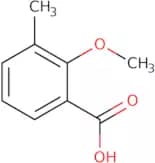
CAS:<p>2-Methoxy-3-methylbenzoic acid is a methoxy methyl, benzyl, methyl ether that can be used as a reagent in organic chemistry. It is an intermediate in the synthesis of phthalic anhydride and in the production of esters and quinones. 2-Methoxy-3-methylbenzoic acid is also used to produce potassium t-butoxide, which can be used for the synthesis of new types of reagents for organic synthesis. The chemical reacts with potassium hydroxide or potassium t-butoxide to form potassium 2-methoxy 3-methyl benzoate, which is soluble in water. This compound can also be produced from methoxy methyl benzyl chloride by reacting it with either potassium or sodium hydroxide.</p>Formula:C9H10O3Purity:Min. 95%Color and Shape:White PowderMolecular weight:166.17 g/mol(Azidomethyl)cyclopentane
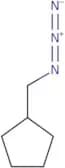
CAS:Azidomethylcyclopentane is a neuraminidase inhibitor that binds to the active site of the influenza virus neuraminidase enzyme. It has been shown to be effective against influenza A and B viruses in vitro. In vivo studies have also shown that Azidomethylcyclopentane prevents the activation of chronic pain receptors, which may be due to its ability to regulate the activation of cyclic adenosine monophosphate (cAMP) by activating adrenergic receptors. This drug is a prodrug that is converted by hydrolysis into an active form, which inactivates viral neuraminidase and prevents spread of infection.Formula:C6H11N3Purity:Min. 95%Color and Shape:Clear LiquidMolecular weight:125.17 g/mol2,4,6-Trinitrobenzenesulfonic acid - 5% Aqueous solution
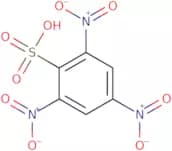
CAS:2,4,6-Trinitrobenzenesulfonic acid (also known as TNBS, TNSBA or picrylsulfonic acid) is a strongly oxidising organic acid that has long been used as a reagent to determine the presence of free primary amine groups. TNBS reacts rapidly with primary amines to form highly coloured N-trinitrophenyl acid products which can then be analysed by colorimetry. The amine can be regenerated by treatment with hydrazine. This analytical technique can also be applied to thiols and hydrazides. As is common with nitrated aromatic compounds, there is a risk of explosion and TNBS is typically commercially available as a solution. We also supply the 1% solution in DMF.Formula:C6H3N3O9SColor and Shape:Colorless Yellow Clear LiquidMolecular weight:293.17 g/molRef: 3D-FT73268
2g334.00€5g453.00€10g607.00€25g955.00€50g1,642.00€200g5,345.00€250g4,404.00€38.69g1,412.00€3-Methylphenylacetone
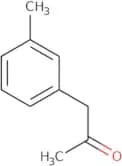
CAS:<p>3-Methylphenylacetone is a dioxane with functional groups, which can be synthesized by coupling of acetoacetate and nitrobenzene. 3-Methylphenylacetone is a versatile precursor for the synthesis of various esters, such as phenylethyl acetate. This compound can also be deacylated to form 3-methylphenol, which is used in the synthesis of nitrophenols. In addition, 3-methylphenylacetone can be used in the production of acetophenones, ketones, and other aromatic compounds by using catalysts such as iodine or phosphoric acid. Nitro groups on 3-methylphenylacetone react with chloro-, bromo-, or methoxy-substituted substrates to form nitrosated derivatives. The tert-butyl group is eliminated spontaneously to form an amine.</p>Formula:C10H12OPurity:Min. 95%Color and Shape:Clear LiquidMolecular weight:148.2 g/mol


![2-[4-(Trifluoromethyl)phenyl]propanal](/_next/image/?url=https%3A%2Fstatic.cymitquimica.com%2Fproducts%2F3D%2Fthumb-webp%2FDEA10804.webp&w=3840&q=75)
![2-Azaspiro[3.3]heptane-1-carboxylic acid hydrochloride](/_next/image/?url=https%3A%2Fstatic.cymitquimica.com%2Fproducts%2F3D%2Fthumb-webp%2FJBD30513.webp&w=3840&q=75)