Building Blocks
This section contains fundamental products for the synthesis of organic and biological compounds. Building blocks are the essential starting materials used to construct complex molecules through various chemical reactions. They play a critical role in drug discovery, material science, and chemical research. At CymitQuimica, we offer a diverse range of high-quality building blocks to support your innovative research and industrial projects, ensuring you have the essential components for successful synthesis.
Subcategories of "Building Blocks"
- Boronic Acids & Boronic Acid Derivatives(5,778 products)
- Chiral Building Blocks(1,243 products)
- Hydrocarbon Building Blocks(6,097 products)
- Organic Building Blocks(61,048 products)
Found 203115 products of "Building Blocks"
Sort by
Purity (%)
0
100
|
0
|
50
|
90
|
95
|
100
2-Pyridinepropanol
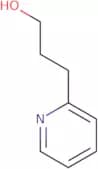
CAS:<p>2-Pyridinepropanol is a tetranuclear compound that contains two nitrogen atoms and two silver ions. It has been shown to be an inhibitor of arthropoda development in the laboratory. 2-Pyridinepropanol also has potent inhibitory activity against the growth of bacteria, including Staphylococcus aureus and Pseudomonas aeruginosa. This compound was synthesized from 2-benzoylbenzoic acid, which is a product of the plant metabolism. The structure of this molecule was determined by X-ray crystallography and electrochemical studies.<br>2-Pyridinepropanol binds to the bacterial enzyme hydrogenase, which catalyzes the production of hydrogen gas, thereby inhibiting its activity (hydrogenase is an enzyme that catalyses the reduction of protons to hydrogen gas).</p>Formula:C8H11NOPurity:Min. 95%Color and Shape:Colorless PowderMolecular weight:137.18 g/molFmoc-β-alanine
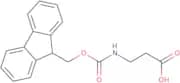
CAS:Fmoc-beta-alanine is a type of amino acid that is found in plants. It has been shown to have biological properties and can be used as an ingredient in food products. Fmoc-beta-alanine is also a chemical ligation agent that can be used for the synthesis of cyclic peptides and polypeptides. The compound has been shown to inhibit chloride ion channels, which may make it useful for the treatment of autoimmune diseases. Fmoc-beta-alanine is natural antibacterial and has been shown to increase the activity of urokinase-type plasminogen activator, which may make it useful for the treatment of cardiovascular diseases. Fmoc-beta-alanine is a sequence of amino acids found in wheat germ, as well as other plant families such as corn and rice. This compound binds to specific receptors and can be synthesized by solid phase synthesis on a resin column.Formula:C18H17NO4Purity:Min. 95%Color and Shape:PowderMolecular weight:311.33 g/mol2-(Cyclopropylamino)-2-(2,6-difluorophenyl)acetic acid
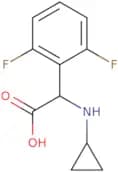
CAS:Versatile small molecule scaffoldFormula:C11H11F2NO2Purity:Min. 95%Color and Shape:PowderMolecular weight:227.21 g/molFerene disodium salt
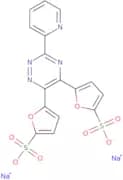
CAS:Ferene is an iron chelate that has been shown to have a number of beneficial effects on iron homeostasis. Ferene has been used in the treatment of chronic viral hepatitis, and it has also been shown to be effective against galleria mellonella. Ferene is a metal chelate, which means that it is a type of molecule that contains two metal ions. The metal ions are usually connected by a central atom, such as oxygen or nitrogen. Ferene disodium salt can be synthesized in the lab using the chemiluminescence method and polymerase chain reaction (PCR). It is also possible to isolate ferene from human serum or from a model system.Formula:C16H8N4Na2O8S2Purity:Min. 95 Area-%Color and Shape:Yellow PowderMolecular weight:494.37 g/molFmoc-L-tert-leucine
CAS:<p>Fmoc-L-tert-leucine is an amide that is used for the treatment of prostate cancer. Fmoc-L-tert-leucine has been shown to be effective in treating resistant prostate cancer cells in vivo, and it has been shown to inhibit the growth of prostate cancer cells in vitro. This drug also has a diagnostic effect on prostate cancer cells. The uptake of this drug by prostate cancer cells is dependent on the presence of caspase-9, which may be due to its ability to inhibit apoptosis.</p>Formula:C21H23NO4Purity:Min. 95%Color and Shape:White PowderMolecular weight:353.41 g/mol3-Furaldehyde
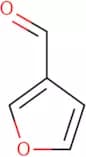
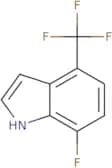
CAS:<p>Plant-derived; solvent</p>Formula:C5H4O2Purity:Min. 96 Area-%Color and Shape:Yellow To Dark Brown Clear LiquidMolecular weight:96.08 g/mol7-Fluoro-4-(trifluoromethyl)-1H-indole
CAS:Versatile small molecule scaffoldFormula:C9H5F4NPurity:Min. 95%Color and Shape:PowderMolecular weight:203.14 g/mol6-Fluoroindole
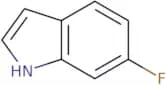
CAS:<p>6-Fluoroindole is an aromatic organic compound that has been shown to have anti-inflammatory and antioxidant properties in vitro and in vivo. 6-Fluoroindole is a 5-methoxyindole and can be synthesized from the amino acid tryptophan, which is a precursor of serotonin. 6-Fluoroindole has also been shown to be active against plant pathogens, human protein, and human pathogens. It can produce hemolytic activity at high concentrations and its chemical stability was tested by incubating it with various acids such as hydrochloric acid or acetic acid. 6-Fluoroindole showed no reaction with either of these acids. The vibrational spectra of 6-fluoroindole was measured using dipolar coupling constants and found to have a dipole moment of 0.01 D for the molecule.</p>Formula:C8H6FNPurity:Min. 98 Area-%Color and Shape:White Yellow PowderMolecular weight:135.14 g/molCyanodibenzylamine
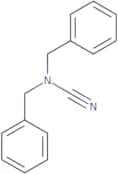
CAS:<p>Cyanodibenzylamine is a synthetic, pharmaceutical preparation. It is an amine that undergoes nucleophilic attack by an amide to form a cyanoguanidine. Cyanodibenzylamine can be used as a stabilizer and additive in pharmaceutical preparations. It also has the ability to bind metal hydroxides, which may be due to the presence of basic fibroblast growth factor and isoquinoline compound. Cyanodibenzylamine is also used as a polymerization initiator in organic chemistry, with hydrocarbon solvents such as benzene or toluene as its solvent.</p>Formula:C15H14N2Purity:Min. 95%Color and Shape:PowderMolecular weight:222.29 g/mol2-Chloro-3-methylbenzylamine HCl - 90%
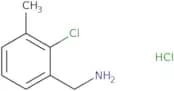
CAS:<p>2-Chloro-3-methylbenzylamine HCl is a fine chemical that is a versatile building block for synthesis of pharmaceuticals and research chemicals. It is also a useful intermediate in the production of other compounds, such as speciality chemicals, complex compounds, and reaction components. 2-Chloro-3-methylbenzylamine HCl has many potential applications in both academia and industry because it is a high quality reagent with many uses.</p>Formula:C8H10ClN·HClPurity:Min. 95%Color and Shape:PowderMolecular weight:192.09 g/mol3-Amino-N-propylpropanamide
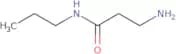
CAS:<p>3-Amino-N-propylpropanamide is a reagent and useful intermediate. It is a fine chemical that has CAS No. 271591-60-7. 3-Amino-N-propylpropanamide can be used as a versatile building block in the synthesis of fine chemicals, such as speciality chemicals and research chemicals, and in the preparation of pharmaceuticals and agrochemicals. 3APPA may also be used as a reaction component in organic synthesis to form amides, ureas, sulfonamides, or phosphonates, which are important intermediates for pharmaceuticals and agrochemicals.</p>Formula:C6H14N2OPurity:Min. 95%Color and Shape:Clear LiquidMolecular weight:130.19 g/mol10H-Phenothiazine-10-propanesulfonic acid sodium salt
CAS:As a derivative of phenothiazine this compound may have various applications, including in the field of pharmaceuticals or materials science, depending on its specific properties and reactivity. Phenothiazine derivatives, in general, have been explored for their diverse biological and chemical activities, ranging from antipsychotic properties to use as dyes and light-sensitive materials.Formula:C15H14NNaO3S2Purity:Min. 98 Area-%Color and Shape:PowderMolecular weight:343.4 g/mol1-(4-Chlorophenyl)-2-nitroethene
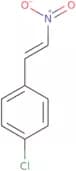
CAS:1-(4-Chlorophenyl)-2-nitroethene is a high yield, versatile reagent for the synthesis of nitro groups. It is prepared by the reaction of 1-(4-chlorophenyl)ethanone with nitric acid in an organic solvent at a temperature of 100 °C. The product can be used as a dehydrating agent, and also has functional groups such as carbonyl, hydroxyl, methoxy, azide, phenyliodonium. It has been shown to be effective in the conversion of diacetates to oximes and ketones. The 1-(4-chlorophenyl)-2-nitroethene reagent is a yellowish liquid that can be handled magnetically, but should be stored under nitrogen gas to avoid oxidation.Formula:C8H6ClNO2Purity:Min. 95%Color and Shape:Yellow PowderMolecular weight:183.59 g/mol2-(1,3-Dioxaindan-4-yl)ethan-1-amine
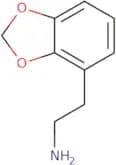
CAS:Controlled Product<p>Versatile small molecule scaffold</p>Formula:C9H11NO2Purity:Min. 95%Color and Shape:Clear LiquidMolecular weight:165.19 g/mol2-Amino-4-chloro-6-methylpyridine
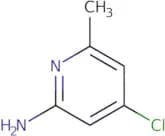
CAS:<p>2-Amino-4-chloro-6-methylpyridine (2ACP) is a molecule that has been studied by molecular modeling. This compound inhibits the enzyme tyrosine phosphatase, which is involved in the transmission of signals from outside the cell to inside the cell. 2ACP has a hydrogen bonding interaction with the catalytic site of the enzyme, which blocks its activity and prevents it from transmitting signals to other cells. 2ACP also has an inhibitory effect on fructus amomi and diamine tetraacetic acid (DTA), which are both enzymes involved in bacterial phosphorus metabolism. The structural analysis of 2ACP shows two protonated amino groups and one protonated pyridine group, which may explain its inhibitory effect on these enzymes.</p>Formula:C6H7ClN2Purity:Min. 95%Color and Shape:White PowderMolecular weight:142.59 g/mol2-[4-(Aminomethyl)phenyl]acetonitrile
CAS:<p>Versatile small molecule scaffold</p>Formula:C9H10N2Purity:Min. 95%Color and Shape:PowderMolecular weight:146.19 g/molEthyl 2-[(benzenesulfonyl)methyl]prop-2-enoate
CAS:<p>Ethyl 2-[(benzenesulfonyl)methyl]prop-2-enoate is a chemical compound that is commonly used as a building block in the synthesis of other compounds. It has shown to be effective in research, as it can be used as an intermediate or a reaction component. CAS No. 89295-32-9 is the Chemical Abstracts Service registry number for this chemical. This compound is also known by its synonym of ethyl propanoate benzenesulfonate, and it has been found to have useful properties such as being a versatile building block and being a fine chemical. This product is high quality and is a reagent that has been found to be useful in many chemical reactions.</p>Formula:C12H14O4SPurity:Min. 95%Color and Shape:Clear LiquidMolecular weight:254.3 g/mol2,2-Dimethylcyclobutan-1-one
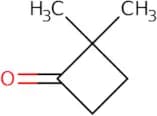
CAS:2,2-Dimethylcyclobutan-1-one is a cycloaddition product of sodium methoxide and trimethylchlorosilane. It is used as an alkylating agent in the preparation of fatty acids. 2,2-Dimethylcyclobutan-1-one can be prepared by reaction of zinc chloride with chlorinated hydrocarbons or alkynes. The product can be purified by distillation and deuterated. The reactants are thermally decomposed to form the desired product at elevated temperatures (≥200 °C). The reaction proceeds via nucleophilic substitution of chloride for the chlorine atom that is attached to the alkene. This process generates a new double bond between carbon atoms 4 and 5 in the molecule. Lastly, 2,2-dimethylcyclobutan-1-one has been found to form a complex with anthracene and emulsifying agents that stabilizes it against thermal decomposition.Formula:C6H10OPurity:Min. 95%Color and Shape:Clear LiquidMolecular weight:98.14 g/mol1,4-Dimethyl-1H-imidazole-5-carboxylic acid
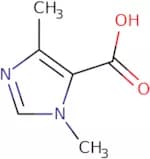
CAS:Versatile small molecule scaffoldFormula:C6H8N2O2Purity:Min. 90%Molecular weight:140.14 g/mol8-Methoxyquinoline-4-carboxylic acid
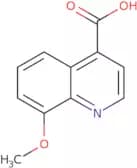
CAS:<p>8-Methoxyquinoline-4-carboxylic acid is a potent inhibitor of phosphodiesterase I, II, IV and V. It has been shown to inhibit the production of inflammatory prostaglandins in asthma patients. 8-Methoxyquinoline-4-carboxylic acid has been used to study the fluorescence properties of acetonitrile and its derivatives. 8-Methoxyquinoline-4-carboxylic acid has been tested as a fluorescent probe for DNA sequencing and has also shown potential as a fluorescent probe for protein sequencing. This molecule is an inhibitor of phosphodiesterases, which are enzymes that break down cyclic nucleotides such as cAMP and cGMP.<br>8-Methoxyquinoline-4-carboxylic acid is a bicyclic heteroaryl compound with an electron donating group at position 4 on the heterocyclic ring. It can be synthesized from ethanol using</p>Formula:C11H9NO3Purity:(¹H-Nmr) Min. 95 Area-%Color and Shape:PowderMolecular weight:203.19 g/mol



![2-[4-(Aminomethyl)phenyl]acetonitrile](/_next/image/?url=https%3A%2Fstatic.cymitquimica.com%2Fproducts%2F3D%2Fthumb-webp%2FJWC78525.webp&w=3840&q=75)
![Ethyl 2-[(benzenesulfonyl)methyl]prop-2-enoate](/_next/image/?url=https%3A%2Fstatic.cymitquimica.com%2Fproducts%2F3D%2Fthumb-webp%2FPDA29532.webp&w=3840&q=75)