Building Blocks
Subcategories of "Building Blocks"
- Boronic Acids & Boronic Acid Derivatives(5,781 products)
- Chiral Building Blocks(1,242 products)
- Hydrocarbon Building Blocks(6,101 products)
- Organic Building Blocks(61,033 products)
Found 205320 products of "Building Blocks"
Methyl Indole-3-acetate
CAS:Controlled ProductApplications A phytohormone.
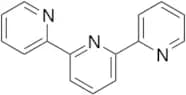
References Quittenden, L., et al.: Plant Physiol., 151, 1130 (2009), Jiraskova, D., et al.: J. Phycol., 45, 108 (2009),Formula:C11H11NO2Color and Shape:Beige To Dark BrownMolecular weight:189.212,2':6',2''-Terpyridine
CAS:Controlled ProductApplications 2,2':6',2''-Terpyridine (cas# 1148-79-4) is a useful research chemical.
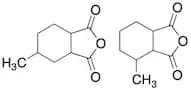
Formula:C15H11N3Color and Shape:Beige To Light BrownMolecular weight:233.27Methylhexahydroisobenzofuran-1,3-Dione
CAS:Controlled ProductStability Moisture Sensitive
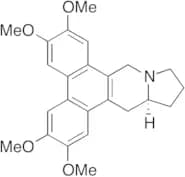
Applications 3A-METHYLHEXAHYDROISOBENZOFURAN-1,3-DIONE (cas# 25550-51-0) is a useful research chemical.Formula:C9H12O3Color and Shape:NeatMolecular weight:168.18(+)-(S)-Tylophorine
CAS:Controlled ProductApplications (+)-(S)-Tylophorine is a a major alkaloid of Tylophora indica. (+)-(S)-Tylophorine is an immunosuppressant and inflammation inhibitor. (+)-(S)-Tylophorine showed antiproliferative activity and induction of apoptosis in tumor cells.
Not a dangerous good if item is equal to or less than 1g/ml and there is less than 100g/ml in the package
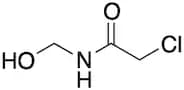
References Gopalakrishnan, C. et a.: Ind. J. Med. Chem., 71, 940 (1980); Ganguly, T.et al.: Phytomedicine, 9, 288 (2002); Gao, W. et al.: Cancer, Res., 64, 678 (2004);Formula:C24H27NO4Color and Shape:NeatMolecular weight:393.482-Chloro-N-(hydroxymethyl)acetamide
CAS:Controlled ProductApplications 2-Chloro-N-(hydroxymethyl)acetamide is an organic building block, and an amidomethylating reagent.
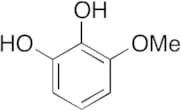
References Haridas, A. K., et al.: RSC Adv., 4, 12188 (2014); Teramoto, K., et al.: Polym. J., 34, 363 (2002)Formula:C3H6ClNO2Color and Shape:NeatMolecular weight:123.543-Methoxycatechol
CAS:Controlled ProductApplications 3-Methoxycatechol is used to prepare polyphenolic deoxybenzoins as potential antioxidants and tyrosinase inhibitors.
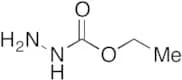
References Ng, L., et al.: Bioorg. Med. Chem., 17, 4360 (2009)Formula:C7H8O3Color and Shape:NeatMolecular weight:140.14Ethyl Carbazate
CAS:Controlled ProductApplications Ethyl Carbazate is used in the synthesis of P1 aryl heterocycle-based thrombin inhibitors. It can be also used to prepare diazenedicarboxamides as inhibitors of alanylalanine ligase.
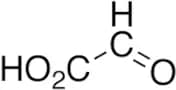
References Young, M., et al.: J. Med. Chem., 47, 2995 (2004); Kovac, A., et al.: Bioorg. Med. Chem. Lett., 17, 2047 (2007)Formula:C3H8N2O2Color and Shape:NeatMolecular weight:104.11Glyoxylic Acid Monohydrate
CAS:Controlled ProductApplications Occurs in unripe fruit and in young green leaves; has also been found in very young sugar beets.
References Lelieveld, J., et al.: Nature, 452, 737 (2008), da Silva, G., et al.: Environ. Sci. Technol., 44, 250 (2010),Formula:C2H4O4Color and Shape:NeatMolecular weight:92.05Homogentisic Acid
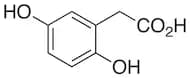
CAS:Applications An intermediate in the metabolism of tyrosine and phenylalanine. Occurs in plants and in the urine of alkaptonurics.
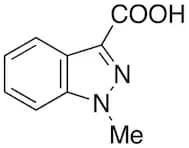
References Knox, W.E., et al.: Biochem. J., 49, 686 (1951), LaDu, B.N., et al.: J. Biol. Chem., 217, 777 (1955)Formula:C8H8O4Color and Shape:NeatMolecular weight:168.151-Methylindazole-3-carboxylic Acid (Granisetron Impurity D)
CAS:Controlled ProductImpurity Granisetron EP Impurity D
Applications Granisetron Impurity D.
References Bermudez, J., et al.: J. Med. Chem., 33, 1924 (1990),Formula:C9H8N2O2Color and Shape:Off White SolidMolecular weight:176.17N-[4-(-Carboxycyclohexylmethyl)]maleamidic Acid
CAS:Controlled ProductApplications N-[4-(-Carboxycyclohexylmethyl)]maleamidic Acid (cas# 72748-87-9) is a compound useful in organic synthesis.
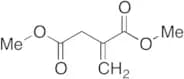
Formula:C12H17NO5Color and Shape:NeatMolecular weight:255.27Dimethyl Itaconate
CAS:Controlled ProductApplications Dimethyl Itaconate is a chemical reagent used in the synthesis of functionalized 2-isoxazolines used in fragment-based drug discovery.
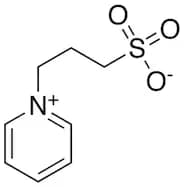
References Tran, N. et al.: Tetrahedron Lett., 56, 4119 (2015); Louise Hazeland, E. et al.: Chem. Comm., 51, 10206 (2015);Formula:C7H10O4Color and Shape:NeatMolecular weight:158.1521-(3-Sulfopropyl)pyridinium Inner Salt
CAS:Controlled ProductApplications A non detergent sulfobetaine used as a mild solubilizing and stabilizing agent for halophilic malate dehydrogenase, halophilic elongation factor Tu (hTu), pig heart malate dehydrogenase, chicken egg white lysozyme and E. coli beta-galactosidase. Preserves the antigenic conformation of serine protease gp76. Does not interfere with colorimetric assays using p-nitrophenylphosphate and o-nitrophenyl-b-D-galactopyranoside as substrates. Reduces aggregation and significantly improves protein renaturation. Zwitterionic over a wide pH range. Does not absorb significantly in the near-UV range. Can be easily removed by dialysis.This compound is suitable for malate dehydrogenase (MDH) related research.
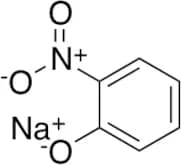
References Vuillard, L., et al.: Anal. Biochem., 230, 290 (1995); Vuillard, L., et al.: FEBS Lett., 353, 294 (1995); Vuillard, L., et al.: Biochem. J., 305, 337 (1995); Goldberg, M.E., et al.: Folding & Design, 1, 21 (1996).Formula:C8H11NO3SColor and Shape:NeatMolecular weight:201.24Sodium 2-Nitrophenolate
CAS:Applications Sodium 2-nitrophenolate (cas# 824-39-5) is a useful research chemical.
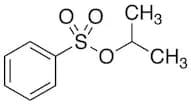
Formula:C6H4NO3·NaColor and Shape:NeatMolecular weight:161.09Isopropyl Benzenesulfonate
CAS:Applications A sulfonate ester as potential genotoxic impurity in drug substances. It may exert genotoxic effects in bacterial and mammalian cell systems.
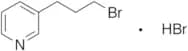
References Eder, E., et al.: Xenobiotica, 12, 831 (1982), Li, W., et al.: J. Chromatogr., 1046, 297 (2004), Glowienke, S., et al.: Mutat. Res., 581, 23 (2005), Colon, I., et al.: J. Pharm. Biomed. Anal., 39, 477 (2005),Formula:C9H12O3SColor and Shape:ColourlessMolecular weight:200.253-(3-Bromopropyl)pyridine Hydrobromide
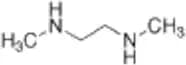
CAS:Controlled ProductFormula:C8H10BrN·BrHColor and Shape:NeatMolecular weight:280.988N,N'-Dimethylethanediamine
CAS:Controlled ProductApplications Has a DNA binding effect.
Not a dangerous good if item is equal to or less than 1g/ml and there is less than 100g/ml in the package
References Mikata, Y., et al.: Chem. Pharm. Bull., 48, 477 (2000),Formula:C4H12N2Color and Shape:NeatMolecular weight:88.15


![N-[4-(-Carboxycyclohexylmethyl)]maleamidic Acid](/_next/image/?url=https%3A%2Fstatic.cymitquimica.com%2Fproducts%2FTR%2Fthumb-webp%2FC177850.webp&w=3840&q=75)