Building Blocks
Subcategories of "Building Blocks"
- Boronic Acids & Boronic Acid Derivatives(5,783 products)
- Chiral Building Blocks(1,242 products)
- Hydrocarbon Building Blocks(6,105 products)
- Organic Building Blocks(61,055 products)
Found 205383 products of "Building Blocks"
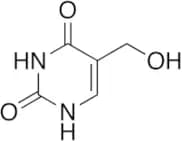
5-Hydroxymethyluracil
CAS:Controlled ProductApplications 5-Hydroxymethyluracil (cas# 4433-40-3) is a compound useful in organic synthesis.
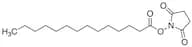
Formula:C5H6N2O3Color and Shape:NeatMolecular weight:142.11N-Succinimidyl Myristate
CAS:Controlled ProductStability Moisture Sensitive
Applications N-Succinimidyl Myristate is used to make cationic polysaccharide compositions for transfection
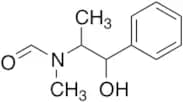
References Faroux-Corlay, B., et al.: J. Med. Chem., 44, 2188 (2001), Georgiades, S.N., et al.: Bioorg. Med. Chem. Lett., 18, 3117 (2008),Formula:C18H31NO4Color and Shape:NeatMolecular weight:325.44N-(1-hydroxy-1-phenylpropan-2-yl)-N-methylformamide
CAS:Controlled ProductStability Air Sensitive
Applications N-Formyl Ephedrine (Mixture of Diastereomers) can be used as a potential radiation-protective agent.
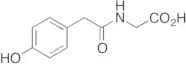
References Bhat, K.V., et.al.:J. Pharm. Sci., 54, 225-28, (1965);Formula:C11H15NO2Color and Shape:NeatMolecular weight:193.24p-Hydroxyphenylacetylglycine
CAS:Controlled ProductStability Hygroscopic
Applications p-Hydroxyphenylacetylglycine is derived from the metabolism of L-DOPA (D533751), a dopamine precursor that induces dyskinesia in Parkinson’s disease patients. p-Hydroxyphenylacetylglycine is also used as a reagent to synthesize novel piperazine salts that have antimicrobial activity against Escherichia coli and Bacillus subtilis.
References Abha, B., et al.: Pharma Chemica, 2, 446 (2010); Picconi, B., et al.: Nat. Neurosci., 6, 501 (2003)Formula:C10H11NO4Color and Shape:NeatMolecular weight:209.2N,N,N',N'-Tetramethyl-1,3-propanediamine
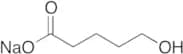
CAS:Formula:C7H18N2Color and Shape:NeatMolecular weight:130.235-Hydroxypentanoic Acid Sodium Salt
CAS:Controlled ProductApplications 5-Hydroxypentanoic acid sodium salt
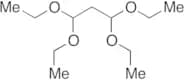
Formula:C5H9NaO3Color and Shape:NeatMolecular weight:140.111,1,3,3-Tetraethoxypropane
CAS:Controlled ProductApplications 1,1,3,3-Tetraethoxypropane has been used in the preparation of diazabicyclodecenes.
References Barykina-Tassa, O.V., Snider, B.B.: Tetrahedron Lett., (Ahead of Print) (2015)Formula:C11H24O4Color and Shape:NeatMolecular weight:220.312-[(1-Hydroxy-2-oxo-2-phenylethyl)sulfanyl]acetic Acid
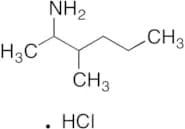
CAS:Controlled ProductFormula:C10H10O4SPurity:>90%Color and Shape:NeatMolecular weight:226.253-Methyl-2-hexanamine Hydrochloride Salt
CAS:Applications 3-Methyl-2-hexanamine HCl Salt is more stable and easier to purify compared to the free base.
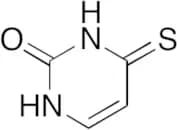
Formula:C7H17N·HClColor and Shape:Off-White To BeigeMolecular weight:115.2236464-Thiouracil
CAS:Applications 4-Thiouracil is a derivative of Uracil (U801000), which is a nitrogenous base in RNA nucleic acid. 4-Thiouracil is used for tagging in cell type-specific RNA isolation from intact complex tissues.
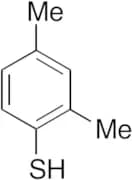
References Miller, M., et al.: Nat. Methods, 6, 439 (2009); Seth, P., et al.: J. Med. Chem., 53, 8309 (2010); Cui, H., et al.: Eur. J. Med. Chem., 45, 5140 (2010);Formula:C4H4N2OSColor and Shape:NeatMolecular weight:128.1522,4-Thioxylenol
CAS:Controlled ProductApplications 2,4-Thioxylenol is a building block that has been used as a reactant for the preparation of Dibenzothiophene derivatives via palladium catalyzed aryl(alkyl)thiolation of unactivated arenes.
Not a dangerous good if item is equal to or less than 1g/ml and there is less than 100g/ml in the package
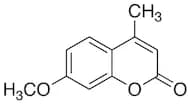
References Saravanan, P., Anbarasan, P.: Org. Lett., 16, 848 (2014)Formula:C8H10SColor and Shape:NeatMolecular weight:138.237-Methoxy-4-methylcoumarin
CAS:Applications 7-Methoxy-4-methylcoumarin (cas# 2555-28-4) is a compound useful in organic synthesis.
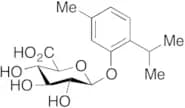
Formula:C11H10O3Color and Shape:NeatMolecular weight:190.2Thymol O-(β)-D-Glucuronide
CAS:Applications Thymol O-β-D-Glucuronide is a glucuronide derivative of Thymol (T413000); an antimicrobial compound which can increase the efficacy of antibiotics involving drug resistant bacteria. It inhibits growth and lactate production as well as reduces cellular glucose uptake within the bacteria.
References Palaniappan, K. et al.: Int. J. Food Microbiol., 140, 164 (2010); Evans, J. et al.: Curr. Microbiol., 41, 336 (2000)Formula:C16H22O7Color and Shape:NeatMolecular weight:326.34(4-Vinylphenyl)methanol (~0.1% TBC stabilizer)
CAS:Controlled ProductApplications (4-Vinylphenyl)methanol (cas# 1074-61-9) is a useful research chemical.
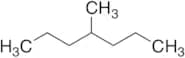
Formula:C9H10OColor and Shape:NeatMolecular weight:134.184-Methylheptane
CAS:Controlled ProductApplications 4-Methylheptane (cas# 589-53-7) is a useful research chemical.
Formula:C8H18Color and Shape:NeatMolecular weight:114.238-Methylquinoline
CAS:Applications 8-Methylquinoline is used in QSAR treatment of mutagenicity and cytotoxicity of quinolines.
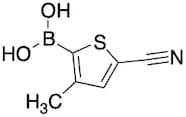
References Smith, C. J., et al.: Mutat. Res., Fund. Mol. Mech. Mut., 379, 167 (1997)Formula:C10H9NColor and Shape:Light Yellow LiquidMolecular weight:143.185(5-Cyano-3-methylthiophen-2-yl)boronic Acid
CAS:Controlled ProductFormula:C6H6BNO2SColor and Shape:NeatMolecular weight:166.993β-Methylamino-L-alanine Dihydrochloride
CAS:Controlled ProductFormula:C4H10N2O2·2(HCl)Color and Shape:NeatMolecular weight:191.052-Hydroxy-2-methyl-3-oxo-butanoic Acid Sodium Salt
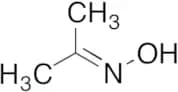
CAS:Controlled ProductFormula:C5H7NaO4Color and Shape:NeatMolecular weight:154.1Acetone Oxime
CAS:Controlled ProductApplications Acetone oxime was one of the reagents used as a part of preparation of arylbenzoxazoles as potent and selective estrogen receptor-β ligands.
Not a dangerous good if item is equal to or less than 1g/ml and there is less than 100g/ml in the package
References Malamas, M., et al.: J. Med. Chem., 47, 5021 (2004)Formula:C3H7NOColor and Shape:NeatMolecular weight:73.1


![2-[(1-Hydroxy-2-oxo-2-phenylethyl)sulfanyl]acetic Acid](/_next/image/?url=https%3A%2Fstatic.cymitquimica.com%2Fproducts%2FTR%2Fthumb-webp%2FH956065.webp&w=3840&q=75)