Building Blocks
Subcategories of "Building Blocks"
- Boronic Acids & Boronic Acid Derivatives(5,780 products)
- Chiral Building Blocks(1,241 products)
- Hydrocarbon Building Blocks(6,100 products)
- Organic Building Blocks(61,029 products)
Found 205306 products of "Building Blocks"
1-Naphthol dihydrogen phosphate monosodium monohydrate
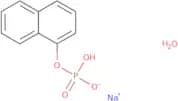
CAS:1-Naphthol dihydrogen phosphate monosodium salt monohydrate is an organic compound that is a useful scaffold for the synthesis of other organic compounds. It is also used as a reagent and building block in organic synthesis. 1-Naphthol dihydrogen phosphate monosodium salt monohydrate has CAS No. 81012-89-7 and can be used as a reaction component, intermediate, or building block in the synthesis of complex compounds. This compound is soluble in water, ethanol, ethers, benzene, chloroform, and acetone. The purity level of 1-naphthol dihydrogen phosphate monosodium salt monohydrate ranges from 99% to 100%.Formula:C10H9O4P•Na•H2OPurity:Min. 98%Color and Shape:PowderMolecular weight:265.16 g/molMethyl 4-(N-methylamino)benzoate
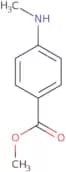
CAS:Methyl 4-(N-methylamino)benzoate is a substance that inhibits the enzyme DPP-4, which is involved in blood glucose regulation. It has been shown to be effective against certain types of cancer and impurities that may be present in the drug. Methyl 4-(N-methylamino)benzoate is an acidic compound with molecular descriptors that include acidic and amines. This compound also has genotoxic impurities, such as benzofurans, which may affect its efficacy.Formula:C9H11NO2Purity:90%Color and Shape:PowderMolecular weight:165.19 g/mol4-Methoxy-3-methylphenylacetone
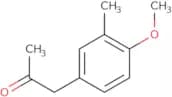
CAS:4-Methoxy-3-methylphenylacetone is an organic chemical that is used as a reaction component, reagent, and useful scaffold. It is a high quality research chemical that can be used as an intermediate in the synthesis of other compounds. 4-Methoxy-3-methylphenylacetone has a CAS number of 16882-23-8 and can be found under the category of speciality chemicals. This compound is versatile and can be used to make complex compounds.Formula:C11H14O2Purity:Min. 95%Color and Shape:Yellow PowderMolecular weight:178.23 g/mol2,3-Methylenedioxycinnamic acid
CAS:2,3-Methylenedioxycinnamic acid is a synthetic, isomeric compound. It has been postulated that this compound could be a topoisomerase poison and that it mediates the alkenylation of protoberberine alkaloids. The physicochemical properties of 2,3-methylenedioxycinnamic acid have not been determined.Formula:C10H8O4Purity:Min. 95%Color and Shape:PowderMolecular weight:192.17 g/mol4-Methoxycinnamic acid methyl ester
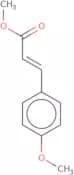
CAS:4-Methoxycinnamic acid methyl ester is an organic compound that has potential use as a reaction modifier. The C8-C9 alkene, which is a common structural motif in fatty acids and cinnamic acid derivatives, can be efficiently produced through the use of this chemical. This organic acid is also used to modify the reactivity of other molecules by changing their steric or electronic properties. It has been shown to increase the diameter of filamentous fungi and to have a significant effect on the selectivity for reactions involving alkene substrates.Formula:C11H12O3Purity:Min. 95%Color and Shape:PowderMolecular weight:192.21 g/molMethyl 4-hydroxy-2-methylbenzoate
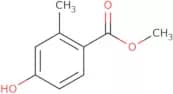
CAS:Methyl 4-hydroxy-2-methylbenzoate is a chromophore. It has demonstrated antioxidant and anti-oxidative properties in a number of assays, including 3-ethylbenzothiazoline-6-sulfonic acid (EBT) assay, naphthalene oxidation assay, and electrocyclic test. Methyl 4-hydroxy-2-methylbenzoate has been shown to be bioactive with respect to steroids and lignans. This compound has also been used as a tyrosinase inhibitor in neocarzinostatin (NCS) synthesis. Methyl 4-hydroxy-2-methylbenzoate is found in the extract of the leaves of Ligustrum lucidum.Formula:C9H10O3Purity:Min. 95%Color and Shape:White PowderMolecular weight:166.17 g/mol2-Methoxybenzophenone
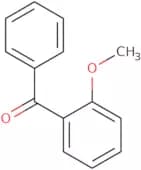
CAS:2-Methoxybenzophenone is an organic chemical compound that is a benzoylating agent. It is used as a solid catalyst in the benzoic anhydride synthesis from 2-methoxybenzene and acetic acid. 2-Methoxybenzophenone reacts with chloride to form benzoic acid, which can be converted to other compounds with different functional groups. 2-Methoxybenzophenone also acts as an antioxidant and can inhibit acetylation reactions. The reaction time for this process varies depending on the nature of the carbonyl group present in the reactant.Formula:C14H12O2Purity:Min. 98.0 Area-%Color and Shape:White PowderMolecular weight:212.24 g/mol6-Oxa-1-azaspiro[3.5]nonane hydrochloride
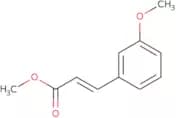
CAS:6-Oxa-1-azaspiro[3.5]nonane hydrochloride is a fine chemical that can be used as a versatile building block, useful intermediate, and a reaction component in research and development. It has been shown to have high quality and is a reagent that can be used in the synthesis of complex compounds. CAS No. 1956324-37-0.Formula:C7H14ClNOPurity:Min. 95%Color and Shape:PowderMolecular weight:163.64 g/mol3-Methoxycinnamic acid methyl ester
CAS:3-Methoxycinnamic acid methyl ester is a high quality, versatile building block for the synthesis of complex compounds. It is an intermediate in the synthesis of reagents and fine chemicals. 3-Methoxycinnamic acid methyl ester has been used in research as a scaffold to create new chemical entities. This compound has been used as a reaction component in multistep syntheses and as a precursor to speciality chemicals.
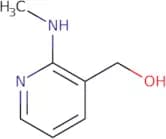
Formula:C11H12O3Purity:Min. 95%Color and Shape:Colorless PowderMolecular weight:192.21 g/mol2-(Methylamino)pyridine-3-methanol
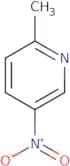
CAS:2-(Methylamino)pyridine-3-methanol is an industrial chemical that is used as a solvent and in the production of potassium sulfate. It has a high boiling point, which makes it a good choice for large-scale industrial processes. 2-(Methylamino)pyridine-3-methanol is also an organic solvent, which can be used to dissolve many other molecules. This product can be used as a conditioner or tertiary butylating agent in the production of organic compounds. Its product yield is high, with only 10 grams needed to produce 1 kilogram.Formula:C7H10N2OPurity:Min. 95%Color and Shape:Off-White PowderMolecular weight:138.17 g/mol2-Methyl-5-nitropyridine
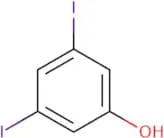
CAS:2-Methyl-5-nitropyridine is an enamine that can be synthesized by the reaction of a primary amine with nitrous acid. It has been shown to react with hydrazines to form 2-methyl-5-nitropyridinium hydrazones, which are useful in organic synthesis. The reaction of 2-methyl-5-nitropyridine with acid anhydrides yields protonated carboxylic acids, which can be used as nucleophiles in the presence of metal ions. This amino acid also forms aliphatic amines and anions and reacts with aldehydes to form nitroalkenes.Formula:C6H6N2O2Purity:Min. 95%Color and Shape:Beige PowderMolecular weight:138.12 g/mol3,5-Diiodophenol
CAS:Versatile small molecule scaffold
Formula:C6H4I2OPurity:Min. 95%Molecular weight:345.9 g/mol6-Mercapto-1-hexanol
CAS:6-Mercapto-1-hexanol is a redox active molecule that has been shown to be a potent inhibitor of human immunodeficiency virus type 1 reverse transcriptase. It has also been shown to inhibit the polymerase chain reaction and transfer reactions, including those mediated by DNA-dependent RNA polymerase. 6-Mercapto-1-hexanol can be detected with high sensitivity in human serum, which is its main application for the diagnosis of HIV infection. This compound reacts with molecular oxygen to form superoxide radicals, which are responsible for its redox potential. The rate constant for this reaction has been shown to be dependent on pH and temperature. 6-Mercapto-1-hexanol can also form stable complexes with proteins such as albumin or human immunoglobulin G (IgG). These complexes have been shown to exhibit electrochemical impedance spectroscopy activity at low concentrations and chemical stability in biological media.Formula:C6H14OSPurity:Min. 96%Color and Shape:Clear LiquidMolecular weight:134.24 g/mol6-Methyl-1H-indole-2,3-dione
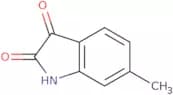
CAS:6-Methyl-1H-indole-2,3-dione is a synthetic molecule that has an amide orientation. The molecule is a crystalline solid and can be found in the form of a white powder. This product also contains impurities such as amino acids, transport molecules, and formic acid. 6-Methyl-1H-indole-2,3-dione is soluble in solvents like formic acid and water. It has been shown to have transport properties for electrons and aldehydes.Formula:C9H7NO2Purity:Min. 95%Color and Shape:PowderMolecular weight:161.16 g/mol6-Methylpyridine-2-carboxylic acid
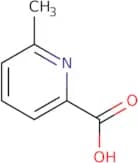
CAS:6-Methylpyridine-2-carboxylic acid is a human metabolite that can be found in the serum matrix. It is part of a ternary complex formation with picolinic acid and fatty acid, which may result in an intramolecular hydrogen transfer from the methyl group to the oxygen atom of the carboxylic acid group. 6-Methylpyridine-2-carboxylic acid has been shown to react with hydroxyl groups to form n-oxides and redox potentials. These reactions are catalyzed by detergents.
Formula:C7H7NO2Purity:Min. 97 Area-%Color and Shape:PowderMolecular weight:137.14 g/molMethyl 4-acetylbenzoate
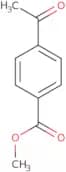
CAS:Methyl 4-acetylbenzoate is a synthetic compound that can be used for the synthesis of imatinib and other pharmaceuticals. It is an effective method for the synthesis of butyric acid with high enantiomeric purity. The cross-coupling reaction was first reported by Suzuki in 1979, which has been widely applied to organic synthesis because it is efficient and produces simple byproducts. This reaction has also been used in the synthesis of model compounds and natural products, as well as in environmental pollution studies.Formula:C10H10O3Purity:Min. 95%Color and Shape:PowderMolecular weight:178.18 g/mol2-Mercapto-5-benzimidazole sulfonic acid sodium salt dihydrate
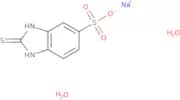
CAS:2-Mercapto-5-benzimidazole sulfonic acid sodium salt dihydrate is a molecule that can be used in devices. It has been shown to reversibly change the morphology of a monolayer and to generate asymmetric structures. 2-Mercapto-5-benzimidazole sulfonic acid sodium salt dihydrate can be used to generate fluorescent emulsions, which are systems where the magnetic particles are suspended in an oil droplet and illuminated by light of an appropriate wavelength. The molecules that make up 2-Mercapto-5-benzimidazole sulfonic acid sodium salt dihydrate have been shown to function as acceptors for molecular orbitals, which are wave functions that describe electron distribution around the atomic nucleus. These properties make it a promising candidate for use in microscopy techniques, such as scanning tunneling microscopy (STM) or atomic force microscopy (AFM).Formula:C7H5N2NaO3S2·2H2OPurity:Min. 95%Color and Shape:PowderMolecular weight:288.28 g/mol3-Methoxyacetophenone
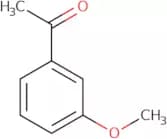
CAS:3-Methoxyacetophenone is a bacterial metabolite that is produced by the metabolism of caproic acid. 3-Methoxyacetophenone has been shown to possess antibacterial activity against gram-positive bacteria and to inhibit protein synthesis in these bacteria. The compound class of 3-methoxyacetophenone includes methyl ketones, which are a type of organic compounds containing a carbonyl group (C=O). This compound can be found in bacterial strains such as Pseudomonas aeruginosa and Streptococcus pneumoniae. These bacteria produce 3-methoxyacetophenone during growth on l-tartaric acid or hydrogen tartrate as the sole carbon sources. The organism’s DNA sequences have been determined by deuterium isotope sequencing and l-tartaric acid as the sole carbon source.
Formula:C9H10O2Purity:Min. 95%Color and Shape:Colorless Clear LiquidMolecular weight:150.17 g/mol4-(3-Pyridyl)aniline
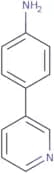
CAS:4-(3-Pyridyl)aniline is a chemical compound that belongs to the group of inhibitors. It is structurally related to the pyridine and aniline rings. 4-(3-Pyridyl)aniline has been shown to inhibit protein kinases, such as casein kinase II and glycogen synthase kinase 3β, in the presence of ATP. The crystallography studies have shown that 4-(3-pyridyl)aniline binds tightly to the ATP binding site of these enzymes by occupying the same position as ATP and forming hydrogen bonds with residues at this site. Structural analysis has also demonstrated that 4-(3-pyridyl)aniline binds to other sites on these enzymes, including the ATP phosphate binding site, which may account for its inhibitory activity against both type 1 and type 2 protein kinases.Formula:C11H10N2Purity:Min. 95%Molecular weight:170.22 g/mol2-Methyl-1,3-propanediol
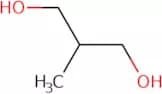
CAS:2-Methyl-1,3-propanediol is a glycol ether that is used in sample preparation for chemical analysis. It is an antimicrobial agent that has been shown to be active against bacteria such as Escherichia coli and Staphylococcus aureus. 2-Methyl-1,3-propanediol has also been shown to have the ability to inhibit the growth of epidermal cells. This chemical has been shown to be effective in treating skin lesions caused by dermatophytes, fungi and bacterial infections. 2-Methyl-1,3-propanediol inhibits the synthesis of glycol esters, fatty acids and epidermal growth factor through competition with hydroxyl groups on cell membranes. It also chelates metal ions such as Cu2+, Zn2+, Cd2+ and Pb2+.Formula:C4H10O2Purity:Min. 95%Color and Shape:Colorless PowderMolecular weight:90.12 g/mol


![6-Oxa-1-azaspiro[3.5]nonane hydrochloride](/_next/image/?url=https%3A%2Fstatic.cymitquimica.com%2Fproducts%2F3D%2Fthumb-webp%2FGDD32437.webp&w=3840&q=75)