Building Blocks
Subcategories of "Building Blocks"
- Boronic Acids & Boronic Acid Derivatives(5,780 products)
- Chiral Building Blocks(1,241 products)
- Hydrocarbon Building Blocks(6,100 products)
- Organic Building Blocks(61,029 products)
Found 205306 products of "Building Blocks"
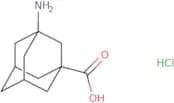
3-Amino-adamantane-1-carboxylic hydrochloride
CAS:3-Amino-adamantane-1-carboxylic hydrochloride is a versatile building block that can be used as a research chemical, reagent, speciality chemical, and useful scaffold in the synthesis of various complex compounds. It is a high quality intermediate and reaction component that can be used in the synthesis of fine chemicals. 3-Amino-adamantane-1-carboxylic hydrochloride has a variety of uses due to its versatility and can be used in the production of pharmaceuticals, agrochemicals, dyes, plastics, perfumes, pesticides, herbicides, explosives, and more.
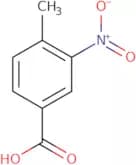
Formula:C11H17NO2•HClPurity:Min. 95%Color and Shape:PowderMolecular weight:231.72 g/mol4-Methyl-3-nitrobenzoic acid
CAS:4-Methyl-3-nitrobenzoic acid is a hydroxide solution that has been shown to be cytotoxic to malignant melanoma cells in vitro. 4-Methyl-3-nitrobenzoic acid also inhibits the growth of normal cells by blocking epidermal growth factor receptor signaling. This molecule is converted to hippuric acid, which may have an anti-cancer effect by inhibiting metal ion uptake and causing DNA damage. There are no known adverse effects or interactions with other drugs.Formula:C8H7NO4Purity:Min. 95%Color and Shape:PowderMolecular weight:181.15 g/mol3-Formyl-4-hydroxybenzoic acid
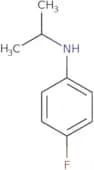
CAS:3-Formyl-4-hydroxybenzoic acid is a synthetic compound with anticancer activity. It is an azobenzene that has been shown to have photocatalytic activity. 3-Formyl-4-hydroxybenzoic acid has a carboxylate functional group and the ethyl ester functional group. The anticancer activity of this compound may be due to hydrogen bonding interactions, as well as its ability to cause DNA damage in cells by photolysis and its antiviral potency.Formula:C8H6O4Purity:90%Color and Shape:White PowderMolecular weight:166.13 g/mol4-Fluoro-N-isopropylaniline
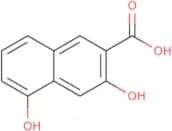
CAS:4-Fluoro-N-isopropylaniline is an organic compound that is a nitroarene with the chemical formula C6H5FNO2. It is soluble in organic solvents and reacts with halogens, alkoxy groups, or polysubstituted alkyl groups to form substituted or polysubstituted alkyl radicals. 4-Fluoro-N-isopropylaniline can be used as a catalyst for many reactions including those involving alkoxycarbonyl groups. This compound is also used as a reagent in the synthesis of other compounds such as 4-fluoroaniline, which can be used to synthesize dyes and pharmaceuticals.Formula:C9H12FNPurity:Min. 95%Color and Shape:Yellow PowderMolecular weight:153.2 g/mol3,5-Dihydroxy-2-naphthoic acid
CAS:3,5-Dihydroxy-2-naphthoic acid (DHNA) is an organic compound with a red shift in the optical spectrum. DHNA is a regulatory domain found in functional groups, such as salicylic acid. It has been shown to inhibit bacterial growth and gram-negative organisms, including Escherichia coli and Pseudomonas aeruginosa. DHNA is also a potent inducer of triticum aestivum lysine carboxypeptidase A and B, which are proteases that function in protein digestion. This property may be due to its ability to bind to receptor subtypes of the epidermal growth factor type 2 receptor family.Formula:C11H8O4Purity:Min. 95%Color and Shape:White PowderMolecular weight:204.18 g/mol2-Amino-4,6-dimethoxybenzoic acid
CAS:2-Amino-4,6-dimethoxybenzoic acid is an organic chemical compound that can be used as a building block for the synthesis of other compounds. 2-Amino-4,6-dimethoxybenzoic acid has a number of uses including being a reagent in organic and inorganic reactions, such as the synthesis of dyes, pharmaceuticals, and pesticides. It is also used as a building block for complex compounds that are difficult to make. This chemical has been classified by the Chemical Abstract Services (CAS) registry with CAS number 21577-57-1.
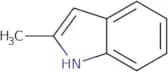
Formula:C9H11NO4Purity:Min. 95%Color and Shape:Yellow SolidMolecular weight:197.19 g/mol2-Methylindole
CAS:2-Methylindole is a reactive molecule that can undergo electrophilic substitution at the 2-position. It reacts with a variety of nitrogen nucleophiles, acylating them at the 2-position. These reactions are catalyzed by enzymes such as carbonyl reductase and methyl ketone reductase. The reaction mechanism is not yet fully understood, but it has been proposed that it proceeds through an acylation reaction between two molecules of 2-methylindole to form a linear product. The regiospecificity of this reaction has been demonstrated in vivo using a model system.Formula:C9H9NColor and Shape:PowderMolecular weight:131.17 g/molN-Acetyl-L-alanine 4-nitroanilide
CAS:N-Acetyl-L-alanine 4-nitroanilide is a drug that belongs to the class of drugs called anticholinergics. It is used to treat various symptoms, such as asthma and other respiratory disorders, chronic obstructive pulmonary disease, emphysema, bronchitis, and other lung diseases. N-Acetyl-L-alanine 4-nitroanilide has been shown to have clinical relevance in the treatment of autoimmune diseases such as rheumatoid arthritis and systemic lupus erythematosus. The drug can also be used to treat clinical studies involving intubation. Drug interactions are possible with cardiac medications and antihistamines. It should not be taken by people who have a body mass index over 30 or those who have a history of cardiac problems or heart disease. The drug also interacts with heparin and nitrates, which can lead to an increased risk of irregular heartbeat or chest pain.
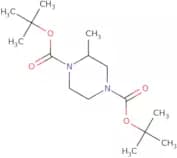
Formula:C11H13N3O4Purity:Min. 95%Color and Shape:Off-White PowderMolecular weight:251.24 g/mol1,4-Di-tert-butyl 2-methylpiperazine-1,4-dicarboxylate
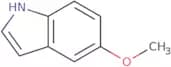
CAS:Versatile small molecule scaffoldFormula:C15H28N2O4Purity:Min. 95%Color and Shape:PowderMolecular weight:300.39 g/mol5-Methoxyindole
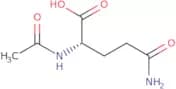
CAS:5-Methoxyindole is a chemical compound that is soluble in water. It has been shown to inhibit tumor growth and induce apoptosis, as well as inhibit the expression of glycogen synthase kinase-3. The structure of 5-methoxyindole was determined by NMR spectroscopy and FT-IR spectroscopy. The compound has been observed to exhibit fluorescence properties at a wavelength of 490 nm when it is excited with UV light. A copper complex of 5-methoxyindole was studied using molecular modeling and FT-IR spectroscopy, which revealed that it can undergo nucleophilic attack by hydrogen bond formation or an acid/base reaction to form a new hydrogen bond. This study also found that 5-methoxyindole is able to form hydrogen bonds with its neighboring molecules, which may contribute to its high solubility in water.Formula:C9H9NOColor and Shape:PowderMolecular weight:147.17 g/molN-Acetyl-L-glutamine
CAS:N-Acetylglutamine is an amino acid that is not synthesized by the human body and must be obtained through diet. It is a precursor to glutamate, which is an important neurotransmitter in the brain. N-Acetyl-L-glutamine has been shown to have neuroprotective effects against various metabolic disorders including diabetes, bowel disease, and microdialysis probes. The effect of N-acetyl-L-glutamine on neuronal death can be observed using a reaction solution containing sodium citrate and glucose injection. N-acetylglutamine has been shown to increase the activity of enzymes such as citrate synthase in this reaction solution.Formula:C7H12N2O4Purity:Min. 95%Color and Shape:White PowderMolecular weight:188.18 g/mol4-Aminoindole hydrochloride
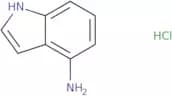
CAS:4-Aminoindole hydrochloride is a white crystalline solid that can be used as a versatile building block in organic synthesis. It is also used as an intermediate in the production of various pharmaceuticals and other chemical compounds. 4-Aminoindole hydrochloride is soluble in most polar solvents, but insoluble in ethers and oils. This compound is also a useful reagent for the conversion of nitrobenzenes to aminobenzoic acids. CAS Number 174854-93-4
Formula:C8H9ClN2Purity:Min. 95%Color and Shape:PowderMolecular weight:168.62 g/molFuran-2-sulfonamide
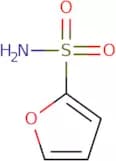
CAS:Furan-2-sulfonamide is a quinoline derivative that prevents HIV from entering the host cell. It inhibits the activation of toll-like receptor (TLR) by blocking the binding of TLR ligands to their receptors. Furan-2-sulfonamide has been shown to be effective in reducing inflammation in inflammatory bowel disease, inflammatory diseases, and pancreatitis. Furan-2-sulfonamide may also have anti-cancer effects by inhibiting the growth of cancer cells and inducing apoptosis. Furan-2-sulfonamide can be used as a part of pharmaceutical preparations for treating symptoms such as pain, nausea, vomiting, or diarrhea. This drug also inhibits matrix metalloproteinases (MMP), which are enzymes that break down collagen in the body. The inhibition of MMP leads to decreased breakdown of skin or bladder tissue and increased healing time in patients with these conditions.Formula:C4H5NO3SPurity:Min. 95%Color and Shape:PowderMolecular weight:147.15 g/mol(2E)-3-(1,3-Oxazol-2-yl)prop-2-enoic acid
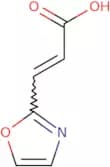
CAS:1,3-Oxazole is an organic compound that belongs to the class of 1,3-diketones. It is a versatile building block that can be used in many different reactions. 1,3-Oxazole has been shown to be a reagent for use in research and as a speciality chemical. It has also been shown to be a useful intermediate for the synthesis of complex compounds. The compound is also a useful scaffold for developing high quality drug candidates with potential applications in medicine or other fields.
Formula:C6H5NO3Purity:Min. 95%Molecular weight:139.11 g/mol5,6-Difluoro-1H-indole-3-carboxylic acid
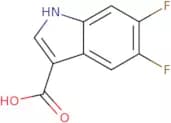
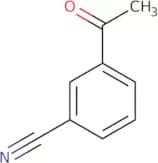
CAS:Versatile small molecule scaffoldFormula:C9H5F2NO2Purity:Min. 95%Color and Shape:PowderMolecular weight:197.14 g/mol3-Acetylbenzonitrile
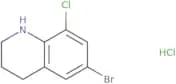
CAS:3-Acetylbenzonitrile is an isomeric, asymmetric synthesis that has been synthesised in the presence of copper complex and salicylic acid. The reaction was carried out with a gaseous phase, where the chalcone was formed. The experimental techniques used were cross-coupling reactions and molecular modeling techniques. 3-Acetylbenzonitrile has been synthesised by a rationalized enthalpic approach that includes alcohol dehydrogenases and molecular modeling techniques.Formula:C9H7NOPurity:Min. 95%Color and Shape:PowderMolecular weight:145.16 g/mol6-Bromo-8-chloro-1,2,3,4-tetrahydroquinoline hydrochloride
CAS:Versatile small molecule scaffoldFormula:C9H10BrCl2NPurity:Min. 95%Color and Shape:PowderMolecular weight:282.99 g/mol4-Acetylbenzoic acid
CAS:4-Acetylbenzoic acid is a reactive functional group that is used to synthesize esters and amides. It has been shown to have anticancer activity in vitro, which may be due to the disruption of basic cellular proteins involved in DNA replication. 4-Acetylbenzoic acid is soluble in neutral pH and reacts with nucleophiles such as hydroxide ions or alcohols, forming alcohols or acetates respectively. The reaction mechanism for this compound is nucleophilic attack on the carbonyl carbon, followed by loss of water from the leaving group. Significant cytotoxicity has been observed in vitro at concentrations of 2mM and higher. This effect was particularly pronounced for cells exposed to radiation or treated with 4-acetylbenzoic acid before being exposed to radiation.
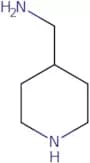
Formula:C9H8O3Purity:Min. 95%Color and Shape:White PowderMolecular weight:164.16 g/mol4-(Aminomethyl)piperidine
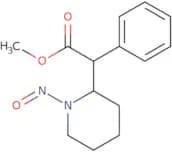
CAS:Inhibitor of CD4+ - GP120 binding during HIV infectionFormula:C6H14N2Purity:Min. 98 Area-%Color and Shape:PowderMolecular weight:114.19 g/molNitrosophenidylate
CAS:Versatile small molecule scaffoldFormula:C14H18N2O3Purity:95%MinColor and Shape:PowderMolecular weight:262.3 g/mol