Building Blocks
Subcategories of "Building Blocks"
- Boronic Acids & Boronic Acid Derivatives(5,781 products)
- Chiral Building Blocks(1,242 products)
- Hydrocarbon Building Blocks(6,101 products)
- Organic Building Blocks(61,033 products)
Found 205320 products of "Building Blocks"
2,3-Butanedione monoxime
CAS:2,3-Butanedione monoxime (BDM) is a metabolite of the glycol ether, 2,3-butanedione. It has been shown to have a beneficial effect on metabolic disorders in rats by modulating several enzyme activities. The optimum concentration of BDM is 2 mmol/L. This compound has also been shown to inhibit the oxidation of xanthine oxidase and the formation of hydroxyl radicals in vitro. BDM has also been found to have synchronous fluorescence with papillary muscles from guinea pigs and cytosolic ca2+ levels in rat liver cells. The structure analysis revealed that BDM binds to the active site of the x-ray crystal structures for mitochondrial cytochrome C oxidase and cardiac ATP synthase with an affinity similar to that of CoQ10. The Langmuir adsorption isotherm for BDM was calculated as 0.913 +/- 0.034 cm/g at 20 degrees Celsius,
Formula:C4H7O2NPurity:(%) Min. 99%Color and Shape:White PowderMolecular weight:101.1 g/mol2-Amino-6-chloro-3-nitropyridine
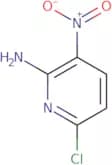
CAS:2-Amino-6-chloro-3-nitropyridine is a cytotoxic drug that has been shown to have anti-viral potency, as well as antiviral activity in an activity test. It is synthesized by reacting hydrogen tartrate with oxadiazole, and then hydrolyzing the resulting product with chloride. 2-Amino-6-chloro-3-nitropyridine has also been shown to inhibit human immunodeficiency virus type 1 (HIV) replication in vitro and to be effective against other viruses such as type 2 influenza. This drug can bind to the viral envelope and inhibit fusion of the viral membrane with host cells by preventing the release of viral contents into the cytoplasm. The binding affinity of 2-amino 6-chloro 3 nitropyridine for chloride may be due to hydrogen bonding interactions. 2AMINO 6 CHLORO 3 NITROPYRIDINE CANPurity:Min. 95%Color and Shape:PowderMolecular weight:173.56 g/mol3-Aminobenzonitrile
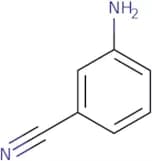
CAS:3-Aminobenzonitrile is an amine that has been shown to inhibit the growth of bacteria. It was synthesized by the reaction of nitrobenzene with benzamide in the presence of acetic acid. The chemical structure of 3-aminobenzonitrile is similar to that of a group of natural amino acids, including cysteine and tryptophan, which are known inhibitors of bacterial growth. This compound is soluble in organic solvents and can be used as an injection solution. 3-Aminobenzonitrile has been evaluated by kinetic studies and found to have a high affinity for bacterial cells, with an inhibition constant (Ki) value of 0.37 mM. It is also active against other microorganisms such as yeast or mold fungi, but not against plant or animal cells. 3-Aminobenzonitrile inhibits the synthesis of proteins by binding to a number of different sites on the ribosomes where
Purity:Min. 95%Color and Shape:Yellow PowderMolecular weight:118.14 g/mol2,6-Dichloropyridine-1-oxide
CAS:2,6-Dichloropyridine-1-oxide is a reactive compound that has been synthesized by the reaction of ethyl diazoacetate and trifluoroacetic acid. The synthesis is scalable and can be immobilized in a ruthenium complex. The reactivity of this compound has been studied in kinetic experiments and molecular modeling simulations. 2,6-Dichloropyridine-1-oxide can form an epoxide with ethyl diazoacetate, which is used as the control experiment.Formula:C5H3Cl2NOPurity:Min. 95%Color and Shape:White PowderMolecular weight:163.99 g/mol2-Aminoethyl Acetate Hydrochloride
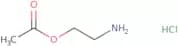
CAS:Versatile small molecule scaffoldFormula:C4H9NO2·HClPurity:Min. 95%Color and Shape:PowderMolecular weight:139.58 g/moltert-Butyl isocyanoacetate
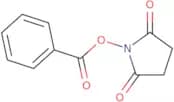
CAS:tert-Butyl isocyanoacetate is an organic compound that belongs to the diacid class of organic compounds. It reacts with water to produce the amide and squaramide. Tert-butyl isocyanoacetate has a high affinity for nitrogen atoms, and can be used in uv absorption spectroscopy. It also has a stepwise mechanism and can react with other chemicals to produce new substances. The compound has fluorescence properties and is used in optical devices such as lasers. Tert-butyl isocyanoacetate also has an ester hydrochloride form which is low potency but active methylene catalysed.Formula:C7H11NO2Purity:Min. 95%Color and Shape:Brown Clear LiquidMolecular weight:141.17 g/molBenzoic acid N-hydroxysuccinimide ester
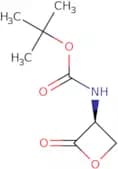
CAS:Benzoic acid N-hydroxysuccinimide ester is a chemical compound that is used for the diagnosis of cancer. It is used as a reagent in chromatographic methods and as a sample preparation agent in amine extraction techniques. The benzoate group reacts with amines to form an aminobenzoate ester, which can be detected by ionization techniques. This reaction mechanism has been studied extensively with spinorphin and epidermal growth factor.Formula:C11H9NO4Purity:Min. 95%Color and Shape:White PowderMolecular weight:219.19 g/molBoc-L-serine-b-lactone
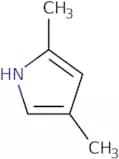
CAS:Boc-L-serine-b-lactone is a chemical compound that can be used as a reagent and reaction component. It can also be used to produce other compounds, such as pharmaceuticals, pesticides, or coatings. Boc-L-serine-b-lactone can be produced in high quality through our advanced manufacturing processes. This chemical is useful for research purposes and has many applications in the production of speciality chemicals. Boc-L-serine-b-lactone is a versatile building block that can also be used as an intermediate or building block to create complex compounds. This chemical is fine and should only be handled by professionals with experience in handling chemicals.Formula:C8H13NO4Purity:Min. 95%Color and Shape:White PowderMolecular weight:187.19 g/mol2,4-Dimethylpyrrole
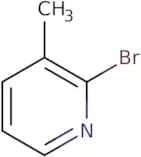
CAS:2,4-dimethylpyrrole (DMP) is a N-heterocycle with two methyl groups. It is used as a dopant in jet fuels to promote oxidative degradation and is converted into a reactive fuel (Kabana, 2011). To a lesser extent, 2,4-dimethylpyrrole has shown antifungal properties and has been used as an active agent against pathogens causing head blight and root rot in some cereals (Sefer, 2017).Formula:C6H9NPurity:Min. 96%Color and Shape:Brown Colorless Clear LiquidMolecular weight:95.14 g/mol2-Bromo-3-methylpyridine
CAS:2-Bromo-3-methylpyridine is a diazido compound with a hydrogen bond. It reacts rapidly with copper chloride to form the coordination complex Cu(diazido)(Cl)2 and an organic product. 2-Bromo-3-methylpyridine can be synthesized from 2,4-dibromopyridine by a cross coupling reaction with copper chloride and calcium carbonate in the presence of sodium potassium bicarbonate. The coordination geometry of the molecule is tetrahedral, with two bromine atoms on opposite sides of the central nitrogen atom and one bromine atom on each side of the pyridine ring. Reaction products are formed as a result of substitution reactions involving halides, such as methyl chloride or ethyl chloride, which act as electrophiles to react with the diazido group. Potential mechanisms include metathesis reactions or cryogenic processes.Formula:C6H6BrNPurity:Min. 95%Color and Shape:Colorless Clear LiquidMolecular weight:172.02 g/mol5-Nitroindole
CAS:5-Nitroindole is a nitro functionalized indole. It is a fine chemical that has a wide range of uses in research, industry and education. 5-Nitroindole can be used as a versatile building block for the synthesis of complex compounds and as an intermediate for the production of other chemicals. 5-Nitroindole is soluble in organic solvents and can be used to synthesize other compounds with high purity. This compound is also known as CAS No. 6146-52-7 and is considered to be of high quality.Formula:C8H6N2O2Purity:Min. 99.0 Area-%Molecular weight:162.15 g/molRef: 3D-N-3000
1kgTo inquire100gTo inquire250gTo inquire500gTo inquire2500gTo inquire-Unit-ggTo inquire(Acetyloxy)(furan-2-yl)methyl acetate
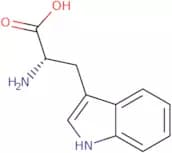
CAS:Acetyloxy(furan-2-yl)methyl acetate is a hydrazone molecule that is used in pharmaceutical preparations. It is synthesized by the condensation of crotonylidene and acetyloxyacetic acid. This compound has shown promising anticancer activity with an activation energy of 8.3 kcal/mol for the formation of the reactive species. Acetyloxy(furan-2-yl)methyl acetate has also been shown to be effective against methicillin resistant Staphylococcus aureus, although it does not have any activity against Gram positive bacteria such as Mycobacterium tuberculosis or Mycobacterium avium complex.Formula:C9H10O5Purity:Min. 95%Color and Shape:PowderMolecular weight:198.17 g/molL-Tryptophan
CAS:L-tryptophan is a non-essential amino acid that is used as a building block in the synthesis of proteins. It has been used in research and as a starting material for the production of other chemicals. L-tryptophan has also been shown to have antidepressant effects, although it is not approved by the FDA for this use. L-tryptophan can be found in protein-rich foods such as meat, eggs, and soybeans.Formula:C11H12N2O2Purity:Min. 98.0 Area-%Molecular weight:204.23 g/molRef: 3D-T-8320
1kgTo inquire100gTo inquire250gTo inquire500gTo inquire2500gTo inquire-Unit-kgkgTo inquire[4-(tert-Butyl)phenyl]methanethiol
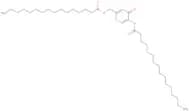
CAS:4-(tert-Butyl)phenyl methanethiol is a reagent that is used as an intermediate in the synthesis of more complex compounds. It has been shown to be a useful building block for the synthesis of a wide range of compounds, including speciality chemicals and research chemicals. This product can be used as a reaction component in the preparation of large quantities of fine chemicals, such as pharmaceuticals and agrochemicals. 4-(tert-Butyl)phenyl methanethiol is also commercially available as a fine chemical or research chemical.Formula:C11H16SPurity:Min. 95%Color and Shape:Clear LiquidMolecular weight:180.31 g/molKojic acid dipalmitate
CAS:Tyrosinase inhibitor; skin whitener
Formula:C38H66O6Purity:(Hplc) Min. 98.5%Color and Shape:White Off-White PowderMolecular weight:618.93 g/mol2-Methyl-3-phenylpyrazine
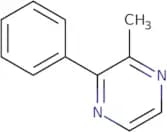
CAS:2-Methyl-3-phenylpyrazine is an organic compound that is a yellow crystalline solid. Its electronic structures are determined by the molecular orbitals, which determine the probability of finding electrons in different regions of space. Excitons are pairs of photons that have been emitted due to the interaction between two molecules, and can be measured with devices such as spectroscopes or photomultipliers. 2-Methyl-3-phenylpyrazine has been used to synthesize carbenes, which are ligands for organometallic compounds. It has also been used in singlet catalysis, where it coordinates with a metal atom to activate another molecule and form a new chemical bond.Formula:C11H10N2Purity:Min. 95%Color and Shape:PowderMolecular weight:170.21 g/molO-Methyl-D-threonine
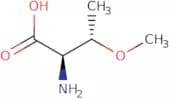
CAS:O-Methyl-D-threonine is an amino acid that is biosynthesized from O-methylserine and D-threonine. It belongs to the class of β-lactam antibiotics and inhibits peptidoglycan synthesis by binding to the catalytic site of the enzyme synthase, which is required for the formation of β-lactam rings in peptidoglycan. The crystal structure of O-methylserine has been determined and analyzed. Mutations in the catalytic tripeptide have been shown to affect its activity, as well as protonation state and carboxylate groups.Formula:C5H11NO3Purity:Min. 98 Area-%Color and Shape:White Off-White PowderMolecular weight:133.15 g/molMethyl 4-hydroxycinnamate
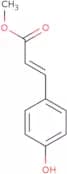
CAS:Methyl 4-hydroxycinnamate is a protocatechuic acid that can be produced by the reaction of hydrochloric acid and b16 mouse melanoma. This chemical has been shown to have an anti-inflammatory effect in rats with inflammatory bowel disease. Methyl 4-hydroxycinnamate is also a natural compound found in plants, such as celery, cinnamon, and apples. The mechanism of this chemical's action is unknown but it has been shown to inhibit the activity of rat liver microsomes. It is theorized that methyl 4-hydroxycinnamate may inhibit the production of proinflammatory substances by altering the membrane composition or activity of enzymes.br>br> br>br> Methyl 4-hydoxycinnamate may be synthesized from anhydrous sodium acetate and an acid complex in a model system using reaction solution. The product is then purified using column chromatography before being reacted with methylamine and sulfurFormula:C10H10O3Purity:Min. 95%Color and Shape:PowderMolecular weight:178.18 g/mol2,3-Dihydrofuro[2,3-b]pyridin-3-amine
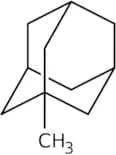
CAS:Versatile small molecule scaffoldFormula:C7H8N2OPurity:Min. 95%Color and Shape:PowderMolecular weight:136.15 g/mol1-Methyl adamantane
CAS:1-Methyl adamantane is a molecule that is used in the chemical industry. It can be synthesized from 1,3-butadiene, which is obtained from petroleum or coal tar. The molecule has been shown to have anti-inflammatory properties and can be used for the treatment of autoimmune diseases, such as multiple sclerosis and rheumatoid arthritis. This compound has also shown potential as a therapeutic agent for inflammatory diseases like Crohn's disease and ulcerative colitis. The mechanism of action of 1-methyl adamantane may be due to its ability to inhibit the production of inflammatory cytokines such as tumor necrosis factor alpha (TNFα), interleukin-1 beta (IL-1β), and IL-6. This inhibition occurs when 1-methyl adamantane binds to the enzyme cyclooxygenase (COX).Formula:C11H18Purity:Min. 95%Color and Shape:White PowderMolecular weight:150.26 g/mol






![[4-(tert-Butyl)phenyl]methanethiol](/_next/image/?url=https%3A%2Fstatic.cymitquimica.com%2Fproducts%2F3D%2Fthumb-webp%2FZBA54363.webp&w=3840&q=75)
![2,3-Dihydrofuro[2,3-b]pyridin-3-amine](/_next/image/?url=https%3A%2Fstatic.cymitquimica.com%2Fproducts%2F3D%2Fthumb-webp%2FVJB06194.webp&w=3840&q=75)