


Building Blocks
This section contains fundamental products for the synthesis of organic and biological compounds. Building blocks are the essential starting materials used to construct complex molecules through various chemical reactions. They play a critical role in drug discovery, material science, and chemical research. At CymitQuimica, we offer a diverse range of high-quality building blocks to support your innovative research and industrial projects, ensuring you have the essential components for successful synthesis.
Subcategories of "Building Blocks"
- Boronic Acids & Boronic Acid Derivatives(5,778 products)
- Chiral Building Blocks(1,242 products)
- Hydrocarbon Building Blocks(6,098 products)
- Organic Building Blocks(61,084 products)
Found 198714 products of "Building Blocks"
Sort by
Purity (%)
0
100
|
0
|
50
|
90
|
95
|
100
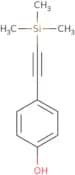
4-((Trimethylsilyl)ethynyl)phenol
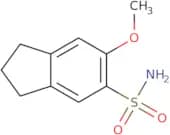
CAS:<p>4-((Trimethylsilyl)ethynyl)phenol is an analog of 4-hydroxytamoxifen, which is a synthetic estrogen. 4-((Trimethylsilyl)ethynyl)phenol has been shown to be a potent, selective, and irreversible antagonist of estradiol at the ERβ receptor. It has also been shown to have anti-inflammatory activities. The compound is soluble in organic solvents.</p>Formula:C11H14OSiPurity:Min. 95%Molecular weight:190.32 g/mol6-Methoxy-2,3-dihydro-1H-indene-5-sulfonamide
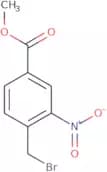
CAS:Versatile small molecule scaffoldFormula:C10H13NO3SPurity:Min. 95%Molecular weight:227.3 g/molMethyl 4-(bromomethyl)-3-nitrobenzoate
CAS:<p>Methyl 4-(bromomethyl)-3-nitrobenzoate is a nitro compound that has been found to have anti-leishmanial activity. It inhibits the growth of Leishmania spp. and reverses the resistance to estradiol in Leishmania donovani, leading to a decrease in parasite load and an increase in survival time. Methyl 4-(bromomethyl)-3-nitrobenzoate is synthesized by coupling activated methyl 3-nitrobenzoate with bromoacetic acid. The nitro group can be photolabile and easily cleaved by ultraviolet light, which makes this drug suitable for use as a photosensitizer for photodynamic therapy (PDT). This drug has been shown to be effective against human cells in vitro, but not against mouse or rat cells.</p>Formula:C9H8BrNO4Purity:Min. 95%Molecular weight:274.07 g/molButyl(3-chloropropyl)amine hydrochloride
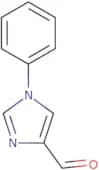
CAS:<p>Versatile small molecule scaffold</p>Formula:C7H17Cl2NPurity:Min. 95%Molecular weight:186.12 g/mol1-Phenyl-1H-imidazole-4-carbaldehyde
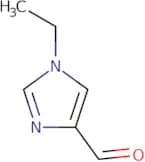
CAS:Versatile small molecule scaffoldFormula:C10H8N2OPurity:Min. 95%Molecular weight:172.18 g/mol1-Ethyl-1H-imidazole-4-carbaldehyde
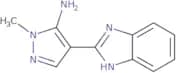
CAS:<p>Versatile small molecule scaffold</p>Formula:C6H8N2OPurity:Min. 95%Molecular weight:124.14 g/mol4-(1H-1,3-Benzodiazol-2-yl)-1-methyl-1H-pyrazol-5-amine
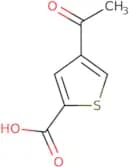
CAS:Versatile small molecule scaffoldFormula:C11H11N5Purity:Min. 95%Molecular weight:213.24 g/mol4-Acetylthiophene-2-carboxylic acid
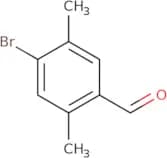
CAS:<p>Versatile small molecule scaffold</p>Formula:C7H6O3SPurity:Min. 95%Molecular weight:170.19 g/mol4-Bromo-2,5-dimethylbenzaldehyde
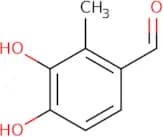
CAS:<p>4-Bromo-2,5-dimethylbenzaldehyde is a chiral compound with photoelectrochemical properties. It has been shown to be an efficient sensitizer for introducing fluorophores into organic materials, such as polymers and plastics. 4-Bromo-2,5-dimethylbenzaldehyde is also a fluorescent compound that can be used in affinity tests. It has been used in optical voltammetry to study the oxidation of organic compounds. The photovoltaic effect of this compound has been studied using cyclic voltammetry and ultrafast spectroscopy. 4-Bromo-2,5-dimethylbenzaldehyde has been applied in transfer and transport experiments on ruthenium surfaces. This enantiomer is also used as a catalyst for the synthesis of other compounds.</p>Formula:C9H9BrOPurity:Min. 95%Molecular weight:213.07 g/mol3,4-Dihydroxy-2-methylbenzaldehyde
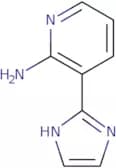
CAS:<p>Versatile small molecule scaffold</p>Formula:C8H8O3Purity:Min. 95%Molecular weight:152.15 g/mol3-(1H-Imidazol-2-yl)pyridin-2-amine
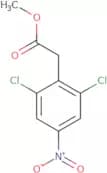
CAS:<p>Versatile small molecule scaffold</p>Formula:C8H8N4Purity:Min. 95%Molecular weight:160.18 g/molMethyl 2-(2,6-dichloro-4-nitrophenyl)acetate
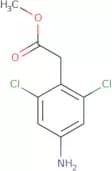
CAS:<p>Versatile small molecule scaffold</p>Formula:C9H7Cl2NO4Purity:Min. 95%Molecular weight:264.06 g/molMethyl 2-(4-amino-2,6-dichlorophenyl)acetate
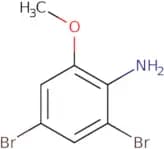
CAS:<p>Versatile small molecule scaffold</p>Formula:C9H9Cl2NO2Purity:Min. 95%Molecular weight:234.08 g/mol2,4-Dibromo-6-methoxyaniline
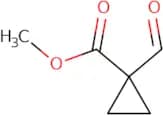
CAS:<p>Versatile small molecule scaffold</p>Formula:C7H7Br2NOPurity:Min. 95%Molecular weight:280.95 g/molmethyl 1-formylcyclopropane-1-carboxylate
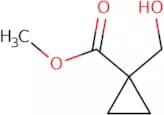
CAS:Versatile small molecule scaffoldFormula:C6H8O3Purity:Min. 95%Molecular weight:128.1 g/molMethyl 1-(hydroxymethyl)cyclopropanecarboxylate
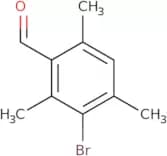
CAS:Versatile small molecule scaffoldFormula:C6H10O3Purity:Min. 95%Molecular weight:130.14 g/mol3-Bromo-2,4,6-trimethylbenzaldehyde
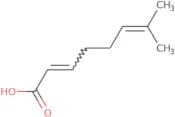
CAS:Versatile small molecule scaffoldFormula:C10H11BrOPurity:Min. 95%Molecular weight:227.1 g/mol(2E)-7-Methylocta-2,6-dienoic acid
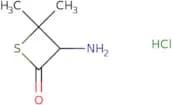
CAS:<p>Versatile small molecule scaffold</p>Formula:C9H14O2Purity:Min. 95%Molecular weight:154.21 g/mol(3R)-3-Amino-4,4-dimethylthietan-2-one hydrochloride
CAS:Versatile small molecule scaffoldFormula:C5H10ClNOSPurity:Min. 95%Molecular weight:167.66 g/mol3-Chloro-5-(chloromethyl)-8-thia-4,6-diazatricyclo[7.4.0.0,2,7]trideca-1(9),2,4,6-tetraene
CAS:<p>Versatile small molecule scaffold</p>Formula:C11H10Cl2N2SPurity:Min. 95%Molecular weight:273.2 g/mol


![3-Chloro-5-(chloromethyl)-8-thia-4,6-diazatricyclo[7.4.0.0,2,7]trideca-1(9),2,4,6-tetraene](/_next/image/?url=https%3A%2Fstatic.cymitquimica.com%2Fproducts%2F3D%2Fthumb-webp%2FNDA20317.webp&w=3840&q=75)