Building Blocks
This section contains fundamental products for the synthesis of organic and biological compounds. Building blocks are the essential starting materials used to construct complex molecules through various chemical reactions. They play a critical role in drug discovery, material science, and chemical research. At CymitQuimica, we offer a diverse range of high-quality building blocks to support your innovative research and industrial projects, ensuring you have the essential components for successful synthesis.
Subcategories of "Building Blocks"
- Boronic Acids & Boronic Acid Derivatives(5,778 products)
- Chiral Building Blocks(1,242 products)
- Hydrocarbon Building Blocks(6,098 products)
- Organic Building Blocks(61,084 products)
Found 198714 products of "Building Blocks"
Sort by
Purity (%)
0
100
|
0
|
50
|
90
|
95
|
100
Methyl 2-Bromohexanoate
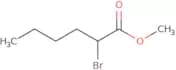
CAS:<p>Methyl 2-bromohexanoate is a reactive chemical that has been found in the urine of healthy volunteers. It is used as an intermediate for pharmaceutical preparations and can be introduced into the body through inhalation, ingestion, or skin contact. Methyl 2-bromohexanoate also has potential use as a biomarker for cancer, since it has been detected in patients with cervical cancer and environmental exposure to benzene. This compound reacts with sulfoxide in the environment to form polymers and phosphates. It also exhibits optical properties when polymerized.</p>Formula:C7H13BrO2Purity:Min. 95%Molecular weight:209.08 g/mol(2,3-Dihydro-1H-inden-2-yl)methanol
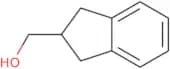
CAS:<p>(2,3-Dihydro-1H-inden-2-yl)methanol is an organometallic compound that has the chemical formula CH(CH)CHO. It is classified as an aromatic alcohol based on its substituent. (2,3-Dihydro-1H-inden-2-yl)methanol has a linear structure with a hydrogen atom at the end of each carbon chain and two carbonyl groups. The equilibrium between this compound and its isomers can be determined by calculating the difference in energy between each form. The properties of this compound depend on the solvent it is mixed with, as well as its solvents’ polarity. This compound can be used for perfuming or for cyclohexanol production.</p>Formula:C10H12OPurity:Min. 95%Molecular weight:148.2 g/mol2-Methyl-3-phenylpropanal
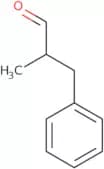
CAS:<p>2-Methyl-3-phenylpropanal is a volatile compound that has been identified as a major component of the odor of fresh cilantro. It has been found to be a pheromone for the crambid moth, which suggests that it may play a role in mating behavior. 2-Methyl-3-phenylpropanal is an allyl ligand that has shown to bind to odorant binding proteins. It also has been shown to have hydrogen bonding and fluorescence properties. This molecule is not active against lepidoptera or gamma-terpinene, but it does show binding activity against the latter.</p>Formula:C10H12OPurity:Min. 95%Molecular weight:148.2 g/mol5-Chloro-2-methylphenylhydrazine hydrochloride
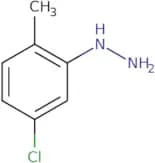
CAS:5-Chloro-2-methylphenylhydrazine hydrochloride (5CMPH) is an arylhydrazine that is used as a reagent in organic chemistry. It can be prepared from 2,6-dichloroacetamide and methyl phenyldiazonium chloride. 5CMPH has the molecular formula CHClN and a molecular weight of 182.8 g/mol. This compound is soluble in water and ethanol, but insoluble in ethers and benzene. 5CMPH has been shown to react with 6-membered heterocycles such as guanidinium chloride to form dialdehydes. When substituted at the 2 position with chlorine, it forms chlorinated arylhydrazines such as 6-chloro-N-(2-chlorophenyl)-2,4-dinitrobenzenamine, which have been shown to have antiinflammatory activities.Formula:C7H10Cl2N2Purity:Min. 95%Molecular weight:193.07 g/mol2-(1-Phenylethylidene)malononitrile
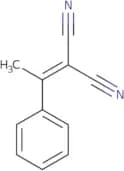
CAS:<p>2-(1-Phenylethylidene)malononitrile (2-PMAN) is a chemical compound that is used as starting material for the manufacture of other chemicals. It can be obtained by the reaction of anthranilic acid with trichloroacetonitrile in the presence of hydride transfer agents. The product is purified by crystallization and recrystallization, and then reacts with carbon disulfide to form 2-phenylethanamine. 2-PMAN has been shown to have nematocidal activity, which may be due to its ability to inhibit protein synthesis by interfering with the uptake of amino acids into cells. Additionally, 2-PMAN can undergo dimerization or isomerisation reactions which affect its biological activity.</p>Formula:C11H8N2Purity:Min. 95%Molecular weight:168.19 g/molrac-(1R,2S)-2-tert-Butylcyclohexan-1-ol
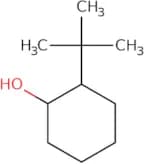
CAS:Rac-1,2-cyclohexan-1,2-diol is a synthetic chemical that is used in the production of hydrogenated oils. It is produced by the hydrogenation of rac-dimethyl carbonate, which can be synthesized from cyclohexanol and tert-butyl chloride. Rac-1,2-cyclohexan-1,2-diol can be quantified using gas chromatography with a flame ionization detector (GC/FID) or high performance liquid chromatography (HPLC). The catalyst used for this reaction is typically a solid material such as platinum on carbon. The reaction requires anhydrous conditions and takes place at low temperatures. Racemic 1,2 cyclohexan-1,2 diol can also be produced through the dehydrogenation of racemic 2,3 cyclohexanedione with a palladium on charcoal catalyst. This process requires anhydrous conditions and takes place at high temperatures.Formula:C10H20OPurity:Min. 95%Molecular weight:156.26 g/mol2-Oxo-2-(4-phenylphenyl)acetic acid
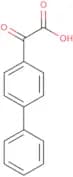
CAS:<p>Versatile small molecule scaffold</p>Formula:C14H10O3Purity:Min. 95%Molecular weight:226.23 g/mol1,2,5-Trimethyl-1H-pyrrole-3-carbaldehyde
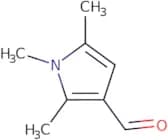
CAS:Versatile small molecule scaffoldFormula:C8H11NOPurity:Min. 95%Molecular weight:137.18 g/mol4-Methylcycloheptan-1-one
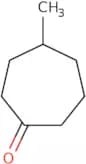
CAS:<p>4-Methylcycloheptan-1-one is an organic compound with a methoxy group, mesylate group and a single optical isomer. This compound has been synthesized by the nucleophilic substitution of 4-methylcycloheptanone with methoxymethyl chloride. The enantiomeric excess of the product can be determined by optical rotation measurements. The reaction system was racemized in a chiral environment. The reaction products are solvents, which must be deuterated to yield the desired chiral product.</p>Formula:C8H14OPurity:Min. 95%Molecular weight:126.2 g/mol1-(2-Bromoethyl)-4-methylcyclohexane
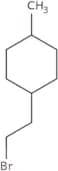
CAS:<p>Versatile small molecule scaffold</p>Formula:C9H17BrPurity:Min. 95%Molecular weight:205.13 g/molEthyl cyclopentane carboxylate
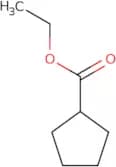
CAS:<p>Ethyl cyclopentane carboxylate is a cell signaling molecule that is synthesized from an amide and diacylglycerol. It has been shown to have therapeutic effects in autoimmune diseases, cancer, inflammatory diseases, bowel disease, and transfer reactions. Ethyl cyclopentane carboxylate inhibits the MCL-1 protein and CB2 receptor in the immune system. Ethyl cyclopentane carboxylate has also been shown to inhibit the inflammatory response in experimental models of inflammatory bowel disease by inhibiting the activity of the Cb2 receptor.</p>Formula:C8H14O2Purity:Min. 95%Molecular weight:142.2 g/molethyl 1-methyl-2-oxocyclopentane-1-carboxylate
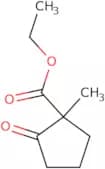
CAS:<p>Ethyl 1-methyl-2-oxocyclopentane-1-carboxylate is a cyclopentenone that has been shown to be effective against epidermoid carcinoma cells and lymphocytic leukemia. It has antitumor activity in vivo, with a good cytotoxicity profile. This compound binds to the DNA of tumor cells, causing mismatched base pairing through its diastereomeric interactions. This binding leads to disruption of the DNA helix, which causes cell death by apoptosis. Ethyl 1-methyl-2-oxocyclopentane-1-carboxylate also inhibits the growth of tissue culture cells. The toxic effects on these cells are dose dependent and can be reduced by irradiation or ethylene gas treatment.</p>Formula:C9H14O3Purity:Min. 95%Molecular weight:170.21 g/molEthyl 1-methyl-2-oxocyclohexane-1-carboxylate
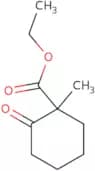
CAS:Ethyl 1-methyl-2-oxocyclohexane-1-carboxylate (EMOC) is a synthetic retinoid that was designed to have biological properties similar to those of retinoic acid. EMOC has been shown to inhibit the growth of cancer cells in vitro and in vivo, as well as to induce differentiation in these cells. It inhibits DNA replication by binding to chloride ions, which are essential for the enzymatic activity of DNA polymerase. EMOC also binds to the carbonyl group of diltiazem hydrochloride, a drug used for the treatment of high blood pressure and angina pectoris. The chemical structures of both compounds are similar, with one difference being that EMOC has an additional methyl group on its terminal half-life.Formula:C10H16O3Purity:Min. 95%Molecular weight:184.23 g/mol2-(2,3-Dihydro-1H-inden-5-yl)acetic acid
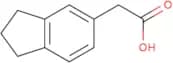
CAS:<p>2-(2,3-Dihydro-1H-inden-5-yl)acetic acid is an antiinflammatory drug used for the relief of acute or chronic pain and inflammation. It works by blocking the production of prostaglandins, which are chemical messengers that cause pain and inflammation. 2-(2,3-Dihydro-1H-inden-5-yl)acetic acid has been found to be effective in relieving pain and inflammation in a variety of conditions including osteoarthritis, rheumatoid arthritis, ankylosing spondylitis and psoriatic arthritis. The drug also has a role in preventing the formation of kidney stones because it prevents calcium oxalate crystals from forming. This compound can be reconstituted with water or alcohols to produce a solution for oral administration. 2-(2,3-Dihydro-1H-inden-5-yl)acetic acid</p>Formula:C11H12O2Purity:Min. 95%Molecular weight:176.21 g/mol1,3-Diphenylpropan-1-amine hydrochloride
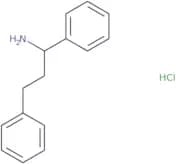
CAS:<p>Versatile small molecule scaffold</p>Formula:C15H18ClNPurity:Min. 95%Molecular weight:247.76 g/mol2-Methylcyclopentanamine hydrochloride
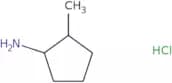
CAS:Versatile small molecule scaffoldFormula:C6H14ClNPurity:Min. 95%Molecular weight:135.64 g/mol5,5-Diethyl-imidazolidine-2,4-dione
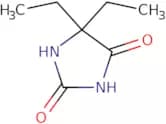
CAS:<p>5,5-Diethyl-imidazolidine-2,4-dione is an n-nitrosodiethylamine (NDELA) metabolite that binds to the cytochrome P450 enzyme and inhibits the activity of hydantoinase. It is also a ligand for the immunoreactive form of the enzyme in rats. 5,5-Diethyl-imidazolidine-2,4-dione has been shown to inhibit carcinogenesis in rats and enhance enzyme activities. This compound also interacts with drugs such as warfarin and phenytoin by enhancing their concentrations.</p>Formula:C7H12N2O2Purity:Min. 95%Molecular weight:156.18 g/mol5-Methyl-5-propylimidazolidine-2,4-dione
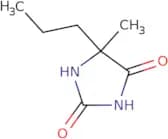
CAS:<p>5-Methyl-5-propylimidazolidine-2,4-dione is an antimicrobial agent that inhibits the growth of bacteria. It has been shown to inhibit the growth of Staphylococcus aureus and other bacteria on cellulose surfaces. This drug also reacts with epoxides in cell walls and is effective against Gram-positive and Gram-negative bacteria. The reaction solution for 5-Methyl-5-propylimidazolidine-2,4-dione was prepared by dissolving the drug in a mixture of methylene chloride and methanol. The stability tests were conducted over a long period at room temperature or at 4°C. The results showed that this drug maintained its potency for extended periods of time when stored at these temperatures.</p>Formula:C7H12N2O2Purity:Min. 95%Molecular weight:156.18 g/mol2-Hydroxy-N-methyl-N-phenylpropanamide
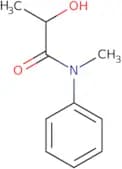
CAS:<p>Versatile small molecule scaffold</p>Formula:C10H13NO2Purity:Min. 95%Molecular weight:179.22 g/molN,N-Dimethyl-1,2,3,4-tetrahydroquinoline-6-sulfonamide
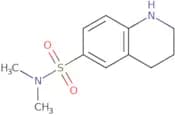
CAS:<p>Versatile small molecule scaffold</p>Formula:C11H16N2O2SPurity:Min. 95%Molecular weight:240.32 g/mol