Building Blocks
Subcategories of "Building Blocks"
- Boronic Acids & Boronic Acid Derivatives(5,781 products)
- Chiral Building Blocks(1,242 products)
- Hydrocarbon Building Blocks(6,101 products)
- Organic Building Blocks(61,033 products)
Found 205320 products of "Building Blocks"
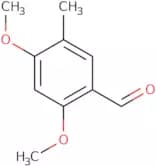
2,4-Dimethoxy-5-methylbenzaldehyde
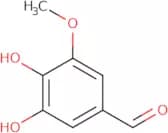
CAS:2,4-Dimethoxy-5-methylbenzaldehyde is an aryl aldehyde that can be synthesized from 2,4-dimethoxyphenol and methyl benzoate. It can also be produced by condensation of benzaldehyde with chloroform in the presence of zinc chloride. This compound is used in the production of various pharmaceuticals, including antihistamines, antidepressants, and antipsychotics.Formula:C10H12O3Purity:Min. 95%Color and Shape:PowderMolecular weight:180.2 g/mol3,4-Dihydroxy-5-methoxybenzaldehyde
CAS:3,4-Dihydroxy-5-methoxybenzaldehyde is a synthetic compound that has shown to have inhibitory effects on the replication of DNA and RNA. It also inhibits the growth of bacteria in culture by binding to the nucleic acid. The chemical structure of 3,4-Dihydroxy-5-methoxybenzaldehyde is similar to that of bisbenzylisoquinoline alkaloids, which are found in plants such as opium poppy. This similarity may explain its ability to inhibit bacterial growth. 3,4-Dihydroxy-5-methoxybenzaldehyde may be used as a drug candidate for treating bacterial infections.Formula:C8H8O4Purity:Min. 95%Color and Shape:PowderMolecular weight:168.15 g/mol3,5-Dinitrosalicylaldehyde
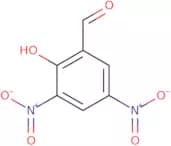
CAS:3,5-Dinitrosalicylaldehyde is an oxidizing agent that is used in organic chemistry to produce aldehydes or carboxylic acids. It reacts with the amino groups of lysine residues and converts them to nitro groups. 3,5-Dinitrosalicylaldehyde is also used as a reagent in the determination of the number of lysine residues in proteins by titration with hydrochloric acid. The reaction mechanism of 3,5-dinitrosalicylaldehyde involves formation of an electron deficient intermediate that oxidizes chloride ions to form water molecules and chloride radicals. These intermediates react with nitro groups on lysine residues, resulting in nitro compounds. Crystallography studies have shown that the molecular structure of 3,5-dinitrosalicylaldehyde has two nitro groups and one hydroxyl group.
Formula:C7H4N2O6Purity:Min. 95%Color and Shape:Yellow PowderMolecular weight:212.12 g/mol2,4-di-tert-Butylaniline hydrochloride
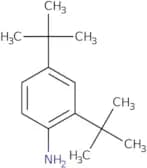
CAS:The reaction mechanism of 2,4-di-tert-butylaniline hydrochloride is the alkylation of anilines with protonated tert-butyl chloride. This reaction proceeds by a substitution process in which one or more hydrogen atoms are replaced by the substituent. The selectivity of this reaction depends on the parameters and conditions used to carry it out. The reaction can be carried out under autogenous conditions or with the addition of a catalyst such as nickel (Ni), palladium (Pd) or platinum (Pt). The product obtained can be modified by changing the catalyst, solvent, temperature, pressure and other parameters. Reaction kinetics is affected by additives such as water, alcohols and acids that may be added during the reaction process. The size and shape of nanoparticles can also affect kinetic properties.
2,4-di-tert-Butylaniline hydrochloride has been shown to have high activity for organic synthesis in homFormula:C14H24ClNPurity:Min. 95%Color and Shape:White PowderMolecular weight:241.8 g/mol(2,5-Dichlorophenyl)acetone
CAS:(2,5-Dichlorophenyl)acetone is a chemical compound that is used as a reaction component in the synthesis of other compounds. It can be used as a reagent in the preparation of high quality research chemicals, speciality chemicals and fine chemicals. It is also used as an intermediate in the synthesis of complex compounds. (2,5-Dichlorophenyl)acetone has CAS number 102052-40-4.Formula:C9H8Cl2OPurity:Min. 95%Color and Shape:PowderMolecular weight:203.06 g/mol3,5-Dichloro-2-methoxybenzoic acid
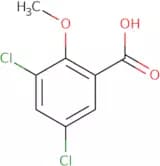
CAS:3,5-Dichloro-2-methoxybenzoic acid (3,5-DMB) is a diphenyl ether with a pharmacokinetic half-life of about 3 hours. It has two isomers: the cis and trans forms. The cis isomer is more active than the trans form. The cis isomer has been shown to be effective in treatments for amine oxidase inhibitors and short-chain fatty acids. It also has growth regulator properties that are used in treatments for psoriasis and acne. 3,5-DMB inhibits bacterial growth by binding to the enzyme dioxygenase, which catalyzes the conversion of 4-hydroxybenzoic acid into 4-hydroxyphenylpyruvic acid; this prevents the production of catecholamines and subsequent cell proliferation. This drug binds to apical membranes in the intestine by attaching to sulfhydryl groups on proteins involved in transport processes, preventing uptakeFormula:C8H6Cl2O3Purity:Min. 95%Color and Shape:White PowderMolecular weight:221.04 g/mol3,5-Dimethoxyphenylacetic acid methyl ester
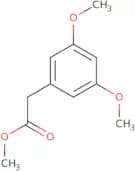
CAS:3,5-Dimethoxyphenylacetic acid methyl ester is a synthetic compound that inhibits the growth of human pathogens by inhibiting protein synthesis. It has been shown to inhibit the biosynthesis of DNA and RNA in human cancer cells. 3,5-Dimethoxyphenylacetic acid methyl ester also binds to aluminium ions and prevents their absorption into the body. This agent is not active against bacteria or fungi because they do not have a cell membrane.Formula:C11H14O4Purity:Min. 95%Color and Shape:Colorless Clear LiquidMolecular weight:210.23 g/mol3,5-Dimethoxyphenylacetic acid
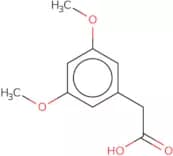
CAS:3,5-Dimethoxyphenylacetic acid is a reagent that can be used in the synthesis of many organic compounds. It is also a high quality chemical with a CAS number of 4670-10-4. 3,5-Dimethoxyphenylacetic acid is useful as a research chemical and as an intermediate for the synthesis of more complex compounds. This compound has been shown to be a versatile building block and useful scaffold in the synthesis of highly complex chemicals.
Formula:C10H12O4Purity:Min. 95%Color and Shape:White PowderMolecular weight:196.2 g/mol3,4-Dihydroxybenzonitrile
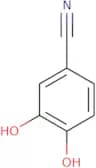
CAS:3,4-Dihydroxybenzonitrile is a chemical compound that is found in soybean lipoxygenase. The molecule has been shown to be an excellent Michaelis-Menten substrate and hydrogen bonding partner. It also reacts with chlorine to form chlorinating agents such as 3,4-dichlorobenzonitrile and 3,4-dibromobenzonitrile. 3,4-Dihydroxybenzonitrile can act as a nucleophile and forms stable complexes when reacted with hydroxyl group compounds such as protocatechuic acid or reaction solution. This chemical is reactive and can be activated by redox cycling or light. 3,4-Dihydroxybenzonitrile has been used to treat protocatechuic acid levels in the blood of patients with chronic liver disease who are being treated for alcoholism.Formula:C7H5NO2Purity:Min. 95%Color and Shape:PowderMolecular weight:135.12 g/mol4,4'-Dibenzoic acid
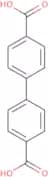
CAS:4,4'-Dibenzoic acid is a chemical compound that has been used as a precursor to other compounds. It is also used in the production of polycarbonates and epoxy resins. 4,4'-Dibenzoic acid has low energy, which means it can be transported more easily than high energy molecules. This property makes it an excellent candidate for use as an enhancement agent for organometallic catalysts such as biphenyl. The structure of 4,4'-dibenzoic acid consists of two benzene rings connected by an ethylene chain. This molecule has one hydrogen bond on each side of the molecule. The 4-hydroxyl group on the left side of the molecule is susceptible to oxidation and can act as an oxidation catalyst when exposed to heat or radiation.Formula:C14H10O4Purity:Min. 95%Color and Shape:PowderMolecular weight:242.23 g/mol3,5-Dimethoxybenzaldehyde
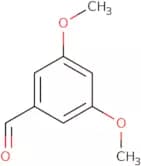
CAS:3,5-Dimethoxybenzaldehyde is a fungicide that can kill fungal cells by inhibiting the synthesis of ergosterol, an important component of the fungal cell membrane. It has been shown to be effective against Cryptococcus neoformans and other fungi. 3,5-Dimethoxybenzaldehyde inhibits mitochondrial superoxide production and the growth of fungi in a model system. The optimum concentration for inhibition was determined in a kinetic and thermodynamic study. This compound has also been shown to have anti-inflammatory properties, which may be due to its ability to inhibit prostaglandin synthesis.
Formula:C9H10O3Purity:Min. 98%Color and Shape:PowderMolecular weight:166.17 g/molZ-1,4-diaminobutane·HCl
CAS:Z-1,4-diaminobutane·HCl is a fine chemical that is a useful building block in research and manufacture of pharmaceuticals. It is also used as a reagent and speciality chemical in the production of other chemicals, such as dyes, rubber products, and pesticides. This compound has been shown to be an effective intermediate for the synthesis of complex organic compounds with versatile structures. Z-1,4-diaminobutane·HCl can be used as a scaffold for the construction of various types of molecules.Formula:C12H18N2O2·HClPurity:Min. 95%Color and Shape:White PowderMolecular weight:258.74 g/mol3',4'-Dimethylacetophenone
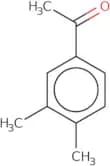
CAS:3',4'-Dimethylacetophenone is a natural product that belongs to the class of salicylates. It is a yellow oily liquid with an odor reminiscent of ocimene, which has been shown to be an attractant for the cotton bollworm (Hirsutum). 3',4'-Dimethylacetophenone is also used in cyclization reactions, such as the conversion of a benzene ring into a cyclohexane ring. This compound can be found in many plants and flowers, including hirsutum, caryophyllene, gossypium, medicago, and chalcone. The molecule can be synthesized in several ways through combinations of different reactants.Formula:C10H12OPurity:Min. 95%Color and Shape:PowderMolecular weight:148.2 g/mol2,5-Dimethoxybenzoic acid
CAS:2,5-Dimethoxybenzoic acid (2,5-DMA) is a plant metabolite that belongs to the group of cinnamic acid derivatives. It can be found in plants and has been shown to have systemic effects. 2,5-DMA is involved in the cycloacylation of protocatechuic acid. This reaction is catalyzed by an enzyme called cyclooxygenase and requires molecular oxygen as a cofactor. 2,5-DMA also forms hydrogen bonds with methoxy groups and other molecules. The monoclonal antibodies against 2,5-DMA have been used for radiation therapy and are effective against cancer cells. Model studies show that 2,5-DMA can be converted into more potent metabolites by the action of cytochrome P450 enzymes or glutathione S-transferases.Formula:C9H10O4Purity:Min. 95%Color and Shape:PowderMolecular weight:182.17 g/mol3,5-Dibromoaniline
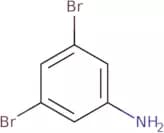
CAS:3,5-Dibromoaniline is a chemical compound that belongs to the group of anilines. It can be used as an intermediate in organic synthesis. 3,5-Dibromoaniline can be obtained by gravimetric analysis and has a solute of about 0.1 g/100 mL in water. The melting point for this compound is about 245 °C and the boiling point is about 330 °C at normal atmospheric pressure. 3,5-Dibromoaniline has been shown to inhibit the growth of Trichophyton mentagrophytes and Coumarin derivatives, which are fungi that cause ringworm infections. This drug also has photophysical properties and can be used as a fluorescence probe for DNA hybridization studies.Formula:C6H5NBr2Purity:Min. 98%Color and Shape:Brown To Black SolidMolecular weight:250.92 g/mol3,5-Dihydroxytoluene
CAS:3,5-Dihydroxytoluene is a natural compound that is structurally related to p-hydroxybenzoic acid. It has been shown to be an efficient fluorescent probe for the detection of quillaja saponaria in wastewater treatment plants. 3,5-Dihydroxytoluene also reacts with orcinol to produce a disulfide bond and can undergo polymerization reactions with nucleophiles such as amines and thiols. It is not active against aerobacter aerogenes, but has been shown to have high values against carcinoma cell lines.Formula:C7H8O2Purity:Min. 97.5 Area-%Color and Shape:White Off-White PowderMolecular weight:124.14 g/mol3,3-Diphenylpropionic acid
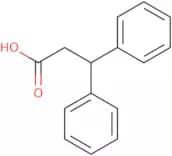
CAS:3,3-Diphenylpropionic acid is a synthetic compound that is used to treat high blood pressure. It is an ester of hydrochloric acid and 3,3-diphenylpropionic acid. 3,3-Diphenylpropionic acid lowers blood pressure by inhibiting the activity of angiotensin II, which causes constriction and shrinking of the blood vessels. The safety profile for this drug has been evaluated in a number of studies in which it was shown that there were no significant adverse effects on the heart or other organs. This drug also has a beneficial effect on diabetic neuropathy and metabolic rate. 3,3-Diphenylpropionic acid is not active against bacteria or fungi but has been shown to be effective against amines by binding to them and preventing their interaction with DNA.Formula:C15H14O2Purity:Min. 95%Color and Shape:White PowderMolecular weight:226.27 g/mol2',6'-Dimethoxyacetophenone
CAS:2',6'-Dimethoxyacetophenone is a synthetic flavonoid that has been shown to be an anticarcinogenic. This compound is synthesized by cyclodehydration of 2,6-dimethoxybenzaldehyde with hydrochloric acid in the presence of magnesium chloride as a catalyst. The resulting product is then converted to 2',6'-dimethoxyacetophenone by acidic hydrolysis. 2',6'-Dimethoxyacetophenone can also be obtained through Wittig reaction of chlorides and magnesium or via phosphoranes synthesis using magnesium and cyanide as starting materials. This compound can also be produced by benzoylation of styrene followed by chalcone synthesis.Formula:C10H12O3Purity:Min. 95%Color and Shape:PowderMolecular weight:180.2 g/molDimethylolurea
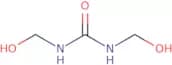
CAS:Dimethylolurea is a formaldehyde releaser that has clinical relevance as a nutrient solution. Dimethylolurea has been shown to release formaldehyde, which may be used to treat bowel diseases and inflammatory bowel disease. Dimethylolurea can also induce an immune response in the human body. This chemical is not soluble in water but it is soluble in ethanol and methanol, which are often used as solvents for this drug. The reaction mechanism of dimethylurea is unclear. It may be due to intramolecular hydrogen transfer or metal hydroxides. As with other drugs, the surface methodology of dimethylurea depends on the size of the microcapsules.Formula:C3H8N2O3Purity:Min. 95%Color and Shape:White PowderMolecular weight:120.11 g/mol3,4-Dimethoxybenzylamine
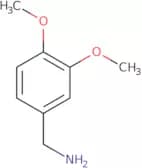
CAS:3,4-Dimethoxybenzylamine is an amine that is used in the synthesis of pharmaceuticals. It can be polymerized by heating with aqueous formaldehyde and hydrochloric acid to form a resin. 3,4-Dimethoxybenzylamine inhibits serotonin receptors, exhibiting inhibitory properties at concentrations of 10-5 M. 3,4-Dimethoxybenzylamine also has pharmacokinetic properties that are similar to vitamin B1. This compound has been shown to inhibit homogeneous catalysts and is used for coatings for ganglion cells.
Formula:C9H13NO2Purity:Min. 95%Color and Shape:Clear LiquidMolecular weight:167.21 g/mol