Building Blocks
This section contains fundamental products for the synthesis of organic and biological compounds. Building blocks are the essential starting materials used to construct complex molecules through various chemical reactions. They play a critical role in drug discovery, material science, and chemical research. At CymitQuimica, we offer a diverse range of high-quality building blocks to support your innovative research and industrial projects, ensuring you have the essential components for successful synthesis.
Subcategories of "Building Blocks"
- Boronic Acids & Boronic Acid Derivatives(5,784 products)
- Chiral Building Blocks(1,242 products)
- Hydrocarbon Building Blocks(6,105 products)
- Organic Building Blocks(61,065 products)
Found 205418 products of "Building Blocks"
Sort by
Purity (%)
0
100
|
0
|
50
|
90
|
95
|
100
2,3,4-Trifluorobenzoic acid
CAS:2,3,4-Trifluorobenzoic acid is a fluorinated fatty acid that has been shown to have anticancer activity. The molecule can be synthesized by reacting 2-bromo-1-(trifluoromethyl)benzene with potassium hydroxide in the presence of benzoic anhydride. This synthesis reaction yields (2,3,4-trifluoro)benzoic acid as the main product and a small amount of 2,3-dihydrobenzoic acid. The analytical method used to determine the purity of this compound is LC-MS/MS. The vibrational spectrum of this compound has been found to show strong absorption in the UV region at 290 nm. It also shows strong absorption at uv wavelengths greater than 300 nm due to its conjugation with fluorine atoms. This chemical is a precursor for synthesis of coumarin derivatives such as 4-[(2,3Formula:C7H3F3O2Purity:Min. 95%Color and Shape:White PowderMolecular weight:176.09 g/molTetrahydropyranylethyleneglycol
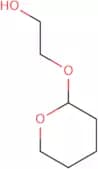
CAS:Tetrahydropyranyl ethyleneglycol is a polymerized, telechelic molecule with a hetero-bifunctional linkage. It is used in bioconjugate chemistry and has been shown to be effective in the treatment of neuropathic pain. Tetrahydropyranyl ethyleneglycol has an acidic hydroxyl group that can be used for ring-opening reactions. It also has a primary amino group that can be used for ion exchange or as a bifunctional agent. The heterobifunctional properties of tetrahydropyranyl ethyleneglycol allow it to be incorporated into polymers and other polymeric materials.Formula:C7H14O3Purity:Min. 95%Color and Shape:PowderMolecular weight:146.18 g/mol2-(4-Methoxyphenyl)ethanol
CAS:2-(4-Methoxyphenyl)ethanol is a chemical compound that can be synthesized in an efficient method. It is a by-product of the reaction of fatty acids with hydroxyl compounds and has been shown to have synergistic effects when combined with chloride. 2-(4-Methoxyphenyl)ethanol is used as a synthetic intermediate for the production of methyl anthranilate, which is an important industrial chemical that is used as a flavor and fragrance additive. 2-(4-Methoxyphenyl)ethanol also has eugenol as one of its cleavage products, which can be found in plants such as clove oil, cinnamon bark, and nutmeg.Formula:C9H12O2Purity:Min. 98%Color and Shape:White PowderMolecular weight:152.19 g/molCopper(I) 2-Thiophenecarboxylate
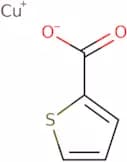
CAS:Copper(I) 2-Thiophenecarboxylate is a copper complex that has been shown to inhibit the polymerase chain reaction. It binds to the active site of DNA polymerases, blocking the ability of these enzymes to synthesize DNA. This inhibition is irreversible and can be reversed by adding excess thiophenecarboxylate ligands. Copper(I) 2-Thiophenecarboxylate also inhibits lipid kinases, which are involved in signal transduction pathways that regulate immune responses and inflammation. The compound may have potential for the treatment of autoimmune diseases such as rheumatoid arthritis. The synthesis of this compound is an example of asymmetric synthesis.Formula:C5H3CuO2SPurity:Min. 95%Color and Shape:PowderMolecular weight:190.69 g/mol1,2-Dimethylnaphthalene
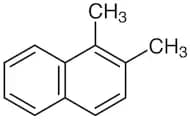
CAS:Formula:C12H12Purity:>95.0%(GC)Color and Shape:Colorless to Light orange to Yellow clear liquidMolecular weight:156.236-Bromocoumarin-3-carboxylic Acid
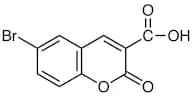
CAS:Formula:C10H5BrO4Purity:>98.0%(HPLC)Color and Shape:White to Orange to Green powder to crystalMolecular weight:269.053-Oxetanol
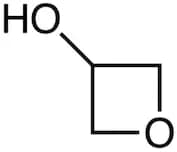
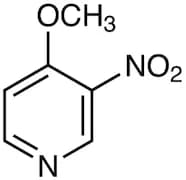
CAS:Formula:C3H6O2Purity:>96.0%(GC)Color and Shape:Colorless to Light yellow clear liquid to slightly cloudy liquidMolecular weight:74.084-Methoxy-3-nitropyridine
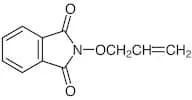
CAS:Formula:C6H6N2O3Purity:>98.0%(GC)Color and Shape:Light orange to Yellow to Green powder to crystalMolecular weight:154.13N-Allyloxyphthalimide
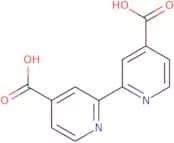
CAS:Formula:C11H9NO3Purity:>98.0%(GC)Color and Shape:White to Light yellow powder to crystalMolecular weight:203.202,2'-Bipyridine-4,4'-dicarboxylic acid
CAS:2,2'-Bipyridine-4,4'-dicarboxylic acid (BBDA) is a synthetic molecule that has been used as an oxidant in organic synthesis. It is a redox-active compound with a reversible oxidation potential of +0.2 V. The electron transfer to the adjacent nitrogen atom is accompanied by light emission at 490 nm and chloride ion release. BBDA reacts with potassium dichromate in water to form 2,2'-bipyridine-6,6'-dicarboxylic acid and potassium chloride. This reaction can be monitored by magnetic resonance analysis and X-ray absorption spectroscopy. The formation of BBDA from dimethylformamide and esters has been reported in the literature.
Formula:C12H8N2O4Purity:Min. 95%Color and Shape:PowderMolecular weight:244.21 g/molL-Valine b-naphthylamide
CAS:H-Val-bNA
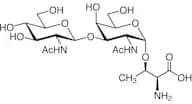
Formula:C15H18N2OPurity:Min. 99 Area-%Molecular weight:242.32 g/molGlcNAcβ(1-3)GalNAc-α-Thr
CAS:Formula:C20H35N3O13Purity:>97.0%(HPLC)Color and Shape:White to Almost white powder to crystalMolecular weight:525.515,6,7,8-Tetrahydronaphthalene-2-carbaldehyde
CAS:5,6,7,8-Tetrahydronaphthalene-2-carbaldehyde is an indole derivative that is used as a precursor to produce other compounds. It is an inducers of enzymes (e.g., hydroxylase) and has been shown to increase the production of toxic metabolites such as cyclized products. 5,6,7,8-Tetrahydronaphthalene-2-carbaldehyde can be synthesized from anthracene by reacting it with acetone and hydrochloric acid. This compound can be converted into a variety of derivatives including esters and zoxazolamine. 5,6,7,8-Tetrahydronaphthalene-2-carbaldehyde also has carcinogenic properties and has been shown to cause cancer in rats when injected or orally administered in high doses.Formula:C11H12OPurity:Min. 95%Color and Shape:PowderMolecular weight:160.21 g/mol3,5-Dimethoxy-4-hydroxybenzoic acid methyl ester
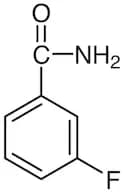
CAS:3,5-Dimethoxy-4-hydroxybenzoic acid methyl ester (DMHBME) is a natural compound that has been shown to have high redox potential values and chemical stability. This compound is an inhibitor of p-hydroxylases and has been shown to inhibit human serum laccase activity. DMHBME also inhibits polymerase chain reactions in the presence of DNA templates, which may be due to its ability to bind to the enzyme at the active site. DMHBME is a potent antimicrobial agent that can be used as a fungicide or preservative in food products. It is also effective against bacteria such as Staphylococcus aureus, Clostridium perfringens, Escherichia coli, and Mycobacterium tuberculosis.Formula:C10H12O5Purity:Min. 95%Color and Shape:White PowderMolecular weight:212.2 g/mol3-Fluorobenzamide
CAS:Formula:C7H6FNOPurity:>97.0%(HPLC)(N)Color and Shape:White to Almost white powder to crystalMolecular weight:139.134-Chloro-7-(p-toluenesulfonyl)-7H-pyrrolo[2,3-d]pyrimidine
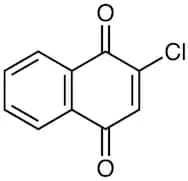
CAS:Formula:C13H10ClN3O2SPurity:>96.0%(HPLC)(N)Color and Shape:White to Orange to Green powder to crystalMolecular weight:307.752-Chloro-1,4-naphthoquinone
CAS:Formula:C10H5ClO2Purity:>98.0%(GC)Color and Shape:Light yellow to Yellow to Orange powder to crystalMolecular weight:192.607-Isopropyl-1,4-dimethylazulene-3-carboxaldehyde
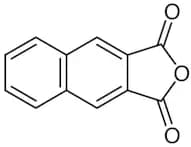
CAS:Formula:C16H18OPurity:>97.0%(GC)Color and Shape:Gray to Dark purple to Black powder to crystalMolecular weight:226.322,3-Naphthalenedicarboxylic Anhydride
CAS:Formula:C12H6O3Purity:>95.0%(GC)(T)Color and Shape:White to Gray to Brown powder to crystalMolecular weight:198.18N-Benzyloxycarbonyl-L-proline
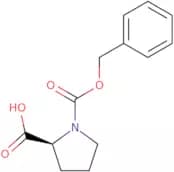
CAS:N-Benzyloxycarbonyl-L-proline is a cationic polymerization inhibitor that has been shown to inhibit the growth of Pseudomonas aeruginosa. It inhibits bacterial growth by inhibiting the production of collagen, an important component in the cell wall. N-Benzyloxycarbonyl-L-proline is also used as a histological staining agent and has been shown to be effective against breast cancer cells resistant to tamoxifen therapy.Formula:C13H15NO4Purity:Min. 95%Color and Shape:PowderMolecular weight:249.26 g/mol







![4-Chloro-7-(p-toluenesulfonyl)-7H-pyrrolo[2,3-d]pyrimidine](/_next/image/?url=https%3A%2Fstatic.cymitquimica.com%2Fproducts%2F3B%2Fthumb-webp%2FC3036.webp&w=3840&q=75)