


Building Blocks
Subcategories of "Building Blocks"
- Boronic Acids & Boronic Acid Derivatives(5,781 products)
- Chiral Building Blocks(1,242 products)
- Hydrocarbon Building Blocks(6,101 products)
- Organic Building Blocks(61,033 products)
Found 205320 products of "Building Blocks"
(1S,4S)-2-Benzyl-2,5-diazabicyclo[2.2.1]heptane Dihydrobromide
CAS:Formula:C12H16N2·2HBrPurity:>98.0%(T)(HPLC)Color and Shape:White to Almost white powder to crystalMolecular weight:350.102-(tert-Butyldimethylsilyl)thiazole
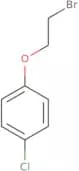
CAS:Formula:C9H17NSSiPurity:>97.0%(GC)Color and Shape:Colorless to Light orange to Yellow clear liquidMolecular weight:199.391-(2-Bromoethoxy)-4-chloro-benzene
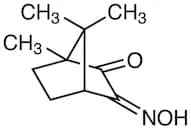
CAS:1-(2-Bromoethoxy)-4-chloro-benzene is a monomer that is soluble in organic solvents and has been shown to be an electron donor. The reaction mechanism of the bromination of 1-(2-bromoethoxy)-4-chlorobenzene involves the formation and subsequent decomposition of a radical anion, which is stabilized by the solvent acetonitrile. This monomer can also be used as a sensitizer for polymerization reactions. The yield of this product has been found to increase with increasing amounts of ethanol in the solution. 1-(2-Bromoethoxy)-4-chlorobenzene can also undergo an intramolecular cyclization to form a five membered ring with two stereogenic centers. 1-(2-Bromoethoxy)-4-chlorobenzene yields optical rotation values that are dependent on the concentration of water in the solution and it has beenFormula:C8H8BrClOPurity:Min. 95%Color and Shape:Off-White PowderMolecular weight:235.51 g/molanti-(1R)-(+)-Camphorquinone 3-Oxime
CAS:Formula:C10H15NO2Purity:>95.0%(GC)(N)Color and Shape:White to Orange to Green powder to crystalMolecular weight:181.242-[[(Butylthio)carbonothioyl]thio]propanoic Acid
CAS:Formula:C8H14O2S3Purity:>95.0%(T)(HPLC)Color and Shape:Light yellow to Yellow powder to crystalMolecular weight:238.381-(2-Cyanoethyl)piperidine
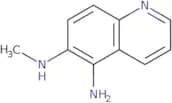
CAS:Formula:C8H14N2Purity:>98.0%(GC)Color and Shape:Colorless to Light yellow to Light orange clear liquidMolecular weight:138.215-Amino-6-(methylamino)quinoline
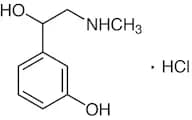
CAS:5-Amino-6-(methylamino)quinoline is a molecule that inhibits the enzymatic activity of tyrosine phosphatases and has been shown to inhibit the growth of typhimurium ta98, which is resistant to quinoxaline. It has also been shown to be mutagenic in vitro. 5-Amino-6-(methylamino)quinoline has an imidazole ring and is synthesized from 2-methylbenzothiazole and N,N'-dimethylethylenediamine. The synthesis of this compound takes place in two steps with the first step being an oxidative cyclization followed by a reductive amination.Formula:C10H11N3Purity:Min. 95%Color and Shape:Green Brown To Brown SolidMolecular weight:173.21 g/molDL-Phenylephrine Hydrochloride
CAS:Formula:C9H13NO2·HClPurity:>98.0%(T)(HPLC)Color and Shape:White to Almost white powder to crystalMolecular weight:203.67N-Boc-2-methyl-L-proline
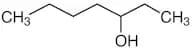
CAS:N-Boc-2-methyl-L-proline is a chemical compound that is used as a building block in the synthesis of other compounds. This substance is also an intermediate in the production of pharmaceuticals and pesticides. The compound has been shown to have high quality, versatility, and complexity. N-Boc-2-methyl-L-proline can be used as a reagent for research or as a speciality chemical. The CAS number for this substance is 103336-06-7.Formula:C11H19NO4Purity:Min. 95%Color and Shape:White To Off-White SolidMolecular weight:229.27 g/mol3-Heptanol
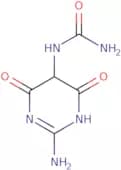
CAS:Formula:C7H16OPurity:>98.0%(GC)Color and Shape:Colorless to Almost colorless clear liquidMolecular weight:116.202-Amino-5-ureido-4,6-pyrimidinedione
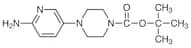
CAS:2-Amino-5-ureido-4,6-pyrimidinedione is a chemical building block that can be used in research, as a reagent for the synthesis of other compounds, or as an intermediate. It is also a versatile building block and reaction component. 2-Amino-5-ureido-4,6-pyrimidinedione is a high purity compound with a CAS number of 21823-25-6.Formula:C5H7N5O3Purity:Min. 95%Color and Shape:PowderMolecular weight:185.14 g/moltert-Butyl 4-(6-Amino-3-pyridyl)piperazine-1-carboxylate
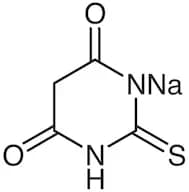
CAS:Formula:C14H22N4O2Purity:>98.0%(T)(HPLC)Color and Shape:White to Yellow to Green powder to crystalMolecular weight:278.36Sodium 2-Thiobarbiturate
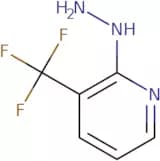
CAS:Formula:C4H3N2NaO2SPurity:>98.0%(T)Color and Shape:White to Almost white powder to crystalMolecular weight:166.13(3-Trifluoromethylpyrid-2-yl)hydrazine
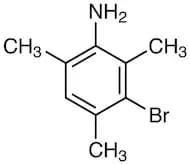
CAS:Building block for preparation of heteroaryltriazole derivativesFormula:C6H6F3N3Purity:Min. 95%Color and Shape:PowderMolecular weight:177.13 g/mol3-Bromo-2,4,6-trimethylaniline
CAS:Formula:C9H12BrNPurity:>98.0%(GC)(T)Color and Shape:White to Light yellow to Light orange powder to crystalMolecular weight:214.11Fmoc-3-chloro-L-beta-homophenylalanine
CAS:Fmoc-3-chloro-L-beta-homophenylalanine is a chemical scaffold that can be used in research, as an intermediate, or as a building block. It has a wide range of utility and can be used to create complex compounds with high purity. This product is sold as a solid that is soluble in organic solvents such as dichloromethane, chloroform, and DMF. Fmoc-3-chloro-L-beta-homophenylalanine is also known by its CAS number 270596-40-2.
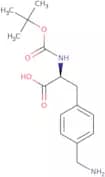
Formula:C25H22ClNO4Purity:Min. 95%Color and Shape:White PowderMolecular weight:435.9 g/molBoc-4-(aminomethyl)-L-phenylalanine
CAS:Boc-4-(aminomethyl)-L-phenylalanine is a useful building block in research and development of pharmaceuticals, agricultural chemicals, and other chemical products. It is a versatile intermediate that can be used in the production of many types of organic compounds. Boc-4-(aminomethyl)-L-phenylalanine has been used as a reagent for the preparation of various complex compounds and a reaction component in organic synthesis. It is also used to produce fluoroquinolones and other antibiotics. CAS No.: 137452-49-4
Formula:C15H22N2O4Purity:Min. 95%Molecular weight:294.35 g/mol2'-Hydroxy-4',5'-dimethylacetophenone
CAS:2'-Hydroxy-4',5'-dimethylacetophenone is a chalcone that is structurally similar to the catecholamines. It has been shown to inhibit bacterial growth in vitro and in vivo and to be active against both Gram-positive and Gram-negative bacteria. This compound also has antiviral activity, inhibiting the replication of herpes simplex virus type 1 (HSV-1) in cell culture. 2'-Hydroxy-4',5'-dimethylacetophenone also has antibacterial activity against Trichophyton mentagrophytes and Melaleuca alternifolia, an Australian tree that produces a range of bioactive compounds with antimicrobial properties. 2'-Hydroxy-4',5'-dimethylacetophenone binds to the enzyme phosphodiesterase, blocking the conversion of cyclic adenosine monophosphate (cAMP) into its inactive form cAMP hydrolysis product (cAMP). Inhibition of this enzymeFormula:C10H12O2Purity:Min. 95%Color and Shape:Off-White To Yellow SolidMolecular weight:164.2 g/mol2,3,3-Trimethyl-3H-benzo[e]indole
CAS:2,3,3-Trimethyl-3H-benzo[e]indole is a reactive molecule that has been shown to be an effective treatment for cervical cancer. It can be used in conjunction with monoclonal antibodies that have been designed to target the acidic protonation sites on the surface of cervical cancer cells. This active form binds to the site and emits fluorescence when illuminated with a laser, which can then be detected by a confocal microscope. This technique can also be used for the diagnosis of other cancers. 2,3,3-Trimethyl-3H-benzo[e]indole is not toxic to human serum as it does not react with this type of tissue.Formula:C15H15NPurity:Min. 98 Area-%Color and Shape:PowderMolecular weight:209.29 g/mol2,2':6',2'-Terpyridine-4,4',4''-tricarboxylic acid
CAS:2,2':6',2'-Terpyridine-4,4',4''-tricarboxylic acid is a model system that has been studied for its photochemical properties. In this molecule, there are two carboxyl groups and three pyridine rings. The molecule can be protonated easily by electron transfer to form a positively charged anion. This allows the molecule to undergo electron transfer reactions with other molecules in the presence of radiation or visible light. 2,2':6',2'-Terpyridine-4,4',4''-tricarboxylic acid absorbs photons easily and then transfers its energy to a nearby electron. The electron then passes on the energy to another molecule, which can produce a photocurrent.
Formula:C18H11N3O6Purity:Min. 95%Color and Shape:Brown SolidMolecular weight:365.3 g/mol
![(1S,4S)-2-Benzyl-2,5-diazabicyclo[2.2.1]heptane Dihydrobromide](/_next/image/?url=https%3A%2Fstatic.cymitquimica.com%2Fproducts%2F3B%2Fthumb-webp%2FB2054.webp&w=3840&q=75)



![2-[[(Butylthio)carbonothioyl]thio]propanoic Acid](/_next/image/?url=https%3A%2Fstatic.cymitquimica.com%2Fproducts%2F3B%2Fthumb-webp%2FB6789.webp&w=3840&q=75)




![2,3,3-Trimethyl-3H-benzo[e]indole](/_next/image/?url=https%3A%2Fstatic.cymitquimica.com%2Fproducts%2F3D%2Fthumb-webp%2FFT29018.webp&w=3840&q=75)
