Building Blocks
Subcategories of "Building Blocks"
- Boronic Acids & Boronic Acid Derivatives(5,784 products)
- Chiral Building Blocks(1,242 products)
- Hydrocarbon Building Blocks(6,105 products)
- Organic Building Blocks(61,065 products)
Found 205418 products of "Building Blocks"
3-Hydroxy-2-pyridine carboxylic acid
CAS:3-Hydroxy-2-pyridine carboxylic acid is a picolinic acid derivative. It is a ligand for the P2 site of ATP synthase, which it binds to by hydrogen bonding interactions. 3-Hydroxy-2-pyridine carboxylic acid has been shown to be an inhibitor of human immunoglobulin production. 3-Hydroxy-2-pyridine carboxylic acid has also been shown to inhibit matrix metalloproteinases (MMPs) and collagenases, which are enzymes that degrade extracellular matrix proteins in the tumor microenvironment.Formula:C6H5NO3Purity:Min. 95%Color and Shape:Off-White PowderMolecular weight:139.11 g/mol3,4-Difluorobenzenesulfonamide
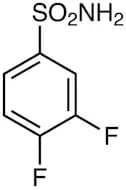
CAS:Formula:C6H5F2NO2SPurity:>98.0%(GC)Color and Shape:White to Almost white powder to crystalMolecular weight:193.171-(1,2,3,6-Tetrahydro-4-pyridyl)-2-benzimidazolinone
CAS:Formula:C12H13N3OPurity:>97.0%(HPLC)Color and Shape:Light orange to Yellow to Green powder to crystalMolecular weight:215.26Ethyl 4-Chloroquinoline-3-carboxylate
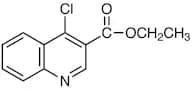
CAS:Formula:C12H10ClNO2Purity:>98.0%(GC)(T)Color and Shape:White to Orange to Green powder to crystalMolecular weight:235.674-Bromo-3-nitroacetophenone
CAS:4-Bromo-3-nitroacetophenone is a potent anticancer agent that has been shown to inhibit cancer cell growth by inhibiting the activity of dehydrogenase enzymes. It has been shown to be active against g1 phase cells, which are cells in the phase of cell cycle before mitosis. 4-Bromo-3-nitroacetophenone also has anti-inflammatory effects and can cross the blood brain barrier due to its hydrogen bond formation. This drug is selectively toxic to cancer cells while sparing healthy tissues and has been shown to be effective in treating inflammatory diseases, such as arthritis, by decreasing the production of proinflammatory cytokines.Formula:C8H6BrNO3Purity:Min. 95%Color and Shape:Yellow To Light (Or Pale) Yellow SolidMolecular weight:244.04 g/mol3-Chloro-2-nitroaniline
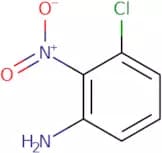
CAS:3-Chloro-2-nitroaniline is an organic compound that regulates the neuron and can be used in the treatment of Alzheimer's disease. It has been shown to bind to the potassium channel, which regulates the flow of potassium ions across neuronal membranes. 3-Chloro-2-nitroaniline also binds to the CB2 receptor, which is found on immune cells, and has been shown to be a potent agonist for this receptor. The affinity of 3-chloro-2-nitroaniline for the CB2 receptor is about 100 times greater than for the CB1 receptor. 3-Chloro-2-nitroaniline also binds to other proteins such as ABCA1 and Abca1, which regulate cholesterol transport in cells. 3-Chloro-2-nitroaniline is currently being studied as a potential drug candidate for treatment of Alzheimer's disease and other neurological disorders.
Formula:C6H5ClN2O2Purity:Min. 95%Color and Shape:PowderMolecular weight:172.57 g/mol(S)-1-(4-Methoxyphenyl)ethanol
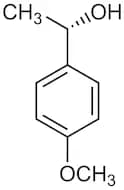
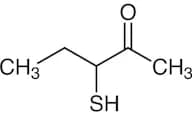
CAS:Formula:C9H12O2Purity:>95.0%(GC)Color and Shape:Colorless to Light yellow clear liquidMolecular weight:152.193-Mercapto-2-pentanone
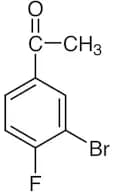
CAS:Formula:C5H10OSPurity:>97.0%(GC)(T)Color and Shape:Colorless to Almost colorless clear liquidMolecular weight:118.193'-Bromo-4'-fluoroacetophenone
CAS:Formula:C8H6BrFOPurity:>96.0%(GC)Color and Shape:White to Orange to Green powder to crystalMolecular weight:217.04L-Alaninol
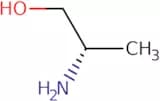
CAS:L-Alaninol is a natural amino acid that can be synthesized in an asymmetric way. It has been used as a palladium complex catalyst to produce the inorganic acid, l-alaninol. L-Alaninol is biologically active and has shown antiviral and antimicrobial activities against mycobacterium avium and human lymphocytes. It also has been shown to have anticancer properties in animal models. In addition, it has been used as a model system for the study of organic chemistry reactions. L-Alaninol has also been shown to exhibit magnetic resonance spectroscopy properties that are similar to those of l-phenylalaninol.
Formula:C3H9NOColor and Shape:Colorless Slightly Yellow Clear LiquidMolecular weight:75.11 g/mol2-Iodopyridine
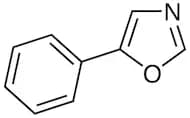
CAS:2-Iodopyridine is an organic compound with the chemical formula C5H5N. It is a white crystalline solid that is soluble in water, alcohol, and ether. The molecule contains a methyl group and two iodine atoms. 2-Iodopyridine has several industrial uses. It acts as a precursor to various pharmaceuticals and agrochemicals. The compound also exhibits insulin resistance properties, which may be related to its ability to bind to the insulin receptor and inhibit insulin signaling. 2-Iodopyridine can also be used for treating cancer because it binds to the DNA of cancer cells, preventing replication and leading to cell death.Formula:C5H4INPurity:Min. 95%Color and Shape:PowderMolecular weight:205 g/mol5-Phenyloxazole
CAS:Formula:C9H7NOPurity:>95.0%(GC)Color and Shape:White to Light yellow powder to crystalMolecular weight:145.16Indole-3-carboxylic acid methyl ester
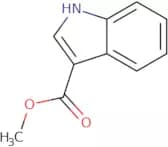
CAS:Controlled ProductIndole-3-carboxylic acid methyl ester is a quinoline derivative that is structurally related to the well-known antibiotic, ciprofloxacin. It has been shown to be cytotoxic against a variety of bacterial strains including Pseudomonas aeruginosa and Staphylococcus aureus. The mechanism of action for this compound is not yet fully understood, but it has been shown to inhibit collagen production in cell cultures and induce neuronal death in mice. Indole-3-carboxylic acid methyl ester also possesses anti-cancer properties and inhibits fatty acid synthesis. This compound also has antifungal effects against Candida albicans and other fungi.Formula:C10H9NO2Purity:Min. 98 Area-%Color and Shape:PowderMolecular weight:175.18 g/mol6-Bromocoumarin-3-carboxylic Acid
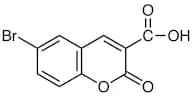
CAS:Formula:C10H5BrO4Purity:>98.0%(HPLC)Color and Shape:White to Orange to Green powder to crystalMolecular weight:269.053,5-Dimethoxybenzoic acid ethyl ester
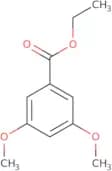
CAS:3,5-Dimethoxybenzoic acid ethyl ester is a carbonic acid ester that can be used as a synthetic intermediate. It is synthesized by reacting 3,5-dimethoxybenzoic acid with the ethyl chloride. The molecular weight of 3,5-dimethoxybenzoic acid ethyl ester is 222.6 g/mol. The homologous series includes dimethylformamide, diethylformamide, and diisopropylformamide. This compound has been shown to inhibit growth factor signaling in vitro and in vivo and may have potential therapeutic applications for cancer treatment. Impurities that may be found in 3,5-dimethoxybenzoic acid ethyl ester include chloride and sulfinyl groups. Synopses of the molecular modeling study are available on request.Formula:C11H14O4Purity:Min. 95%Molecular weight:210.23 g/mol2-Nitrobiphenyl
CAS:Formula:C12H9NO2Purity:>98.0%(GC)Color and Shape:White or Colorless to Yellow powder to lump to clear liquidMolecular weight:199.21DL-Phenylephrine Hydrochloride
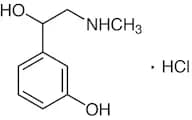
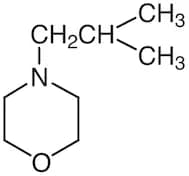
CAS:Formula:C9H13NO2·HClPurity:>98.0%(T)(HPLC)Color and Shape:White to Almost white powder to crystalMolecular weight:203.674-Isobutylmorpholine
CAS:Formula:C8H17NOPurity:>98.0%(GC)Color and Shape:Colorless to Yellow clear liquidMolecular weight:143.233,5-Dimethoxy-4-hydroxybenzoic acid methyl ester
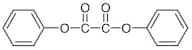
CAS:3,5-Dimethoxy-4-hydroxybenzoic acid methyl ester (DMHBME) is a natural compound that has been shown to have high redox potential values and chemical stability. This compound is an inhibitor of p-hydroxylases and has been shown to inhibit human serum laccase activity. DMHBME also inhibits polymerase chain reactions in the presence of DNA templates, which may be due to its ability to bind to the enzyme at the active site. DMHBME is a potent antimicrobial agent that can be used as a fungicide or preservative in food products. It is also effective against bacteria such as Staphylococcus aureus, Clostridium perfringens, Escherichia coli, and Mycobacterium tuberculosis.Formula:C10H12O5Purity:Min. 95%Color and Shape:White PowderMolecular weight:212.2 g/molDiphenyl Oxalate
CAS:Formula:C14H10O4Purity:>98.0%(GC)Color and Shape:White to Light yellow to Light orange powder to crystalMolecular weight:242.23