


Building Blocks
This section contains fundamental products for the synthesis of organic and biological compounds. Building blocks are the essential starting materials used to construct complex molecules through various chemical reactions. They play a critical role in drug discovery, material science, and chemical research. At CymitQuimica, we offer a diverse range of high-quality building blocks to support your innovative research and industrial projects, ensuring you have the essential components for successful synthesis.
Subcategories of "Building Blocks"
- Boronic Acids & Boronic Acid Derivatives(5,778 products)
- Chiral Building Blocks(1,242 products)
- Hydrocarbon Building Blocks(6,098 products)
- Organic Building Blocks(61,034 products)
Found 199601 products of "Building Blocks"
Sort by
Purity (%)
0
100
|
0
|
50
|
90
|
95
|
100
3-[4-(Trifluoromethyl)phenyl]pyrrolidine
CAS:<p>Versatile small molecule scaffold</p>Formula:C11H12F3NPurity:Min. 95%Molecular weight:215.22 g/mol3-[(3-Fluorophenyl)methyl]pyrrolidine
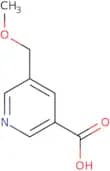
CAS:<p>Versatile small molecule scaffold</p>Formula:C11H14FNPurity:Min. 95%Molecular weight:179.23 g/mol5-(Methoxymethyl)pyridine-3-carboxylic acid
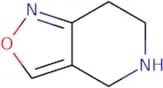
CAS:Versatile small molecule scaffoldFormula:C8H9NO3Purity:Min. 95%Molecular weight:167.16 g/molcyclopentanecarboxamide
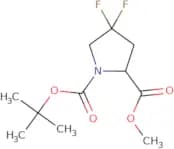
CAS:<p>Cyclopentanecarboxamide is a class of organic compounds that are used as antihypertensives, immunosuppressants, and antineoplastic agents. The compound is a potent adenosine receptor antagonist and has been shown to inhibit the production of chemokines in cultured cells. Cyclopentanecarboxamide also inhibits the activation of hydrogen bond-dependent enzymes such as fatty acid synthase and lipoxygenase. This inhibition leads to an anti-inflammatory effect by reducing inflammation caused by these enzymes. Cyclopentanecarboxamide also has been shown to reduce the incidence of myocardial infarcts in rats when given before or after coronary artery ligation.</p>Formula:C6H8N2OPurity:Min. 95%Molecular weight:124.14 g/mol1-tert-Butyl 2-methyl 4,4-difluoropyrrolidine-1,2-dicarboxylate
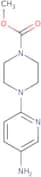
CAS:<p>Versatile small molecule scaffold</p>Formula:C11H17F2NO4Purity:Min. 95%Molecular weight:265.25 g/molMethyl 4-(5-aminopyridin-2-yl)piperazine-1-carboxylate
CAS:Versatile small molecule scaffoldFormula:C11H16N4O2Purity:Min. 95%Molecular weight:236.27 g/mol3-(6,8-Dimethyl-[1,2,4]triazolo[4,3-b]pyridazin-7-yl)-propionic acid
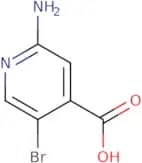
CAS:<p>Versatile small molecule scaffold</p>Formula:C10H12N4O2Purity:Min. 95%Molecular weight:220.23 g/mol2-Amino-5-bromopyridine-4-carboxylic acid
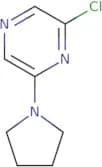
CAS:<p>2-Amino-5-bromopyridine-4-carboxylic acid (2ABPC) is a molecule that inhibits DNA gyrase and topoisomerase IV, which are enzymes that maintain the integrity of bacterial DNA. It binds to bacterial 16S ribosomal RNA and inhibits protein synthesis, leading to cell death by inhibiting the production of proteins vital for cell division. 2ABPC has been shown to be effective against gram-positive pathogens such as Streptococcus pneumoniae and Staphylococcus aureus. This drug also has antibacterial activity against gram negative pathogens such as Escherichia coli, Pseudomonas aeruginosa, Klebsiella pneumoniae, Proteus vulgaris, Enterobacter cloacae, Citrobacter freundii, Salmonella typhi, and Shigella dysenteriae. The antibacterial activity of 2ABPC may be due to its inhibition</p>Formula:C6H5BrN2O2Purity:Min. 95%Molecular weight:217.02 g/mol2-Chloro-6-(pyrrolidin-1-yl)pyrazine
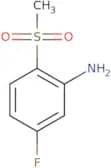
CAS:<p>Versatile small molecule scaffold</p>Formula:C8H10ClN3Purity:Min. 95%Molecular weight:183.64 g/mol5-Fluoro-2-methanesulfonylaniline
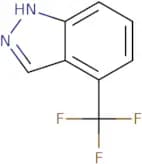
CAS:<p>Versatile small molecule scaffold</p>Formula:C7H8FNO2SPurity:Min. 95%Molecular weight:189.21 g/mol4-(Trifluoromethyl)-1H-indazole
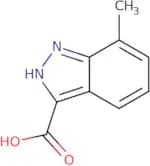
CAS:<p>Versatile small molecule scaffold</p>Formula:C8H5F3N2Purity:Min. 95%Molecular weight:186.14 g/mol7-Methyl-1H-indazole-3-carboxylic acid
CAS:<p>Versatile small molecule scaffold</p>Formula:C9H8N2O2Purity:Min. 95%Molecular weight:176.17 g/mol6-chloro-1H-pyrrolo[2,3-b]pyridin-4-amine
CAS:<p>Versatile small molecule scaffold</p>Formula:C7H6ClN3Purity:Min. 95%Molecular weight:167.6 g/mol3-Iodo-4-methoxy-1H-pyrrolo[3,2-c]pyridine
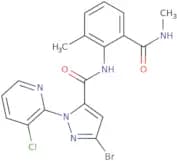
CAS:Versatile small molecule scaffoldFormula:C8H7IN2OPurity:Min. 95%Molecular weight:274.06 g/mol3-Deschloro-4-methyl-chlorantraniliprole
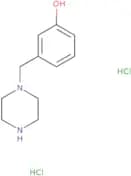
CAS:<p>Versatile small molecule scaffold</p>Formula:C18H15BrClN5O2Purity:Min. 95%Molecular weight:448.7 g/mol3-(Piperazin-1-ylmethyl)phenol dihydrochloride
CAS:Controlled Product<p>Versatile small molecule scaffold</p>Formula:C11H18Cl2N2OPurity:Min. 95%Molecular weight:265.18 g/mol2,4-Dimethoxybenzaldehyde oxime
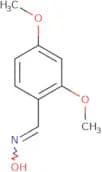
CAS:<p>2,4-Dimethoxybenzaldehyde oxime is a nitrile and an oxime. It inhibits the activity of creatine kinase, which is responsible for the conversion of creatine to creatinine in muscle tissue. 2,4-Dimethoxybenzaldehyde oxime has been shown to increase plasma glucose levels in rats by inhibiting the activity of glucokinase. The compound also inhibits creatine kinase and increases creatinine levels in blood serum.</p>Formula:C9H11NO3Purity:Min. 95%Molecular weight:181.19 g/molMethyl 2-cyano-3-methylbenzoate
CAS:<p>Versatile small molecule scaffold</p>Formula:C10H9NO2Purity:Min. 95%Molecular weight:175.18 g/mol3-[2-(Dimethylamino)ethoxy]benzonitrile
CAS:Controlled ProductVersatile small molecule scaffoldFormula:C11H14N2OPurity:Min. 95%Molecular weight:190.24 g/mol4-[(Dimethylamino)methyl]-N'-hydroxybenzene-1-carboximidamide
CAS:<p>Versatile small molecule scaffold</p>Formula:C10H15N3OPurity:Min. 95%Molecular weight:193.25 g/mol
![3-[4-(Trifluoromethyl)phenyl]pyrrolidine](/_next/image/?url=https%3A%2Fstatic.cymitquimica.com%2Fproducts%2F3D%2Fthumb-webp%2FAQB19876.webp&w=3840&q=75)

![3-[(3-Fluorophenyl)methyl]pyrrolidine](/_next/image/?url=https%3A%2Fstatic.cymitquimica.com%2Fproducts%2F3D%2Fthumb-webp%2FAQB19880.webp&w=3840&q=75)
![3-(6,8-Dimethyl-[1,2,4]triazolo[4,3-b]pyridazin-7-yl)-propionic acid](/_next/image/?url=https%3A%2Fstatic.cymitquimica.com%2Fproducts%2F3D%2Fthumb-webp%2FAQB33920.webp&w=3840&q=75)
![6-chloro-1H-pyrrolo[2,3-b]pyridin-4-amine](/_next/image/?url=https%3A%2Fstatic.cymitquimica.com%2Fproducts%2F3D%2Fthumb-webp%2FAQB34080.webp&w=3840&q=75)
![3-Iodo-4-methoxy-1H-pyrrolo[3,2-c]pyridine](/_next/image/?url=https%3A%2Fstatic.cymitquimica.com%2Fproducts%2F3D%2Fthumb-webp%2FAQB34125.webp&w=3840&q=75)

![3-[2-(Dimethylamino)ethoxy]benzonitrile](/_next/image/?url=https%3A%2Fstatic.cymitquimica.com%2Fproducts%2F3D%2Fthumb-webp%2FAVA02450.webp&w=3840&q=75)
![4-[(Dimethylamino)methyl]-N'-hydroxybenzene-1-carboximidamide](/_next/image/?url=https%3A%2Fstatic.cymitquimica.com%2Fproducts%2F3D%2Fthumb-webp%2FAVA02479.webp&w=3840&q=75)