Building Blocks
This section contains fundamental products for the synthesis of organic and biological compounds. Building blocks are the essential starting materials used to construct complex molecules through various chemical reactions. They play a critical role in drug discovery, material science, and chemical research. At CymitQuimica, we offer a diverse range of high-quality building blocks to support your innovative research and industrial projects, ensuring you have the essential components for successful synthesis.
Subcategories of "Building Blocks"
- Boronic Acids & Boronic Acid Derivatives(5,778 products)
- Chiral Building Blocks(1,242 products)
- Hydrocarbon Building Blocks(6,098 products)
- Organic Building Blocks(61,098 products)
Found 199594 products of "Building Blocks"
Sort by
Purity (%)
0
100
|
0
|
50
|
90
|
95
|
100
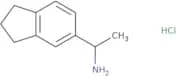
1-(2,3-Dihydro-1H-inden-5-yl)ethan-1-amine hydrochloride
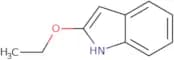
CAS:Versatile small molecule scaffoldFormula:C11H16ClNPurity:Min. 95%Molecular weight:197.7 g/mol2-Ethoxy-1H-indole
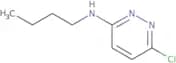
CAS:<p>2-Ethoxy-1H-indole is a synthetic, nucleophilic compound that has been shown to be an effective hydrogenation catalyst. The biological properties of 2-ethoxy-1H-indole have been studied in both animals and humans. In rats, this compound has shown to be an effective analgesic and antiinflammatory agent with few side effects. 2-Ethoxy-1H-indole also has shown efficacy in the treatment of Parkinson's disease in animal models. This drug can be used as a precursor for a variety of compounds including carboximidamides, enecarbamates, amines, or sulfoxides. It is also possible to control the stereocontrol of 2-ethoxy-1H-indole by using chiral reagents or by converting it to its chiral counterpart (2-(2'-ethoxy)-1H-indole).</p>Formula:C10H11NOPurity:Min. 95%Molecular weight:161.2 g/mol3-(Butylamino)-6-chloropyridazine
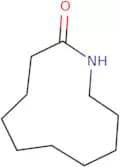
CAS:<p>Versatile small molecule scaffold</p>Formula:C8H12ClN3Purity:Min. 95%Molecular weight:185.66 g/molAzacycloundecan-2-one
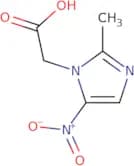
CAS:<p>Azacycloundecan-2-one is a ring-opening polymerization monomer that exhibits good solubility in organic solvents. It is used as the precursor to polyamides and polymeric matrices. Azacycloundecan-2-one has been shown to form a film with a high degree of viscosity and excellent mechanical properties, which are desirable for films in the food industry. Ring opening polymerization of azacycloundecan-2-one can be achieved by using magnesium salts or diacids as catalysts. The lactam ring structure of azacycloundecan-2-one provides reactive sites for reactions with other compounds, such as amines, alcohols, phenols, and carboxylic acids.</p>Formula:C10H19NOPurity:Min. 95%Color and Shape:PowderMolecular weight:169.26 g/mol2-(2-Methyl-5-nitro-1H-imidazol-1-yl)acetic acid
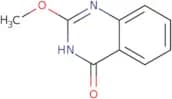
CAS:<p>2-(2-Methyl-5-nitro-1H-imidazol-1-yl)acetic acid is an antimicrobial agent that inhibits the growth of bacteria by oxidation. It has been shown to be effective against protozoan parasites and has a good activity against Gram-positive bacteria. The main metabolic pathway for 2-(2-Methyl-5-nitro-1H-imidazol-1-yl)acetic acid is hydrolysis by hydrochloric acid, with a minor route involving hydroxy metabolite formation. This drug also acts as a prodrug for antipyrine, which inhibits bacterial growth via inhibition of protein synthesis.</p>Formula:C6H7N3O4Purity:Min. 95%Molecular weight:185.14 g/mol2-Methoxyquinazolin-4-ol
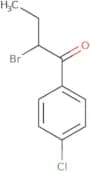
CAS:<p>Versatile small molecule scaffold</p>Formula:C9H8N2O2Purity:Min. 95%Molecular weight:176.17 g/mol2-Bromo-1-(4-chlorophenyl)butan-1-one
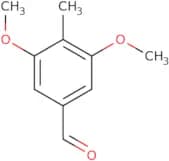
CAS:<p>Versatile small molecule scaffold</p>Formula:C10H10BrClOPurity:Min. 95%Molecular weight:261.54 g/mol3,5-dimethoxy-4-methylbenzaldehyde
CAS:<p>3,5-Dimethoxy-4-methylbenzaldehyde is a phenylacetic compound that is found in the fructus of plants. It has been shown to have tumor necrosis factor (TNF) and phenolic properties. This molecule also stimulates the inflammatory process by inducing pro-inflammatory cytokines such as TNF-α and IL-1β. 3,5-Dimethoxy-4-methylbenzaldehyde has been found to inhibit the growth of various bacteria, including methicillin resistant Staphylococcus aureus isolates, when used at concentrations of 0.001%.</p>Formula:C10H12O3Purity:Min. 95%Molecular weight:180.2 g/mol3-Phenylisoxazole-5-carbonitrile
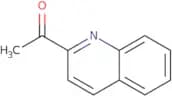
CAS:<p>Versatile small molecule scaffold</p>Formula:C10H6N2OPurity:Min. 95%Molecular weight:170.17 g/mol1-(Quinolin-2-yl)ethanone
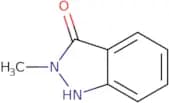
CAS:<p>1-(Quinolin-2-yl)ethanone is an inhibitor of proteolytic enzymes. It is a triazolopyrimidine that binds to the active site of proteases, thereby inhibiting their activity. 1-(Quinolin-2-yl)ethanone has been shown to be effective against viruses such as herpes simplex virus and Streptococcus faecalis, and bacterial infections such as streptococcus faecalis and Staphylococcus aureus. 1-(Quinolin-2-yl)ethanone also inhibits the production of matrix metalloproteinases, which play an important role in tumor development, by binding to the zinc ion in the enzyme's active site. This compound can also be used synergistically with copper chloride or hydrochloric acid to inhibit protease activity.</p>Formula:C11H9NOPurity:Min. 95%Molecular weight:171.2 g/mol2-Methyl-2,3-dihydro-1H-indazol-3-one
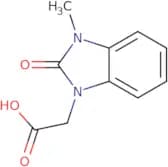
CAS:<p>Versatile small molecule scaffold</p>Formula:C8H8N2OPurity:Min. 95%Molecular weight:148.16 g/mol(3-Methyl-2-oxo-2,3-dihydro-benzoimidazol-1-yl)-acetic acid
CAS:Versatile small molecule scaffoldFormula:C10H10N2O3Purity:Min. 95%Molecular weight:206.2 g/mol2-[3-(Carboxymethyl)-2-oxo-2,3-dihydro-1H-1,3-benzodiazol-1-yl]acetic acid
CAS:Versatile small molecule scaffoldFormula:C11H10N2O5Purity:Min. 95%Molecular weight:250.21 g/mol1-Methyl-2-benzimidazolinone
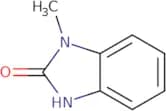
CAS:<p>1-Methyl-2-benzimidazolinone is a synthetic compound that has been shown to be cytotoxic to cancer cells. It binds to metal ions and forms reactive intermediates, which are able to react with nucleophiles in cellular macromolecules. The reaction mechanism of 1-methyl-2-benzimidazolinone is similar to the reaction of picolinic acid with metal hydroxides. The heteroarylations of this compound have also been studied using chemical ligation, and it has been found that the d4 receptor may play a role in its cytotoxicity.</p>Formula:C8H8N2OPurity:Min. 95%Molecular weight:148.16 g/mol2-Amino-4,7-dichlorobenzothiazole
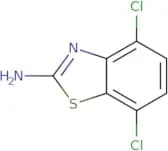
CAS:<p>Versatile small molecule scaffold</p>Formula:C7H4Cl2N2SPurity:Min. 95%Molecular weight:219.09 g/mol4,5-Dichloro-benzothiazol-2-ylamine
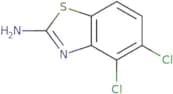
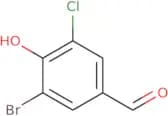
CAS:<p>Versatile small molecule scaffold</p>Formula:C7H4Cl2N2SPurity:Min. 95%Molecular weight:219.08 g/mol3-Bromo-5-chloro-4-hydroxybenzaldehyde
CAS:<p>3-Bromo-5-chloro-4-hydroxybenzaldehyde (3BCHA) is a phenolic compound that has been used in the synthesis of new drugs. 3BCHA is produced by the ozonation of 2,6-dichlorophenol and subsequent reactions with sodium hydroxide and hydrogen peroxide. The production of 3BCHA can be monitored using gas chromatography/electron spray ionization mass spectrometry (GC/ESI MS). 3BCHA can be synthesized in two ways:</p>Formula:C7H4BrClO2Purity:Min. 95%Molecular weight:235.46 g/mol{4-[2-(Diethylamino)ethoxy]phenyl}methanamine
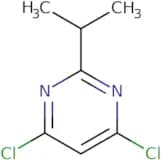
CAS:Controlled Product<p>Versatile small molecule scaffold</p>Formula:C13H22N2OPurity:Min. 95%Molecular weight:222.33 g/mol4,6-Dichloro-2-(propan-2-yl)pyrimidine
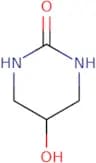
CAS:<p>Versatile small molecule scaffold</p>Formula:C7H8Cl2N2Purity:Min. 95%Molecular weight:191.05 g/mol5-Hydroxy-1,3-diazinan-2-one
CAS:<p>Versatile small molecule scaffold</p>Formula:C4H8N2O2Purity:Min. 95%Molecular weight:116.12 g/mol


![2-[3-(Carboxymethyl)-2-oxo-2,3-dihydro-1H-1,3-benzodiazol-1-yl]acetic acid](/_next/image/?url=https%3A%2Fstatic.cymitquimica.com%2Fproducts%2F3D%2Fthumb-webp%2FBAA84899.webp&w=3840&q=75)
![{4-[2-(Diethylamino)ethoxy]phenyl}methanamine](/_next/image/?url=https%3A%2Fstatic.cymitquimica.com%2Fproducts%2F3D%2Fthumb-webp%2FBAA84980.webp&w=3840&q=75)