


Building Blocks
This section contains fundamental products for the synthesis of organic and biological compounds. Building blocks are the essential starting materials used to construct complex molecules through various chemical reactions. They play a critical role in drug discovery, material science, and chemical research. At CymitQuimica, we offer a diverse range of high-quality building blocks to support your innovative research and industrial projects, ensuring you have the essential components for successful synthesis.
Subcategories of "Building Blocks"
- Boronic Acids & Boronic Acid Derivatives(5,778 products)
- Chiral Building Blocks(1,242 products)
- Hydrocarbon Building Blocks(6,098 products)
- Organic Building Blocks(61,069 products)
Found 197521 products of "Building Blocks"
Sort by
Purity (%)
0
100
|
0
|
50
|
90
|
95
|
100
4H,5H,6H-Thieno[3,4-c]pyrrole-4,6-dione
CAS:<p>4H,5H,6H-Thieno[3,4-c]pyrrole-4,6-dione is a potent antitumor agent that inhibits the activity of protein kinases. It has been shown to have the ability to inhibit tumor growth in animal models and has been shown to be effective against resistant microorganisms such as Staphylococcus aureus and Mycobacterium tuberculosis. 4H,5H,6H-Thieno[3,4-c]pyrrole-4,6-dione has also been shown to improve hematopoiesis by stimulating colony stimulating factor production. This compound is metabolized through a number of metabolic transformations including oxidative deamination by monoamine oxidase or pyridoxal phosphate dependent aminotransferases. The biological properties of 4H,5H,6H-Thieno[3,4-c]pyrrole-4</p>Formula:C6H3NO2SPurity:Min. 95%Molecular weight:153.16 g/mol3-Oxa-8-thiabicyclo[3.2.1]octane-2,4-dione
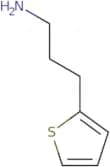
CAS:<p>Versatile small molecule scaffold</p>Formula:C6H6O3SPurity:Min. 95%Molecular weight:158.18 g/mol3-(Thiophen-2-yl)propan-1-amine
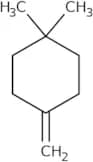
CAS:<p>3-(Thiophen-2-yl)propan-1-amine is an organic solvent that is used as a reactant in the production of polyphosphoric acid. It is also used in the synthesis of pharmaceuticals. This compound can be produced by reacting chloroformate with propylamine and aluminium chloride in a solution of hydrochloric acid, producing 3-(thiophen-2-yl)propan-1-amine and hydrogen chloride gas. The reaction can also be carried out using phosphoryl chloride and propylamine to produce 3-(thiophen-2-yl)propan-1-amine and phosphorus pentoxide.</p>Formula:C7H11NSPurity:Min. 95%Molecular weight:141.24 g/mol1,1-dimethyl-4-methylidenecyclohexane
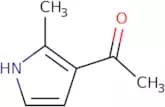
CAS:<p>Mesityl oxide is a colorless liquid with a sweet odor that is used as a flavor and fragrance agent. It can be found in the volatile fraction of many essential oils such as lavender, rosemary, and sage. Mesityl oxide has been identified by gas chromatography-mass spectrometry (GC-MS) to be present in the volatile fraction of these oils. It is also found in many foods such as red wine, coffee, and beer. Mesityl oxide has been shown to have differentiating properties in initially similar samples. This compound can be detected by GC-MS using an oxidized pentane extraction procedure.<br>Mesityl oxide is not considered to be toxic at low doses but may cause irritation at high doses.</p>Formula:C9H16Purity:Min. 95%Molecular weight:124.23 g/mol1-(2-Methyl-1H-pyrrol-3-yl)ethanone
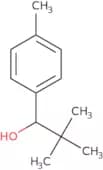
CAS:<p>Versatile small molecule scaffold</p>Formula:C7H9NOPurity:Min. 95%Molecular weight:123.15 g/mol2,2-Dimethyl-1-(4-methylphenyl)propan-1-ol
CAS:<p>2,2-Dimethyl-1-(4-methylphenyl)propan-1-ol is a product of the dehydration of 2,2-dimethylcyclohexanol. The hydrogenolysis reaction with metals such as palladium or platinum has been shown to produce retropinacol in high yields. The catalytic dehydroxylation reaction can be carried out using a variety of metal catalysts, such as palladium or platinum. 2,2-Dimethyl-1-(4-methylphenyl)propan-1-ol is also produced by the isomerization of other alcohols and can be synthesized by reacting an alkyl halide with carbonium ions.</p>Formula:C12H18OPurity:Min. 95%Molecular weight:178.27 g/molPyrimido[4,5-d][1,3]diazine-4-thiol
CAS:<p>Versatile small molecule scaffold</p>Formula:C6H4N4SPurity:Min. 95%Molecular weight:164.19 g/molN-(1H-Indol-5-yl)benzamide
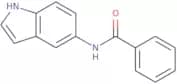
CAS:<p>N-(1H-Indol-5-yl)benzamide is a tetraaryl compound that acts as a catalyst. It has been shown to be active against Gram-positive bacteria, such as Streptococcus pneumoniae and Staphylococcus aureus, at 10 μM. This compound has high activity against these bacteria and is more stable at higher temperatures. N-(1H-Indol-5-yl)benzamide has also been shown to have good stability in the presence of clarithromycin, which is an antibiotic used to treat bacterial infections. This drug can form a complex with clavulanic acid (a β-lactamase inhibitor) and thus can inhibit bacterial growth by binding to the ribosomal RNA of the bacteria. The molecular weight of N-(1H-indol-5-yl)benzamide is 169 g/mol and its functional groups are hydroxyl, carbonyl, and car</p>Formula:C15H12N2OPurity:Min. 95%Molecular weight:236.27 g/mol4-Hydroxy-2,3-dimethylbenzoic acid
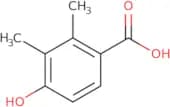
CAS:<p>4-Hydroxy-2,3-dimethylbenzoic acid is a hydroxybenzoic acid that is soluble in oil solutions. It has been shown to be a ligand with additives such as hydrocarbon groups and can be used as an additive for hydrocarbons. 4-Hydroxy-2,3-dimethylbenzoic acid also has cyclic properties and can be used as a lubricant. This compound has been shown to have anticorrosive properties and can be used to treat metals. 4-Hydroxy-2,3-dimethylbenzoic acid is also a reactive compound with the chemical formula CH(COOH)CH(OH)COOH. It reacts with trifluoromethanesulfonic acid (TFMS) to produce the corresponding carboxylic acid and sulfonic acid products, which are strong absorbers of UV light. 4-Hydroxyl benzoic acid is found in the molecule</p>Formula:C9H10O3Purity:Min. 95%Molecular weight:166.17 g/mol4-Chloropyrrolo[1,2-a]quinoxaline
CAS:4-Chloropyrrolo[1,2-a]quinoxaline is an organic compound that is used in the synthesis of other drugs. It is a chiral molecule that can be derived from the natural product quinoxaline. 4-Chloropyrrolo[1,2-a]quinoxaline has been shown to inhibit efflux proteins in mammalian cells and to inhibit the kinase activity of hepg2 cell lines. These effects may be due to its ability to bind to the ATP binding site of these enzymes and prevent ATP hydrolysis. 4-Chloropyrrolo[1,2-a]quinoxaline has been shown to bind selectively with protein kinases and has antimalarial activity against Plasmodium falciparum, a parasite that causes malaria.Formula:C11H7ClN2Purity:Min. 95%Molecular weight:202.64 g/molPiperidine-3-carboxylic acid hydrochloride
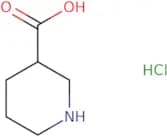
CAS:<p>Versatile small molecule scaffold</p>Formula:C6H12ClNO2Purity:Min. 95%Molecular weight:165.62 g/mol2,3-Dihydro-1,3-thiazol-2-one
CAS:<p>Versatile small molecule scaffold</p>Formula:C3H3NOSPurity:Min. 95%Molecular weight:101.13 g/mol4-Chloro-2,6-dimethylbenzaldehyde
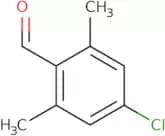
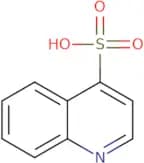
CAS:<p>Versatile small molecule scaffold</p>Formula:C9H9ClOPurity:Min. 95%Molecular weight:168.62 g/molQuinoline-4-sulfonic acid
CAS:<p>Quinoline-4-sulfonic acid is a chemical compound that belongs to the class of quinoline derivatives. It has a linear range of activity and inhibits enzymes such as glutamicum, organisms, additives, metal ion, alkali metal, heterocycle, methyl groups and oxygenated. The optimum pH for this compound is 7. Quinoline-4-sulfonic acid is not very soluble in water but is soluble in an organic solvent such as acetone or ethanol. This molecule has been shown to be active against strains of Escherichia coli.</p>Formula:C9H7NO3SPurity:Min. 95%Molecular weight:209.22 g/molN-[(Naphthalen-1-yl)methyl]guanidine hydrochloride
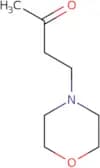
CAS:<p>Versatile small molecule scaffold</p>Formula:C12H14ClN3Purity:Min. 95%Molecular weight:235.71 g/mol4-Morpholin-4-ylbutan-2-one
CAS:<p>Versatile small molecule scaffold</p>Formula:C8H15NO2Purity:Min. 95%Molecular weight:157.21 g/mol2H,3H-Naphtho[1,2-b]furan-2-one
CAS:<p>2H,3H-Naphtho[1,2-b]furan-2-one is a potent antagonist of the plasminogen activator inhibitor type 1 (PAI-1) and the urokinase-type plasminogen activator (uPA). It has been shown to be a potential therapeutic agent for the treatment of cancer and rheumatoid arthritis. The inhibition of PAI-1 and uPA by 2H,3H-Naphtho[1,2-b]furan-2-one leads to an increase in fibrinolysis or dissolution of blood clots, as well as angiogenesis. This may account for its antitumor activity. 2H,3H-Naphtho[1,2-b]furan-2-one has also been synthesized using intramolecular cyclization reactions with high yields and purity.</p>Formula:C12H8O2Purity:Min. 95%Molecular weight:184.19 g/mol2-Oxaspiro[4.5]decane-1,3-dione
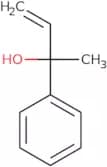
CAS:<p>2-Oxaspiro[4.5]decane-1,3-dione is a heterocyclic compound that is used in pharmaceutical research and the development of new drugs. It can be synthesized by reacting phenylhydrazine with 2-oxaspiro[4.5]decane-1,3-dione. The nitrogen atom in this molecule is essential for its activity and pharmacological properties, which are similar to those of phenacetin. The profile of 2-oxaspiro[4.5]decane-1,3-dione has been studied using physicochemical parameters such as molecular weight and melting point. This molecule was first discovered to have antilead activities by Friedel and Crafts reaction with lead iodide.</p>Formula:C9H12O3Purity:Min. 95%Molecular weight:168.19 g/mol2-Phenylbut-3-en-2-ol
CAS:<p>2-Phenylbut-3-en-2-ol is a synthetic molecule that has been shown to be an efficient ligand for the treatment of halides. It also has been used in allylation reactions with proton catalysis and as an epoxide functional group. This compound can be synthesized from the reaction of acetone, propylene oxide, and butadiene. 2-Phenylbut-3-en-2-ol is a byproduct of the synthesis of obtustyrene. This compound has been used in cross coupling reactions as well as carbonic acid transfer reactions.</p>Formula:C10H12OPurity:Min. 95%Molecular weight:148.2 g/mol1-(Ethylsulfanyl)-2-{[2-(ethylsulfanyl)ethyl]sulfanyl}ethane
CAS:<p>1-(Ethylsulfanyl)-2-[(2-ethylsulfanyl) ethyl]sulfanylethane is a polymerizable and ultraviolet absorber that can be used in acrylic paints. It interacts with the double bonds of acrylic resin to form cross-linked polymers, thereby increasing the hardness and durability of the paint. 1-(Ethylsulfanyl)-2-[(2-ethylsulfanyl) ethyl]sulfanylethane absorbs UV light in the range of 320 - 350 nm and exhibits high optical purity.</p>Formula:C8H18S3Purity:Min. 95%Molecular weight:210.4 g/mol
![4H,5H,6H-Thieno[3,4-c]pyrrole-4,6-dione](/_next/image/?url=https%3A%2Fstatic.cymitquimica.com%2Fproducts%2F3D%2Fthumb-webp%2FGAA00782.webp&w=3840&q=75)

![3-Oxa-8-thiabicyclo[3.2.1]octane-2,4-dione](/_next/image/?url=https%3A%2Fstatic.cymitquimica.com%2Fproducts%2F3D%2Fthumb-webp%2FGAA00784.webp&w=3840&q=75)
![Pyrimido[4,5-d][1,3]diazine-4-thiol](/_next/image/?url=https%3A%2Fstatic.cymitquimica.com%2Fproducts%2F3D%2Fthumb-webp%2FGAA01408.webp&w=3840&q=75)
![4-Chloropyrrolo[1,2-a]quinoxaline](/_next/image/?url=https%3A%2Fstatic.cymitquimica.com%2Fproducts%2F3D%2Fthumb-webp%2FGAA02569.webp&w=3840&q=75)

![N-[(Naphthalen-1-yl)methyl]guanidine hydrochloride](/_next/image/?url=https%3A%2Fstatic.cymitquimica.com%2Fproducts%2F3D%2Fthumb-webp%2FGAA04771.webp&w=3840&q=75)
![2H,3H-Naphtho[1,2-b]furan-2-one](/_next/image/?url=https%3A%2Fstatic.cymitquimica.com%2Fproducts%2F3D%2Fthumb-webp%2FGAA05080.webp&w=3840&q=75)
![2-Oxaspiro[4.5]decane-1,3-dione](/_next/image/?url=https%3A%2Fstatic.cymitquimica.com%2Fproducts%2F3D%2Fthumb-webp%2FGAA05125.webp&w=3840&q=75)
![1-(Ethylsulfanyl)-2-{[2-(ethylsulfanyl)ethyl]sulfanyl}ethane](/_next/image/?url=https%3A%2Fstatic.cymitquimica.com%2Fproducts%2F3D%2Fthumb-webp%2FGAA05245.webp&w=3840&q=75)