


Building Blocks
This section contains fundamental products for the synthesis of organic and biological compounds. Building blocks are the essential starting materials used to construct complex molecules through various chemical reactions. They play a critical role in drug discovery, material science, and chemical research. At CymitQuimica, we offer a diverse range of high-quality building blocks to support your innovative research and industrial projects, ensuring you have the essential components for successful synthesis.
Subcategories of "Building Blocks"
- Boronic Acids & Boronic Acid Derivatives(5,783 products)
- Chiral Building Blocks(1,242 products)
- Hydrocarbon Building Blocks(6,105 products)
- Organic Building Blocks(61,055 products)
Found 205383 products of "Building Blocks"
Sort by
Purity (%)
0
100
|
0
|
50
|
90
|
95
|
100
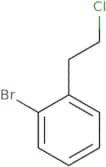
1-Bromo-2-(2-chloroethyl)benzene
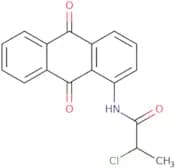
CAS:Versatile small molecule scaffoldFormula:C8H8BrClPurity:Min. 95%Molecular weight:219.5 g/mol2-Chloro-N-(9,10-dioxo-9,10-dihydroanthracen-1-yl)propanamide
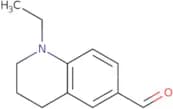
CAS:Versatile small molecule scaffoldFormula:C17H12ClNO3Purity:Min. 95%Molecular weight:313.7 g/mol1-Ethyl-1,2,3,4-tetrahydro-quinoline-6-carbaldehyde
CAS:Versatile small molecule scaffoldFormula:C12H15NOPurity:Min. 95%Molecular weight:189.26 g/mol3,4-Dihydro-2H-spiro[naphthalene-1,3'-oxolane]-2',5'-dione
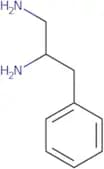
CAS:Versatile small molecule scaffoldFormula:C13H12O3Purity:Min. 95%Molecular weight:216.23 g/mol3-Phenylpropane-1,2-diamine
CAS:3-Phenylpropane-1,2-diamine is a phenoxy compound that has potent inhibitory activity against benzyl aminosulfonyl and phenylethyl groups. It also has an anti-metastatic effect on anions, which may be due to its ability to inhibit the activity of metalloproteinases. 3-Phenylpropane-1,2-diamine is synthesized from phenol and acetone by the reaction with methylamine in the presence of ethylamine. This compound also inhibits the activity of carboxypeptidase A, an enzyme that degrades insulin. 3-Phenylpropane-1,2-diamine can be used as a derivate for other substances such as nitrobenzene or chloroacetophenone.Formula:C9H14N2Purity:Min. 95%Molecular weight:150.22 g/mol[2-(Azepan-1-ylmethyl)phenyl]methanamine
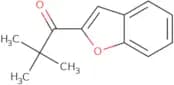
CAS:Versatile small molecule scaffoldFormula:C14H22N2Purity:Min. 95%Molecular weight:218.34 g/mol1-(1-Benzofuran-2-yl)-2,2-dimethylpropan-1-one
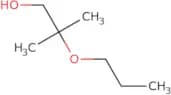
CAS:Versatile small molecule scaffoldFormula:C13H14O2Purity:Min. 95%Molecular weight:202.25 g/mol2-Methyl-2-propoxypropan-1-ol
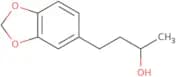
CAS:Versatile small molecule scaffoldFormula:C7H16O2Purity:Min. 95%Molecular weight:132.2 g/mol4-(1,3-Dioxaindan-5-yl)butan-2-ol
CAS:Controlled ProductVersatile small molecule scaffold
Formula:C11H14O3Purity:Min. 95%Molecular weight:194.23 g/mol2-{[(2-Phenyl-1,3-oxazol-4-yl)methyl]sulfanyl}acetic acid
CAS:Versatile small molecule scaffold
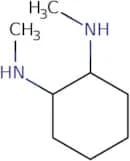
Formula:C12H11NO3SPurity:Min. 95%Molecular weight:249.29 g/molCis-N,N-dimethyl-1,2-cyclohexanediamine
CAS:Versatile small molecule scaffold
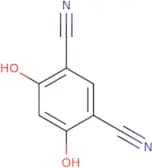
Formula:C8H18N2Purity:Min. 95%Molecular weight:142.24 g/mol4,6-Dihydroxybenzene-1,3-dicarbonitrile
CAS:4,6-Dihydroxybenzene-1,3-dicarbonitrile (4,6DBCN) is a glycosylase that selectively removes damaged nucleotides from the DNA backbone. 4,6DBCN has been shown to protect mammalian cells against oxidative damage by removing reactive oxygen species (ROS) and reducing the redox potential. This drug has been shown to be effective in preventing cancer and neurodegenerative diseases such as Alzheimer's disease. The effectiveness of 4,6DBCN is dose-dependent, with lower doses inducing cell recruitment and death while higher doses cause excision of damaged DNA.
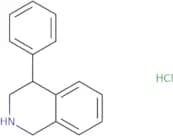
Formula:C8H4N2O2Purity:Min. 95%Molecular weight:160.13 g/mol4-Phenyl-1,2,3,4-tetrahydroisoquinoline HCl
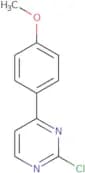
CAS:4-Phenyl-1,2,3,4-tetrahydroisoquinoline HCl (4PTI) is a purgative drug that is used for the treatment of chronic kidney disease. It has been shown to have an inhibitory effect on cancer cells in culture. 4PTI prevents the uptake of glucose and fatty acids into the cell by binding to the cellular receptor for these substances. This binding inhibits cellular uptake of glucose and fatty acids by inhibiting the translocation of GLUT1 from intracellular compartments to the plasma membrane. 4PTI also blocks dopamine release from nerve terminals in rat striatum by inhibiting dopamine uptake.Formula:C15H16ClNPurity:Min. 95%Molecular weight:245.75 g/mol2-Chloro-4-(4-methoxyphenyl)pyrimidine
CAS:Versatile small molecule scaffoldFormula:C11H9ClN2OPurity:Min. 95%Molecular weight:220.65 g/molN-(2-Hydroxyethyl)bicyclo[2.2.1]hept-5-ene-2-carboxamide
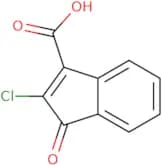
CAS:Versatile small molecule scaffoldFormula:C10H15NO2Purity:Min. 95%Molecular weight:181.23 g/mol2-Chloro-1-oxo-1H-indene-3-carboxylic acid
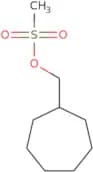
CAS:Versatile small molecule scaffoldFormula:C10H5ClO3Purity:Min. 95%Molecular weight:208.6 g/molcycloheptylmethanol; methanesulfonic acid
CAS:Versatile small molecule scaffoldFormula:C9H20O4SPurity:Min. 95%Molecular weight:224.32 g/molN-[2-(4-Methoxyphenyl)ethyl]-2-(methylamino)benzamide
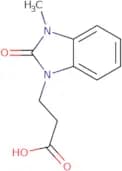
CAS:Versatile small molecule scaffoldFormula:C17H20N2O2Purity:Min. 95%Molecular weight:284.35 g/mol3-(3-Methyl-2-oxo-2,3-dihydro-benzoimidazol-1-yl)-propionic acid
CAS:Versatile small molecule scaffoldFormula:C11H12N2O3Purity:Min. 95%Molecular weight:220.22 g/molrac[(1R,2S)-2-(Hydroxymethyl)cyclopentyl]methanol
CAS:Versatile small molecule scaffoldFormula:C7H14O2Purity:Min. 95%Molecular weight:130.18 g/mol

![3,4-Dihydro-2H-spiro[naphthalene-1,3'-oxolane]-2',5'-dione](/_next/image/?url=https%3A%2Fstatic.cymitquimica.com%2Fproducts%2F3D%2Fthumb-webp%2FADA54229.webp&w=3840&q=75)
![[2-(Azepan-1-ylmethyl)phenyl]methanamine](/_next/image/?url=https%3A%2Fstatic.cymitquimica.com%2Fproducts%2F3D%2Fthumb-webp%2FADA54579.webp&w=3840&q=75)
![2-{[(2-Phenyl-1,3-oxazol-4-yl)methyl]sulfanyl}acetic acid](/_next/image/?url=https%3A%2Fstatic.cymitquimica.com%2Fproducts%2F3D%2Fthumb-webp%2FADA59527.webp&w=3840&q=75)
![N-(2-Hydroxyethyl)bicyclo[2.2.1]hept-5-ene-2-carboxamide](/_next/image/?url=https%3A%2Fstatic.cymitquimica.com%2Fproducts%2F3D%2Fthumb-webp%2FADA63978.webp&w=3840&q=75)
![N-[2-(4-Methoxyphenyl)ethyl]-2-(methylamino)benzamide](/_next/image/?url=https%3A%2Fstatic.cymitquimica.com%2Fproducts%2F3D%2Fthumb-webp%2FADA65261.webp&w=3840&q=75)
![rac[(1R,2S)-2-(Hydroxymethyl)cyclopentyl]methanol](/_next/image/?url=https%3A%2Fstatic.cymitquimica.com%2Fproducts%2F3D%2Fthumb-webp%2FADA65883.webp&w=3840&q=75)