Building Blocks
Subcategories of "Building Blocks"
- Boronic Acids & Boronic Acid Derivatives(5,780 products)
- Chiral Building Blocks(1,241 products)
- Hydrocarbon Building Blocks(6,100 products)
- Organic Building Blocks(61,024 products)
Found 205297 products of "Building Blocks"
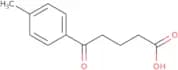
5-(4-Methylphenyl)-5-oxopentanoic acid
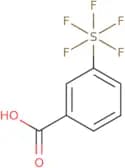
CAS:Versatile small molecule scaffoldFormula:C12H14O3Purity:Min. 95%Molecular weight:206.24 g/mol3-(Pentafluorosulfanyl)benzoic acid
CAS:3-(Pentafluorosulfanyl)benzoic acid (3PFSA) is a quinoline derivative used as an agrochemical. It is a research chemical that has not been tested for neurotoxicity, but it is suspected to be neurotoxic due to its structural similarity to other neurotoxic substances. 3PFSA has the potential to be an analog of the synthetic drug pentafluorobenzoic acid (5FBBA). The structure of 3PFSA includes a trifluoromethyl group, which is a functional group that can make compounds more permeable in the brain and could contribute to neurotoxicity.Formula:C7H5F5O2SPurity:Min. 95%Molecular weight:248.17 g/mol(2,4-Dioxo-1,3-diaza-spiro[4.5]dec-3-yl)-acetic acid
CAS:Versatile small molecule scaffoldFormula:C10H14N2O4Purity:Min. 95%Molecular weight:226.23 g/mol4-(Ethoxycarbonyl)bicyclo-[2.2.2]octane-1-carboxylic acid
CAS:Versatile small molecule scaffoldFormula:C12H18O4Purity:Min. 95%Molecular weight:226.27 g/mol2-[(4-Chloronaphthalen-1-yl)oxy]acetic acid
CAS:Versatile small molecule scaffold
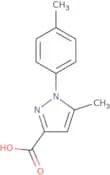
Formula:C12H9ClO3Purity:Min. 95%Molecular weight:236.65 g/mol5-Methyl-1-(4-methylphenyl)-1H-pyrazole-3-carboxylic acid
CAS:Versatile small molecule scaffoldFormula:C12H12N2O2Purity:Min. 95%Molecular weight:216.24 g/mol4-[1-(4-Aminophenyl)-1-methylethyl]-phenol
CAS:4-[1-(4-Aminophenyl)-1-methylethyl]-phenol is a processable organic solvent that can be used in temperatures between -20°C and 100°C. It has a transition temperature of -10°C and exhibits an unsymmetrical boiling point distribution. 4-[1-(4-Aminophenyl)-1-methylethyl]-phenol has high viscosity and is catalytic, showing nucleophilic properties with techniques such as catalytic reduction or catalytic hydrogenation. The solvents are also soluble in many other solvents, which makes it useful for diffraction techniques. 4-[1-(4-Aminophenyl)-1-methylethyl]-phenol is soluble in many solvents including water, acetone, and tetrahydrofuran (THF).Formula:C15H17NOPurity:Min. 95%Molecular weight:227.3 g/mol1,3-Diazaspiro[4.11]hexadecane-2,4-dione
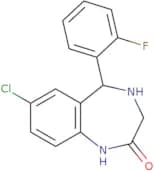
CAS:Versatile small molecule scaffoldFormula:C14H24N2O2Purity:Min. 95%Molecular weight:252.35 g/mol7-Chloro-5-(2-fluorophenyl)-2,3,4,5-tetrahydro-1H-1,4-benzodiazepin-2-one
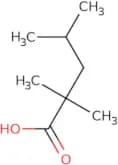
CAS:Controlled ProductVersatile small molecule scaffoldFormula:C15H12ClFN2OPurity:Min. 95%Molecular weight:290.72 g/mol2,2,4-Trimethylpentanoic acid
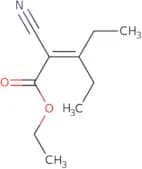
CAS:Versatile small molecule scaffoldFormula:C8H16O2Purity:Min. 95%Molecular weight:144.21 g/molEthyl 2-cyano-3-ethylpent-2-enoate
CAS:Versatile small molecule scaffoldFormula:C10H15NO2Purity:Min. 95%Molecular weight:181.23 g/molDimethyl 2,4-dibromoglutarate
CAS:Dimethyl 2,4-dibromoglutarate is a stereospecific, unselective opioid receptor ligand. It interacts with the opioid receptors and has been shown to have affinity for both mu and kappa receptors. Dimethyl 2,4-dibromoglutarate has been studied as a potential model for morphine and other selective ligands. The two enantiomers of dimethyl 2,4-dibromoglutarate were synthesized in order to study their selectivity for the opioid receptor. The racemic mixture of dimethyl 2,4-dibromoglutarate was found to be more potent than either of the individual enantiomers. The cyclopropane ring on the left side of the molecule is responsible for this effect. This ring confers higher affinity and selectivity than that on the right side of the molecule.
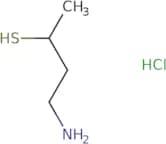
Formula:C7H10Br2O4Purity:Min. 95%Molecular weight:317.96 g/mol4-Aminobutane-2-thiol hydrochloride
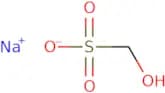
CAS:Versatile small molecule scaffoldFormula:C4H12ClNSPurity:Min. 95%Molecular weight:141.66 g/molFormaldehyde Sodium Bisulfite
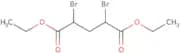
CAS:Formaldehyde Sodium Bisulfite is an aqueous solution of formaldehyde and sodium bisulfite. It is used as a disinfectant in the treatment of wastewater, including sewage and other industrial effluents. Formaldehyde Sodium Bisulfite is also used as a detergent additive to prevent the formation of acid in detergent compositions. This product can be used in analytical methods to determine the presence of formaldehyde and dimethyl fumarate by mass spectrometry (LC-MS/MS). Formaldehyde Sodium Bisulfite can also be utilized in glycol ester polymerization reactions, where it acts as an epidermal growth factor (EGF) receptor antagonist.Formula:CH3NaO4SPurity:Min. 95%Molecular weight:134.08 g/molDiethyl 2,4-dibromopentanedioate
CAS:Versatile small molecule scaffoldFormula:C9H14Br2O4Purity:Min. 95%Molecular weight:346.01 g/mol[3-(Dimethylamino)propyl]hydrazine dihydrochloride
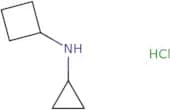
CAS:Versatile small molecule scaffoldFormula:C5H17Cl2N3Purity:Min. 95%Molecular weight:190.11 g/molN-Cyclopropylcyclobutanamine hydrochloride
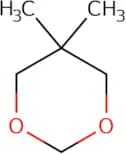
CAS:Versatile small molecule scaffoldFormula:C7H14ClNPurity:Min. 95%Molecular weight:147.64 g/mol5,5-Dimethyl-1,3-dioxane
CAS:5,5-Dimethyl-1,3-dioxane is a byproduct of the polymerization reaction between ethylene oxide and propylene oxide. It is used in wastewater treatment to remove organic pollutants. 5,5-Dimethyl-1,3-dioxane reacts with benzene to form dioxanes and yields of dioxanes are increased when phenyl groups are present. The conformation of 5,5-Dimethyl-1,3-dioxane is cyclic and it can react with terephthalic acid or alcohols to form telomerization products. When reacted with oxygen atoms from air, 5,5-Dimethyl-1,3-dioxane will create organic compounds such as ethers or esters.Formula:C19H19BrN2OSPurity:Min. 95%Molecular weight:403.34 g/mol3,4-Dimethylpyridin-2-amine hydrochloride
CAS:Versatile small molecule scaffoldFormula:C7H11ClN2Purity:Min. 95%Molecular weight:158.63 g/molN-Cyclopropylcyclopentanamine
CAS:Versatile small molecule scaffoldFormula:C8H15NPurity:Min. 95%Molecular weight:125.21 g/mol

![(2,4-Dioxo-1,3-diaza-spiro[4.5]dec-3-yl)-acetic acid](/_next/image/?url=https%3A%2Fstatic.cymitquimica.com%2Fproducts%2F3D%2Fthumb-webp%2FAAA83445.webp&w=3840&q=75)
![4-(Ethoxycarbonyl)bicyclo-[2.2.2]octane-1-carboxylic acid](/_next/image/?url=https%3A%2Fstatic.cymitquimica.com%2Fproducts%2F3D%2Fthumb-webp%2FAAA83450.webp&w=3840&q=75)
![2-[(4-Chloronaphthalen-1-yl)oxy]acetic acid](/_next/image/?url=https%3A%2Fstatic.cymitquimica.com%2Fproducts%2F3D%2Fthumb-webp%2FAAA83508.webp&w=3840&q=75)
![4-[1-(4-Aminophenyl)-1-methylethyl]-phenol](/_next/image/?url=https%3A%2Fstatic.cymitquimica.com%2Fproducts%2F3D%2Fthumb-webp%2FAAA83711.webp&w=3840&q=75)
![1,3-Diazaspiro[4.11]hexadecane-2,4-dione](/_next/image/?url=https%3A%2Fstatic.cymitquimica.com%2Fproducts%2F3D%2Fthumb-webp%2FAAA83932.webp&w=3840&q=75)

![[3-(Dimethylamino)propyl]hydrazine dihydrochloride](/_next/image/?url=https%3A%2Fstatic.cymitquimica.com%2Fproducts%2F3D%2Fthumb-webp%2FAAA87156.webp&w=3840&q=75)