Building Blocks
Subcategories of "Building Blocks"
- Boronic Acids & Boronic Acid Derivatives(5,781 products)
- Chiral Building Blocks(1,242 products)
- Hydrocarbon Building Blocks(6,101 products)
- Organic Building Blocks(61,033 products)
Found 205320 products of "Building Blocks"
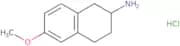
6-Methoxy-1,2,3,4-tetrahydro-naphthalen-2-ylamine hydrochloride
CAS:Controlled ProductVersatile small molecule scaffoldFormula:C11H16ClNOPurity:Min. 95%Molecular weight:213.7 g/mol1,2-Dimethyl-1H-1,3-benzodiazol-6-amine
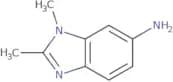
CAS:Versatile small molecule scaffoldFormula:C9H11N3Purity:Min. 95%Molecular weight:161.2 g/mol5,5-Dimethylpiperidin-2-one
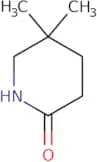
CAS:Versatile small molecule scaffoldFormula:C7H13NOPurity:Min. 95%Molecular weight:127.18 g/mol1,2,3,4-Tetrahydroquinolin-2-imine
CAS:Versatile small molecule scaffoldFormula:C9H10N2Purity:Min. 95%Molecular weight:146.2 g/molMethyl 3-(benzylamino)-2-methylpropanoate
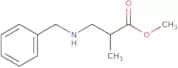
CAS:Versatile small molecule scaffoldFormula:C12H17NO2Purity:Min. 95%Molecular weight:207.27 g/mol6,7-Dimethoxy-4-methylquinazoline
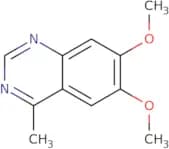
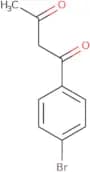
CAS:Versatile small molecule scaffoldFormula:C11H12N2O2Purity:Min. 95%Molecular weight:204.22 g/mol1-(4-Bromophenyl)-1,3-butanedione
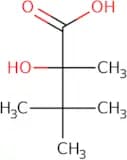
CAS:1-(4-Bromophenyl)-1,3-butanedione is a colorless liquid that has a molecular weight of 98.09 and an elemental analysis of C, H, Br, O. It is soluble in water and alcohols and has an enol form. 1-(4-Bromophenyl)-1,3-butanedione reacts with tantalum to give the tantalum salt with a molecular weight of 203.59. 1-(4-Bromophenyl)-1,3-butanedione can be used as a raw material for organic synthesis or as an intermediate for chemical reactions involving bromine or halogens.Formula:C10H9BrO2Purity:Min. 95%Molecular weight:241.08 g/mol2-Hydroxy-2,3,3-trimethylbutanoic acid
CAS:2-Hydroxy-2,3,3-trimethylbutanoic acid is a molecule that has been used in the synthesis of ligands and is also used to stabilize the carboxylic acid group. The protonation of this molecule leads to its acidic properties, which are useful for many purposes, including as a precursor for insect pheromones. The addition of chloride ions to 2-hydroxy-2,3,3-trimethylbutanoic acid produces an ion with a mononuclear charge that can be detected by nmr spectroscopy. This molecule forms hydrogen bonds with water molecules.
Formula:C7H14O3Purity:Min. 95%Molecular weight:146.18 g/molSpiro[4.5]decan-8-one
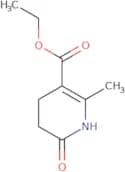
CAS:Spiro[4.5]decan-8-one is a phenylhydrazine that has been used in the synthesis of indole and cycloalkyl compounds. The spectra of this compound show two peaks at 6.3 and 8.7 ppm in the IR spectrum, which correspond to the C=C stretching mode for the cycloalkyl group and the C=N stretch for the phenylhydrazine moiety respectively. This structural isomer shows different chemical properties when compared to other isomers because it has a spirocyclic ring system with an 8-membered ring fused to a 10-membered ring, whereas other isomers have a 9-membered ring fused to a 10-membered ring.Formula:C10H16OPurity:Min. 95%Molecular weight:152.23 g/molEthyl 2-methyl-6-oxo-1,4,5,6-tetrahydropyridine-3-carboxylate
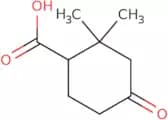
CAS:Versatile small molecule scaffoldFormula:C9H13NO3Purity:Min. 95%Molecular weight:183.2 g/mol2,2-Dimethyl-4-oxocyclohexanecarboxylic acid
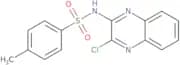
CAS:Versatile small molecule scaffoldFormula:C9H14O3Purity:Min. 95%Molecular weight:170.21 g/molN-(3-Chloroquinoxalin-2-yl)-4-methylbenzenesulfonamide
CAS:3-Chloroquinoxaline-2-carboxylic acid (3CQC) is a halogen atom, oxadiazole, benzene, alkoxycarbonyl, alkoxy, cyano, trifluoromethyl, dihedral and halogen. 3CQC is used as a chemical intermediate in organic synthesis. It can be used as a starting material for the synthesis of other organic compounds and pharmaceuticals. 3CQC has been found to inhibit bacterial growth by inhibiting RNA polymerase. This compound also inhibits protein synthesis by binding to the ribosome's 50S subunit and prevents the production of proteins vital for cell division.
Formula:C15H12ClN3O2SPurity:Min. 95%Molecular weight:333.79 g/molN-{4-[(3-Chloroquinoxalin-2-yl)sulfamoyl]phenyl}acetamide
CAS:Versatile small molecule scaffold
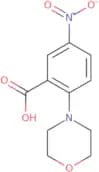
Formula:C16H13ClN4O3SPurity:Min. 95%Molecular weight:376.8 g/mol5-Nitro-2-(morpholin-4-yl)benzoic acid
CAS:5-Nitro-2-(morpholin-4-yl)benzoic acid is a cytotoxic agent that induces apoptosis in cells. This compound binds to tubulin and inhibits its polymerization, which leads to the disruption of microtubules. 5NMBA has potent cytotoxicity against cancer cells, including human lung cancer cells. It has been shown to be a potent inhibitor of paclitaxel polymerization, and also can disrupt the polymerization of other drugs such as colchicine and vinblastine. 5NMBA expresses itself at high levels in human lung cancer tissues and is often found in multidrug resistant tumor cells.
Formula:C11H12N2O5Purity:Min. 95%Molecular weight:252.22 g/mol2,4,4Prime-Trimethoxybenzophenone
CAS:Versatile small molecule scaffold
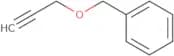
Formula:C16H16O4Purity:Min. 95%Molecular weight:272.29 g/molPropargyl Benzyl Ether
CAS:Propargyl benzyl ether is an organic compound with the formula CHCH=C(CH)OCH. It is a colorless liquid that has been used as a synthetic intermediate in organic synthesis. Propargyl benzyl ether has been shown to induce apoptotic cell death, which may be due to its ability to bind and inhibit the activity of pyrazole-3-carboxamide ribonucleotide transformylase, an enzyme involved in purine metabolism. This compound also induces apoptosis through the activation of caspases. The sample is pretreated before analysis by activating the cells with a solution of HCl and KOH before adding propargyl benzyl ether. Analysis is then conducted using analytical chemistry techniques such as gas chromatography or mass spectrometry. The chemical synthesis can be accomplished by reacting a β-unsaturated ketone with an acid catalyst such as HCl or acetic acid in the presence of a chelate ligand such as pyridine hydro
Formula:C10H10OPurity:Min. 95%Molecular weight:146.19 g/molBicyclo[2.2.1]heptan-2-ylmethanamine hydrochloride
CAS:Controlled ProductBicyclo[2.2.1]heptan-2-ylmethanamine hydrochloride is a chemical compound that is used to treat inflammatory diseases. It has been shown to be effective in animals with experimental arthritis, and it has been found to suppress the production of nitric oxide, which is involved in inflammation. Bicyclo[2.2.1]heptan-2-ylmethanamine hydrochloride binds to proteins and peptides in the body, forming conjugates that are excreted in urine samples or plasma concentrations. The enantiomers of this drug have different effects on the body, with one being more potent than the other. It has been shown that this drug can inhibit cell dysfunction by modulating cell signaling pathways as well as inhibiting inflammatory responses via interactions with opioid receptors on cells. This drug also inhibits the production of inflammatory cytokines such as IL-6 and TNF-α by binding to their
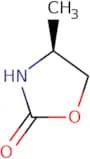
Formula:C20H27NOPurity:Min. 95%Molecular weight:297.4 g/mol(S)-4-Methyloxazolidin-2-one
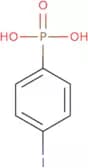
CAS:Versatile small molecule scaffoldFormula:C4H7NO2Purity:Min. 95%Molecular weight:101.1 g/mol(4-Iodophenyl)phosphonic acid
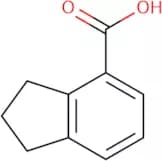
CAS:Versatile small molecule scaffoldFormula:C6H6IO3PPurity:Min. 95%Molecular weight:283.99 g/mol2,3-Dihydro-1H-indene-4-carboxylic acid
CAS:Versatile small molecule scaffold
Formula:C10H10O2Purity:Min. 95%Molecular weight:162.18 g/mol


![Spiro[4.5]decan-8-one](/_next/image/?url=https%3A%2Fstatic.cymitquimica.com%2Fproducts%2F3D%2Fthumb-webp%2FEAA02735.webp&w=3840&q=75)
![N-{4-[(3-Chloroquinoxalin-2-yl)sulfamoyl]phenyl}acetamide](/_next/image/?url=https%3A%2Fstatic.cymitquimica.com%2Fproducts%2F3D%2Fthumb-webp%2FEAA02942.webp&w=3840&q=75)
![Bicyclo[2.2.1]heptan-2-ylmethanamine hydrochloride](/_next/image/?url=https%3A%2Fstatic.cymitquimica.com%2Fproducts%2F3D%2Fthumb-webp%2FEAA04059.webp&w=3840&q=75)