Building Blocks
This section contains fundamental products for the synthesis of organic and biological compounds. Building blocks are the essential starting materials used to construct complex molecules through various chemical reactions. They play a critical role in drug discovery, material science, and chemical research. At CymitQuimica, we offer a diverse range of high-quality building blocks to support your innovative research and industrial projects, ensuring you have the essential components for successful synthesis.
Subcategories of "Building Blocks"
- Boronic Acids & Boronic Acid Derivatives(5,781 products)
- Chiral Building Blocks(1,242 products)
- Hydrocarbon Building Blocks(6,101 products)
- Organic Building Blocks(61,038 products)
Found 205338 products of "Building Blocks"
Sort by
Purity (%)
0
100
|
0
|
50
|
90
|
95
|
100
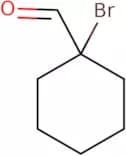
1-Bromocyclohexane-1-carbaldehyde
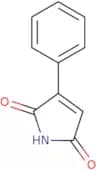
CAS:Versatile small molecule scaffoldFormula:C7H11BrOPurity:Min. 95%Molecular weight:191.07 g/mol3-Phenyl-2,5-dihydro-1H-pyrrole-2,5-dione
CAS:3-Phenyl-2,5-dihydro-1H-pyrrole-2,5-dione is a chemical compound that belongs to the class of acrylonitrile. This product is a reaction product obtained from the reaction of an inorganic acid and a divalent hydrocarbon with an optical property, which has magnetic resonance spectroscopy properties and inhibits actin filaments. 3-Phenyl-2,5-dihydro-1H-pyrrole-2,5-dione has been found to be effective against chlorine atoms. It has also been shown to inhibit the growth of bacteria by inhibiting protein synthesis.Formula:C10H7NO2Purity:Min. 95%Molecular weight:173.17 g/mol[4-(Prop-2-yn-1-yloxy)phenyl]methanol
CAS:Versatile small molecule scaffoldFormula:C10H10O2Purity:Min. 95%Molecular weight:162.18 g/mol[3-(Prop-2-yn-1-yloxy)phenyl]methanol
CAS:Versatile small molecule scaffoldFormula:C10H10O2Purity:Min. 95%Molecular weight:162.18 g/mol[3-(Prop-2-en-1-yloxy)phenyl]methanol
CAS:3-(Prop-2-en-1-yloxy)phenylmethanol is a multicomponent that inhibits the activity of β-amyloid peptides. It has been shown to inhibit the formation of amyloid fibrils in Alzheimer's disease, which may be due to its ability to bind to β-amyloid and inhibit their aggregation. 3-(Prop-2-en-1-yloxy)phenylmethanol has also been shown to have an inhibiting effect on the enzyme that forms amyloid fibrils, protein kinase C (PKC).Formula:C10H12O2Purity:Min. 95%Molecular weight:164.2 g/mol8-Chloro-5-methoxy-1,2,3,4-tetrahydronaphthalen-1-one
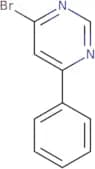
CAS:Versatile small molecule scaffoldFormula:C11H11ClO2Purity:Min. 95%Molecular weight:210.65 g/mol4-Bromo-6-phenylpyrimidine
CAS:4-Bromo-6-phenylpyrimidine is an organic compound with the formula C9H5BrN2. It is a pyrimidine that can be made by laboratory transformations of other compounds. 4-Bromo-6-phenylpyrimidine has been synthesized from 2,4,6-trichloropyrimidine and phenylboronic acid in the presence of potassium carbonate and tetrakis(triphenylphosphine)palladium(0). The compound crystallizes as a white solid that decomposes at about 160 °C to give a brown powder.Formula:C10H7BrN2Purity:Min. 95%Molecular weight:235.08 g/mol2,3-Dihydro-1H-indole-1-sulfonamide
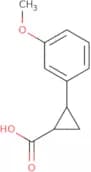
CAS:2,3-Dihydro-1H-indole-1-sulfonamide is a potent inhibitor of cellular proliferation and has been shown to be effective in inhibiting the growth of mesenchymal cells. It also has potential use in treating heart disease and cancer. 2,3-Dihydro-1H-indole-1-sulfonamide inhibits tumor growth by inducing apoptotic signaling in the cells. The drug binds to bcl2 protein and inhibits its phosphorylation at Ser70, thereby blocking activation of the mitochondrial pathway. This prevents the release of cytochrome c from mitochondria into cytosol, which leads to cell death.br>br> 2,3-Dihydro-1H-indole-1-sulfonamide is structurally related to indoleamine 2,3 dioxygenase (IDO) inhibitors that are used for immunotherapy of cancer. The drug bindsFormula:C8H10N2O2SPurity:Min. 95%Molecular weight:198.24 g/molrac-(1R,2R)-2-(3-Methoxyphenyl)cyclopropane-1-carboxylic acid
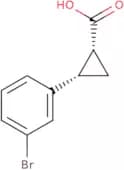
CAS:Versatile small molecule scaffoldFormula:C11H12O3Purity:Min. 95%Molecular weight:192.21 g/molrac-(1R,2R)-2-(3-bromophenyl)cyclopropane-1-carboxylic acid, trans
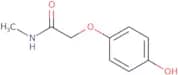
CAS:Versatile small molecule scaffoldFormula:C10H9BrO2Purity:Min. 95%Molecular weight:241.1 g/mol2-(4-Hydroxyphenoxy)-N-methylacetamide
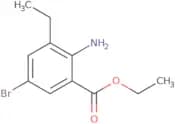
CAS:2-(4-Hydroxyphenoxy)-N-methylacetamide is an analytical standard that was isolated from a plant. It is a natural product, and it is used in research and development. This compound has been shown to have potential as a reference material for HPLC analysis. 2-(4-Hydroxyphenoxy)-N-methylacetamide may also be used in the screening of plant extracts for bioactive compounds.Formula:C9H11NO3Purity:Min. 95%Molecular weight:181.19 g/molEthyl 2-amino-5-bromo-3-ethylbenzoate
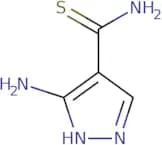
CAS:Versatile small molecule scaffoldFormula:C11H14BrNO2Purity:Min. 95%Molecular weight:272.14 g/mol3-Aminopyrazole-4-thiocarboxamide
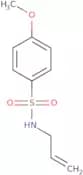
CAS:Versatile small molecule scaffoldFormula:C4H6N4SPurity:Min. 95%Molecular weight:142.19 g/mol4-Methoxy-N-(prop-2-en-1-yl)benzene-1-sulfonamide
CAS:Versatile small molecule scaffold
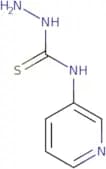
Formula:C10H13NO3SPurity:Min. 95%Molecular weight:227.28 g/mol3-Amino-1-(pyridin-3-yl)thiourea
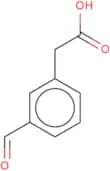
CAS:Versatile small molecule scaffoldFormula:C6H8N4SPurity:Min. 95%Molecular weight:168.22 g/mol2-(3-Formylphenyl)acetic acid
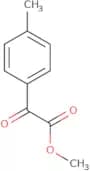
CAS:2-(3-Formylphenyl)acetic acid is a ferrocene derivative that is structurally similar to porphyrins and porphyrinogens. It is the dialdehyde of 3-formylbenzoic acid and can be used as a molecular device. The macrocyclic form of 2-(3-formylphenyl)acetic acid has been shown to be a good quencher for singlet oxygen, which is produced by photosensitizers in photosynthesis. This compound has also been shown to have potential in the treatment of myocardial infarction, due to its ability to inhibit platelet aggregation and vasoconstriction.Formula:C9H8O3Purity:Min. 95%Molecular weight:164.16 g/molMethyl 2-(4-methylphenyl)-2-oxoacetate
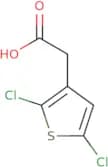
CAS:Versatile small molecule scaffoldFormula:C10H10O3Purity:Min. 95%Molecular weight:178.18 g/mol2-(2,5-Dichlorothiophen-3-yl)acetic acid
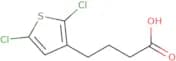
CAS:Versatile small molecule scaffoldFormula:C6H4Cl2O2SPurity:Min. 95%Molecular weight:211.06 g/mol4-(2,5-Dichlorothiophen-3-yl)butanoic acid
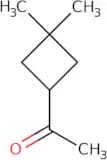
CAS:Versatile small molecule scaffoldFormula:C8H8Cl2O2SPurity:Min. 95%Molecular weight:239.12 g/mol1-(3,3-Dimethylcyclobutyl)ethan-1-one
CAS:Versatile small molecule scaffoldFormula:C8H14OPurity:Min. 95%Molecular weight:126.2 g/mol

![[4-(Prop-2-yn-1-yloxy)phenyl]methanol](/_next/image/?url=https%3A%2Fstatic.cymitquimica.com%2Fproducts%2F3D%2Fthumb-webp%2FJBA90502.webp&w=3840&q=75)
![[3-(Prop-2-yn-1-yloxy)phenyl]methanol](/_next/image/?url=https%3A%2Fstatic.cymitquimica.com%2Fproducts%2F3D%2Fthumb-webp%2FJBA90503.webp&w=3840&q=75)
![[3-(Prop-2-en-1-yloxy)phenyl]methanol](/_next/image/?url=https%3A%2Fstatic.cymitquimica.com%2Fproducts%2F3D%2Fthumb-webp%2FJBA90507.webp&w=3840&q=75)